


The Senate vote to confirm Todd Blanche as U.S. attorney general squeaked by with a razor-thin margin — 50-49 — thanks to no-show Sen. Mitch McConnell and opposition by Sens. Lisa Murkowski and Susan Collins. Their “nays” were in part because of comments Blanche made on a recent phone call with religious groups, first reported by Politico, in which he assured “the Dobbs decision [will become] permanent in every single state” and indicated the Justice Department was coordinating with the White House, Health and Human Services (HHS), and the Food and Drug Administration (FDA) toward this goal.
For Collins, it is a sure sign she is feeling the heat from Maine voters turned off by her zero regrets remark about her vote to confirm Brett Kavanaugh to the Supreme Court. And as The Contrarian has reported, the Trump administration would prefer abortion rights stay out of the public discourse, knowing how massive an electoral liability the issue is for Republicans in the midterms.
So, what to make of Blanche’s comments and what to watch for from the above federal agencies (and a few others)? Here’s a quick rundown.
Department of Justice. Blanche’s role as top law enforcement official now enables him to make pivotal decisions — about whether or not state abortion restrictions are challenged, how federal emergency abortion care protections are used, and if clinics will be protected from violence, among others.
He is quite explicit, for example, about rolling back the Freedom of Access to Clinics Act (FACE) Act, the 1994 federal law passed to protect abortion clinics and patients from threats, intimidation, violence, and obstruction. During Blanche’s tenure as acting attorney general, the DOJ fired career prosecutors who enforced clinic protections and issued a seven-figure taxpayer-funded settlement to a convicted FACE Act violator. Blanche now claims the Justice Department is gearing up so that even after Trump leaves the White House, “prosecutors will no longer be able to use the FACE Act.”
Blanche’s comment about nationalizing Dobbs refers primarily his desire to decimate access to mifepristone vis-à-vis the FDA (see below) and/or by reviving the Comstock Act of 1873, a long-dormant anti-obscenity law that could prohibit abortion pills, and pretty much any product used to perform any abortion, from being transported by mail. Either option would create instant and massive curbs on access, which is why many are accusing Blanche of paving the path to a “backdoor abortion ban.”
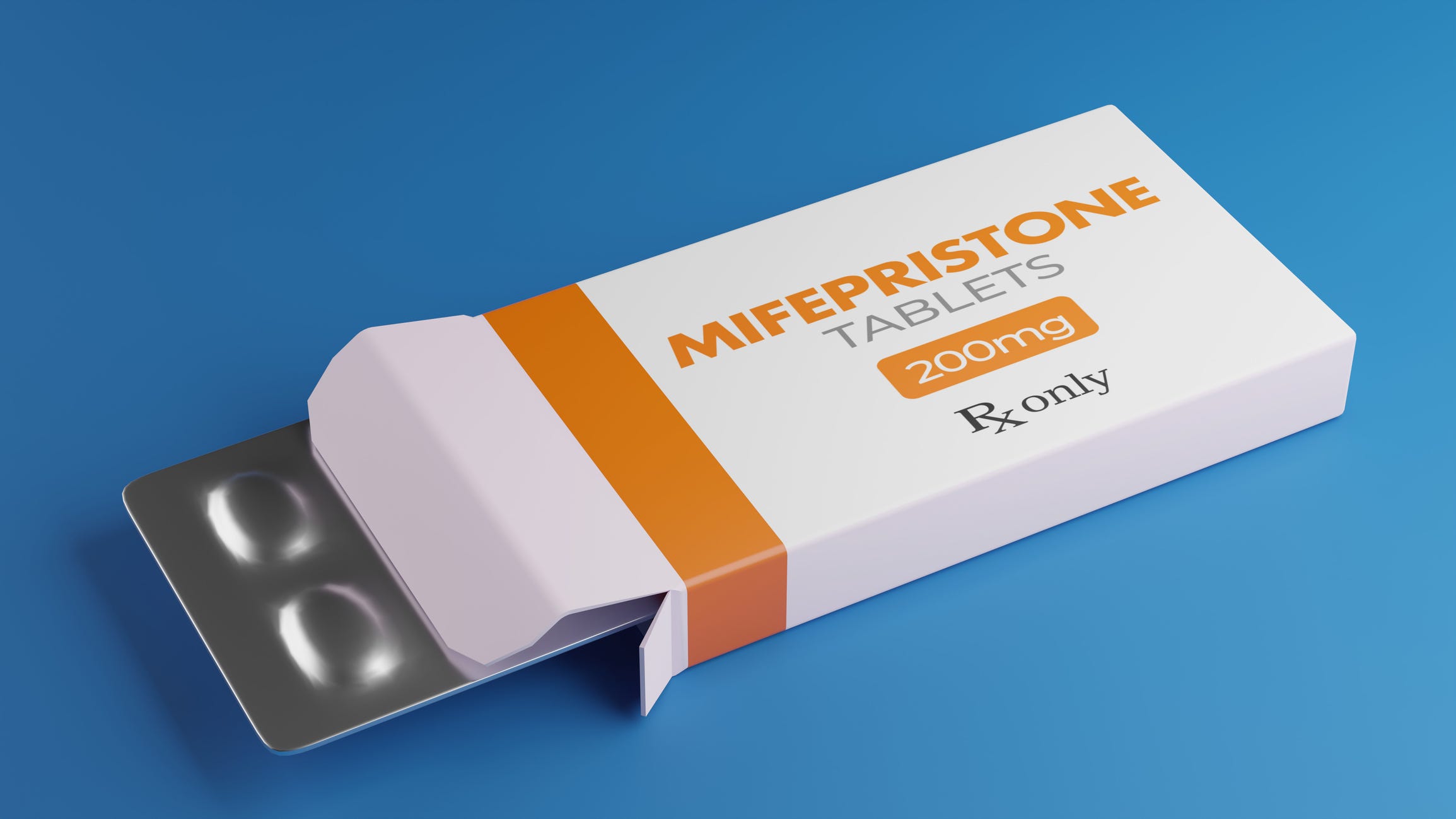
HHS and the FDA. The Contrarian has regularly covered the FDA’s slow walk to regulate mifepristone — a.k.a. its effort to stay under the radar during an election year — including its approval last year of a generic version of the drug and its docile stance in federal litigation seeking to rescind telehealth rules for abortion medication nationwide. The real danger awaits: the potential for fake findings in a so-called “safety report” commissioned by HHS, likely to be issued this year. The entire exercise is a sham, given the drug has been on the market for decades and has an exemplary safety record. Nonetheless, the results will be positioned to create buzz and political cover if it conjures any headlines that indicate otherwise. Do not fall for it.
Centers for Disease Control (CDC). Last week, the Senate also confirmed Dr. Erica Schwartz as CDC director, making her the first Black woman to hold the position. (The prior director didn’t even last a full month before she was ousted after pushback over vaccine policies.) Schwartz, who served as deputy surgeon general during Trump’s first term and has a solid public health background, said during her confirmation hearing that she “will never betray the science.”
And yet, Schwartz made a disturbing statement at her confirmation hearing: “Abortion surveillance is absolutely a critical component of what the CDC is currently doing.” She was responding to Sen. Josh Hawley’s claim that “the CDC collects data on abortions that are committed in the United States of America through a system called the Abortion Reporting System. This system is voluntary, and so a number of states, not coincidentally large blue states, do not turn over any data, so that it’s difficult to get a picture of just how many abortions and under what circumstances are committed in this country.”
Note she did not challenge his vocabulary usage; is “committing” abortion meant to imply it is a crime? Her own word choice — “abortion surveillance” — as a government tool is a frightening harbinger, whether she means the CDC will collect private information, spread misinformation, and/or otherwise support federal or state efforts to criminalize patients and providers. Schwartz made her allegiance clear, as she pledged to Hawley, “senator, you have my commitment.” All eyes on the CDC, too.
Environmental Protection Agency (EPA). Even the EPA has entered the chat — after anti-abortion groups rallied behind a report “purporting to show ‘significant levels of mifepristone’ contaminating the waterways of Austin, Texas; Blacksburg, Virginia; and Carbondale, Illinois,” as Politico reported. Earlier this summer, Republican attorneys general from 14 states and 19 members of Congress submitted a letter to EPA Administrator Lee Zeldin asking the agency to classify and regulate mifepristone as a water contaminant, and to revisit a 1996 FDA statement that the environmental effects of mifepristone pose “no significant impact.” Thus far, Zeldin does not appear to have issued a statement or tasked the EPA.
***
There is no singular route that will declaratively ban abortion — at least as far as this amalgam of federal agencies — making Blanche’s statement about the nationalization of Dobbs equal parts hyperbole and his own wishful thinking. Electoral politics will further muddy the public message in the coming months. Voters need to stay savvy, aware, and disciplined; this is an administration that thrives on distraction.
Jennifer Weiss-Wolf is executive director of the Birnbaum Women’s Leadership Center at NYU School of Law. She also leads strategy and partnerships at Ms. Magazine.

If they’re really worried about Mifipristone being a water contaminant then maybe they should con the FDA into banning Lisinopril. Lisinopril is an ACE inhibitor class of medication that lowers blood pressure rather effectively and often ends ups in the municipal water supplies because so many are on it for hypertension. They would all just stroke out if Lisinopril were to be banned as big a deal as the anti-abortion cult makes out of banning mifepristone. This is all proof positive these people are cultists and don’t give a damn about anything except their personal pet projects to control others.
The ingredients of erectile dysfunction drugs can also be detected in waterways and treated as contaminants.