


The Iran war is escalating after the ceasefire agreed in the Memorandum of Understanding between the United States and Iran crumbled in early July. The renewed hostilities have also dragged new state and non-state actors into the fight, widening the conflict significantly.
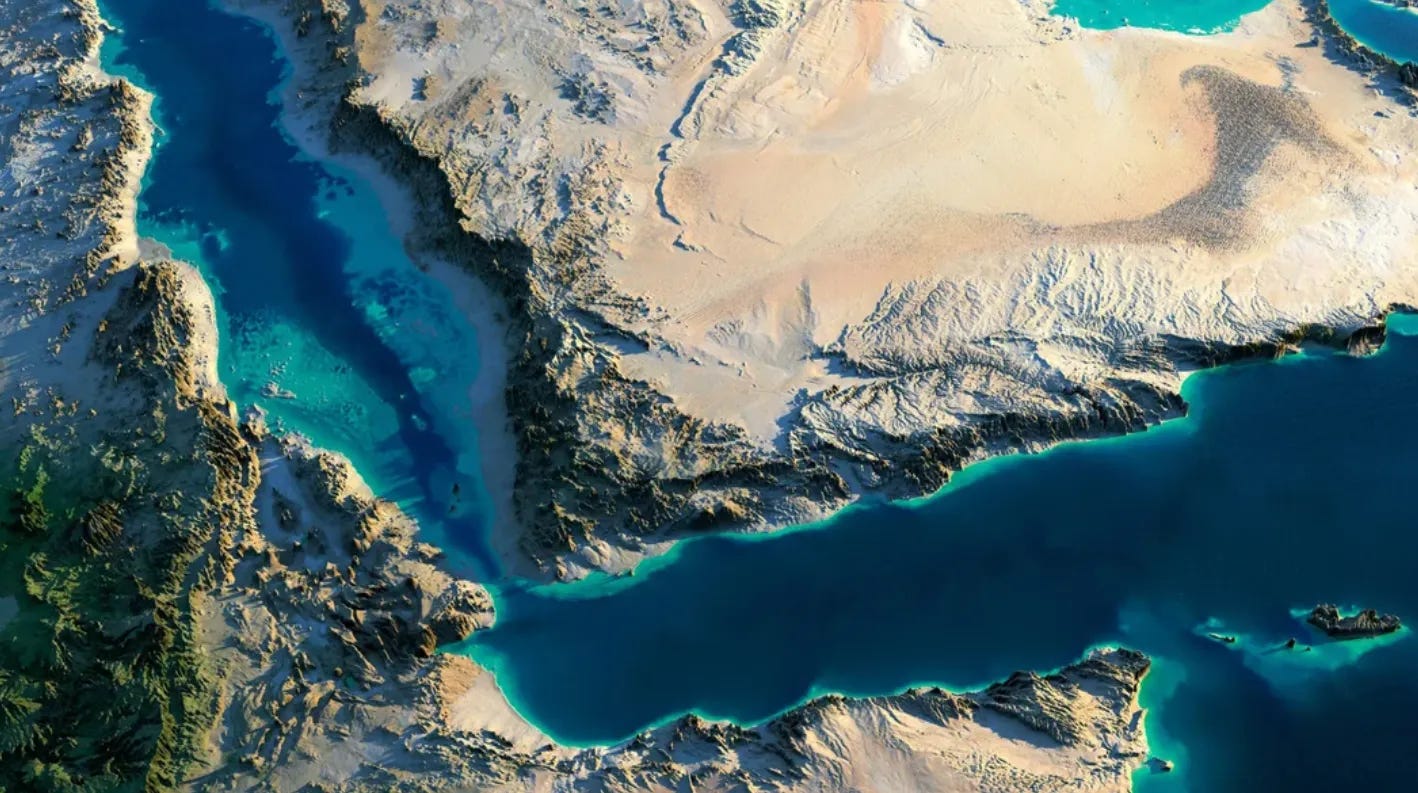
Iran-backed Houthi rebels in Yemen declared a maritime embargo against Saudi Arabia and attacked Saudi oil tankers in the Red Sea, disrupting the Bab el-Mandeb Strait, one of the few remaining routes for Gulf oil exports to bypass the Hormuz blockade and a vital chokepoint, through which not just oil but a significant percentage all global trade passes.
Saudi Arabia became directly involved in the war for the first time, after conducting joint strikes with U.S. forces on Iranian-backed militias in Iraq and launching strikes against the Houthi positions in Yemen. Also, for the first time, a port in Egypt near the Suez Canal was hit by a drone attack, opening a new front in the conflict.
A Ukrainian strike last weekend on an Iranian cargo ship in the Caspian Sea, which according to Kyiv, was carrying military equipment to Russia, raised the risk of direct confrontation between the two and a convergence of the two wars.
There are also concerns that Pakistan may be dragged into the conflict by pressure from Saudi Arabia to provide direct military support or risk undermining the credibility of its mutual defense commitments under the Strategic Mutual Defense Agreement signed in 2025.
Escalation and Widening the Conflict Are in Iran’s Interest
With its surprise missile strike on a U.S. military base in Jordan, Iran showed that it sees escalation is in its interest and is willing to take the fight to the U.S. on its own terms. Iran’s strategy is to escalate and widen the conflict to increase the economic and political costs of ongoing U.S. military operations. Iran knows that President Trump is looking for an off-ramp. Tehran, though, is in no hurry to return to direct talks with U.S. negotiators and is taking full advantage of its newly acquired leverage to improve its negotiating position.
The relationship between the U.S. and Iran is also poisoned by deep mistrust. Having been attacked twice by the U.S. while in negotiations, Tehran is highly suspicious of Trump. His threats and insults have seemed to validate Iranian suspicions about U.S. intentions. Tehran believed Washington was using the ceasefire to establish a shipping route along Oman’s coast to neutralize Iran’s newly acquired leverage over the Hormuz Strait, and suspected that the MoU was a temporary respite by the U.S. to give it time to replenish its dwindling strategic oil reserves and ammunition stockpiles, relieve pressure on the global economy, and prepare for a renewed attack. Tehran concluded that renewed war was inevitable and that it had to close the Strait of Hormuz to preserve its strongest leverage — even if that meant Iran would have to bear considerable costs. Iran believed it was better off restarting it before the U.S. had time to regroup fully, and the global economy had time to recover from the energy shock.
The erosion of the Trump administration’s credibility is also increasing the risk of escalation. Having repeatedly threatened to “start a massive attack,” “hit Iran hard,” and “end its civilization” and then not follow through has cost the administration credibility. Now, such threats are no longer taken seriously by Tehran, forcing Trump to ratchet up his threats and increasing pressure on him to follow through.
Shrinking Menu of Options
Trump failed to translate superior military might into political success and now finds himself with a shrinking menu of options, none of which is likely to achieve his original war objectives or return the Strait of Hormuz to its pre-war status.
Continuing the airstrikes and blockade of Iranian shipping while waiting for the Iranian economy to collapse won’t bring Tehran back to the negotiating table. Iran demonstrated its resilience and sold oil during the ceasefire, replenishing its coffers. Three weeks of renewed U.S. air strikes failed to reopen the strait, and the Pentagon has been unable to eliminate Iran’s ability to launch drone and missile strikes, cause U.S. casualties, or reopen the strait. According to the Washington Post, a U.S. intelligence community assessment, led by the CIA, has concluded that continued airstrikes or the expansion of the strikes to more civilian infrastructure in Iran, causing extensive civilian casualties, also are unlikely to make Tehran compromise on control of the strait. Since the MoU was signed and the ceasefire started, Iran seems to have rebuilt much of its ballistic missile and drone arsenal. Many of the sites that the U.S. hit in the past three weeks were targets it struck during the initial assault, according to officials interviewed by the New York Times, speaking on the condition of anonymity. Iran would likely continue attacking U.S. military bases and civilian infrastructure in the region to degrade the U.S. ability and willingness to continue the war and challenge its control of the strait.
At the same time, the U.S. tolerance for continued high gas prices and the cost of war ahead of the midterm elections is doubtful at best. Further, the Institute for the Study of War reported that Russia may be providing Iran with intelligence on U.S. sites and equipment in the region, helping Iran increase the accuracy and effectiveness of Iran’s drone and missile attacks, likely to result in increased casualties over time. Reports have emerged that China is set to supply Iran with hundreds of portable anti-air missile systems to strengthen its short-range air defense capabilities.
Major escalation would be even costlier, politically untenable, and have a very low likelihood of success. Expanding the bombing campaign would alienate key Gulf allies vulnerable to Iranian attacks and worsen the global economic and energy crises. A limited deployment of ground troops — to, say, occupy Kharg Island — would be unlikely to make a meaningful difference in the strait and would make U.S. troops sitting ducks, resulting in considerable casualties. Wresting control of Hormuz from Iran would likely require hundreds of thousands of ground troops and take a year to accomplish, making it a political non-starter. Finally, the ability to escalate the conflict will be limited by the diminishing supply of air defense interceptors and other advanced weaponry, which affects the ability to protect U.S. military bases in the region against Iranian attacks and causes shortages in other theaters, rendering the U.S. ill-prepared to respond to a crisis elsewhere, including Chinese aggression against Taiwan. According to multiple media sources, the warnings by Gen. Dan Caine, the chair of the Joint Chiefs of Staff, that the expanded hostilities has drained U.S. stockpiles of anti-missile interceptors to dangerously low levels, contributed to the president calling off strikes on Iranian targets last week.
Walking away from the conflict and declaring victory would also be difficult. The war has been costly, resulted in the deaths of 18 U.S. service members and wounding of hundreds, and caused vast economic damage. The administration would have to own the casualties and leaving Iran’s missile arsenal, uranium stockpile, and nuclear program in place, not achieving any stated objectives of the war, leaving Iran in control of the Strait of Hormuz and allowing it to become the rising regional power. The president would struggle to claim that outcome is better than the nuclear deal negotiated by the Obama administration, which Trump spent years denouncing as the “worst deal ever” and walked away from in 2018.
Losing Control
It seems to have dawned on Trump that he has only unpalatable options . He is rapidly losing control of the outcome and the direction of the conflict. He likely missed the window to take an off-ramp at a time of his choosing and may no longer even be able to choose among the above options.
As always in war, the adversary also has a vote, and Iran has shown its willingness to seize the initiative to keep the U.S. on its back foot, disrupt its plans, and limit the choices available to the president. As a result of the widening of the conflict, many countries have equities in it and new actors have acquired a vote in the direction of the war. Other nations might decide to escalate the war, forcing the U.S. back into the spiral. Equally likely, allies could frustrate a U.S.-led escalation by denying access to airspace, for example.
Furthermore, the decision to attack Iran, which Washington apparently had no thought-through plan for, has created long-term strategic and geoeconomic consequences that are difficult to reverse: most prominently, it has shown how effective Iran’s weaponization of its control of Hormuz has been in pushing the U.S. back and created a strong incentive for others to also weaponize their control of maritime and other chokepoints.
An attack that Trump believed would very quickly defeat Iran, collapse its regime, and lead to the emergence of a new compliant leadership has proved to be a strategic self-inflicted wound that weakened the position, power, and influence of the United States — with no end in sight. It has forced the U.S. to abandon upholding freedom of navigation, a long-standing U.S. national objective vital for economic prosperity and for maintaining a rules-based international order. The president is unable to reopen the Strait of Hormuz, compel Iran to negotiations, achieve any of goals of the war or prevent the widening and escalation of the conflict. He has lost control of the crisis he created.

'Trump Is Losing Control of the Widening Conflict:
His lack of planning has left the administration with dwindling influence over the direction of the Iran war.'
These two statements are both beyond understatement. Trump is not just 'losing control' of this madness, he has not had any control since the first hours of this shockingly stupid, brazenly illegal and immoral attack.
I wish directors of 'advisory firms', like this writer, could stop saying things like ' The war has been costly, resulted in the deaths of 18 U.S. service members and wounding of hundreds, and caused vast economic damage' - without acknowledging the massive death and destruction the US/Israeli war has brought to the region.
In Iran, there have been anywhere from 3500-6000 people killed and tens of thousands injured. In Lebanon, at least 4000 people have been killed since March, tens of thousands more injured, and a million people have been made homeless by Israel's flagrantly illegal occupation. Many more have been killed across the region.
As I see it, Tump made two massive errors from the get-go:
1) He thought Iran was another Venezuela. It is not.
2) He failed to take into account The Law of Unintended Consequences (a close relative of Murphy's Law). One wonders if he's ever heard of either one.