


Last week was a bad one for freedom of speech in the United States.
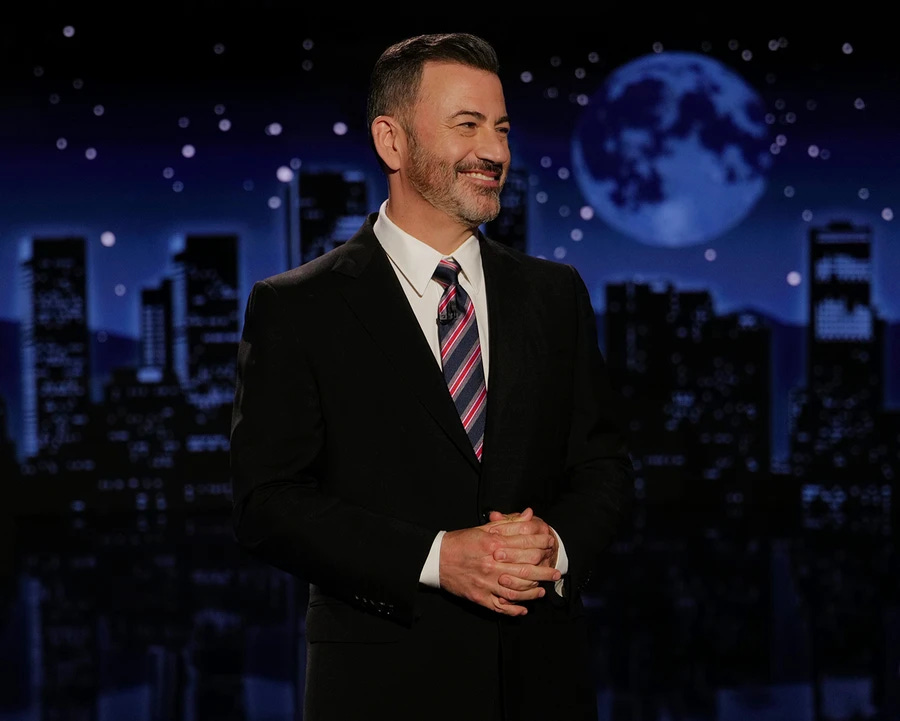
Late-night talk show host Jimmy Kimmel was taken off the air (only to return Tuesday night) for what he said in the aftermath of the assassination of Charlie Kirk. Federal Communications Commission Chair Brendon Carr went on the warpath, threatening to make life hard for media companies unless they “find ways to change (their) conduct.”
Not to be outdone, Attorney General Pam Bondi responded to Kirk’s death by saying, “There’s free speech, and then there’s hate speech—and there’s no place [for that], especially now, especially after what happened to Charlie, in our society.” She promised, “We will absolutely target you, go after you, if you are targeting anyone with hate speech.”
At the state and local level, governments responded to officials who made insensitive comments about Kirk’s death by censuring them or calling for their removal from office.
And on Friday, President Donald Trump said that news reporters who criticize him are breaking the law. “They’ll take a great story,” Trump claimed, “and they’ll make it bad…. I think that’s really illegal.”
Never in American history had a president made such a sweeping and clearly unconstitutional assertion. Sure, we’ve seen government censorship before. But Trump has upped the ante.
He has revived a form of censorship that many thought was no longer the primary threat to free speech in America.
As Columbia University Law Professor Timothy Wu explained in 2018, “The First Amendment was brought to life in a period, the twentieth century, when the political speech environment was markedly different than today’s. With respect to any given issue, speech was scarce and limited to a few newspapers, pamphlets or magazines. The law was embedded, therefore, with the presumption that the greatest threat to free speech was direct punishment of speakers by government.”
“Today,” he continued, “in the internet and social media age, it is no longer speech that is scarce—rather, it is the attention of listeners. And those who seek to control speech use new methods that rely on the weaponization of speech itself, such as the deployment of ‘troll armies,’ the fabrication of news, or ‘flooding’ tactics.”
The assumption that government censorship is the primary threat to free speech, Wu argued, “no longer hold[s].”
Others point to the social pressures associated with so-called “cancel culture,” not government censorship, as the greatest threat to free speech. Wisconsin Law Assistant Professor Franciska Coleman argued that “Cancel culture is a type of social speech regulation that facilitates domination. It resembles the very type of nationwide censorship that the founders were trying to avoid when they prohibited government censorship of speech.”
“The US,” she suggests, “has a strong tradition of prohibiting the legal regulation of speech, but at the same time, it has a very robust system of social regulation of speech. And we’re constantly broadening the definition of speech that can be socially regulated and censored.”
It is, she argues, a “form of vigilante justice, and vigilante justice” that does not require government action.”
Last week reminded us that when the levers of government fall into the wrong hands, they can still pose a major threat to free speech. And what Trump is now doing draws on a long history of such abuses of power.
For example, in 1798, President John Adams signed the so-called Alien and Sedition Acts, making it a crime to “write, print, utter or publish, or… cause or procure to be written, printed, uttered or published, or … knowingly and willingly assist or aid in writing, printing, uttering or publishing any false, scandalous and malicious writing or writings against the government of the United States … with intent to defame the said government.”
In the 1830s, the postmaster general of the United States, with the support of President Andrew Jackson, refused to allow the delivery of pamphlets advocating the abolition of slavery in Southern states. Jackson labelled abolitionist ideas “repugnant to the principles of our national compact and to the dictates of humanity and religion.”
In 1918, during World War I, Congress passed the Sedition Act, targeting anyone who “willfully make[s] or convey[s] false reports or false statements with intent to interfere with the operation or success of the military or naval forces of the United States, or to promote the success of its enemies … or ... shall willfully utter, print, write, or publish any disloyal, profane, scurrilous, or abusive language about the form of government of the United States, or the Constitution of the United States.”
In 1954, the Communist Control Act said that members of the Communist Party were “not entitled to any of the rights, privileges, and immunities attendant upon legal bodies.” And, after 9/11, President George W. Bush’s press secretary, Ari Fleischer, criticized comedian Bill Maher’s response to it. Maher then had a television program on ABC.
Fleischer reminded “all Americans that they need to watch what they say, watch what they do.” Shortly thereafter, ABC fired Maher. In a strange twist of history, Maher’s late-night time slot eventually was taken over by Jimmy Kimmel Live!
Government censorship has often reared its head or been justified in times of real or perceived crisis. Not surprisingly, the administration is portraying Kirk’s murder as a sign of such a crisis.
As Reuters reported, “Trump and senior officials have repeatedly blamed left-wing groups for creating an atmosphere of hostility towards conservatives before Kirk’s assassination.”
Nonetheless, the administration’s efforts to censor or punish speakers who say things they don’t like are clearly unconstitutional. More than 60 years ago, the Supreme Court ruled that the First Amendment is violated when the government “deliberately … [seeks] to achieve the suppression of publications deemed ‘objectionable.’”
The court pointed out that threats of regulatory action against those whose speech offends the government “create … hazards to protected freedoms markedly greater than those that attend reliance upon criminal sanctions, which may be applied only after a … criminal trial hedged about with the procedural safeguards of the criminal process.”
Justice William Douglas, who joined the majority in that case, observed that censoring or punishing what the government brands “dangerous and pernicious’’ speech has long been a tool of an “all-powerful elite” and “is as dangerous today” as it has ever been.
Last year, a unanimous Supreme Court reaffirmed that view. It noted, as if foreseeing the tactics used by the Trump administration, that government censorship is no less dangerous when “A government official… coerce[s] a private party to punish or suppress disfavored speech on her behalf.”
And even Texas Sen. Ted Cruz, Trump’s usually steadfast ally, denounced those tactics, comparing them to a “mafioso coming into a bar going, ‘Nice bar you have here, it’d be a shame if something happened to it.’”
Cruz went on to say that what the administration did last week was “unbelievably dangerous.” The government, he said, should never “put itself in the position of saying, ‘We’re going to decide what speech we like and what we don’t, and we’re going to threaten to take you out there if we don’t like what you’re saying.’”
“It might feel good right now to threaten Jimmy Kimmel,” Cruz cautioned. “But when it is used to silence every conservative in America, we will regret it.”
That is why, even as we recognize the proliferating threats to free speech from the internet and cancel culture, we need to stand up for the right of people to say things we hate when the government tries to silence them.
Austin Sarat is the William Nelson Cromwell Professor of Jurisprudence and Political Science at Amherst College.

It seems like trump and his lackeys like Bondi, RFK Jr, Homan and Stephen Miller are in constant competition to be the most repulsive person on the planet.
After she made her comments about hate speech perhaps she should prosecute her boss first and foremost, [she can’t] because even hate speech is protected by the first amendment. Let’s see how far she’ll get with that.