

By Craig Becker and Joseph A. McCartin
“This is a case in which the President of the United States has asserted a constitutional right to discriminate against federal employees.” So begins a complaint filed in a United States District Court last month by an immigration judge fired by the Department of Justice.
And it is true. When the judge, Tania Nemer, alleged she had been fired based on her sex and national origin, the Department of Justice responded, “Your removal is beyond the purview of Title VII” of the 1964 Civil Rights Act.
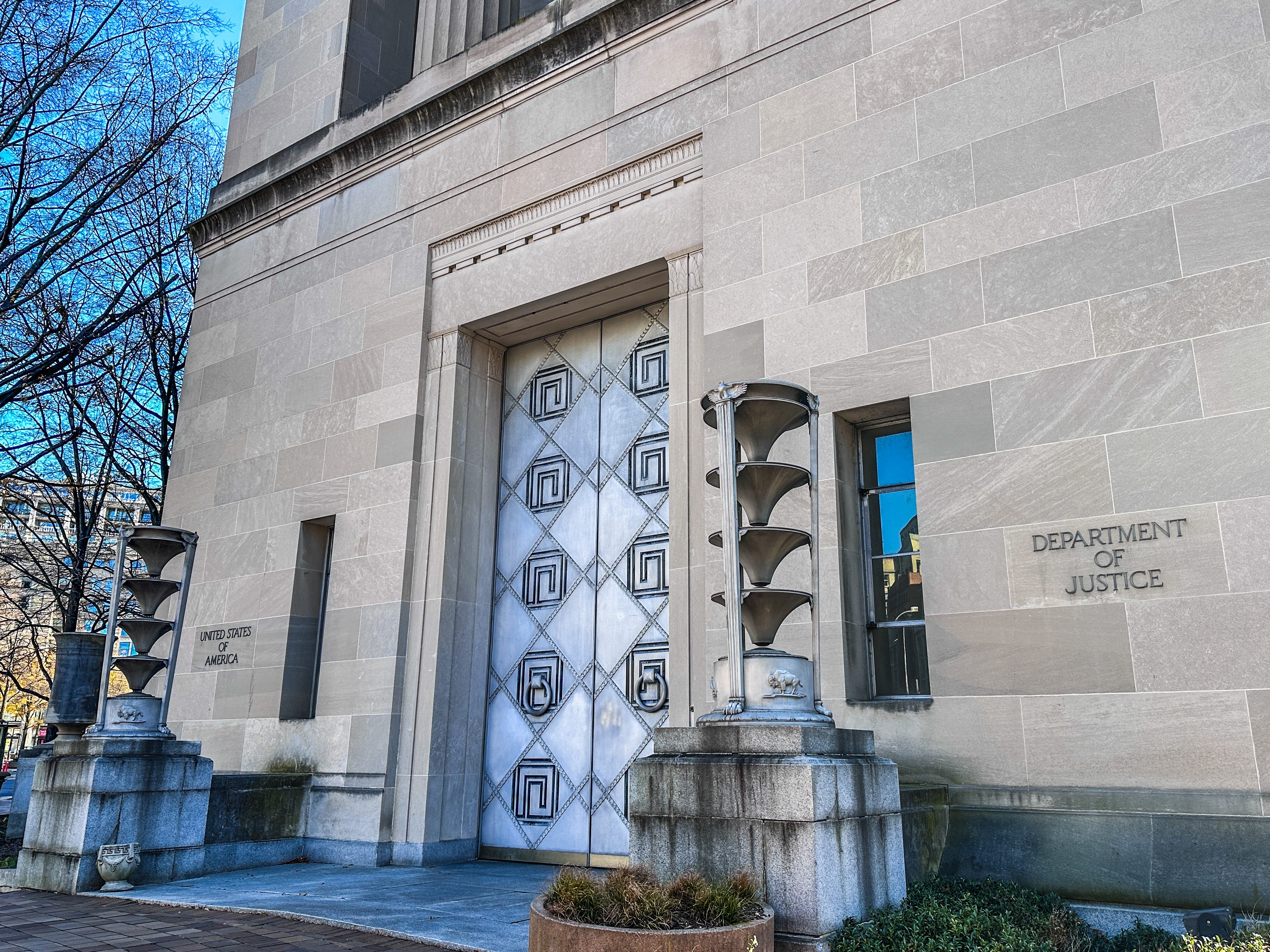
As this response demonstrates, it is now President Donald Trump’s legal position that he not only has authority to fire federal employees without just cause, but that he is also free from accountability regarding any claim, no matter how solidly fact-based, that he has fired someone on the basis of sex, race, religion or national origin in violation of Title VII, which forbids such discrimination.
The president’s radical assertion of his authority to engage in invidious discrimination that has been against the law in this country for over 60 years is the logical conclusion of his unprecedented assertion of personal control over the federal workforce and represents a grave threat to the progress Black workers have made in federal employment when it was governed by merit principles.
The president’s startling assertion of unchecked power stems from nine words in Article II of the Constitution, stating that the president “shall take Care that the Laws be faithfully executed.” Trump asserts that he cannot fulfil that duty unless he can fire, at will, any of the officials and employees who actually administer the laws.
The president has fired multiple members of independent agencies, including the Federal Trade Commission and the National Labor Relations Board, without cause, despite statutes providing that those officers can be removed only for neglect of duty or malfeasance in office. The president has fired multiple immigration judges, like Ms. Nemer, based on the same naked assertion of authority under Article II. And, despite the Civil Service Reform Act of 1978, which provides that most federal employees can be terminated only for misconduct, neglect of duty, or malfeasance and requires that employees be given advance notice and an opportunity to rebut the charges against them, the president has selectively and summarily fired dozens of employees throughout the federal government, informing them only “Pursuant to Article II of the United States Constitution and the laws of the United States, your employment . . . is hereby terminated.”
Some of the victims have a high profile, like Maureen Comey, who was fired from her position as an Assistant U.S. Attorney when her only sin was being her father’s daughter. Some held important positions, like Joseph Tirrell, the ethics officer at the DOJ. But others appear simply to have been caught up in the president’s reign of retaliation, like the paralegals and administrative assistants who were assigned to work with Special Prosecutor Jack Smith in his investigation of Trump, the then-former president.
All of these actions violate laws enacted by Congress and ignore Supreme Court precedent dating back to the 1880s holding that Congress can restrict the president’s authority to fire federal employees.
The actions also threaten the central principle of the civil service system and pose a unique threat to Black workers. In 1978, when President Jimmy Carter transmitted what became the Civil Service Reform Act to Congress, he stated that among its central objectives were to “protect employee rights” and “promote equal employment opportunity.” That merit principle and the transparent employment practices of the government created unique opportunities for Black workers. By the time Trump took office last January, they constituted 19% of the federal workforce (compared with 14% in the total population). “It’s very difficult to tell the story of the Black middle class without the federal government’s role in employing Black individuals,” explains historian Frederick Gooding Jr., author of “American Dream Deferred: Black Federal Workers in Washington, D.C., 1941-1981.”
Trump’s attack on federal employees has already disproportionately hurt Black workers, many of whom were concentrated in precisely those agencies that are the president’s central targets. Some 36% of the workforce of the Department of Education was Black when Trump ordered its closure. How deeply such cuts are hurting Black workers has become difficult to determine since the administration removed current and historic data on the racial and ethnic composition of the federal workforce from the Office of Personnel Management’s public website last spring. Although the extent of the damage is thus hard to quantify, its effect is certain to “erode the middle class” in the Black community according to Everett Kelley, president of the American Federation of Government Employees.
Now, both the merit principle and the progress of Black workers are further threatened by the president’s radical assertion of immunity from basic civil rights law. Would the president use the authority he claims under Article II not only to punish his perceived enemies but also to discriminate? His own abhorrent recent words, referring to Somali people as “garbage” starkly evidence the danger.
Craig Becker is managing counsel for affirmative litigation with Democracy Defenders Fund. Joseph A. McCartin is a professor of history and executive director of the Kalmanovitz Initiative for Labor and the Working Poor at Georgetown University.
This is an excellent, concise opinion piece! I love to read about the law, and find it fascinating how a gross exaggeration of the substance, and intent, of what is written in the Constitution can be twisted into a word salad of semantics that this Supreme Court seems all-too-often to willingly support ... completely missing the point, and a judicious overview of the implications of their decision. We are certainly living in trying times ... where the culpable party who should be tried for breaking the law is not, given immunity by a court with the most contorted view of the Constitution, and their power to read into it what is not written, in history.
Congressional Republicans don’t care what happens to innocent people as long as they still have a job at the end of the day.