


I’ll admit that I was shocked watching Fox News report on the $2.2 billion Donald Trump raked in last year from crypto scams, licensing deals, and foreign real estate. “We have seen ten-figure business deals breaking the Trump family’s way for rare earth minerals and for cryptocurrency,” Peter Doocy declared on air. I was also shocked when The Wall Street Journal’s editorial board commented on it, writing, “Americans tell pollsters they don’t think they are getting ahead financially. But President Trump and his family are having no trouble.” And I was similarly shocked when the New York Post covered it, saying, “It stinks to high heaven.” But that is how undeniable Trump’s corruption has become: even his media lapdogs can’t ignore it.
A grift of $2.2 billion would be bad enough unto itself; it’s even worse given the fact that Trump ran expressly on bringing about an end to cronyism and instead helping the little guy. He swore he’d bring down costs, fix healthcare, bring back jobs. None of it has happened. The little guy is getting buried. The monthly cost of a median-priced home has almost doubled in the last five years. Premiums for subsidized ACA health plans jumped 114% this year. And the pain isn’t just affecting the poorest Americans anymore. People earning between $45,000 and $75,000 a year, the vanishing middle class, are buried in housing costs.
The guy who promised to use the powers of the office he won to deliver on helping Americans instead used those powers to help himself. We have 927 pages of receipts in Trump’s latest financial disclosure that prove it. The scale of his scam is unprecedented in US history — but there is a road map to see where this leads. Because Russia went there decades ago.
In the 1990s, the post-Soviet Russian governmentg auctioned off state assets to whomever was positioned closest to power, and a handful of oligarchs became billionaires overnight. Everyone else suffered economic collapse: hyperinflation, wiped-out savings, a decimated economy. Life expectancy fell six years, from 63.4 to 57.4, over the course of three years. All while the oligarchs took for themselves what should have belonged to the public. They literally bled the people dry.
This rampant kleptocracy set the stage for someone to come in and make sweeping promises, vowing to hold power accountable — one might even say, to make Russia great again. But Putin didn’t dismantle the grift. He centralized it around himself. Today, he officially reports earnings of $140,000 a year, owns a small apartment and three Soviet-era cars. But credible sources say his real wealth is between $70 and $200 billion. It’s squirreled away in offshore accounts and laundered through shell companies. And there will never be a true record of it, because Putin has ensured that Russia does not have a free press or independent courts capable of finding it. He will never be held accountable.
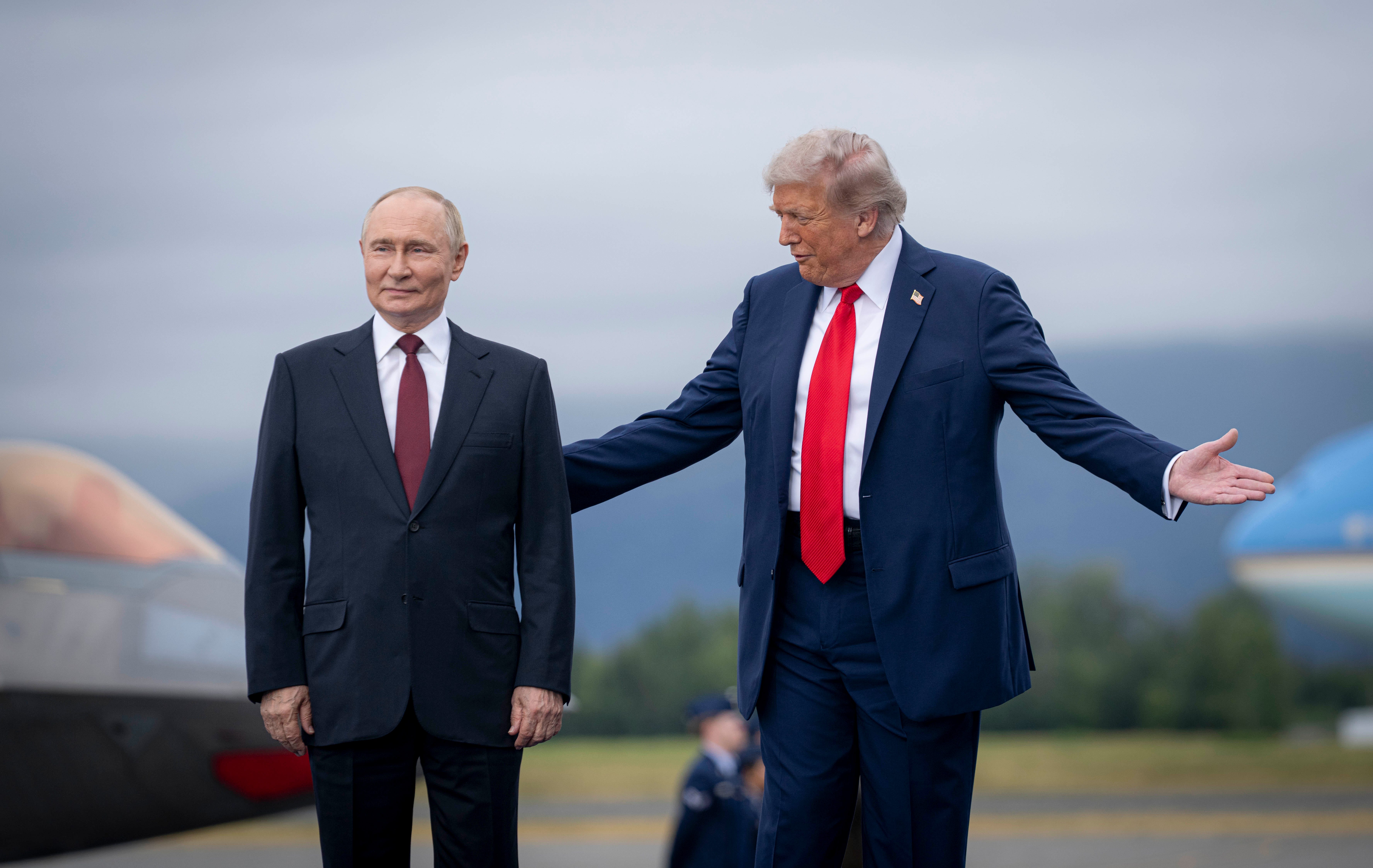
We’re not there. We have the 927-page account because of our disclosure laws, a free press that reported it, and courts that can still act. We still have the tools they lost — but we have to use them.
How do we hold Trump accountable? We’re well beyond the Merrick Garland era of Democratic strategy. The time to ‘have patience, and trust the process’ is over. That approach was built for a system under stress, not one being actively destroyed. What’s actually working is the opposite: lawyers like Norm Eisen and Marc Elias filing the lawsuits, exposing criminality, and seeking consequences. If the next Democratic administration doesn’t take note and prosecute the criminals of today to the fullest extent of the law, then that criminality is doomed to repeat itself in the future.
In my new book, The Day After (available today), I write about what happens when the same rot reaches the machinery meant to hold Trump accountable:
“When you demolish the independence of the Justice Department, once you politicize the prosecutors, you destroy the fundamentals of our democratic government. You end up with a federal appeals court judge — and possible future Supreme Court justice — who believes that the Justice Department can say ‘Fuck you’ to the courts. It does not take long to slide all the way down the slippery slope to the end of the rule of law—the same rule of law that Trump once promised to protect.”
Democratic governance, going forward, must not simply entrench the status quo, but rather encourage — demand — that Democrats wield power aggressively. This is not a moment for symbolic victories; it’s a moment to fight as if the future of our democracy depends on it. Because it does.
Brian Tyler Cohen is a progressive political commentator and #1 NYT bestselling author. You can now order his new book, The Day After, at any of the retailers here. And you can see him in conversation with Jim Acosta in DC, with Don Lemon in NYC, or with Jon Lovett in LA.

" If the next Democratic administration doesn’t take note and prosecute the criminals of today to the fullest extent of the law, then that criminality is doomed to repeat itself in the future."
If only Merrick Garland had started the ball rolling earlier, we wouldn't be having this conversation. And Cohen is right: if the next Dem admin doesn't learn from that disaster, we are toast. We are truly on the cusp of a tipping point as far as inequality in America goes.
"If the next Democratic administration doesn’t take note and prosecute the criminals of today to the fullest extent of the law, then that criminality is doomed to repeat itself in the future."
The Democratic Congressional leaders must be ready on Day One to hit the ground running with a list of actions they are begining THAT DAY. A list of persons to be investigated. A plan for recouping the president's irresponsible and unlawful expenditures. A plan to stop any further work on the White House grounds ir other public land. (No arches, no walkways, no heliports, and especially no ballroom.) If the Dems gain a Senate majority they must take back the power of the purse. They must have credible, effective plans they are prepared to go public with on January 3, 2027.