

By John F. Terzano
Six months ago, President Donald Trump took this country to war with Iran. They called it Operation Epic Fury. Of course they did.
In this administration, even war is branded. They wanted a muscular name, a slogan, and a public-relations campaign. “Epic Fury” sounded powerful, decisive, aggressive—designed to convey overwhelming American strength and a quick military victory.
Except victory never came.
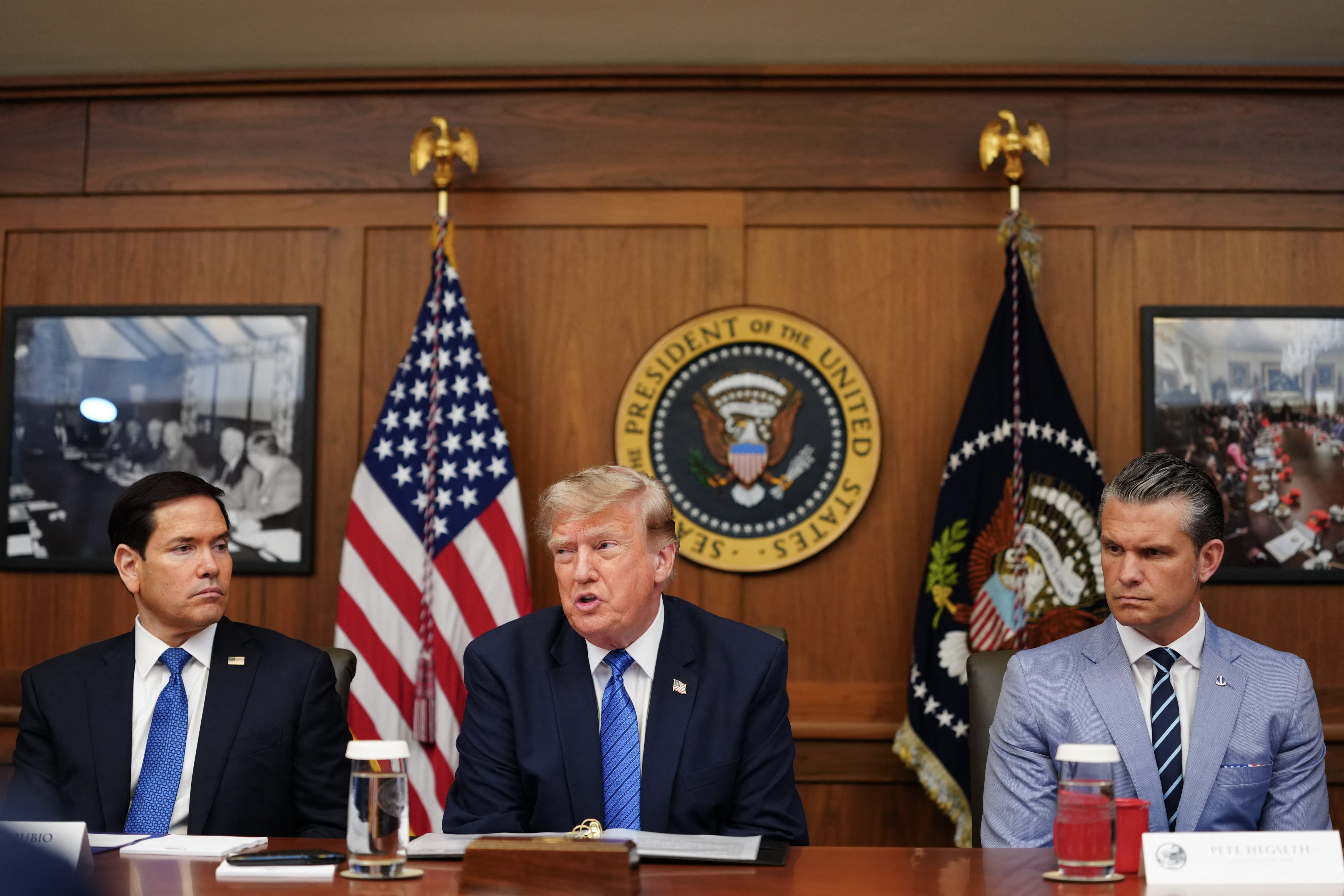
On May 5, Secretary of State Marco Rubio announced, in regards to Epic Fury, “The operation is over.” The same day, Defense Secretary Pete Hegseth unveiled the next brand: Project Freedom, which he described as “defensive in nature, focused in scope and temporary in duration.” Temporary? That was nearly five months ago.
The Pentagon reportedly instructed personnel to stop calling the continuing military operations Epic Fury and refer instead to “overseas operations” in the U.S. Central Command area. But American forces are still fighting. Trump is still threatening annihilation. Iran is still retaliating. American troops remain deployed throughout the region. The Strait of Hormuz remains dangerous. American warships remain in harm’s way. Peace negotiations have faltered. And recent weeks have brought further escalation, including American attacks on Iranian targets and Iranian missile attacks against American forces and regional allies.
I am a Vietnam combat veteran. I have heard political leaders sell wars before. I have heard promises of progress, turning points, and light at the end of the tunnel. I have seen objectives change when original aims became inconvenient. I have watched young Americans pay the price for decisions made by people comfortably removed from the battlefield.
So I am less patient than others when a president dismisses a six-month military conflict as “small potatoes,” as Trump did. Eighteen American service members are dead. Close to 800 have been wounded. More than $37.5 billion has been spent. Those are not “small potatoes.” Those are the words from a true chicken hawk, which our president is.
Small potatoes for whom? Not for the families who lost those 18 Americans. Not for the wounded, learning to reassimilate with injuries some will carry the rest of their lives. Not for the thousands of Iranian families who have buried their dead. Not for innocent civilians who happened to be in the flight path of somebody else’s reckless war. And certainly not for the American sailors, airmen, soldiers, and Marines who have spent month after month wondering when they are coming home.
Vice President JD Vance tells us he “wouldn’t call it a war,” yet offered no timetable for when the conflict would end. If not a war, what should we call it? When one country bombs another country, provoking it to fire missiles back at American forces, most of us understand the English language well enough to know what is happening. It is war.
Changing the operation’s branding or denying its significance does not make the missiles disappear. There is something profoundly troubling about hearing political leaders minimize a conflict that other Americans are fighting. But that is what chicken hawks do. War is remarkably easy to discuss from behind a podium. Less so when somebody is shooting at you. Trust me.
When I went to Vietnam in 1971, I was young — like so many of the men and women we continue to send to war. The decisions that sent us there were made thousands of miles away, by people for whom troop levels, bombing campaigns, and casualty figures were numbers on briefing papers. For those of us on the ground, they represented our lives.
Hearing a new generation of American leaders speak casually about another war whose purpose and endpoint become harder to explain with each passing day leaves me angry. What are Americans dying for in Iran today? What constitutes victory? Or, for that matter, defeat? What conditions must exist before American forces can return? What is the strategy for instilling peace?
These are not partisan questions. They are questions every president who sends Americans into combat owes to the people he is sending. They are questions to which Congress should be demanding answers. Instead, Congress has (again) abdicated its constitutional responsibility. The Framers deliberately divided the war powers because they understood the danger of placing such a consequential decision in the hands of one person. And yet, faced with a president determined to expand his executive power, Congress has surrendered its own — acquiescing rather than confronting, reacting rather than restraining, and allowing assertions of authority to become reality rather than summoning the courage to object.
Vietnam taught us what happens when constitutional safeguards erode. The War Powers Resolution — which requires American participation in hostilities to end within 60 days, absent congressional authorization — was enacted in its aftermath to prevent another president from drawing the nation into hostilities without sustained approval.
Yes, this Congress debated and voted on War Powers measures. But debate is not enough. Failed resolutions are not enough. Speeches are not enough.
Six months into this conflict, Congress has not enacted specific authorization for ongoing hostilities. American forces continue to fight, American bombs continue to fall, and American service members continue to die. That failure of congressional oversight is an abdication of Congress’s most solemn responsibility. They were not given War Powers to stand on the sidelines and observe, or to avoid politically difficult votes and deny responsibility for the consequences.
If members of Congress believe this war is necessary, they should have the courage to authorize it and explain that vote to the American people. If they do not believe it is necessary, they should have the courage to try to stop it. Why is the fate of the men and women risking their lives not on Congress’s daily agenda? Congress can correct a tax law, repeal a regulation, or rewrite a spending bill. But it cannot bring a dead nineteen-year-old soldier back to life. That is why, six months into this war, the question is no longer, “Who authorized this?” The more disturbing question is: Why has Congress allowed it to continue? And what will embolden them to defy the president’s whims?
Mike Rogers, the former Representative and current Republican Senate candidate for Michigan, was a strong supporter of Trump’s war. Now, with the midterms fast approaching and Trump’s polls plummeting, Rogers stated the war in Iran “needs to end, and end quickly.” But his reasoning focused on soaring diesel prices, groceries, and economic woes. Those concerns, to be clear, are very real. But surely the measure of whether America should continue a war cannot be the price at the pump or checkout counter. If our daily costs become the barometer for whether to send our troops into battle and when to bring them home, then we have learned remarkably little from the wars we have fought in recent memory.
Donald Trump spent years condemning America’s endless wars. He presented himself as the president who would stop sending Americans into conflicts without clear objectives or endings. Now he owns one. Six months is not twenty years. Not yet. But endless wars do not begin as endless wars. Vietnam did not begin with over half a million American troops in Vietnam. Afghanistan did not begin with a plan to remain there for two decades. Iraq was not sold as years of occupation, insurgency, and sectarian warfare.
Instead, they begin incrementally. It is one more bombing campaign, deployment, or retaliation. One more carrier, deadline, or failed negotiation. One more military operation with a new brand and a new empty promise that victory is just around the corner.
In March, when I wrote “Trump the Chicken Hawk” for The Contrarian, I asked why we were still at war, and argued that Trump’s approach to military power too often substituted spectacle for strategy and coercion for leadership: “If the war widens into a regional conflict and the casualties increase, Trump will do his best to change the narrative.”
And indeed, the labels have changed. Operation Epic Fury became Project Freedom. War became “overseas operations.” But no branding exercise can change the reality of dead Americans. No amount of rhetorical sleight of hand answers the question their families have every right to ask: For what?
That question does not mean Iran bears no responsibility for this conflict. Iran has attacked shipping, fired missiles, supported armed proxies, and pursued policies that have contributed enormously to instability and escalation. But acknowledging Iran’s conduct does not absolve American leaders of responsibility for their decisions. We control our bombs. We decide when jets fly and ships sail. We decide when American men and women are ordered into combat. And elected officials have an obligation to explain why.
I left Vietnam aboard a Navy destroyer in 1972. Nine years later, I went back. Not to fight, but to work with people we once called the enemy. I know something about what happens after politicians are finished making speeches about battles and triumphs. More than half a century after the war, Americans and Vietnamese are still living with its consequences. We have spent decades accounting for the missing, clearing unexploded ordnance and landmines, confronting the legacy of Agent Orange, and slowly building trust between people once trained to kill one another.
The work has not yielded dramatic television pictures or boastful Pentagon briefings. Peace is not spectacular. War is. Bombing produces images that spread by morning. A missile strike can be packaged into a thirty-second video and heralded under a heroic-sounding name. Rebuilding relationships in the aftermath of war takes generations.
Trump, Vance, and Hegseth talk about our attacks on Iran as a demonstration of toughness — as feats to be renamed and escalated without explanation. They speak confidently about military power while other people’s sons and daughters fight, families wait for the knock on the door, and Iranian civilians live beneath relentless bombing.
Yet our supposed leaders seem remarkably uninterested in the questions every leader must be forced to answer: What comes after the shooting stops? Who rebuilds what we destroy? Who tends to the wounded? Who cares for the veterans who return with injuries they may endure for the rest of their lives? Who deals with the widows and children? Who clears the unexploded weapons? Who accounts for the missing? Who begins the painful work of reconciliation? Reconciliation requires patience, truth, compromise, accountability, and the willingness to recognize the humanity of people we once tried to kill. As Archbishop Desmond Tutu observed, there is “no handy roadmap for reconciliation.” And I have no patience left for politicians who deny the reality of consequences and treat war as political theater.
Eventually, this war will end. When it does, Americans will be left with the same questions we should have answered before the first bombs fell. What did we accomplish? What did it cost? Was there another way? Was it worth the lives we lost? I heard those questions in the aftermath of Vietnam, Iraq, and Afghanistan. I am tired of hearing them only after Americans have perished.
There is nothing epic about a war whose leaders cannot tell us how it ends. Our politicians must stop branding the war. Stop minimizing its cost. Stop pretending it is something other than what it is. And start explaining why Americans are still dying for it.
John F. Terzano is an attorney and social justice and human rights advocate who co-founded Vietnam Veterans of America Foundation (VVAF), an international advocacy and humanitarian organization that addressed the causes, conduct, and consequences of war. Terzano currently lives in Ludington, Michigan, where he continues to work as a social justice and human rights advocate, both locally and globally.
Every time "small potatoes" comes out of his lumpy face, he is showing the world he cares nothing about the dead and/or the families they leave behind as the price of his adventures. The potatoes only get huge when anything concerns him directly.