

By Carron J. Phillips
Issuing an executive order for a game between two service academies is bizarre. Doing it while American soldiers are dying and being put in harm’s way is gratuitous. In football, that’s called unsportsmanlike conduct. If only we could eject presidents who break the rules, just as we do with players.
“I have much more power in my second term,” President Donald Trump bragged while flanked by members of our military as he announced that the annual Army-Navy game would be federally ensured to commence every December with a window that disallows other college football games from being broadcast.
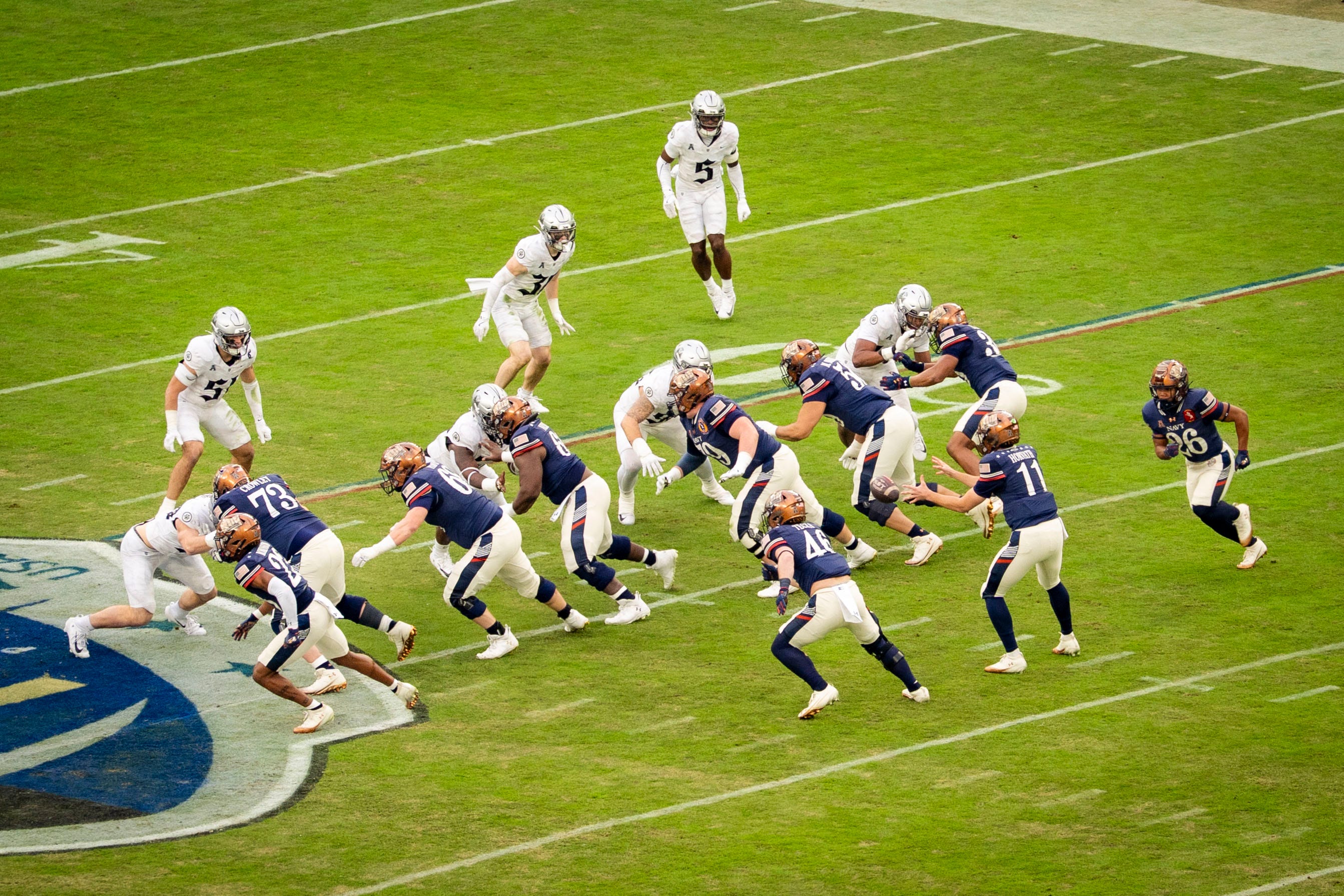
“Not Ohio State against Notre Dame. Not LSU against Alabama. Nobody is going to play football for four hours during that very special time of the year in December,” he declared. “It’s preserved forever for the Army-Navy game. If you don’t want to watch football, you don’t have to. But if you want to watch football, you are only watching one game. You are not watching 19 different games.”
At this rate, Trump might as well mandate that Chick-fil-A can’t be sold on Sundays.
According to SportsMediaWatch, since 2009, the Army-Navy Game — scheduled the weekend after conference championships — has aired mostly unopposed. Because of the pandemic, 2020 was the lone year in recent history in which the game’s schedule was disrupted. Notably, the 2025 matchup saw a 17 percent decline in viewership from the previous year. It was not among the 20 most-watched college football games of the season. Army-Navy averaged 7.84 million viewers, almost 11 million less than the 18.42 million viewers for Michigan-Ohio State, the most-watched annual college football game of the regular season.
Next season’s Army-Navy game is already scheduled in a window that won’t collide with other games of the first round of the College Football Playoffs. But a discussion around expanding the postseason played a part in Trump’s decision. “Such scheduling conflicts weaken the national focus on our Military Service Academies and detract from a morale-building event of vital interest to the Department of War,” reads the order, as if protecting one of the least anticipated games of the year is a better “morale builder” than not sending our troops to war without a clear reason or endgame.
This initiative was never truly about honoring the Army-Navy game; it’s about attempting to distract the public from the fact that the men and women in that stadium could be sent off to war.
“Pete [Hegseth], I think you were the first one to speak up and you said, ‘Let’s do it because you can’t let them have a nuclear weapon,’” Trump said recently in an attempt to pass the blame for the war in Iran, as even his party members don’t understand why he started it, even though he apparently ignored warnings of retaliatorily attacks.
But signing a law that dictates a TV blockade for a game between two teams that aren’t championship contenders will not distract people from the real horrors they’re facing, especially as rising fuel prices have impacted how people travel. And despite America’s obsession with football, a game cannot restore the lives of fallen soldiers – nor make the president care about them.
“We pray for the full recovery of the wounded and send our immense love and eternal gratitude to the families of the fallen,” Trump said. “And, sadly, there will likely be more before it ends. That’s the way it is.”
Coincidentally, the president’s latest gimmick is just one of the many ways in which he’s attempted to manipulate the sports world. He signed the executive order the same day the NBA champion Oklahoma City Thunder announced they were skipping their White House visit because of a “timing issue.” Weeks prior, the president’s College Sports Roundtable, ostensibly formed to discuss issues facing college sports, accomplished nothing – which was not surprising considering that college athletes were not invited. And last month, Team USA’s men’s Olympic gold medal hockey team found itself in the middle of the controversy for saddling up to Trump after he made comments disparaging the women’s team, which also won gold.
“He’s using you to do something else, which isn’t just celebrating your moment. He’s always going to co-opt,” former U.S. soccer star Megan Rapinoe said at the time about Trump’s tactics. That applies to what he’s doing to the members of the Army and Navy’s football teams, too.
Once a year, Army and Navy face off in a game filled with pageantry and patriotism. It transcends football and serves as a representation of sacrifice, service, and bipartisanship, reflecting the reality that our military consists of individuals from both political parties. The fact that we have a president who disparages Americans with differing political views does little to enhance the spirit of this revered tradition.
The second weekend in December is dedicated to honoring our best and brightest who volunteered to defend our country and our freedoms – and will risk their lives to do so. However, the words and actions of our current commander-in-chief disrespect the citizens he was elected to govern, including military members and veterans.
Don’t believe me? Remember this: “I don’t get it. What was in it for them?” – Donald J. Trump at Arlington National Cemetery on Memorial Day 2017, regarding those killed in Afghanistan and Iraq.
Carron J. Phillips is an award-winning journalist who writes on race, culture, social issues, politics, and sports. He hails from Saginaw, Michigan, and is a graduate of Morehouse College and Syracuse University. Follow his personal Substack to keep up with more of his work.
Next there will be an EO preserving air time for UFC championships and mandating that anyone caught not watching them shall be sent to a re-education camp🤠
Unfortunately, the vast majority of military service members and veterans vote for him and his ilk.