


American farmers and truckers are paying painfully high diesel prices, and the midterm elections are three weeks away. President Donald Trump needs the price to come down, so his instinct, as it often is, is to scramble for a quick fix or to blame someone else. This weekend, he found both.
Events are moving quickly, and some of the particulars may change before this column is published. That matters less than the pattern already on display.
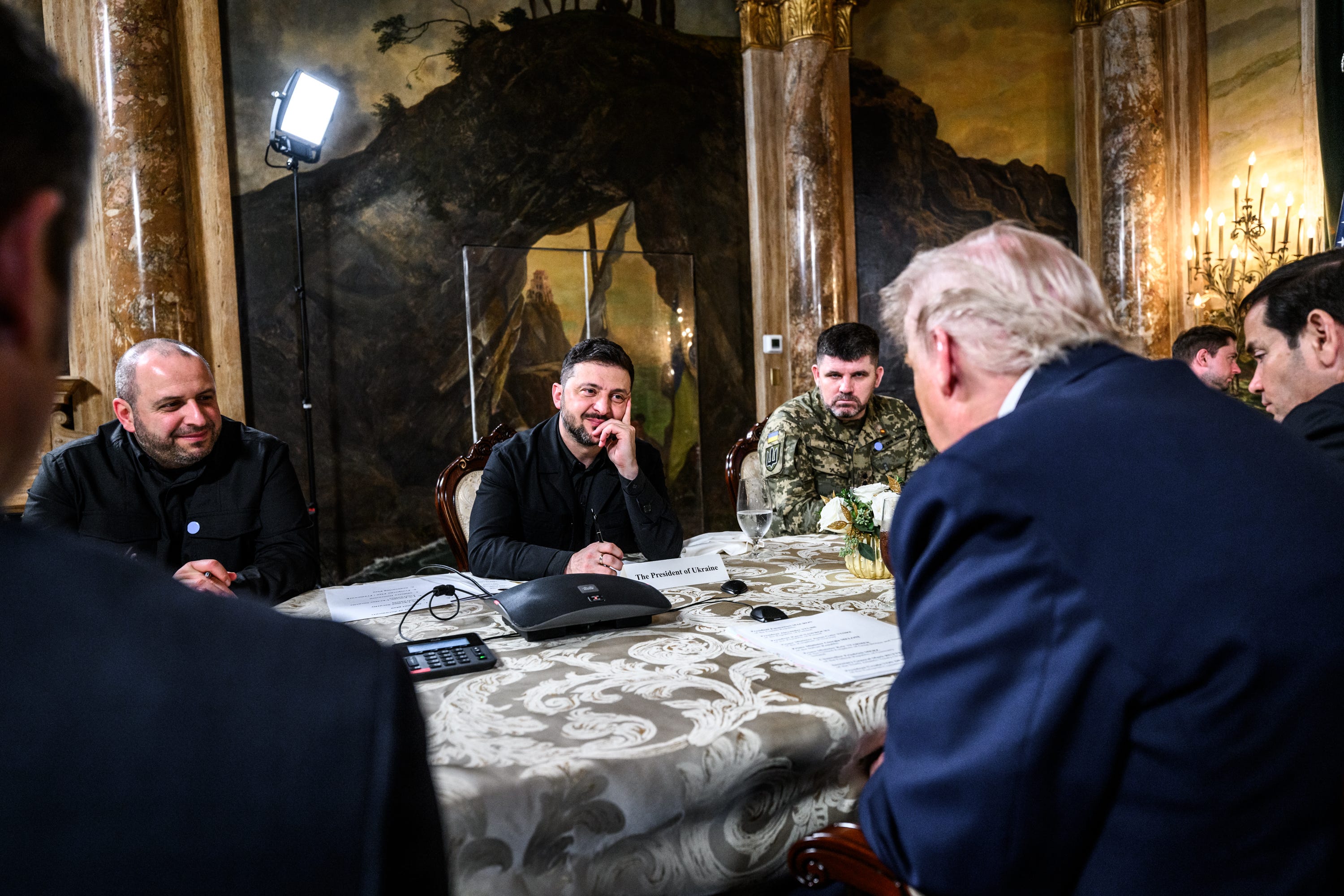
On Friday, Trump temporarily opened the American market to Russian diesel and presented the move as a way to lower fuel prices. By Saturday, he had found his culprit. Ukraine’s attacks on Russian refineries, Trump said, had become a “world problem” that was hurting American farmers and ranchers. He suggested Ukrainians might need a new president if Volodymyr Zelenskyy would not make a deal. The administration went further behind closed doors, according to the Financial Times, threatening to restrict weapons procurement and intelligence sharing unless Ukraine stopped attacking Russian energy facilities.
Then came Sunday. Trump announced an “energy ceasefire” between Russia and Ukraine, even though Kyiv had not been given the terms and Moscow had not confirmed that it had agreed to anything. It may yet become real. Or it may join the growing list of agreements Trump has proclaimed before the other parties knew they had made one.
Sifting through Trump’s logic is always a challenge. His calculation seems to be that Kyiv’s strategic decision to target Russian refineries — crippling a critical source of revenue for Moscow — has added pressure to an already tight global diesel market. But Ukraine did not create the diesel crisis. Much of the chaos Trump is trying to contain began with his own war against Iran.
That war has knocked refineries offline across the region, leaving the world short an estimated 6 million barrels a day of refined products. Crude shipments through the Strait of Hormuz have largely recovered, but diesel and other finished fuels have not.
Focusing on Russian diesel isn’t much of an answer. Trump’s declaration involves an immediate 300,000 metric tons, followed by additional shipments. This initial amount is less than four days of demand for the U.S. transportation sector alone, too small to provide meaningful relief. Russia’s ability to increase exports substantially depends on its ability to repair refineries battered by Ukrainian attacks.
Markets seem to understand the arithmetic: U.S. diesel prices barely moved Monday and remain near wartime highs.
The economics are shaky. The legal footing may be worse.
In 2022, Congress passed the Ending Importation of Russian Oil Act, barring Russian energy imports and requiring consultation with Congress and formal certification before the prohibition can be lifted. Four Republican and three Democratic senators now say Trump violated that law by acting without either. Treasury Secretary Scott Bessent says the administration has other legal authority — but he hasn’t yet defined it.
The strategic logic is worse. Sanctions create leverage. Ukraine’s attacks on Russian refineries have compounded the pressure on Russia, which has been forced to restrict exports, and made one of the Kremlin’s most valuable economic assets harder to operate. Trump answer to ending the conflict, again, is to relieve one source of pressure on Russia while threatening Ukraine if it does not surrender another.
Zelenskyy offered on Sunday the obvious alternative. Ukraine would stop attacking Russian refineries if Russia stopped attacking Ukrainian energy infrastructure. Trump’s deft strategic mind apparently recognized what bargaining leverage was for and shortly afterward announced that an “energy ceasefire” was already in effect.
Yet, Ukraine had not been given the terms, and Russia continued striking Ukrainian power and gas facilities. By Monday, the Kremlin was refusing to confirm Trump’s supposed agreement and outright rejected the idea of a temporary ceasefire.
Zelenskyy put it more memorably: “Putin does not read Truth Social.”
Trump tends to mistake raw power for usable leverage. He has been telling Zelenskyy since February 2025 that Ukraine does not “have the cards,” yet Ukraine has been holding a stronger hand than Trump acknowledges. Cheap drones have destroyed equipment worth many times more, helped drive much of Russia’s Black Sea Fleet away from Crimea, and increasingly reached military and economic targets deep inside Russia.
The refinery campaign is the latest example. Ukraine found a vulnerability in a much larger power and exploited it well enough that Moscow wants the attacks stopped. That is precisely what a smaller country fighting a larger one is supposed to do: find the pressure points the stronger adversary cannot easily protect and turn military success into negotiating leverage.
There is also a moral asymmetry Trump’s rhetoric erases. Russia is attacking the electrical and water systems on which Ukrainian civilians depend. Ukraine is attacking the energy industry that generates revenue for the Russian state and supports its war. Treating the two campaigns as equivalent requires forgetting who invaded whom.
What makes this episode more than another bad policy decision is what it again reveals about Trump’s instinct as commander-in-chief. For a president who boasts about his unmatched intellect, negotiating prowess, and singular ability to end wars, Trump continually demonstrates an inability to think more than one move ahead — whether dealing with Russia, going to war with Iran, managing strategic alliances, confronting inflation, or calculating what any of it will eventually cost Americans.
This past weekend, Trump compressed that familiar pattern into a few days.
The diesel deal may shift. The ceasefire may evaporate. What remains is the same impulsive judgment — and the near certainty that another crisis will soon give it a new stage.
Brian O’Neill, a retired senior executive from the CIA and National Counterterrorism Center, is an instructor on strategic intelligence at Georgia Tech. His Safehouse Briefing Substack looks at what’s ahead in global security, geopolitics, and national strategy.
