

By Frederic J. Frommer
In May 1977, the Atlanta Braves were reeling — losers of 16 straight games, with a National League-worst .276 winning percentage. Ted Turner, who had purchased the team the previous year, decided it was time for a new manager: Ted Turner.
“I wanted to see what it’s like down in the trenches,” said Turner, who died this week at 87.
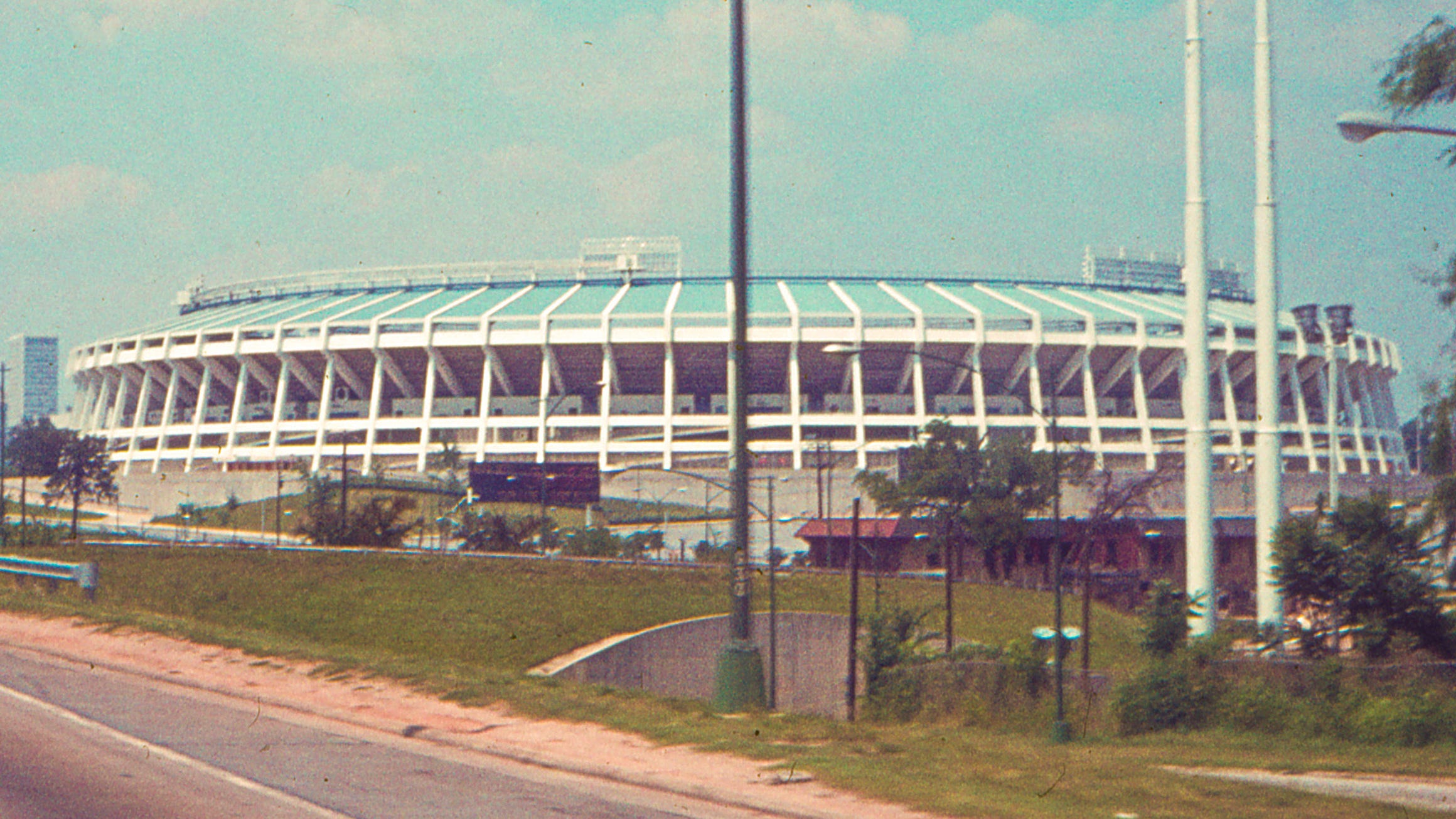
The shakeup didn’t work. Atlanta lost to the Pittsburgh Pirates 2-1 that night at Three Rivers Stadium in front of 6,800 fans, extending the losing streak to 17.
“I know what they call it,” Turner said in an interview after the May 11 game. “Tonight, I learned firsthand exactly what’s going on with our club. We’re snakebit.”
Turner had jettisoned manager Dave Bristol, sending him on a “10‐day scouting trip.”
At 38, Turner was the same age as the Braves’ starting pitcher that night, Phil Niekro, a future Hall-of-Famer who fell to 0-7. Turner wore a Braves uniform and let a pair of coaches make the strategy decisions.
“I could have made some if I wanted,” he said. “Maybe I will sometime.”
“I’ll be back again tomorrow,” Turner added. “I don’t want to be remembered as an 0‐1 manager.”
But he never got the chance. The next day, National League President Charles (Chub) Feeney, ordered Turner to give up the managing gig, citing a rule that stated:
“No manager or player on a club shall directly or indirectly own stock or any other proprietary interest or have any financial interest in the club by which he is employed except under an agreement approved by the commissioner....”
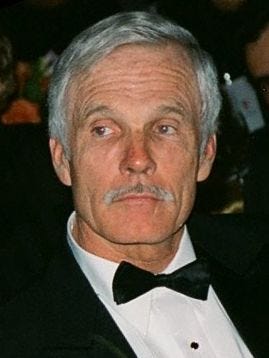
Not surprisingly, Turner then sought that approval from Commissioner Bowie Kuhn.
“It will be interesting to see what the big chief says,” said Turner.
Turner would eventually turn the Braves into a powerhouse, marketing them as “America’s Team” thanks to his WTBS “superstation,” carried on cable companies across the country. Starting in 1991, the Braves won a record 14 consecutive division titles and were World Series champs in 1995, the team’s first since moving from Milwaukee to Atlanta in 1966.
But the late ‘70s was a lean time in Atlanta – the Braves finished in the cellar in 1977, the second year of four straight last-place finishes in the NL West.
After Turner’s game in the dugout, Pirates manager Chuck Tanner backed up his adversary.
“He owns the ballclub and he can do anything he wants,” Tanner said. “He was very enthusiastic on the bench. He cheered every time one of his players did something.” (Eight years later, Turner hired Tanner to manage the Braves after the Pirates fired him.)
While waiting on Kuhn’s ruling on whether he could manage the team, the kinetic Turner ran laps around the field to release his “nervous energy.” As he ran past the Braves dugout with Andy Messersmith – the free agent pitcher he had signed after an arbitrator ditched baseball’s reserve clause – Turner remarked, “I wish I could hit somebody, but there’s nobody to hit.”
Then he mulled that he should have signed himself to a player’s contract.
“Then I’d be under Marvin Miller’s protection. The man people in baseball fear most is not Bowie Kuhn but Marv,” he said. referring to the famous MLB Players Association’s executive director.
With Turner back in the stands, the Braves snapped their losing streak at 17, beating the Pirates 6-1.
“I’d like to be down there; I’d like to take credit for this,” he said. “I want to manage even more now because they don’t want me to. I don’t see why I can’t manage. If you have enough brains to save up $11 million to buy the club, you ought to have enough brains to go down there and run it.”
But Turner, known as the “the Mouth of the South,” shouldn’t have expected a sympathetic ear from Kuhn.
A few months earlier, Kuhn had suspended Turner for a year for publicly discussing pursuing soon-to-be free agent outfielder Gary Matthews before his contract with the Giants was up. “I’m thankful he didn’t order me shot,” Turner quipped after the ruling.
In an appeal held in Washington that January, Turner laid it on thick, as Kuhn recalled in his autobiography, Hardball, addressing Kuhn as “the Big Chief of baseball” and comparing himself to “little Indians.”
“Great White Father, please tell me how to avoid fighting for what little we have left,” Turner pleaded, according to Kuhn. “The buffalo are gone. The white man came and killed off all the buffalo.”
Kuhn called Turner’s remarks “memorable. I had a feeling he thought he was Sitting Bull and I was Custer.”
Years later, Turner’s Braves would take cultural appropriation to a mass audience with the polarizing tomahawk chop.
After losing that appeal, Turner took his case to federal court, which put the suspension on hold while the case was pending.
In the meantime, of course, Kuhn backed up the NL president’s decision disallowing Turner as manager.
“I am satisfied Mr. Feeney’s disapproval of the Turner coach’s contract should stand,” he said. “Given Mr. Turner’s lack of familiarity with game operations, I do not think it is in the best interest of baseball for Mr. Turner to serve in the requested capacity.”
Turner brought Bristol back as manager, ending the colorful owner’s managerial career at one game.
But you can find Turner on baseballreference.com, with his position listed as “manager” and a career .000 winning percentage. He’s one of two Ted Turners on the site; the other had an equally short career, appearing as a relief pitcher in one game with the Cubs in 1920 – and finishing with a 13.50 ERA.
The week after Turner’s managerial stunt, a federal judge upheld Turner’s suspension — making that two job disqualifications in the same month. Turner was about to leave Atlanta anyway to start practicing for the America’s Cup sailing competition, which he wound up winning. In the leadup to the race, Sports Illustrated put his picture on the cover at the helm with the headline, “Terrible Ted Takes Command.”
Turner sent a laminated copy to the commissioner, inscribed, “To my good friend Bowie Kuhn, Best Regards, Ted Turner.”
Frederic J. Frommer, a sports and politics historian who has written for the Washington Post, the New York Times, the Atlantic and other national publications, is working on a book on ‘70s baseball.
Lived in Atlanta for much of this drama. The braves were a joke. They’d almost pay fans to go to a game. The falcons weren’t doing so well either. Turner was a colorful character. Thanks for putting the story together - memory lane.
Great story. Ted Turner was one of the last few remaining "characters," no matter what field.
Nowadays, most every one is "streamlined" and doesn't dare go against the stream, no matter how foul it is.