


The MAGA Supreme Court justices’ decision in Louisiana v. Callais struck a serious blow to multi-racial democracy, but it is not the final word on the reimposition of Jim Crow in the South. In both South Carolina and Alabama this week, voting rights’ advocates successfully pushed back to limit the fallout from Callais, which threatens to eviscerate the Congressional Black Caucus and deny millions of Blacks and Hispanics the power to select representatives of their choosing.
“The majority-Black district held for 34 years by South Carolina Democratic Rep. Jim Clyburn will survive intact, for now, after Republican state lawmakers rejected a plan to redraw congressional maps,” NPR reported. Clyburn responded: “A critical number of Republicans did not believe in putting a man over the law. Today, members of the South Carolina State Senate stood up for the constitutional principles that they say they believe in.”
Some Republican lawmakers (unlike the partisan hacks on the Supreme Court) refused to confuse voters by imposing a new map in an election for which early voting was already underway. Others had personal relationships with Clyburn, who has been a giant in the State and delivered billions in federal funding for his constituents. And self-interest certainly played a role as well: By packing Black voters into Clyburn’s district, the others remain solidly Republican.
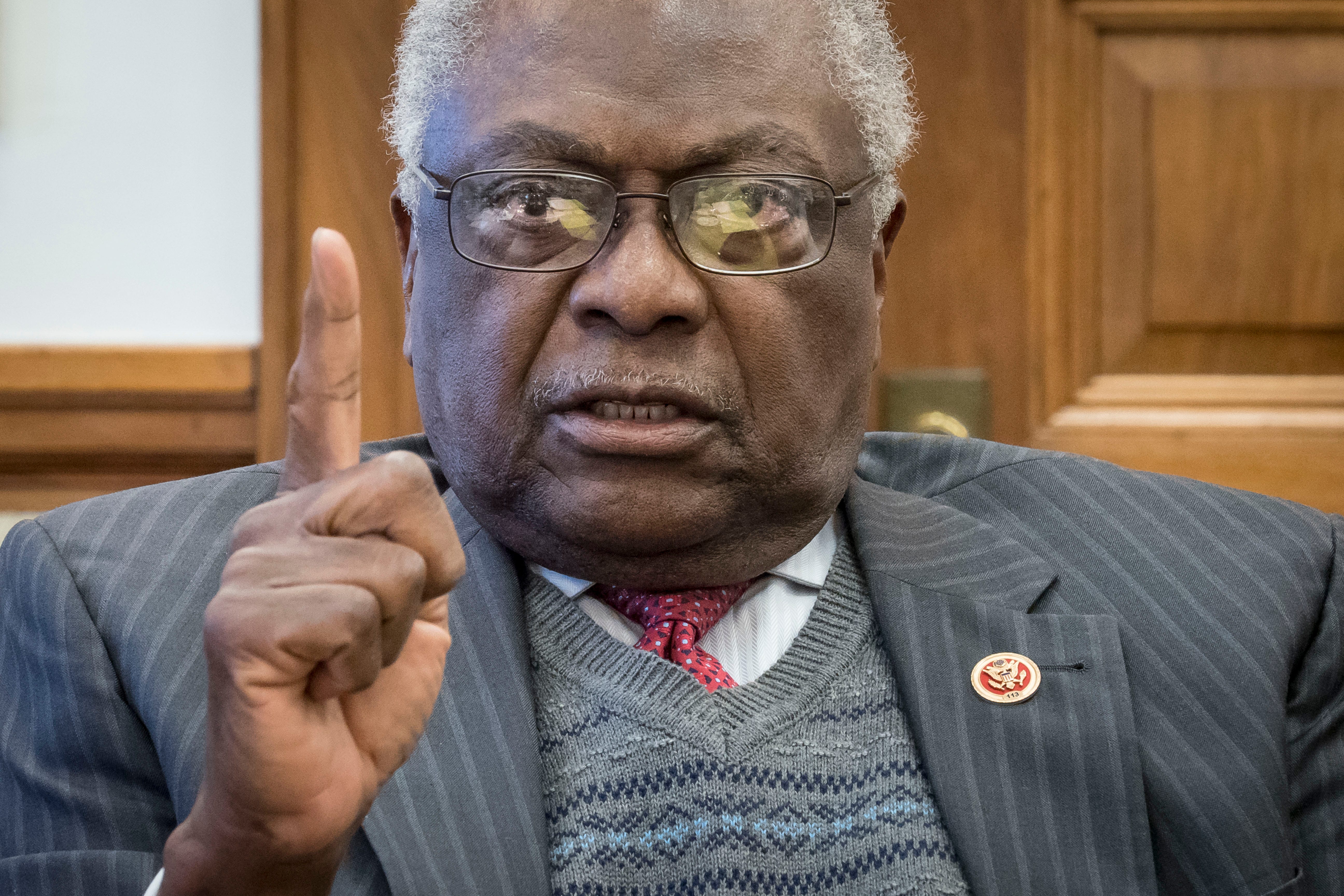
Credit goes to Clyburn, who refused to go into retirement quietly. By insisting on running for re-election, he saved Democrats, at least for one election, a seat that Republicans would otherwise have snatched before the midterms.
Regardless of the reason Republicans backed down, no one should underestimate the significance of Republicans’ failure to remove the only Black congressman from a state infamous for leading secession from the Union in 1860. Jace Woodrum, Executive Director of the ACLU of South Carolina, in a written statement, asserted:
Don’t let anyone tell you that our political fate is set in stone. Remember that showing up and fighting for democracy still matters. South Carolinians from all walks of life showed up to give testimony, to call and write to our lawmakers, to lift our voices in protest, and finally to cast ballots in record-breaking numbers on the first day of primary voting. There are powerful people who want you to believe that showing up doesn’t matter. But we the people still hold the power, and representative democracy is still standing. After we made our voices heard, lawmakers from both political parties finally saw that the rush to redistrict hurts voters — and they did the right thing.
MAGA politicians are counting on voters’ despondency and cynicism to make the reimposition of Jim Crow as pain-free for Republicans as possible. But Democrats’ refusal to concede and determination to build momentum, using key events and political battles to drive organization and turnout, will aid both their fight to flip the House in November and their long-term mission to restore democracy.
On the same day as the victory in South Carolina, the Congressional Black Caucus released a letter urging corporate America “to defend our nation’s democratic principles and publicly reaffirm its commitment to voting rights and equal representation amid growing attacks on fair representation and Black political and economic power in the wake of the Supreme Court’s decision in Louisiana v. Callais.”
Citing a letter to Congress from 200 corporations issued 5 years ago demanding reauthorization of the Voting Rights Act, the CBC called on corporations once more, to publicly condemn “efforts to dilute Black voting strength and dismantle the protections of the Voting Rights Act” and to engage with civil rights groups. They urged corporations to attend “a national convening alongside civil rights leaders, advocates, and movement organizations to discuss the urgent defense of voting rights and Black political power in America.”
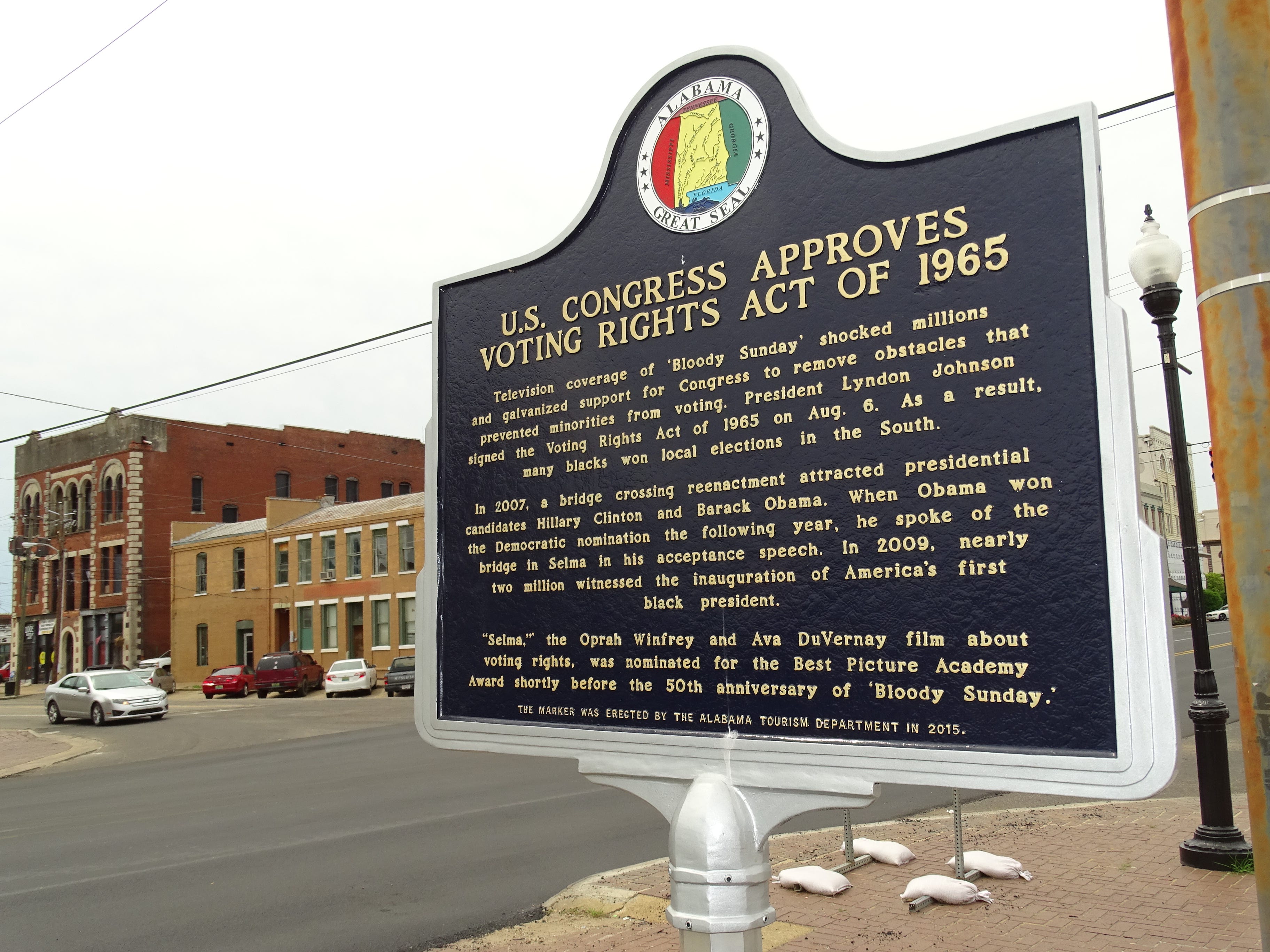
Only a whole-of-society push (in state government, the business community, electoral politics, etc.) with a broad coalition across the political spectrum can defend voting rights and recover pluralistic democracy. Despite the Supreme Court’s disastrous decision, the courts can still afford some protection.
A three-judge federal district panel in Alabama considered Allen v. Milligan in the wake of the Supreme Court’s Callais decision, which held that intentional discrimination could still be grounds for striking down a map. The panel (with two Trump-appointed judges and one Clinton-appointee) held that even under the MAGA majority’s latest opinion, a congressional map with only a single Black congressional district could not stand:
[W]e cannot see our way clear to requiring Alabamians to cast their votes in the 2026 elections under a districting plan tainted by intentional race-based discrimination. And under the unusual circumstances of this case, we conclude that a limited order requiring the Secretary to continue using this Court’s race-blind map will not disrupt Alabama’s elections (all candidates ran under the race-blind map until fifteen days ago, and all voters remain districted under the race-blind map in electoral computer systems). We do not lightly intrude in state affairs, but our previous review of the undisputed evidence left us in no doubt that Alabama’s legislatively enacted plan (the “2023 Plan”) intentionally discriminated based on race in violation of the Constitution. Our re-examination in light of Callais yields the same conclusion.
The panel reiterated that there was no evidence of partisan gerrymandering (blessed by Callais). This was intentional, undisguised racial discrimination.
Alabama immediately appealed. We should not be surprised if the MAGA Supreme Court majority, having opened the door a sliver to permit certain VRA claims (for intentional discrimination), slams it shut in Alabama voters’ faces. Nevertheless, in that event, the 3-judge panel would at least have smoked out the MAGA hacks who all but struck down the VRA in its entirety. We will find out if the MAGA justices (as many voting rights advocates believe) are determined to defend any Republican-friendly map, no matter how blatantly discriminatory.
Janai Nelson, president and director-counsel of LDF, who argued Callais at the Supreme Court, reacted to the three-judge panel’s opinion: “Our teams have been working nonstop around the clock since the Callais decision to defend the maps in Alabama. This is a critical victory [and] affirmation that Black voters deserve fair maps.”
Victories in South Carolina and Alabama are the direct result of undaunted, unflagging, and unapologetic activists, civil rights lawyers, elected leaders, and organizations laboring to defend voting rights. In the case of Alabama, credit goes to the two conscientious Trump-appointed judges who insisted that the law still guaranteed two Black-majority districts.
The fight to undo Callais’ noxious legacy and secure voting rights will take years. However, this was inarguably a positive week, thanks to dogged voting rights activists who refuse to accept it as the final word on our 250-year experiment in multi-racial democracy.
There are too many of us still alive who fought the first big fight in the Sixties for the reimposition of Jim Crow to succeed for long.
This is the moment, to say loudly and clearly, who we are and what we stand for as Americans. We will NOT go back.