



After 16 years of Viktor Orbán’s despotic rule, Hungarians turned out in overwhelming numbers to deliver a landslide victory to Péter Magyar (whose name literally means “Hungarian”) and his center-right Tisza Party. The victory was so large Viktor Orbán could not dispute the results. The new majority is large enough to enact constitutional reforms.
Credit goes to the youthful Magyar (forty-five years old), who came from the ranks of Orbán’s Fidesz Party. (Note to file: Democracy advocates need defectors.) On his path to victory, he weathered a public/political feud with his ex-wife (whom he taped acknowledging the Orbán regime’s corruption), a failed “honey trap” plot, and every election trick in the book (from gerrymandering to propaganda from state-controlled media to hacking and wiretapping to threats on his life).
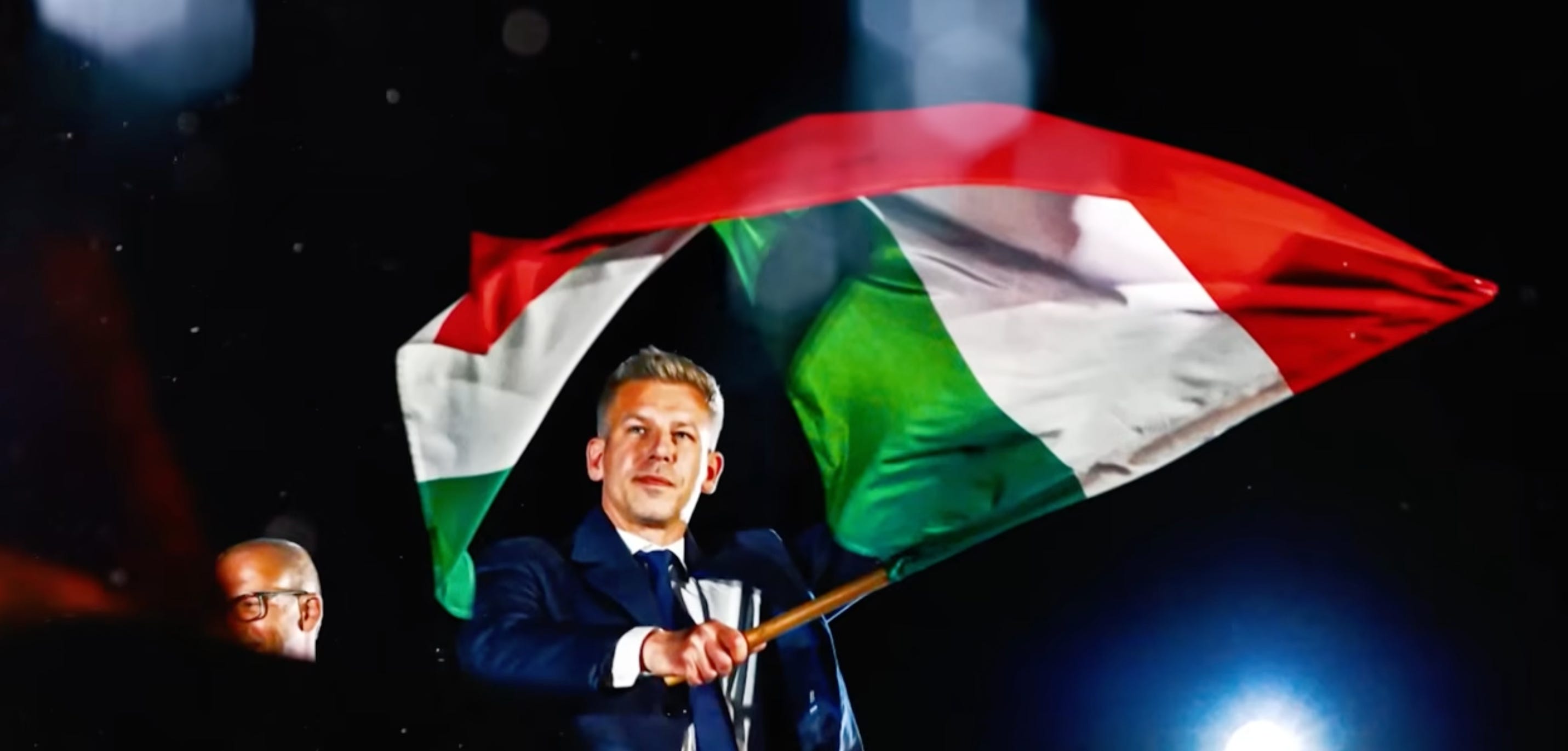
Orbán had considerable advantages. As scholar Anne Applebaum pointed out, with control of the “judiciary, bureaucracy, and universities, as well as a group of oligarchic companies that in turn controlled a good chunk of the economy… Orbán used his control of the state to build an extraordinary web of international illiberal and far-right supporters, and funding mechanisms to support some of them.” They did not help. Indeed, Orbán may have been harmed by his coziness with Trump and with Russia. (Hungarians on election night chanted “Russians, go home!” )
Magyar’s campaign was a model of tenacity and street smarts. Rather than create a new party, he revived a moribund one. He “toured Hungary relentlessly for two years, visiting hundreds of cities, towns and villages in an effort to win over some of Orbán’s rural support,” the Associated Press explained. “He appeared before thousands of supporters on Saturday on University Square in Debrecen, Hungary’s second-largest city and traditionally a Fidesz stronghold.”
Magyar focused incessantly on Orbán’s corruption, the economic penalties Hungary incurred because of EU sanctions, restoration of democracy, and national reunification. Pledging renewal and reconciliation, he remained vague on some issues (e.g., LGBTQ+ rights, Ukraine). “As a former member of Fidesz himself, he was able to speak with extra conviction about Fidesz’s corruption,” Applebaum noted. “He portrayed himself as a part of the European, democratic, law-abiding center-right. He waved a lot of Hungarian flags, as did his supporters.”
In his victory speech, Magyar offered a message that should inform democratic movements worldwide. “From now on, we will no longer be a country without consequences,” he declared. He promised that “those who have robbed the country will be held accountable.” And to Orbán’s supporters, he extended his hand: “I promise you that I will also be your prime minister, and I will work to heal wounds and help us accept each other, even if we represent different views.”
The massive turnout (an estimated 77.8%!), shattered records, reflecting both economic pain (the highest unemployment in a decade, growth that lagged other Eastern European countries, and a decrepit healthcare system) but also many young adults’ excitement. (The youth vote is critical in dislodging autocrats. The New York Times noted that Generation Z movements “have toppled governments in Bulgaria, Madagascar and Nepal over the past year.”)
It would be a mistake for democracy defenders in other countries to run a carbon copy of Magyar’s campaign. In the U.S., for example, a conservative from Republican ranks is unlikely to galvanize the wide array of groups in the resistance. Issues that in Hungary can be put to one side (e.g., LGBTQ+ rights) are an essential part of the message supporting America’s pluralistic democracy and commitment to self-determination.
However, there are lessons that can carry over to the U.S. context:
Corruption and economic issues are inextricably linked. A despot and his cronies take from ordinary people to fatten their own wallets.
Patriotism and unity are powerful emotions. Casting the autocrat as the one who divided the country, brought disgrace on it, and divided fellow citizens can be extremely effective.
Broad coalitions are essential. Though certain issues are dealbreakers (e.g., reform, democracy), constituencies need not agree on everything. Purity tests are for losers.
Democracy defenders can win even if the playing field is badly tilted in favor of the reigning regime. Dogged effort, coalition building, and massive enthusiasm (converted into record turnout) can overcome considerable obstacles.
Upending an entrenched autocrat takes resilience and patience. Errors, legislative losses, and scandals inevitably occur — but tenacious dedication to democracy can weather temporary setbacks.
Optimism and joy are essential to a pro-democracy movement, serving as a powerful counterweight to the atmosphere of fear and the dystopian imagery despots cultivate.
Democracy defenders must do the hard work to win. There is no substitute for active participation, organization, and voting en masse. People must dedicate time, money, and energy if they want to oust an autocrat.
The outpouring of joy evident on election night in the streets and squares of Hungary reflected ordinary people’s abiding love of freedom and democracy. When roused and inspired (and pushed to their limit by a corrupt regime), they overcame fear and isolation to join fellow citizens in a noble cause.
The undaunted, unrelenting, and unafraid Magyar and the people of Hungary he inspired deserve our thanks and praise. They powerfully demonstrated what is possible when ordinary people take ownership of their country and their democracy. If we want to oust our own autocrat, Americans must muster the same doggedness, commitment, patriotism, sound judgment, and courage Hungarians displayed.
The same dynamic must happen in our nation if we are to oust this regime. Young people must rise up to fight against the evil and corruption.
When swooning about democracy let's not forget that the WH Crime Boss was elected democratically twice. Americans will vote for the one who they believe will deliver what they most want. Many Americans really don't give a hoot about democracy (though they probably would deny that). Forty percent of Americans wanted someone who would make them feel special and protect them from those People Not Like Themselves who they perceived were taking their stuff, raping their women, and abusing their children. They believed, and still believe comforting lies. Candidates who wish to win against the MAGA Voodoo Cult must have a story that will neutralize the MAGA Coolaide. Just chanting about democracy won't do it.