


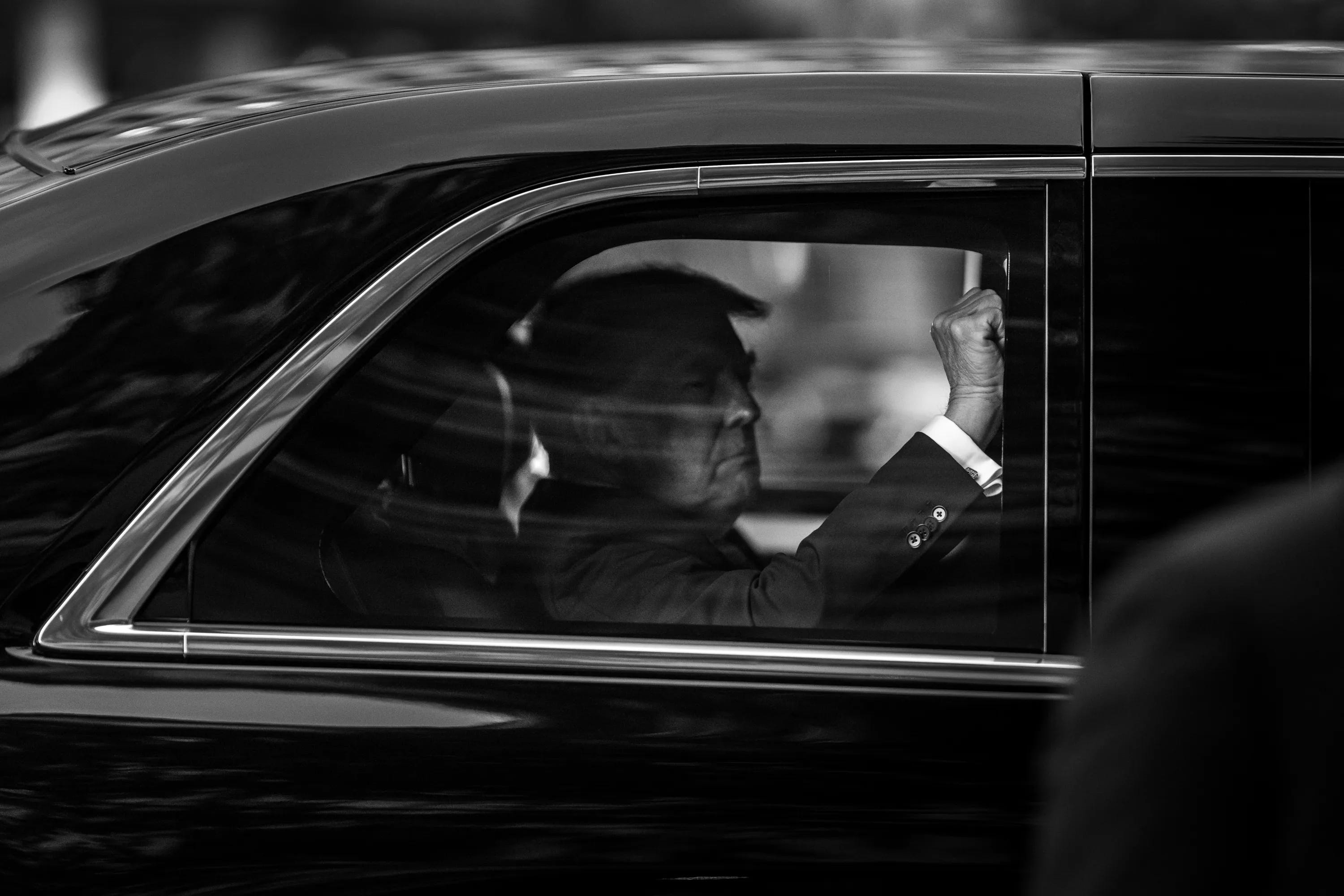
At the direction of President Donald Trump, U.S. forces this month have carried out three lethal strikes against boats in international waters alleged to be ferrying narcotics from Venezuela. An estimated 17 people were killed. On the surface, the strikes offer the White House a means to project toughness; in practice, they highlight a costly mismatch of means and ends—especially when contrasted with China’s ability to advance its regional maritime claims through persistent, lower-cost pressure.
The vessels targeted in these U.S. strikes were neither combat vessels nor freighters carrying tons of contraband. Known locally as peñeros, they were wooden fishing skiffs about 40 feet long, often modified with multiple high-horsepower outboard engines and, in some cases, repurposed for smuggling. These boats remain central to subsistence fishing in Venezuela, but years of economic collapse increasingly have pushed some crews to make illicit runs—carrying drugs, migrants, or other contraband. The strikes have therefore landed not only on alleged traffickers but on impoverished coastal communities already living on the edge.
The cost to the United States of eliminating a single modified fishing skiff, perhaps carrying a few hundred kilograms of drugs, or the boarding of suspect fishing vessels—operating in Venezuela’a exclusive economic zone (EEZ) waters—is anything but small. They might make headlines, but the “production costs” for these media images run into the millions: laser-guided missiles fired from naval vessels or advanced fighter aircraft. Add the expenses of deploying surveillance drones, strategic intelligence collection, and command overhead, and the price tag for a single interdiction by missile strike can be in the millions of dollars.
China has taken a different path. Its actions are aimed not at narcotics or smuggling but at enforcing its expansive sovereignty claim over nearly the entire South China Sea. That claim, embodied in the so-called nine-dash line, was rejected by an international tribunal in 2016 but remains central to Beijing’s strategy. The stakes are immense: The South China Sea is a vital trade corridor carrying more than a third of global shipping, and it is believed to contain billions of barrels of oil and vast natural gas reserves alongside critical fisheries.
To convert this contested space into lived Chinese control, Beijing over decades has built the world’s largest coast guard fleet and paired it with a vast maritime militia of subsidized fishing boats. These forces are not held back for rare operations; they are deployed daily on patrols that shadow, harass, and expel foreign boats. A Chinese cutter might trail a Filipino or Vietnamese vessel, blare warnings over loudspeakers, force it off course, or drench it with a water cannon.
Congressional reviews and independent assessments underscore how effective China’s strategy has been. Chinese vessels have driven Filipino fishermen out of Scarborough Shoal, maintained near-constant patrols around the Spratly Islands, and established forward bases on artificial islands in disputed waters. What began as scattered harassment incidents has, over the course of a decade, hardened into a status quo in which Chinese presence is the default and rival access the exception.
The costs of these patrols—fuel, crews, maintenance—are not negligible, but they are predictable and sustainable. China budgets for them as routine operations, the equivalent of law enforcement at sea. Washington, by contrast, expends advanced munitions and surges billion-dollar warships episodically. One approach produces steady presence that accumulates strategic advantage; the other burns through resources for fleeting tactical gain.
Legality and legitimacy also diverge. Beijing frames its actions as law enforcement, even when its coast guard and militia operate in other nations’ EEZs. Few countries accept China’s sweeping claims, but the framing muddies the waters and creates space for normalization. Washington, by contrast, is conducting lethal strikes in international waters without transparent evidence of legality. Trump insists the boats were loaded with narcotics, yet his administration has provided no chain-of-custody proof or corroborating intelligence. Abroad, the optics are not of interdiction but of extrajudicial killings at sea.
An exponential increase in U.S. Navy and Coast Guard assets to mirror China’s approach in the Gulf of Mexico would further strain the U.S. economy without actually disrupting the drug economy. Less than 10% of drugs seized come from maritime interdiction, and even then the largest hauls come from stopping bulk shipments in containers or semi-submersibles—not small fishing skiffs. Most seized narcotics entered the United States over land, through ports of entry along the southwest border, making maritime patrols even less decisive. A fleet of subsidized patrol craft or a U.S.-run maritime militia would consume billions while leaving the underlying flows largely untouched.
None of this makes China’s harassment benign. It is coercion in slow motion, designed to deny others their rights under international law. But it is effective precisely because it is incremental, low-cost, and, in many, cases plausibly deniable. Trump’s strikes, by contrast, are expensive, questionably legal, and strategically barren. They expend valuable ordnance and political capital for returns measured in grams of narcotics and hours of cable news coverage.
Nor is criticism of Trump’s campaign a dismissal of the danger of narcotics or the need for a national strategy to counter the flow of drugs into the United States. Cocaine, fentanyl, and other drugs inflict immeasurable damage at home. But Trump’s recent actions in the Caribbean will not slow their flow. These strikes generated news clips, yet the administration has offered no evidence that the approach will dismantle networks, strengthen regional law enforcement, or reduce demand.
A serious U.S. counter-narcotics plan would target finance, logistics, and partnerships—not expend missiles on speedboats that can be replaced in days. Beijing, by contrast, invests a fraction of those resources to lock down the South China Sea, with measurable deliverables in sustained presence and de facto control. In short, the Trump administration is burning treasure for headlines, while China is achieving durable strategic gains through a more disciplined and financially logical approach.
Brian O’Neill, a retired senior executive from the CIA and National Counterterrorism Center, is an instructor on strategic intelligence at Georgia Tech. His Safehouse Briefing Substack looks at what’s ahead in global security, geopolitics, and national strategy.

A clear and concise assessment and analysis of our real national threats and priorities and the depth of the lack of competence and seriousness throughout our current administration. Thank you, Brian!
Every day I’m left simply without words to begin to express my complete dismay and disgust of anything FF47 says or does, as well as the unbelievable costs of his dithering and no sense of these to the rest of us who have to fund the games he plays.