


Across the Atlantic, a mother is grabbing her newborn baby hastily as evacuation orders ring out. A family is praying that the missile just shot down overhead will land in a nearby field instead of their street. An eighty-year-old woman is abandoning the only home she has ever known. A young girl is grieving a future she thinks may no longer be possible.
These are not hypotheticals. This is reality for millions of civilians across Iran, Lebanon, Jordan, and Iraq who are being punished for a regional war they never wanted.
The United States and Israel’s strike on Iran is not unfolding within a vacuum. Neighboring countries join in the suffering, even if they are not involved in military clashes. Mass displacement breaches borders and separates families. Vital infrastructure crumbles under the bombardment of missiles. Resource scarcity gnaws at fragile social cohesion. Dreams of the future are replaced by nightmares of the present.
This is what the human cost of war looks like on the ground in four countries. The stories and people profiled are merely snapshots of an unfathomably vast, brutal picture. This crisis is ongoing. For each day of complacency, the cost of lives and livelihoods goes up.
Iran
Kiana’s cousin is studying for her university entrance exam. She has dreamed of attending college, working tirelessly to earn top marks. But now, the universities she wants to attend are being bombed. “I don’t know if I have a future anymore,” she fears. She continues her exam preparation, as her only alternative is giving up entirely.
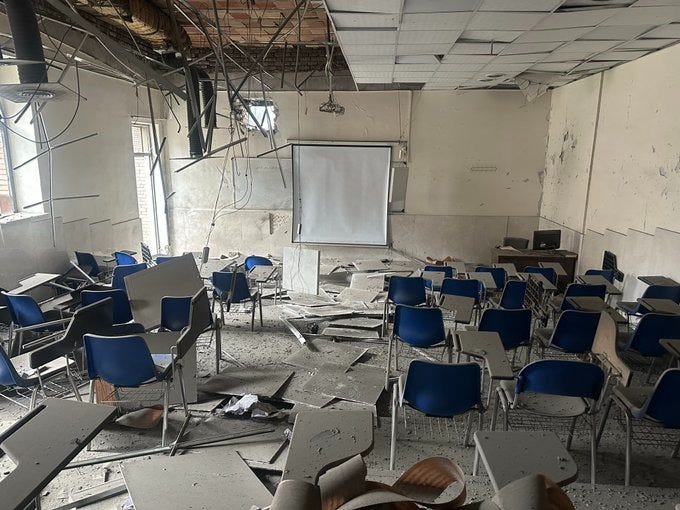
Over 1,700 civilians, including 254 children, have been killed since the war erupted. Kiana, an Iranian woman living in America, describes trying to reach her family after learning that bombs had hit her aunt’s neighborhood. “It is absolute terror and panic 24/7,” Kiana said. “Anxiety is persistent even when the bombs subside. It’s hard to communicate with my family.” Phone calls cut out mid-sentence. Starlink connections exist, but are rare. For many families trying to reach their loved ones, silence is the only response.
The war’s reach extends beyond the headlines, overwhelmingly burdening vulnerable communities. Disabled Iranians face medical equipment malfunctioning with loss of electricity, disruptions of vital medications, and barriers to receiving warning notices. Entire communities have had to rebuild systems of daily life out of rubble, persevering under unimaginable conditions.
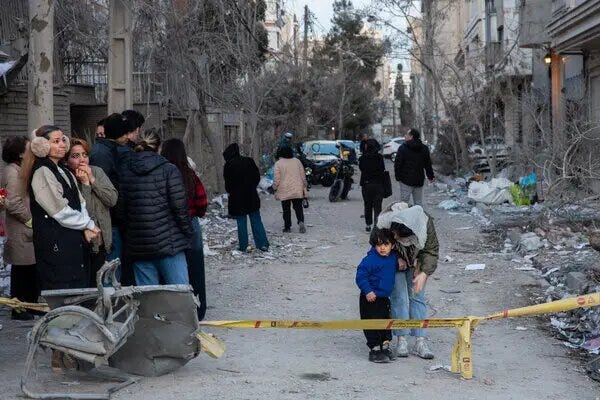
Kiana and millions of others are witnessing long-term loss in real time as homes, centuries-old historical sites, and religious spaces are demolished.
Lebanon
A Maronite Catholic priest stands before his dais, head bowed in defiance. He refuses to comply with Israeli evacuation orders, choosing instead to stay and defend his church through peace and presence. On March 9, he was killed by an Israeli missile while helping his neighbors, whose home had been hit moments earlier.
This is life in Lebanon, a country caught in the crossfire of the U.S./Israel/Iran war. U.S. strikes on Iran, particularly the assassination of Supreme Leader Ali Hosseini Khamenei, drove Iran-backed Hezbollah to launch retaliatory strikes against Israel. Israel is now bombarding most of southern Lebanon and its capital city, Beirut, despite an alleged ceasefire.
The side-by-side wars have killed over 2,700 people and wounded at least 8,000 — and, according to Anhal Kozhaya, a young political activist, both parties bear responsibility. Israel is deliberately forgoing strike precision “to push a narrative,” Kozhaya explained. “It is a psychological war, just to put further pressure on the government and discourse.” The result is over 1.2 million people currently displaced. Nonviolent Peaceforce Regional Policy and Advocacy Manager for the Middle East and North Africa Rahaf Abu Shahin told The Contrarian that these families are fleeing with no knowledge of “where to go or for how long.”


What makes Lebanon’s crisis particularly suffocating is that its people are trapped. Hayek, a human rights activist, revealed that humanitarian infrastructure — including ambulances — is deliberately targeted. Israeli forces are striking “bridges above the Litani River that connect South Lebanon to the rest of the Lebanese territories,” which severs evacuees from any path home. For those who stay, survival is not guaranteed by either side: Hezbollah is blocking “western” humanitarian aid and barring civilians who don’t support the militant group from its hospitals, even when those hospitals are the only medical facilities for miles.
Jordan
A residential street in Amman is violently awoken in the middle of the night by a downed Iranian missile. The intercepted missile, aiming for Israel, does not land in an open field, but in a neighborhood, injuring dozens of civilians from a country not party to the war. Since there are no deaths to report, the headlines focus elsewhere.
Abu Shahin clarified that “safety is not a physical condition. When people hear or see evidence of weapons in their communities, the sense of security that daily life depends on is shattered.” She identified a common psychological defense system amongst Jordanians: minimizing their own suffering by comparing their distress to the plight of Palestinians and Lebanese people. Abu Shanin was quick to note that Jordanians deserve more attention than they are currently granted.
Jordanian stability is threatened by the possible influx of additional refugees. The tiny kingdom already hosts one of the largest refugee populations per capita, and spillover effects would strain the existing resources. Abu Shahin outlined the humanitarian gaps that must be addressed: dignified conditions for new arrivals, resources to boost host communities, and protection systems for the most vulnerable. Without this, security is disrupted as humanitarian conditions worsen.
Iraq
The suffering of an entire civilian population is missing from traditional newsfeeds. Hundreds of missile and drone strikes have hit Iraq, with the capital city of Baghdad bearing the brunt. Attacks continue to pummel villages around Erbil in the Kurdistan Region. Explosions are detonated in civilian neighborhoods.
For Iraqi civilians, life has morphed into a constant security negotiation. Abu Shahin relayed that Iraqis now face new considerations concerning their daily life: Is it safe to go to work, or send their children to school, or even sleep through the night?
Civilians have taken an economic blow as well — the blockade of the Strait of Hormuz skyrocketed oil and gas prices while fueling financial instability. “Widespread exhaustion and fear” has settled over a country already fighting to sustain itself.
Iraq, like Jordan, is poised to absorb more than it can hold. Abu Shahin warned that sudden, large-scale displacement could jeopardize social cohesion and ripple across both displaced and host communities irrespective of the country it occurs in. It doesn’t help that adequate resources are harder to come by with the humanitarian sector on life support due to detrimental funding cuts. And yet, coverage is sparse. Living in such a constant state of mounting concerns, Iraq suffers from being relegated to the media sidelines.
These are four countries. There are more.
Civilians are not ticks in a tracking toll. They are our neighbors — a young woman studying for a future she’s not sure exists, a local priest sacrificing his safety, a family losing its home to an errant missile, an exhausted community being asked to endure more. Their lives are more than footnotes — they are the story.
Do not let political theater distract you. Do not turn a blind eye. Use your voice and advocate for the protection and peace of our neighbors in the Middle East. Demand that your representatives block funding for Trump’s war, enact congressional oversight into this war, open an investigation under the War Crimes Act, and vote on a war powers resolution. Join Amnesty International’s call for a potential “war crimes” investigation. Contrarians abroad can push for an international fact-finding mission through the UN Human Rights Council. Talk to your friends, your family, your community, and, yes, your elected officials. Stand up and speak out.
Ciera Stone is the editorial associate of The Contrarian
We can soon add Cuba to this list, or should have already since 1960. Intermittent silence and inability to travel in person between those on the island and loved ones in the U.S. have been facts of life for Cubans and Cuban Americans. Presently, Donald Trump has seized on Cuba's economic woes, exploiting and exacerbating them by literally cutting off their energy sources, in effect, starving them slowly.
While the enmity between our two countries has been a lifelong sadness for me, it is about to increase exponentially when Trump, losing in Iran, turns to the low-hanging fruit of Cuba. Marco Rubio is happy to assist in the revenge for nationalized assets by the Communist government, when that act can no longer be amended. One commenter who traveled there recently told of no medicines on pharmacy shelves and an allotment of one chicken per household per month. I guess they'll have to rub two sticks together to cook that--if they still have sticks.
Not only am I shamed by our lack of humanity as an American, I am deeply wounded as one who has family on the island whom I cannot help thanks to our shameful embargo--a wealthy country's FU to one of our closest neighbors.
It’s time we read & learn about the fo reelz folx who are affected during the madness unleashed in Iran, Lebanon, Gaza. The unreality of trump running his mouth eeevery day aaalll day does a disservice to these people. It’s a sad-assed situation, but media folx who wade into the deep end of the pool deserve credit for puttin faces on these atrocities. The leaders of these countries have lost their damn minds.