


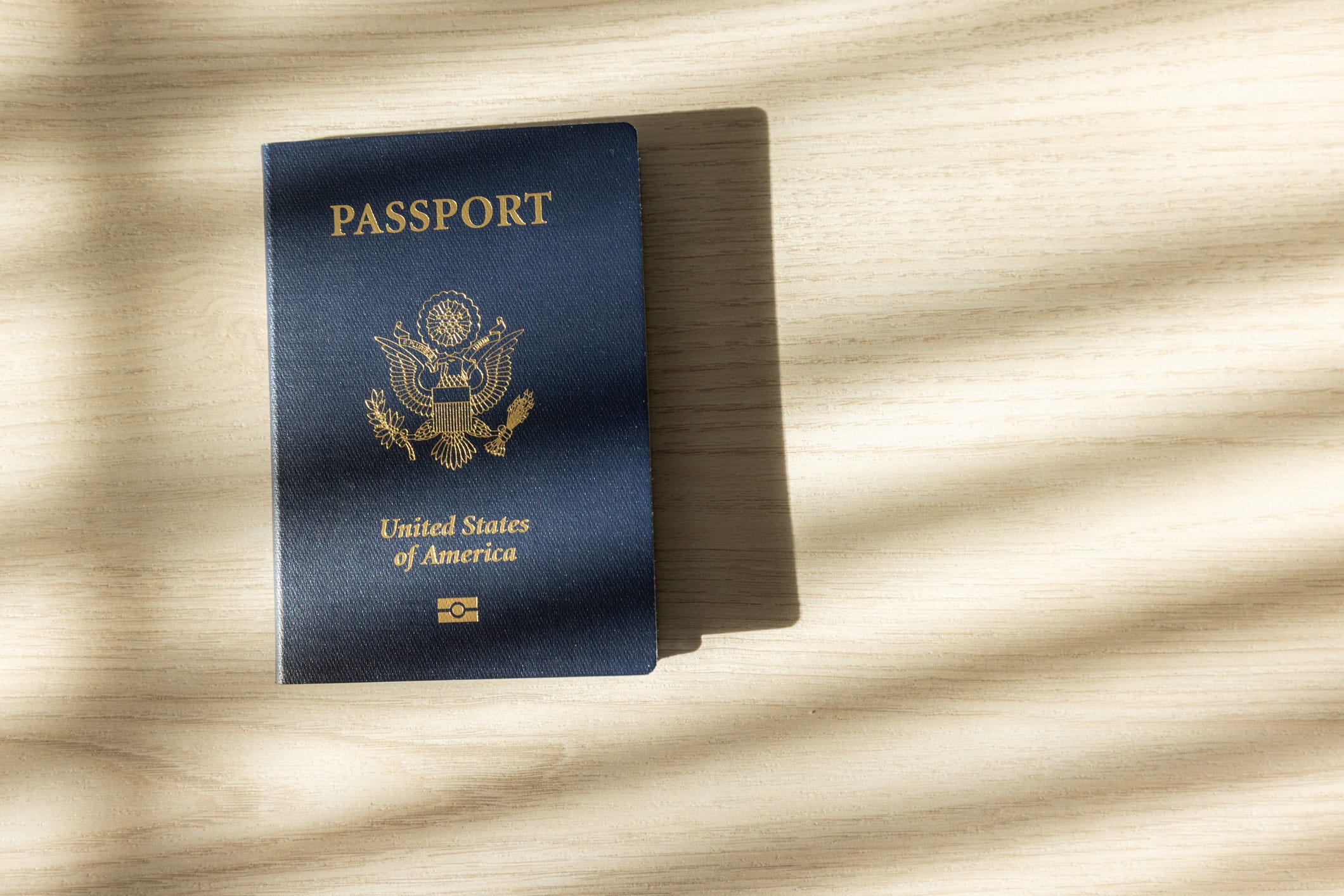
They say the definition of insanity is doing the same thing over and over but expecting a different result. President Donald Trump’s two new executive orders on birthright citizenship, which attempt to unlawfully deny citizenship to certain people born in the United States, probably fit in that category.
On the first day of his second administration, Trump issued an executive order denying birthright citizenship to two populations: children born to parents temporarily, but lawfully, present in the United States, and children born to parents without legal authorization to be in the US.
By a 5-4 vote, the U.S. Supreme Court held that this first attack on birthright violated the U.S. Constitution, specifically the first sentence of the Fourteenth Amendment. The Fourteenth Amendment reads: “All persons born or naturalized in the United States, or subject to the jurisdiction thereof, are citizens of the United States.” The vote was 5-4 on whether the order was unconstitutional, but 6-3 on whether the order was illegal; Trump appointee Brett Kavanaugh said the executive order violated only a federal statute that also guaranteed birthright citizenship using the same language as the Fourteenth Amendment. That disposition — both the fact that it was, ridiculously, 5-4, and Kavanaugh’s pathetic middle position — invited the elected branches to continue to experiment with and chip away at birthright citizenship, all but ensuring that this constitutional right would remain a political issue.
The new executive orders are an illustration. In one order, the President declared his intent to deny birthright citizenship to four categories of Americans:
People born to an “alien enemy,” which includes “any member of a designated Foreign Terrorist Organization … and Executive Order 13224 … (Blocking Property and Prohibiting Transactions With Persons Who Commit, Threaten to Commit, or Support Terrorism)”
People born to a “foreign government employee,” including “ambassadors,” people “employed by a foreign embassy or consulate,” people “employed by a foreign government in any official capacity,” or people “employed by an international organization that possess[es] international organization immunity”
People born to parents who “engaged in a commercial transaction to purchase or access birthright citizenship” including “a commercial transaction with a surrogate” and
People born “in a territory or territorial waters of the United States where citizenship is not conferred by Federal statute.”
The Trump administration has all but admitted that it was Justice Kavanaugh’s opinion in particular that motivated the new order. In remarks on August 6th, White House deputy chief of staff Stephen Miller said that the president was “using the new ruling the Supreme Court issued to expand the definition of people who are ineligible for birthright citizenship.”
“The Constitution is an enduring document, and its principles were designed to, and do, apply to modern conditions and developments,” Justice Kavanaugh wrote in his oh-so-helpful opinion. “The original constitutional principles do not change … but the relevant principles — both the rules and exceptions alike — must be faithfully applied not only to circumstances as they existed in 1787, 1791, and 1868, for example, but also to modern situations that were unknown or unanticipated by the Constitution’s Framers.” He continued, “[B]oth the relevant constitutional rule and the constitutional exceptions … apply to new circumstances.”
Kavanaugh was gesturing at a principle of constitutional interpretation that often comes into play when a constitutional provision is framed at a high level of generality. For example, the Fourth Amendment refers to “The right of the people to be secure in their persons, houses, papers, and effects, against unreasonable searches and seizures, shall not be violated.” “Reasonable” is a general term and what constitutes a reasonable search depends on circumstances that may change over time, such as the proliferation of cell phones, cars, and guns.
With the Fourth Amendment, the interpretive move of applying a general concept to new factual circumstances makes sense. But the guarantee of birthright citizenship looks different than the Fourth Amendment: It just says that people born in the United States and subject to the jurisdiction thereof are citizens. It doesn’t say that people born in the United States to parents who are regarded as reasonably American are citizens. Kavanaugh’s opinion, which emphasized that “constitutional exceptions” can adapt to new circumstances, was an invitation to try and take the narrow exceptions to birthright citizenship and apply them more broadly. Birthright citizenship doesn’t extend to the children of invading armies and ambassadors, both of whom aren’t “subject to the jurisdiction” of the United States in the same way everyone else is.
The latest executive orders are a transparent effort to take the existing, extremely narrow exceptions to birthright citizenship and broaden them beyond recognition. Take the well-recognized, but again extremely narrow, exception to birthright citizenship for children born to invading, occupying armies. With the new targeting of people born to “any member of a designated Foreign Terrorist Organization,” The Trump administration seems to be taking that exception and expanding it out of all lawful proportion — especially because of how broadly the administration has interpreted FTOs and their alleged members.
Back when the administration sought to expel people it labeled as being part of Tren de Aragua, a gang operating in Venezuela, it insisted that Venezuelan nationals with no criminal history, but with some tattoos, were members of TdA — and sent them to CECOT, the notorious prison in El Salvador with conditions and officers that subject those detained to torture. Analyses have suggested that many of the men sent to CECOT were not part of TdA — and even came to the United States legally without having violated federal immigration law. The new “exception” to birthright citizenship invites the administration to claim that anyone born to parents from an area where there is gang activity was born to “designated FTO members.”
The other new exceptions to birthright citizenship also make the move outlined by Justice Kavanaugh — taking an exception and applying it to new circumstances. The exception for people born to noncitizens who work at an embassy or for a foreign government builds on the well-recognized, but again extremely narrow, exception to birthright citizenship for people born to foreign ambassadors. Here, too, the new exception would swallow the rule: It would conceivably allow the administration to deny birthright citizenship to anyone whose noncitizen parents happen to be employed as janitors at a consulate.
When birthright citizenship came down as a 5-4 decision, some legal commentators, including myself, tried to warn people that the attacks on birthright were not over. In fact, the Supreme Court’s weak rejection practically invited more of them. And the Trump administration has taken the Court up on its invitation.
Leah Litman is a professor of law at the University of Michigan, cohost of Strict Scrutiny, and author of the NYT best seller LAWLESS: How the Supreme Court Runs on Conservative Grievance, Fringe Theories, & Bad Vibes (paperback edition out now).

"They say the definition of insanity is doing the same thing over and over but expecting a different result. President Donald Trump’s two new executive orders on birthright citizenship, which attempt to unlawfully deny citizenship to certain people born in the United States, probably fit in that category."
Everything he does fits in that category.
Thank you Susie Collins