


If Democrats win Congress, what can they do?
Now that Democrats have won back Congress (the House and Senate), what can they do? What could a Congress controlled by one party do with another party controlling the White House?
I get asked this question a lot. Let’s take a look.

The House can …
Investigate
Democrats could use the Oversight Committee or create special committees to investigate the president, his administration, and family business dealings and expose potential corruption of officials (separate from or in addition to impeachment). These public hearings could be broadcast across the country. And House members have the power to subpoena witnesses, compelling them to testify under penalty of perjury.
Block Bills
The House can block bills that are a priority for the White House.
The Senate can …
Block Bills, Judicial Nominees, and Cabinet Appointments
In addition to blocking the same bills as the House, Senate Democrats would also have the power to block the president’s nominees to federal judge positions. So far, in his second term, Trump has appointed 55 judges to various District and Circuit Court positions. In his six years as president Trump has appointed one-third of all judges now sitting on the District Courts, Circuit Courts, and Supreme Court. Remember, judges serve for life (unless they die, quit, or get impeached and removed, which rarely happens). So blocking a lifetime appointment is a big deal.
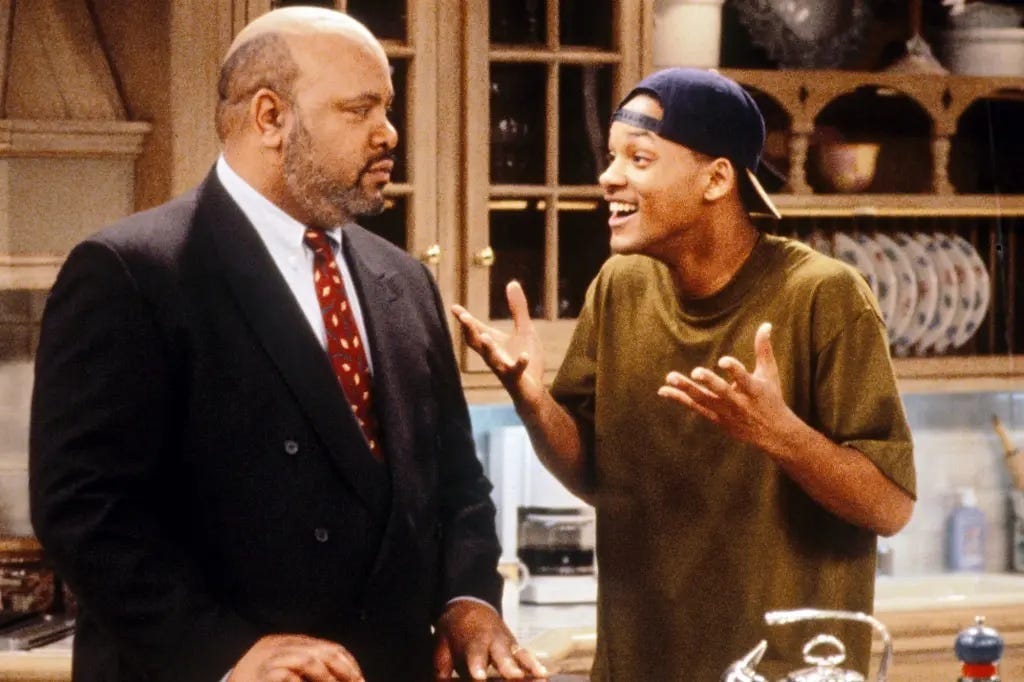
In Season 3 of The Fresh Prince of Bel-Air, Uncle Phil was appointed to fill a vacant Superior Judge position in Los Angeles County. While not a federal position, Uncle Phil would’ve been great as a U.S. District, Circuit, or Supreme Court judge.
Besides judges, Senate Democrats could block nominees to various Cabinet and agency positions. (This is an administration with high turnover; there are bound to be vacancies.)
Both the House and the Senate can …
Impeach and Remove
The House can file articles of impeachment, though impeachment may not mean much without removal (as we saw in 2019 and 2021), which happens in the Senate. But articles of impeachment let the House investigate the alleged impeachable conduct, complete with evidence and debate. If the impeachment succeeds, what follows is a very public trial in the Senate (one that could present criminal evidence for future prosecution).
When the trial is over, senators vote on removing that person from office. If successful, senators also vote on barring that person from holding federal office ever again. But the Senate has only removed eight people ever — all federal judges — and only barred three of them from holding federal office again.
So, could it happen? Maybe. Impeachment requires a majority vote in the House (218 if all 435 members are present), and removal requires a two-thirds Senate vote (67 if all 100 senators are present). Oddly enough, the vote to bar someone from holding federal office is just a majority (51 of 100 senators).
And which officials can be impeached and possibly removed? Federal judges. Cabinet members. The president and vice president. But not members of Congress (they have their own expulsion process).
Pass legislation
Pass laws with or without the White House’s involvement. Look at what happened with the housing bill this year — Congress passed it, and Trump let it become law without his signature. A Democratic Congress could also override a presidential veto, reasserting congressional authority on things like tariffs and the war in Iran.
But perhaps the most consequential thing a Democratic Congress could do is block certain funding bills. These ‘budget reconciliation’ bills require only a majority vote in Congress. That means they can’t be stopped in the Senate by a filibuster.
In the past two years, these bills have given significant tax cuts to the wealthy and more than $200 billion to ICE and the Border Patrol combined (the most those agencies have ever received). A Democratic Senate could block funding like that or extract significant concessions in return for it.
Conclusion
Is there a chance that a Democratic Congress and a Republican White House could work together? Sure. Would that be good for the country? Depends on the topic.
But I’m not expecting a ton of collaboration.
As always, if you liked this article and want to support my work, become a paying subscriber here. Or support me by ordering my book, What Does the Constitution Actually Say?, or its kids version. And check out my PBS show, Civics Made Easy, here.

First, pass the Voting Rights Act. https://en.wikipedia.org/wiki/John_Lewis_Voting_Rights_Act
Should be veto proof.