


On the first day of my class on strategic intelligence, I ask my students a series of straightforward questions: What is intelligence? How does an analytic assessment from CIA differ from a New York Times article? What is the role of the U.S. intelligence community? These questions are the baseline. If students do not understand the distinctions at the outset, everything that follows becomes harder to interpret.
Intelligence, at its core, is not just information. It is judgment. It is the disciplined effort to assess capability, intent, and risk under conditions of uncertainty. More important, it provides the president what he needs to know — not the answers he wants to hear.
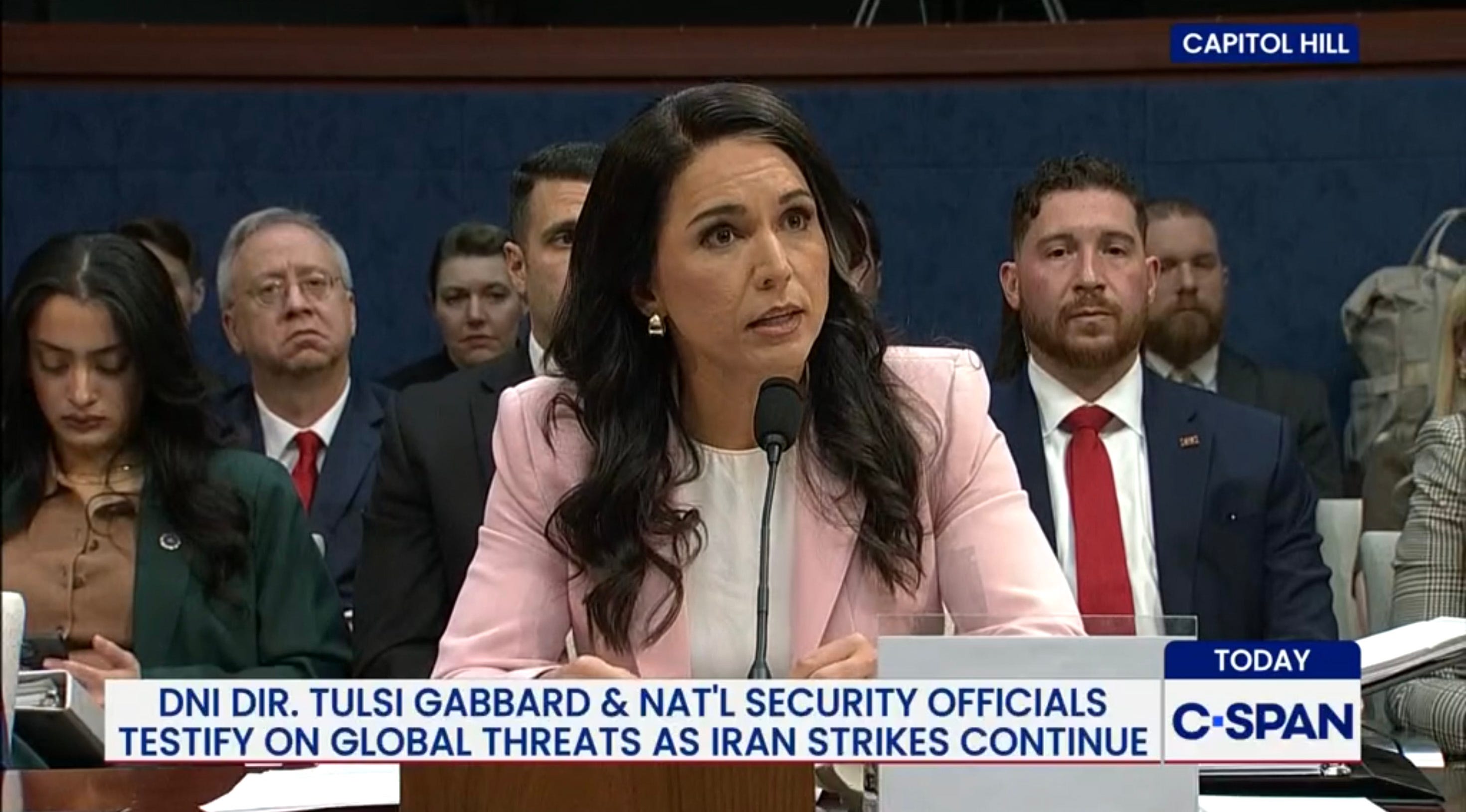
Earlier this week, I reminded my students of those basics and pointed them to the now-published Annual Threat Assessment (ATA). The unclassified version of the document offers a rare glimpse into how America’s intelligence agencies collectively assess the risks the country faces. I explained that Director of National Intelligence Tulsi Gabbard, CIA Director John Ratcliffe, FBI Director Kash Patel, and the directors of the Defense Intelligence Agency and the National Security Agency testified publicly testify on the assessment in open hearings on Capitol Hill last week.
This week, I will spend a few minutes objectively walking the class through the differences between the 2025 and 2026 assessments — what changed, what did not, and what that suggests about how the threat picture is evolving.
The harder part will be keeping the focus on the assessment and not the hearings.
But outside the classroom, it is even harder to ignore what this week’s hearings revealed beyond the assessment itself.
The hearings raised far more than can be addressed here — from omissions in the opening statement to questions about election-related activity in Georgia and the scope of intelligence support to partners abroad. What stood out was how little of this resembled the intelligence process and standards I teach my students. A few takeaways:
1. Gabbard needs to audit my class. The most revealing moment of the hearings was not the misdirections or the inept contradictions but the DNI director’s misunderstanding of fundamentals. When pressed on whether Iran posed an imminent threat to justify the U.S. attack on Iran, Gabbard responded that determining what constitutes an “imminent threat” is the responsibility of the president, not the intelligence community.
The assessment of capability, intent, and timing — precisely the elements that inform whether a threat is imminent — is the core of the intelligence community’s mission. It is what analysts are trained to do. It is what the President’s Daily Brief is designed to convey.
If intelligence is reduced to describing conditions while leaving judgment entirely to policy, then it ceases to function as intelligence. It becomes background.
2. Ratcliffe is the chief intelligence adviser. If there was any lingering question about who holds real influence with the president, the hearings confirmed what was already visible.
Ratcliffe didn’t just testify. He operated like someone already inside the decision loop. While watching C-SPAN before the Senate hearing began, I saw him working the room, engaging members across the aisle — moving with the confidence of a principal, not a co-equal and certainly not a subordinate to the others testifying. When pressed on Iran, he did what matters most in this environment: He aligned with the president without sounding subordinate to him. He shaped the narrative rather than avoided it.
Gabbard, by contrast, took her seat and sat stone-faced staring ahead, as did Patel, without moving for several minutes before the opening gavel. As the hearing proceeded, Gabbard looked constrained — careful, reactive, increasingly peripheral, and at times uninformed.
But this was more evidence of a DNI being sidelined.
It showed up last June during the first Israeli attacks on Iran. The president dismissed her testimony at the 2025 ATA that Iran was not actively developing a nuclear weapon: “I don’t care what she said.” Days later, the United States carried out airstrikes against facilities linked to Iran’s nuclear program.
During the administration’s most consequential foreign operation to date — the January 3 mission to seize Venezuelan President Nicolás Maduro — Ratcliffe was with the president as the operation unfolded. Gabbard was absent — publicly silent and outside the core process.
By the time this week’s hearings began, the hierarchy wasn’t unclear. It was established.
3. A collective refusal to contradict the president has metastasized. For all the talk about threats, the most consistent answer across the panel was silence when asked what they actually told the president before the strikes, including whether he was warned about escalation risks tied to the Strait of Hormuz.
Gabbard and Ratcliffe refused to say whether they briefed Trump on the risks tied to the Strait of Hormuz. They wouldn’t say whether that assessment was delivered directly, how it was framed, or whether it factored into the decision-making process.
The refusal tells us one of two things. Either the warning was given and ignored — or it wasn’t emphasized the way it should have been. Neither answer is comfortable. That’s why we didn’t get one.
4. More collection isn’t better intelligence. When asked to elaborate on the CIA’s efforts, Ratcliffe reminded senators that he had promised at his confirmation to return the agency to the “business of stealing secrets.” He followed with statistics: intelligence assets up 25%, China collection up 100%, operations up across the board. But increasing the number of apples harvested in an orchard doesn’t mean more quality apples made it to market. It just means you put more people in the field.
The questions that matter never came. How many of those sources were new and untested? What confidence levels were assigned? What validation exists? How often did that reporting actually change an analytic judgment? Did it improve warning — or just add volume?
That kind of framing — more, bigger, higher — is ideal for Donald Trump. It’s simple, it signals success, and it avoids uncertainty. But it turns intelligence into a scoreboard instead of a decision tool. And when that happens, the risk isn’t that we know too little. It’s that we think we know enough.
Brian O’Neill, a retired senior executive from the CIA and National Counterterrorism Center, is an instructor on strategic intelligence at Georgia Tech. His Safehouse Briefing Substack looks at what’s ahead in global security, geopolitics, and national strategy.

When Tulsi Gabbard said publicly that it wasn't her job to make assessments on amassed intelligence, she should have either resigned, been DOGEed, or simply set on fire. It would have had the same result on our ability to outgame our opponents.
This article alone is worth my Contrarian subscription. It is so helpful to read this introduction and understand the [original] purpose and function of our Intelligence Agency. Of course none of this applies in a burgeoning dictatorship.