

By Frederic J. Frommer
Sitting in the audience at a downtown Washington dining club in 1958, Jackie Robinson was taken aback when he heard President Dwight D. Eisenhower urge Black leaders to have patience in the battle for civil rights.
“On hearing you say this, I felt like standing up and saying, ‘Oh no! Not again,’” Robinson wrote in a letter to Ike the next day. “I respectfully remind you sir, that we have been the most patient of all people. When you said we must have self-respect, I wondered how we could have self-respect and remain patient considering the treatment accorded us through the years.”
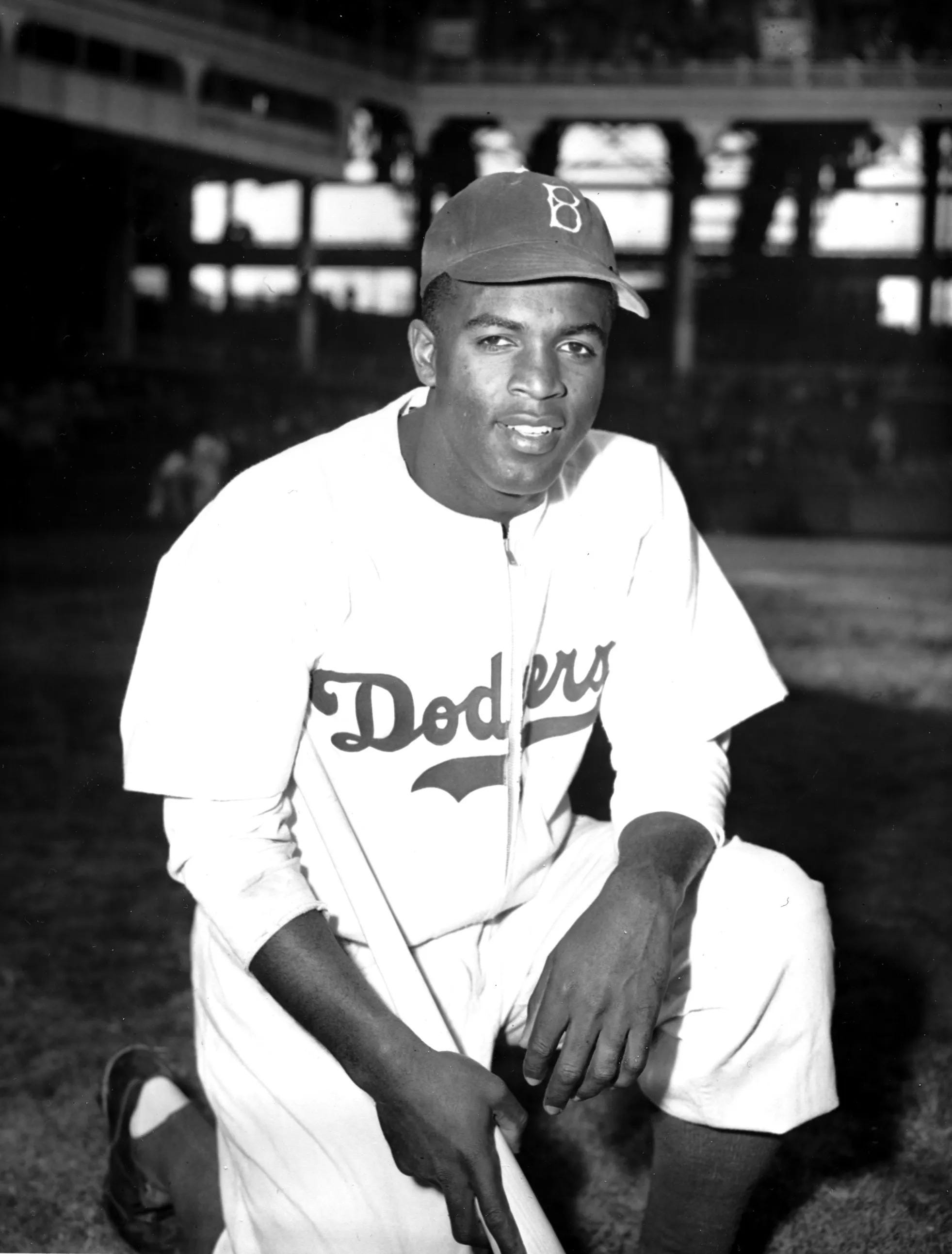
The May 13, 1958, letter—written less than two years after the final game of Robinson’s trailblazing career—is one of several documents that the National Archives will display across the country next year as part of the celebration of America’s 250th birthday. Among the others: the 13th Amendment to the Constitution, which ended slavery, and a handwritten draft of Franklin Delano Roosevelt’s 1941 speech to Congress after the Japanese attack on Pearl Harbor.
The inclusion of Robinson’s letter comes months after the Pentagon removed an article about his military service in a purge of what it called diversity, equity, and inclusion content, before admitting it made a mistake and reversing course.
Robinson broke baseball’s color barrier in 1947 with the Brooklyn Dodgers, becoming one of the most important figures in the 20th century in the fight for equality. He retired after the ’56 season, but his role as a civil rights activist entered a new phase. From the late ‘50s, through the civil rights movement of the 1960s, and literally until his final, dying days in October 1972, Robinson would forcefully champion equal opportunities for Black Americans.
Eisenhower’s 1958 speech was delivered four years after Brown v. Board of Education, the unanimous landmark Supreme Court decision that ruled segregated public schools violated the Constitution. And it came just a year after Ike sent troops to Little Rock, Arkansas, to enforce a court order to allow nine Black students, known as the Little Rock Nine, to attend all-white Central High School.
But civil rights progress was halting. Eisenhower acknowledged as much in his speech to the National Newspaper Publishers Association, the trade association for the Black press. Still, he said, laws could only accomplish so much.
“I do believe that as long as they are human problems—because they are buried in the human heart rather than ones merely to be solved by a sense of logic and of right—we must have patience and forbearance,” the Republican president told the 350 editors and business and community leaders at the Grand Ball Room of the Presidential Arms. “We must depend more on better and more profound education than simply on the letter of the law. We must make sure that enforcement will not in itself create injustice.”
The newspaper group gave Eisenhower a special citation for “the prestige and power he has used in behalf of civil rights,” including his action in Little Rock. And attendees gave him several rounds of applause when he talked up his support for equal rights, the New York Times reported.
But Robinson wasn’t impressed. In his letter, written on stationary from Chock full o’ Nuts, where he was vice president of personnel, and addressed to “My dear Mr. President,” Robinson wrote:
17 million Negroes cannot do as you suggest and wait for the hearts of men to change. We want to enjoy now the rights that we feel we are entitled to as Americans. This we cannot do unless we pursue aggressively goals which all other Americans achieved over 150 years ago.
As the chief executive of our nation, I respectfully suggest that you unwittingly crush the spirit of freedom in Negroes by constantly urging forbearance and give hope to those pro-segregation leaders like Governor Faubus who would take from us even those freedoms we now enjoy.
That was a reference to Arkansas’s segregationist governor, Democrat Orval Faubus, who had ordered the state National Guard to keep the Black students from entering Central High, which forced Eisenhower’s hand to send in federal troops.
“Your own experience with Governor Faubus is proof enough that forbearance and not eventual integration is the goal the pro-segregation leaders seek,” Robinson pointedly added. “In my view, an unequivocal statement backed up by action such as you demonstrated you could take last fall in dealing with Governor Faubus if it became necessary, would let it be known that America is determined to provide—in the near future—for Negroes—the freedoms we are entitled to under the constitution.”
Eisenhower wrote back to Robinson a couple of weeks later, suggesting Robinson had misconstrued his message.
“While I understand the points you make about the use of patience and forbearance, I have never urged them as substitutes for constructive action or progress,” he wrote in the June 4, 1958, letter. “If you will review my talk made at the meeting, you will see that at no point did I advocate a cessation of effort on the part of individuals, organizations, or government, to bring to fruition for all Americans, the enjoyment of all the privileges of citizenship spelled out in our Constitution.”
Eisenhower added that he was firmly on record in believing every citizen deserves equal civil rights, “for there can be no such citizen in a democracy as a half-free citizen. … Steadily we are moving closer to the goal of fair and equal treatment of citizens without regard to race or color.”
He ended the note with an acknowledgement of Robinson’s hardships in integrating baseball, which led to abuse from fans, opponents, and even some of his own teammates:
“This progress, I am confident, will continue. And it is gifted persons such as yourself, born out of the crucible of struggle for personal dignity and achievement, who will help lead the way towards the goals we seek.”
Frederic J. Frommer, a writer and sports and politics historian, has written for the Washington Post, the New York Times, the Atlantic, History.com and other national publications. A former Associated Press reporter, Frommer is the author of several books, including “You Gotta Have Heart: Washington Baseball from Walter Johnson to the 2019 World Series Champion Nationals.” Follow him on X.
I so appreciated this article, which brought many new facts to this fan of baseball and equal rights. Also the happy fact that certain historical artifacts will tour the country for all to see. It was important to lay the context for Robinson's and Eisenhower's words. I recall reading as a child a novel about the Little Rock incident and marveling at the courage of children my own age--and the abject hatred and lack of responsibility from so many adults, including those who purported to be leaders.
Hooray for Jackie Robinson. And also: only 2 months before pitchers and catchers report for the 2026 season. It's a long off-season.
So much to unpack here. That the Trump regime tried to erase Jackie Robinson from the Pentagon's records. That the National Archives is including his letter to President Eisenhower in its celebration of the 250th anniversary of the Declaration of Independence. It is unfortunate that Eisenhower did not more forcefully support civil rights. Trump has dragged the US so far back that the fact that Eisenhower sent the National Guard to Little Rock seems amazing. He actually ensured the Supreme Court decision would be followed. How many SCOTUS decisions has this regime followed this year? My father entered the armed forces in 1956, eight years after Truman's Executive Order to desegregate the military. An EO, not a SCOTUS decision. My father gave credit to Eisenhower for ensuring that was the case when he was a young, black enlisted man in 1956. We cannot go backwards. We must get the back to the Constitution and the rule of law in this country.