


I was a first lieutenant in the U.S. Army when I first read about William Buckley, the CIA station chief in Beirut kidnapped in 1984. Buckley was held for more than a year by a Shia militia linked to Hezbollah, tortured—his suffering filmed and used as propaganda. Hearing about what he endured did not cause me to hesitate about my chosen career or ambitions; if anything, it pushed me closer to wanting at some point to work for the Agency. I didn’t ask about the motives of the torturers or whether any of it was justified. That would have been depraved.
Decades later, at CIA, I tracked kidnappings and executions of hostages by terrorist groups. From James Foley, the American journalist abducted in Syria in 2012, to others whose names never made the news, the pattern was the same: needless torture of people with no secrets to reveal, their fear and humiliation staged for the camera. The violence was never about extracting information. It was about intimidation and propaganda.
I never wondered whether President Barack Obama, receiving updates on those cases, was grilling his briefers about whether the analysis was politicized or meant to embarrass him. In a serious country, you can argue over what to do about the murder of your citizens. You don’t pretend the murder is a rumor or that the analysis carries some partisan agenda.
Which brings us to Tuesday’s spectacle at the White House. Donald Trump rolled out marching bands and a flyover to welcome Saudi Crown Prince Mohammed bin Salman back to Washington, touting a defense pact, a sale of F-35s fighter jets, and Saudi investment Trump said could reach a trillion dollars.
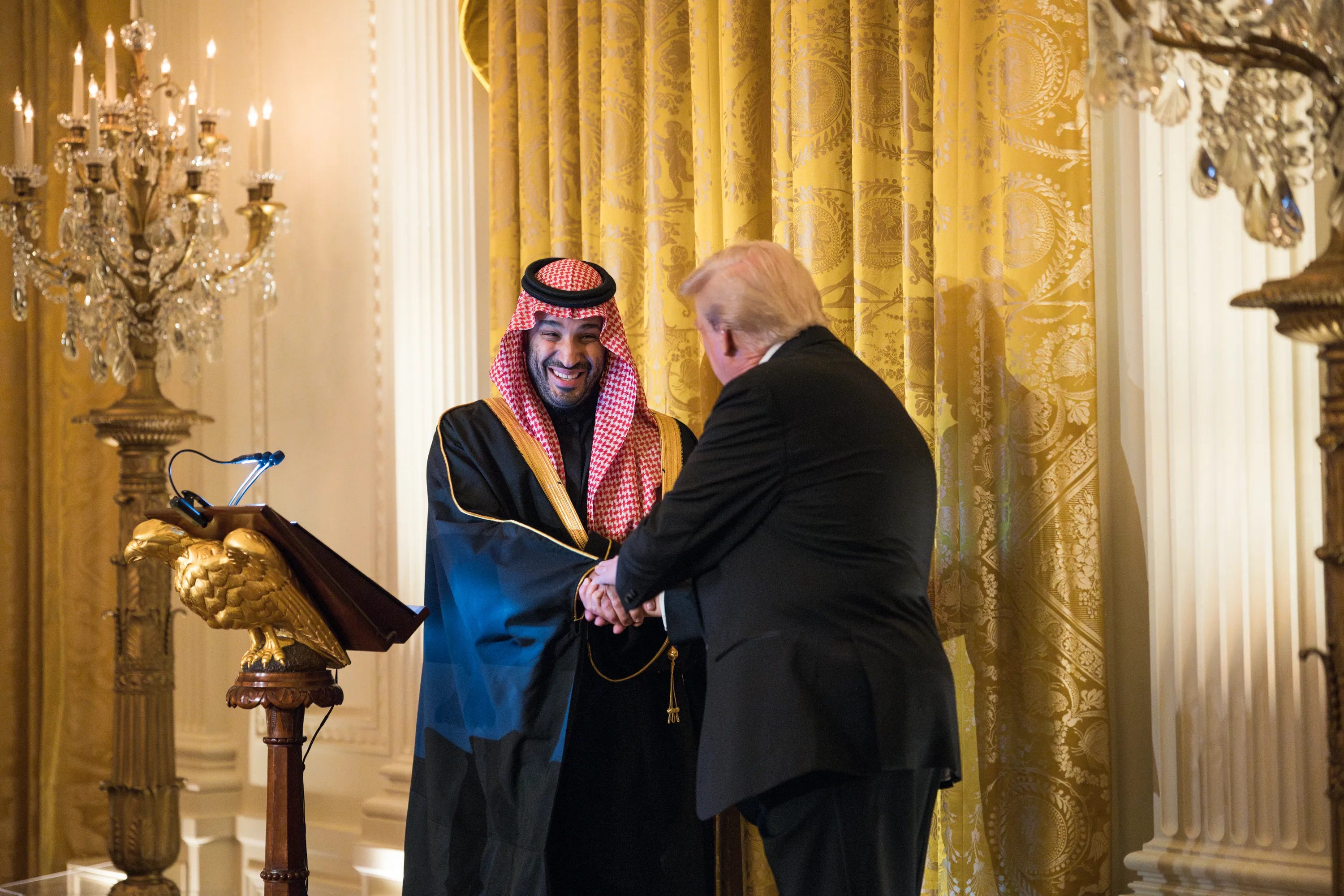
Then came the question that cut through the pageantry: Jamal Khashoggi.
Pressed by a reporter on the 2018 murder of the Washington Post columnist inside the Saudi consulate in Istanbul, Trump snapped. He called the question “horrible” and “insubordinate,” scolded the reporter for embarrassing “our guest,” and insisted that the crown prince “knew nothing about it.” He waved the matter away with two words that ought to be engraved on this presidency: “things happen.”
No previous president tried to console a widow or a nation with that kind of shrug—neither George W. Bush on the rubble of the World Trade Center nor Barack Obama deciding on the Osama bin Laden raid.
The problem is that the U.S. government already knows quite a bit about this particular “thing.” In 2021, the Office of the Director of National Intelligence declassified an assessment that could not have been clearer: Saudi Arabia’s crown prince approved an operation in Istanbul “to capture or kill” Jamal Khashoggi. Analysts based that judgment on his control of Saudi security services, the role of his close advisers and security detail, and his record of using violence against dissidents.
In other words: This analytic judgment is not a close call. It is the considered view of the intelligence community that the man Trump shook hands with this week approved an operation to kill a U.S. resident journalist working for an American newspaper.
Trump’s response was not to acknowledge that tension and argue that U.S. interests required him to engage the crown prince anyway. That would be unsettling but, in a narrow, realpolitik sense, understandable. He instead did what he has done repeatedly when facts threaten his preferred relationships: He brushed aside the intelligence professionals whose job is to help him separate the wheat from the chaff and declared his belief in the strongman’s denial.
We have seen this before. In Helsinki in 2018, standing beside Vladimir Putin, Trump said he didn’t “see any reason why it would be Russia” that interfered in the 2016 election, despite the assessment of U.S. intelligence agencies that Russia did exactly that. Later that year, after Khashoggi’s killing, he issued a statement titled “Standing with Saudi Arabia,” insisting that “maybe [MBS] did and maybe he didn’t” know about the murder and that “we may never know all of the facts.”
This week’s comments went further. It is one thing to say “maybe he did, maybe he didn’t” when the assessment is still classified and Washington is trying to manage the fallout. It is another to dismiss that assessment years later, after it has been declassified and accepted by allies, and to do so while praising the crown prince as “one of the most respected people in the world.”
That is not simply moral depravity. It is complicity.
There is a national security cost to that choice. It tells every autocrat that the intelligence community’s judgments are, in practice, conditional; if you are strategically valuable enough—oil, arms, money, alignment against Iran or China—the president might simply decline to believe the evidence against you. It tells U.S. allies that American intelligence—even their own intelligence—comes with an asterisk: true, unless the president decides it isn’t. And it corrodes the compact between the intelligence community and the people it recruits, who were told their job was to present the best assessment of the truth, not to flatter the leader.
Some will defend Trump’s display as hard-nosed realism. But that framing is a dodge. The question is not whether a U.S. president should deal with unsavory leaders. Every president has. The question is whether he acknowledges who they are while doing it—or chooses, for his own purposes, not to know.
William Buckley died at the hands of people who proudly called themselves enemies of the United States. James Foley died on his knees in the Syrian desert, murdered by men who styled themselves soldiers of a caliphate. Their killers were not invited to the White House or rewarded with a defense pact.
Jamal Khashoggi was murdered in a consulate by agents of a state the United States calls an ally. The intelligence community did its job and told the truth about who gave the order. On Tuesday, the president of the United States chose to treat that truth as the problem and the author of the crime as “one of the most respected people in the world.”
Brian O’Neill, a retired senior executive from the CIA and National Counterterrorism Center, is an instructor on strategic intelligence at Georgia Tech. His Safehouse Briefing Substack looks at what’s ahead in global security, geopolitics, and national strategy.

Giving deference to a murderer should be grounds for impeachment. He has just made the United States a less safe place for Americans abroad and at home. He just ogles and drools all over these dictators.
The "things happen" president is not an accomplished thinker or speaker and can only see things in three colors--black, white, and green. Besides not wanting any kind of embarrassment to overshadow his dominance on camera (ask Mary Trump about the "legendary mashed potato" incident), he does not want any pesky murder charge getting in the way of his "deal" for an imaginary trillion dollars. That was supposed to be the focus of the photo op--the money. Thanks to the impertinent journalist, Trump's ham-handed rebuke became the focus. Fail.