


Mike Makowsky once knew very little about James A. Garfield, the 20th president of the United States, and even less about Charles Guiteau, the mentally ill man who assassinated him in 1881.
In that regard, the screenwriter was just like most Americans: Garfield, who served only six months in office before his death, is generally perceived as one of many forgettable Gilded Era presidents distinguished only by their ornate facial hair.
For Makowsky, this all changed one day in 2018, when he was browsing the buy-two-get-one-free table at his local Barnes & Noble. For his third item, he picked up a copy of Destiny of the Republic: Madness, Medicine and the Murder of a President by Candice Millard.
He quickly devoured the book, which follows Garfield, a self-made Ohio congressman reluctantly thrust into the presidency, and Guiteau, a delusional grifter who’d spent time in the free-love Oneida Community and was outraged that he had not received consulship in the new administration. In a warped act of revenge, he shot Garfield on July 2, 1881. 79 agonizing days later, the president died from a massive infection caused by the doctors who examined him.
Makowsky was struck by the “situational absurdity” Millard captured in her book.
“I kept having to jump on Wikipedia just to make sure that this historian in Kansas wasn’t making all this shit up,” he says by Zoom from his home in LA. He reached out to Millard to pitch an adaptation. After some hesitation, she eventually agreed to let him option the book. (Makowsky thinks Millard was initially hesitant because he compared Guiteau to Rupert Pupkin, the wannabe stand-up played by Robert DeNiro in The King of Comedy.)
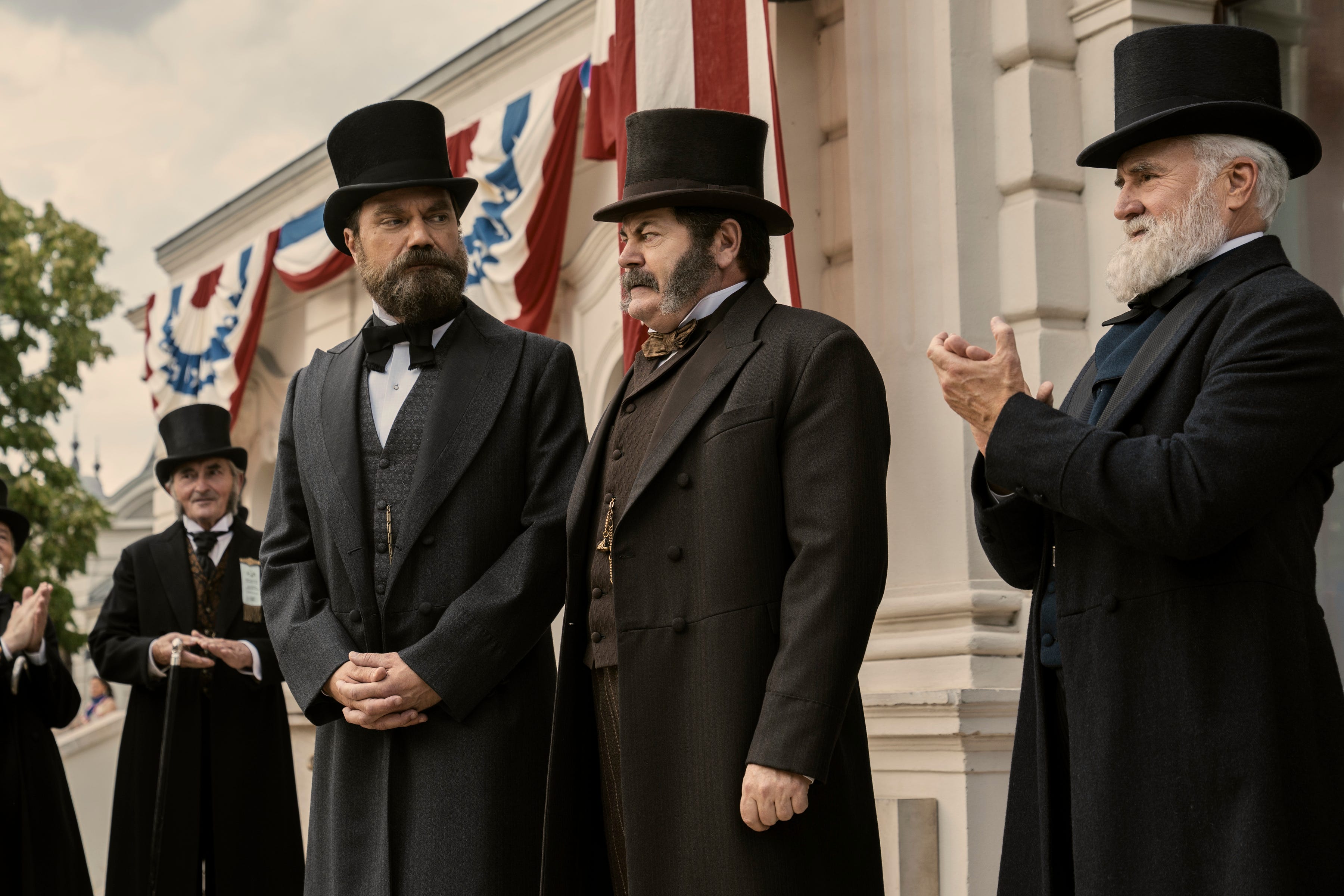
Seven years later, that project has finally come to fruition as Death by Lightning, a Netflix period piece starring Michael Shannon as Garfield, Matthew Macfadyen as Guiteau, Betty Gilpin as First Lady Lucretia Garfield, and Nick Offerman as Vice President Chester A. Arthur.
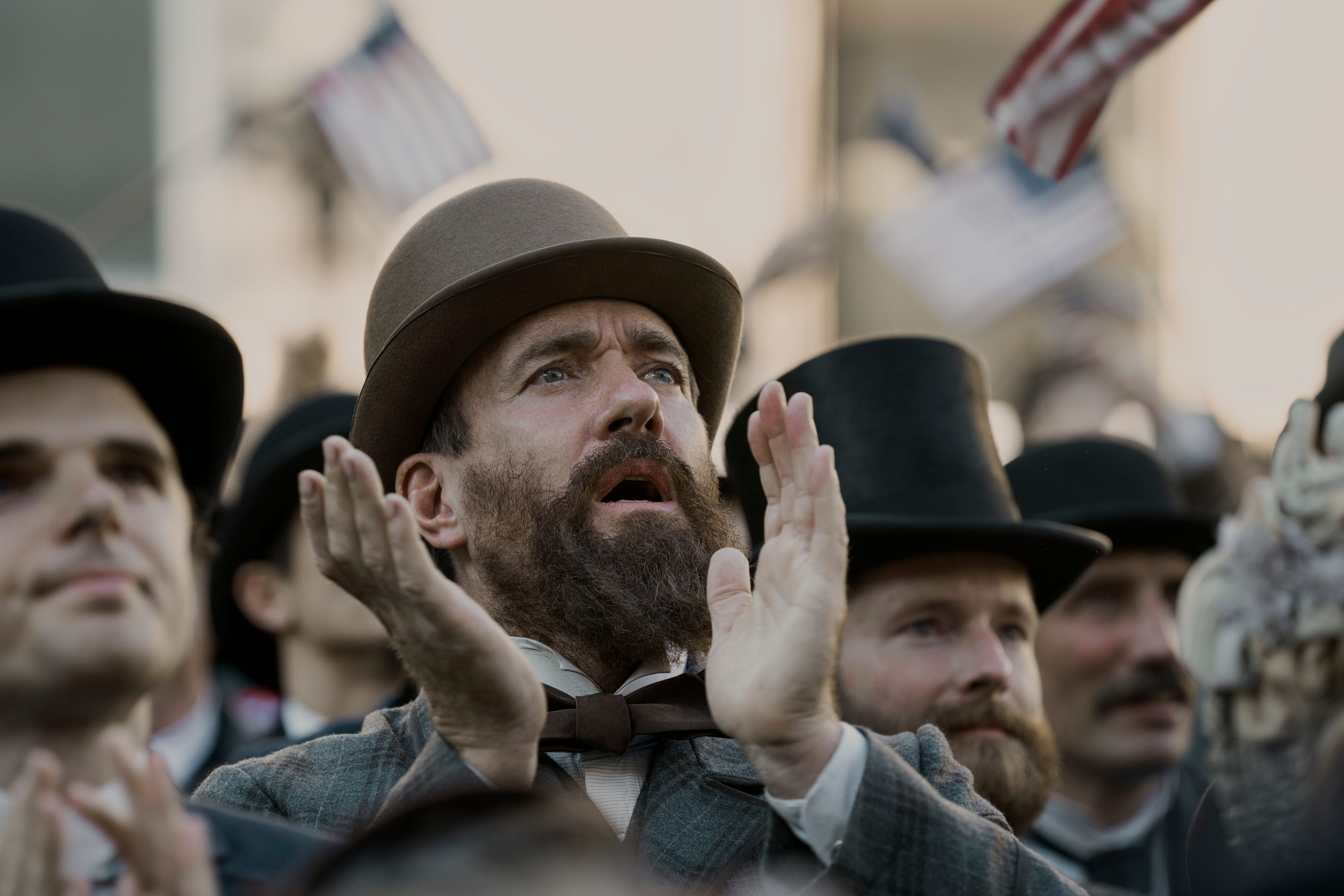
Over four fast-paced and darkly funny episodes, the limited series dramatizes Garfield’s unlikely ascent to the White House as a reform-reminded Republican intent on battling the party machine, and Guiteau’s increasingly dangerous fixation with a man whose rise he thinks he made possible. Created by Makowsky, Death by Lightning is replete with colorful scoundrels like New York Senator Roscoe Conkling (Shea Whigham) and leaves viewers with the overwhelming impression that brazen corruption is nothing new in American politics—and neither is senseless violence.
Over the weekend, it was the most-watched show on Netflix in the U.S., an indication that something in this overlooked chapter of history resonates with Americans in 2025.
“A lot of the issues in this political era speak to what we’re currently going through, to existential questions about the role of the civil service and who gets to serve in it, and ego and ambition in politics,” Makowsky says.
Perhaps most relevant of all is the series’ portrayal of a disturbed loner driven to violence for ideologically incomprehensible reasons. Guiteau, who pursued numerous failed careers and even attempted to launch a newspaper called The Daily Theocrat, had a grandiose belief that he made Garfield’s victory possible.
“Unfortunately, there are a lot of eerie parallels between what we’re seeing play out on the national stage right now and the forces, both internal and external, that compel a man like Guiteau to pick up a gun and assassinate a political figure,” says Makowsky, whose writing credits include the Emmy-winning HBO film Bad Education.
When it came to adapting Millard’s nonfiction book into a work of historical fiction, Makowsky tried to remain faithful to the emotional (if not the chronological) truth of events.
But he says the basics of the story were already so outlandish, he didn’t have to take much creative license; in fact, he left out some real-life details “because they seemed almost too crazy” or too distracting to include. (For instance: the doctor who examined Garfield with dirty instruments, inadvertently causing his death, was actually named “Doctor.”)
To the modern viewer, one of the most shocking things in Death by Lightning is just how accessible the president used to be. Garfield is seen taking one-on-one meetings with the public, and is utterly unconcerned for his safety. (He says that getting assassinated was about as likely as death by lightning.) “Garfield really didn’t believe that his life was in danger at all from his constituents,” Makowsky says. “Though Lincoln had been assassinated just 16 years earlier, his killing was viewed as an aberration tied to the Civil War.”
By his own admission, Makowsky took greater liberties with the often salty dialogue in the series, which is not always strictly accurate to the period. “Would people have really said ‘motherfucker’ back then? I’ll leave that up to the language scholars to decide,” he says with a shrug. “But I certainly had fun writing the line, ‘Eat shit, I’m a taxpayer.’ It felt emotionally appropriate.”
However, a considerable amount of what Garfield says is drawn directly from the historical record. The president “was a brilliant orator and a brilliant writer” according to Makowsky.
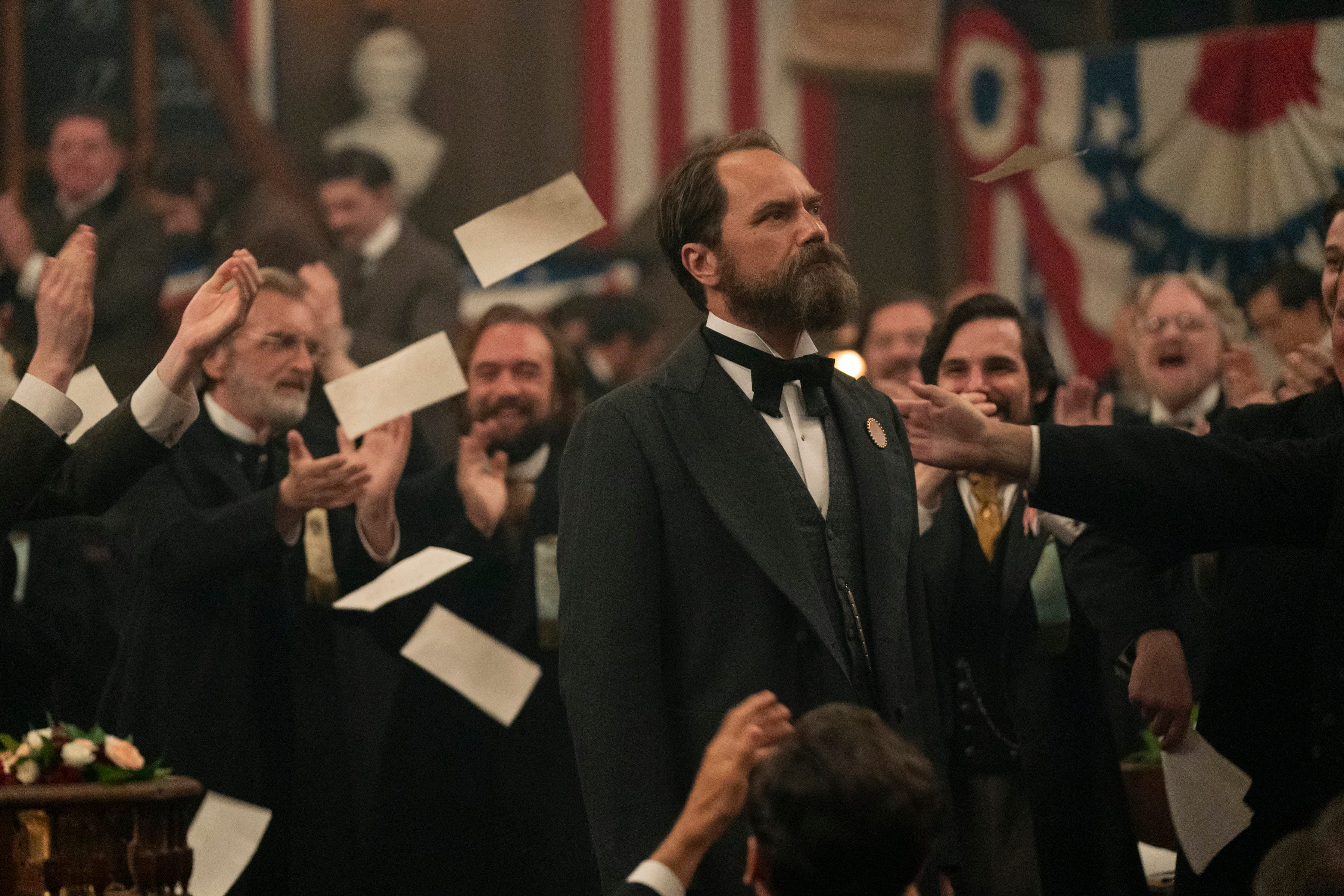
Case in point: the speech that Garfield gave at the 1880 convention, which serves as a dramatic turning point in Episode 1 of Death by Lightning.(and which hews closely to Garfield’s actual remarks). Though he was speaking on behalf of another candidate — treasure secretary John Sherman — Garfield was so compelling that he wound getting the nomination after 36 rounds of voting.
He presented “such a strong and confident vision for the future of our country, while reconciling with the complexities of the past, that people start standing up in the rafters and shouting, ‘We want Garfield!,’” says Makowsky. “He doesn’t explicitly court the highest office in the land, but that ends up making him the best man for the job. It’s that absence of ego that’s all too rare today.”
Death by Lightning portrays Garfield as a progressive leader who was unafraid of challenging the culture of cronyism in Washington. “It’s hard to speculate what he might have been able to achieve had he not been shot 100 days into his term,” Makowsky says, “But we can speak to the platform that he ran on. This is a man who believed very strongly in universal public education as a means of racial equality in our country. He was far ahead of his time on questions of civil rights, Black suffrage, and civil service reform.”
Makowsky has now spent the better part of a decade down the James Garfield rabbit hole, and it’s been lonely at times. The president he once knew nothing about has long since become his Roman Empire. A few years ago, Makowsky’s parents even gave him a James Garfield birthday cake. “They were like, ‘You are the one person on earth who cares about him,’” he recalls. Now, thanks to Death by Lightning, the James Garfield fan club may be getting a few more members. “All these people are going to know who he is, and that’s the most validating, the most humbling part of this process.”
Meredith Blake is the culture columnist for The Contrarian
Just finished this limited series last night. We loved it, though it was emotionally painful to watch at times. It connects nicely with current events. The assassin's mental illness was not funny to me as I spent my professional medical career treating such unfortunate folks. I assume we see him in a protracted bipolar manic state with psychotic features. No treatment for that back then. Thankfully, in modern times there are several widely available and effective treatments. Still, there are many undiagnosed and/or untreated sufferers who roam freely and have access to firearms in our culture... an ongoing recipe for disaster.
Interesting fact: It was decided that the fresh air of the Jersey shore might aid Garfield in his recovery. Charles G. Francklyn, an executive with the British-owned Cunard Line, offered the President and his wife the use of his Long Branch, NJ oceanfront mansion, and Garfield was placed into a train for the journey. The problem was that there was no good way to get Garfield from the Long Branch train station to the mansion, about a half-mile away. The solution was to build a temporary railroad spur from the train station right up to the house! A group of volunteers and railroad workers laid the half-mile of track overnight. Even more astounding, the train was actually pushed the final distance to the front of the house by a large crowd. It was in that house that Garfield died. https://monmouthtimeline.org/timeline/u-s-president-james-a-garfield-dies-in-elberon/