


In January 2026, John Steinbach opened an electric bill for $281, nearly triple the month before. He has lived in the same house in Manassas, Virginia for almost forty years and knows his power costs precisely. “It’s just so far beyond any bill that I’ve ever had,” he told Consumer Reports.
The mystery increase is being partially driven by AI data centers. John lives in a region of Virginia where energy demand from newly-constructed data centers is requiring billions of dollars in new electricity generation and transmission costs. Those costs must be settled somewhere, and it is in the bills of ratepayers like him.
Most of our AI debates are still hypothetical: the jobs it could take, the timing of the crash many anticipate, or what the “intelligence” in artificial intelligence actually means. Steinbach’s inequitable, unaffordable power bill increase is happening today—and our current utility framework is totally unequipped to handle the problem.
What few understand is that an electric bill is really three bills combined. Roughly half is generation, or the cost of energy creation. The rest is delivery: transmission (the long lines across the region), and distribution (the local wires to your street). A data center pays for its own connection, the distribution part. Generation and transmission are what spill over onto customers.
This system of utility regulation was built a hundred years ago, and designed for an electrical grid powering the lightbulbs and fridges of individual customers. The central idea behind the grid is to create a common pool of reliable electricity—which worked well when demand grew slowly and evenly. It was not designed for our current reality, in which a single giant customer consumes as much as a metropolitan area.
There are almost 4,500 data centers in the country, but the pressure comes from a few hundred hyperscale campuses, sprawling facilities the size of 20 Walmarts. xAI’s Colossus, outside Memphis, runs on roughly 200,000 AI chips and draws an estimated 250 to 300 megawatts, about what a town of 5 - 10,000 uses. Data center power usage is projected to grow to up to 12 percent of U.S. electricity by 2030, mainly caused by the demands of AI.
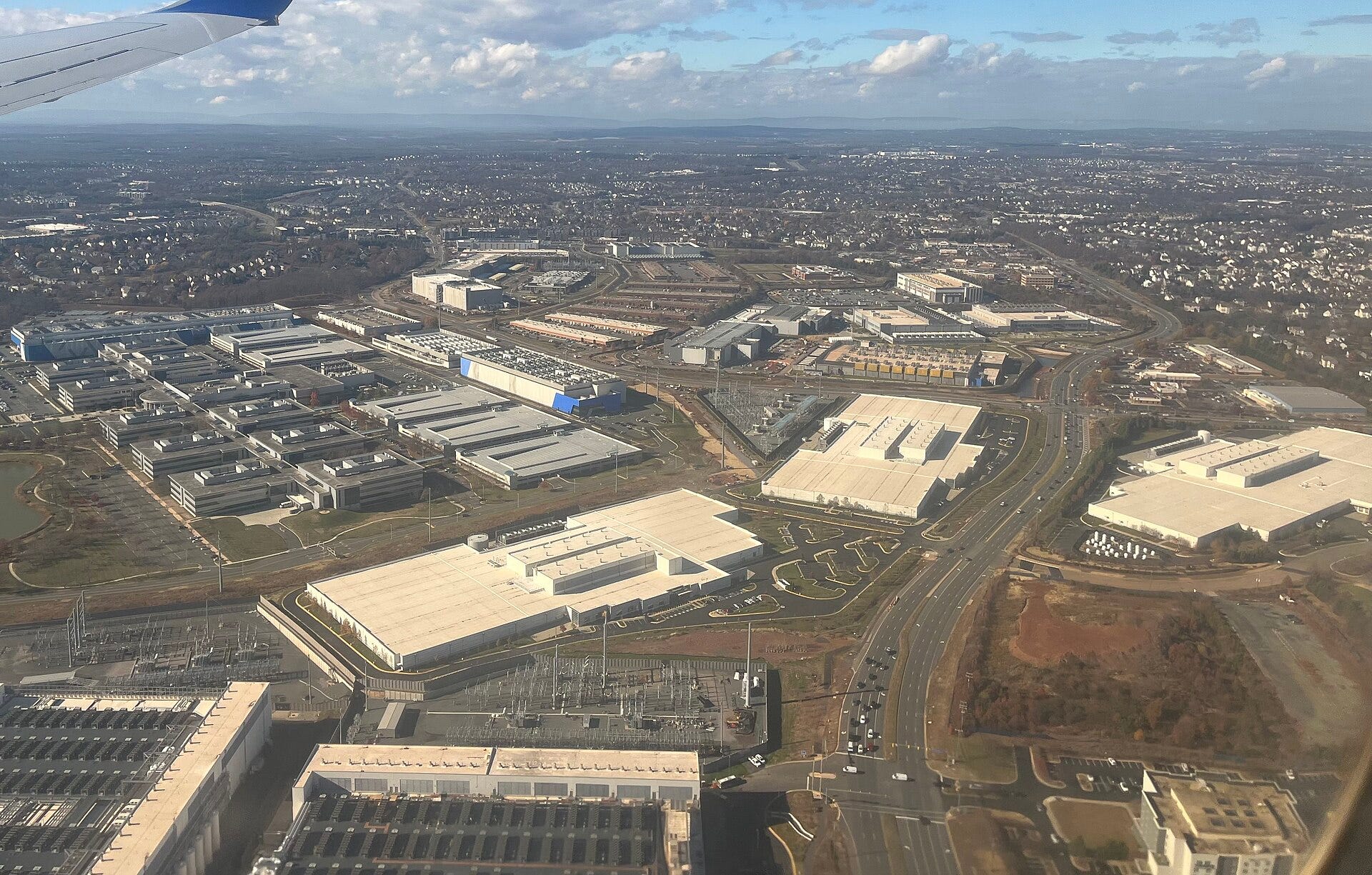
The greatest strain comes from generating the power. In PJM's 2024 capacity auction, the regional market that pays power plants to stay available, the total cost jumped from about $2.2 billion to $14.7 billion, driven largely by new data-center demand. Senator Mark Warner's office projects those rising capacity costs could add about $70 a month to the average household bill by 2028.
Distant forces shape local prices too. Steinbach’s bill climbed partly because data centers elsewhere in the region made reserve power scarcer, and transmission works the same way. A recent analysis found about $4.4 billion in data-center-driven transmission projects approved across seven PJM states in 2024, with nearly half the costs falling in Virginia. Because transmission is shared across all customers in a utility’s footprint, ordinary ratepayers help foot the bill.
None of this breaks any rules. It is unjust, not illegal. And unsurprisingly, the AI giants don’t want the system to change. They get to drive demand and cost higher and higher knowing that the bill will land disproportionately with their grids’ other customers.
So what can be done? A promising path to reform is a utility industry rule called “cost causation,” which says that whoever runs up a cost should pay for it. In practice a data center would pay for the new transmission and distribution needed to connect it to the grid, the way a housing developer, not existing neighbors, pays to run a line out to a new subdivision. This would mean each hyperscale campus would provide its own generation, or what the industry calls “bring your own power.” This would help shift the burden of expenses back up the AI supply chain instead of down into a retiree’s electric bill.
The White House has shown typical disdain for regulation, backing a voluntary, unenforceable pledge from major AI and cloud companies. But some states have stopped waiting on Washington and started making progress. Virginia created a new rate class, GS-5, for its largest data centers, requiring them to post collateral of nearly $1.5 million per megawatt and cover most of the costs they create. In the first six weeks of 2026, more than 300 data-center bills were introduced across better than 30 states, with New York passing the first statewide one-year moratorium on new hyperscale approvals. Virginia Senator Mark Warner has co-sponsored a federal bill to make operators pay for their own transmission.
There are also useful examples in previous tech-driven power crunches. Cryptocurrency miners drew an enormous load while producing few jobs, lurching from boom to bust. When miners flooded upstate New York in 2018, power bills in Plattsburgh rose about $10 a month. Regulators there did not ban crypto mining. They put miners on a separate “high-density load” rate that kept those costs off everyone else’s bill. That enforcement template seems to have been misplaced under a stack of letters of admiration to our new AI overlords.
A few studies argue there are no proven rate hikes yet. But however true this is today, it misses where the long-term damage happens. When a utility builds a plant, it recovers the full cost, plus a guaranteed profit, from every customer over the plant’s thirty-year life. If the AI boom fizzles out, the data-center operator will walk away cleanly. The utility won’t lose a dollar, because it still collects the plant’s cost plus its guaranteed profit. That bill lands on whoever is still connected. Unless the rules change, that expense will show up on John Steinbach’s bill for thirty years.
Reuben Steiger is a writer and entrepreneur based in Princeton, NJ. Over a 25-year career he has helped start companies including Second Life and has led global innovation for companies including Interpublic and Omnicom. His current focus is the scaling and adoption of AI technologies. He collects books about the future.

They need to pay for their own energy. Why aren’t they putting solar panels on these sites? They must have ginormous roofs. This AI boom needs to be regulated NOW before even more damage is done.
Where I live in Maryland, they're trying to bull through massive power lines to take electricity to Data Alley in Virginia. It will go through people's farms and backyards, with no benefit to us whatsoever. But we'll end up paying for it.