


When does food count as whole food? I was pondering this recently as I read that Health Secretary Robert F. Kennedy Jr. rejected the idea of moving beans and lentils to the protein category of the food pyramid because the administration emphasizes the importance of every trad bro’s favorite trifecta — grassfed steak, butter, and sauerkraut.
All this while beans are having a moment, fibermaxing is becoming the new protein stacking, and everyone on TikTok seems to be having beans for breakfast. Still, amid this rising tide of popularity, plants are the enemy to the carnivore bros of the alt right, a symbol of coastal elitism and smug Berkeley-style politics. The way we eat signals something important about the way we live, or want to. But what does it mean to eat well in Modern America?
What’s a conscientious cook to do? Do I heed the MAGA recommendations and let my toddler eat a whole stick of butter? Do I cook everything in bone broth? Or do as American snack culture tells me to do and give in to the drumbeat of packaged treats between every meal, trusting that the hidden veggies will do their work? There has to be a happy medium—and I think we may have found it this week.
Processed Food and Politics
According to the Centers for Disease Control and Prevention, American adults get 55 percent of their daily calories from ultra-processed food—and if the popularity of premade snacks in our toddler cohort is any indication, that number might be higher for American children.
This number has risen over the years, but there has always been a segment of American life opposed to convenience food in all its forms. Since the early days of health reformers like Sylvester Graham and John Harvey Kellogg, whose names have ironically gone on to be synonymous with some of the most highly processed snack foods out there, elites have been warning Americans that there is something wrong about the way most of the country eats, all while smugly refusing to do anything about it on a systemic level.
Still, I can’t say I entirely disagree that snack culture is out of control. The consumption of ultra-processed foods has been linked to higher risk of obesity, type 2 diabetes, heart disease, mental health issues, and all-cause mortality — basically, anything that kills you might have its roots in your diet. But with food costs rising and free time shrinking, what, exactly, are we supposed to be eating anyway?
Beyond Grass-fed Beef: Real Food in the Real World
The answer to that question is as elusive as the meaning of life, shifting over the decades with the culture, giving us plausible deniability when blaming other people for their health.
The hippy movement brought us what was perhaps the first mass rejection of American convenience food culture, moving mainstream with the rise of Whole Foods and the whole foods movement. Surely I’m not the only one who still owns a spiralizer designed to create “zoodles,” although I always mixed them in with my spaghetti.
Then the backlash came. Vegetable rejection hit, and these days my fellow parents ask me if I’m not worried about my children getting enough protein because we don’t eat meat every night. But the truth is, most of us are getting enough protein; fiber is the problem for most Americans, my family included. So, I wondered how we can bring these things together: conservative-baiting plant protein, whole foods for all, and a playful embrace of American snack culture? The answer in our home is dip dinner.
Dip Dinner: Aa Solution to The Dinnertime Blahs
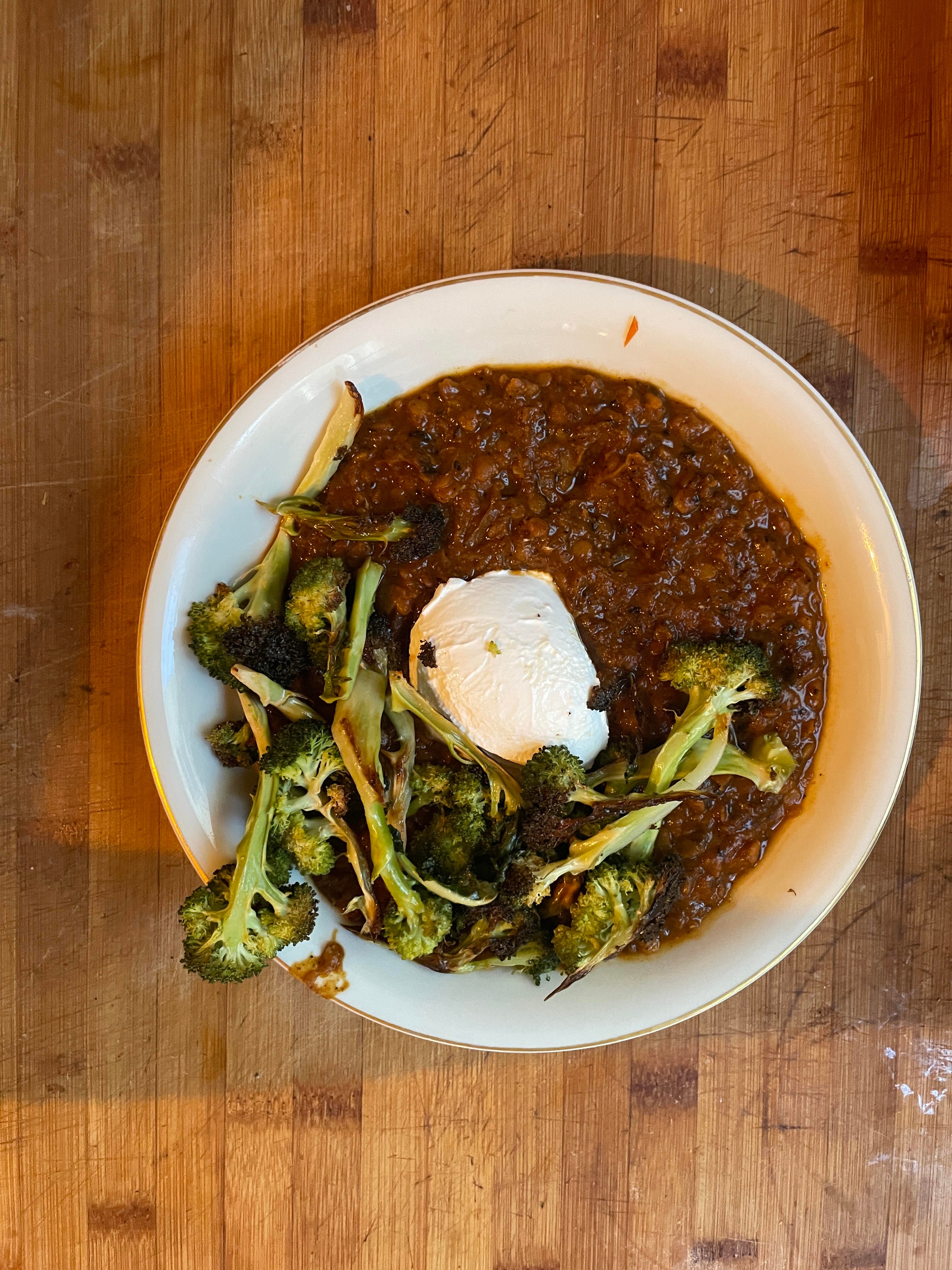
Picture this: chips and dips for dinner. Only the chips are crispy roasted broccoli, a pillowy sourdough flatbread, and homemade crackers, and the dips are a lovely tomato and red lentil puree that my toddler calls “ketchup beans.” Hey, I’ll take it.
Piled up together on a plate, they make a lovely and flavorful dinner that comes together with just fifteen minutes of chopping and stirring, and it keeps well for lunches and afternoon snacks to come.
You can’t please everyone, of course, and I doubt that RFK would approve of what’s on our table. But I happen to think that’s a good thing! And for the rest of us, more dip dinners means more fiber, more flavor, and more fun.
Emily Beyda’s writing has appeared in the Los Angeles Times, Built, Refinery29, Smartmouth, Fodors, the Thrillist, the Austin Chronicle, and more. Her novel, “The Body Double,” was published in 2021.

Emily, your broccoli recipe also works with cauliflower. 1 can also use a wee roasted Parmesan on it.
As someone who considers hummus and homemade flatbread a great meal (ok, I should include carrots and celery), you will get no argument from me!