


In their 2025 Foreign Affairs essay, Steven Levitsky, Lucan Way, and Daniel Ziblatt argued that the United States has slipped into “competitive authoritarianism” — a system in which elections continue, but the governing side steadily tilts the field in its favor. Their essay is a warning, not a postmortem. The transformation — a campaign targeting the news media, universities, law firms, federal workers, immigrants, and others — is ongoing, not settled.
And authoritarian pressure does not stop at formal institutions. Its hungry hand also reaches into informal spaces.
Take Donald Trump’s fixation on comedians. At first glance, his attacks on late-night hosts can seem petty or juvenile. They are. They also are consequential. The near-constant satiric jabs directed at him threaten his authoritarian instincts and his need to control the message.
Satire does not rebut claims the way a fact-check does. It shrinks them. That is why comedy becomes a target for authoritarians. Not all at once, but slowly, in a tightening circle: Venues and sponsors get nervous, regulators “ask questions,” platforms adjust distribution, and the comic suddenly finds himself without an audience.
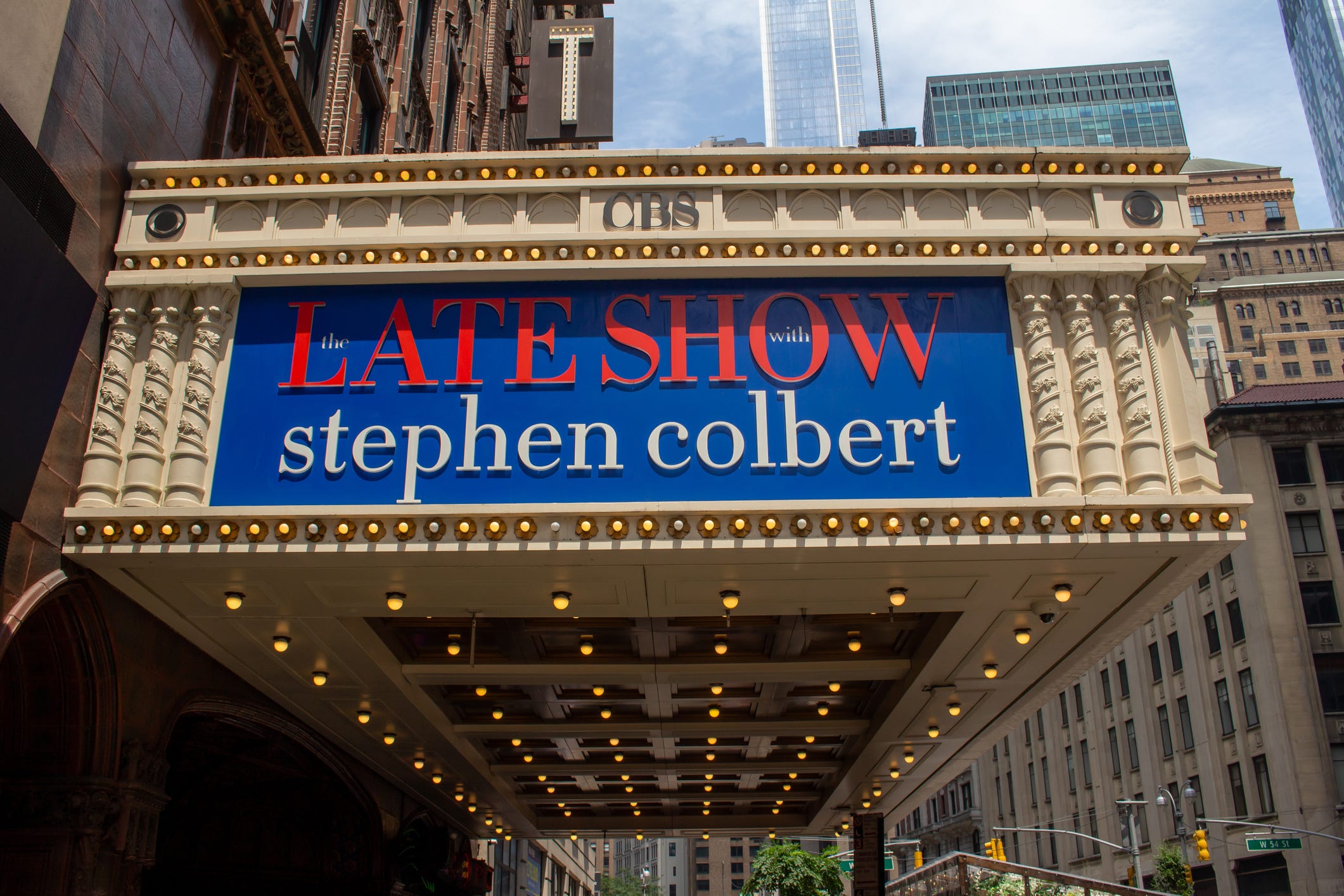
Over the past year, we have seen Trump apply that pressure repeatedly. CBS did not renew The Late Show with Stephen Colbert; the franchise is scheduled to end tonight. CBS described the move as financial, tied to the worsening economics of late night. That explanation cannot be dismissed.
But the timing invited suspicion: Paramount needed Trump administration approval for its Skydance merger and had recently settled Trump’s lawsuit against 60 Minutes. The effect is still straightforward: One of the country’s largest nightly platforms for political satire is scheduled to go dark months before the November election.
Jimmy Kimmel offers the counter-signal. In September, ABC suspended Jimmy Kimmel Live! after backlash over remarks Kimmel made in the wake of the killing of conservative activist Charlie Kirk. Parent-company Disney reversed course after public backlash, and Kimmel returned to the air a week later. More than that, he later received a one-year contract extension, keeping him on air through May 2027.
But the pressure returned late last month after Kimmel joked in a White House Correspondents’ Dinner skit — before the actual dinner, where an assailant allegedly attempted to assassinate the president — that Melania Trump had “a glow like an expectant widow.” The first lady and the president called for ABC to fire him. Kimmel responded that the remark was “not, by any stretch of the definition, a call to assassination” but a joke about the Trumps’ age difference.
Colbert and Kimmel were predictable targets, but not just because of their craft. Late-night television is centralized, legible, and institutionally exposed in ways other comedy platforms are not. It sits inside a broadcast ecosystem where “standards,” affiliates, advertisers, owners, and regulators can create friction while insisting, with a straight face, that nothing political is happening.
Trump’s relationship with ridicule helps explain his obsession with late-night comics. This is not a president merely annoyed by criticism. These shows do not merely criticize him; they ridicule him before large audiences. As far back as then-President Barack Obama’s 2011 White House Correspondents’ Dinner roast, ridicule has punctured the status politics Trump thrives on. Trump can wield mockery freely, but he treats mockery aimed at him as illegitimate — sometimes even hinting that it should be investigated or treated as unlawful.
Satire plays a particular role in a political environment because it is not persuasion in the ordinary sense. A monologue functions like recognition, not an argument. The audience laughs because the joke names a contradiction they already sensed but had not fully put into words. In that environment, satire keeps the public’s internal “absurdity detector” well-tuned.
Fortunately, the Trump administration is working from an old map of American comedy. The jokes no longer come mainly from network desks. They come from Comedy Central, YouTube clips, TikToks, podcasts, stand-up specials, influencer accounts, and comics posting their own routines online. Americans do not need to wait for a monologue after the local news to see political satire. It arrives through feeds, group chats, reposts, and short clips, often detached from the platform or program where it began.
South Park is an ideal example — not because it is subtle, but because it shows scale outside the late-night broadcast lane. The 2025 season opener last July — Paramount reported about 5.9 million cross-platform viewers — put Trump in bed with Satan. The remainder of the season built a plot around immigration raids, cabinet personalities, FCC pressure, and coerced “pro-Trump messaging,” then kept returning to Trump-world themes of retaliation and compliance.
That scale changes the problem for anyone trying to discipline comedy. It is hard enough to cancel one host or punish one joke. It is much harder to cancel the joke once it has been clipped, shared, reposted, remixed, and pushed through platforms no single broadcaster controls. Harder still to cancel a political comedy ecosystem made up of thousands of creators.
Colbert may become a revealing test case. When The Late Show goes dark, his political humor will not necessarily disappear. It would not be surprising to see him move into a looser platform environment, where his audience follows him directly and his monologues travel beyond the constraints of a broadcast time slot. The irony is obvious: A network can end a show and turn the host into a freer, more portable political voice.
Which brings us back to Levitsky, Way, and Ziblatt’s warning. Competitive authoritarianism is not a settled condition in the United States, and comedy will not save democracy. Nor should the resilience of online satire minimize the more serious pressures on broadcast networks, network news, and corporate ownership structures. Those pressures are real, and in some respects they may be far more consequential than the fate of any individual comic.
But the comedy fight offers only a narrow measure of solace. The information environment is not healthier, wiser, or less distorted; in many ways, it is not: Pew found that 76 percent of adults under 30 get news from social media at least sometimes, and roughly four in ten regularly get news from TikTok, YouTube, Instagram, and Facebook. That is not a civic triumph. But it does mean political information now travels through channels no broadcast executive fully controls.
The question before November, and perhaps even more after it, is not whether every comic will keep his show. It is whether ridicule of power remains visible, portable, and shared enough to matter. There is reason to think it will, because the jokes are moving faster than the institutions trying to contain them. Authoritarian politics asks citizens to stop noticing what is absurd. Comedy, at its best, refuses the request.
Brian O’Neill, a retired senior executive from the CIA and National Counterterrorism Center, is an instructor on strategic intelligence at Georgia Tech. His Safehouse Briefing Substack looks at what’s ahead in global security, geopolitics, and national strategy.
