


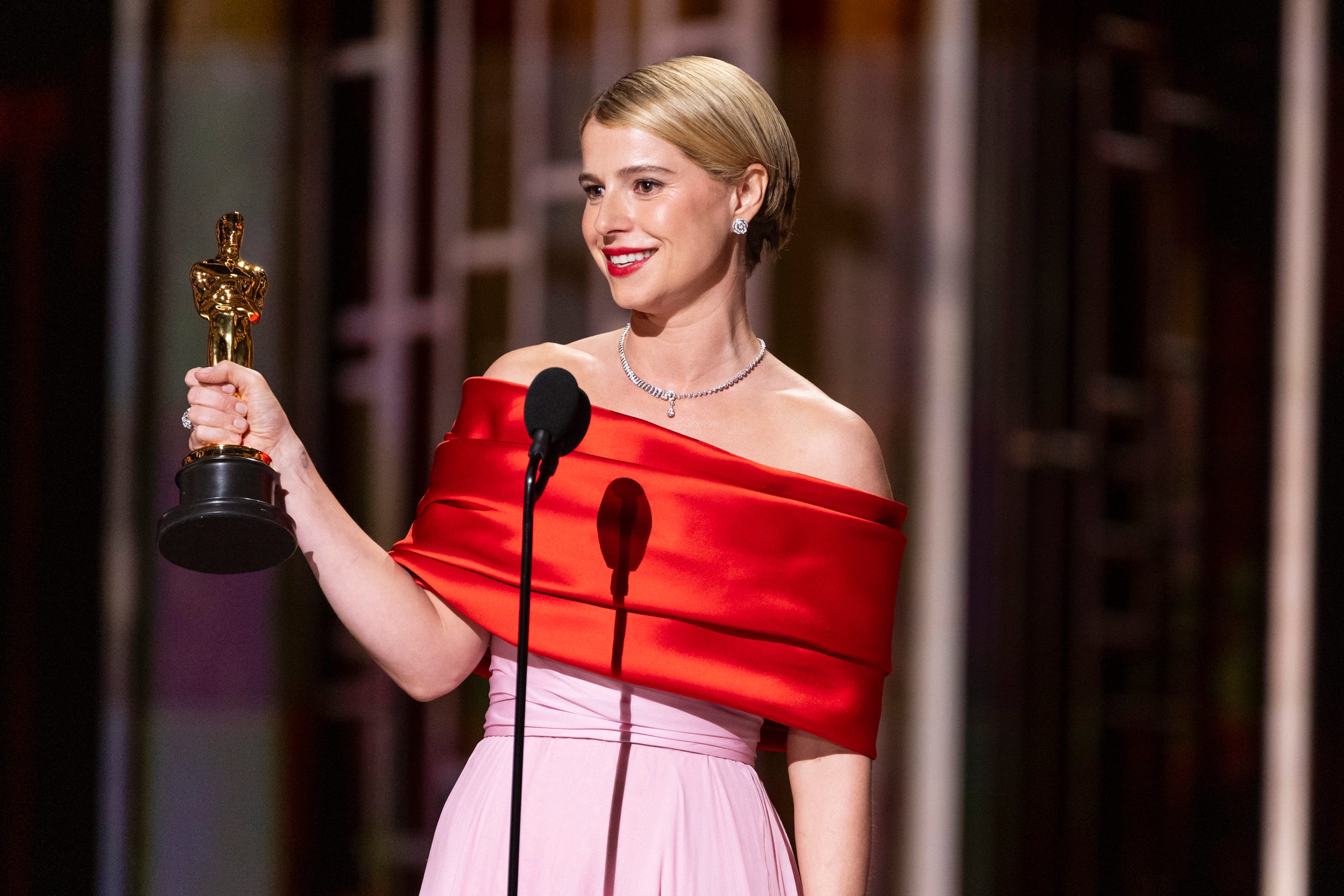
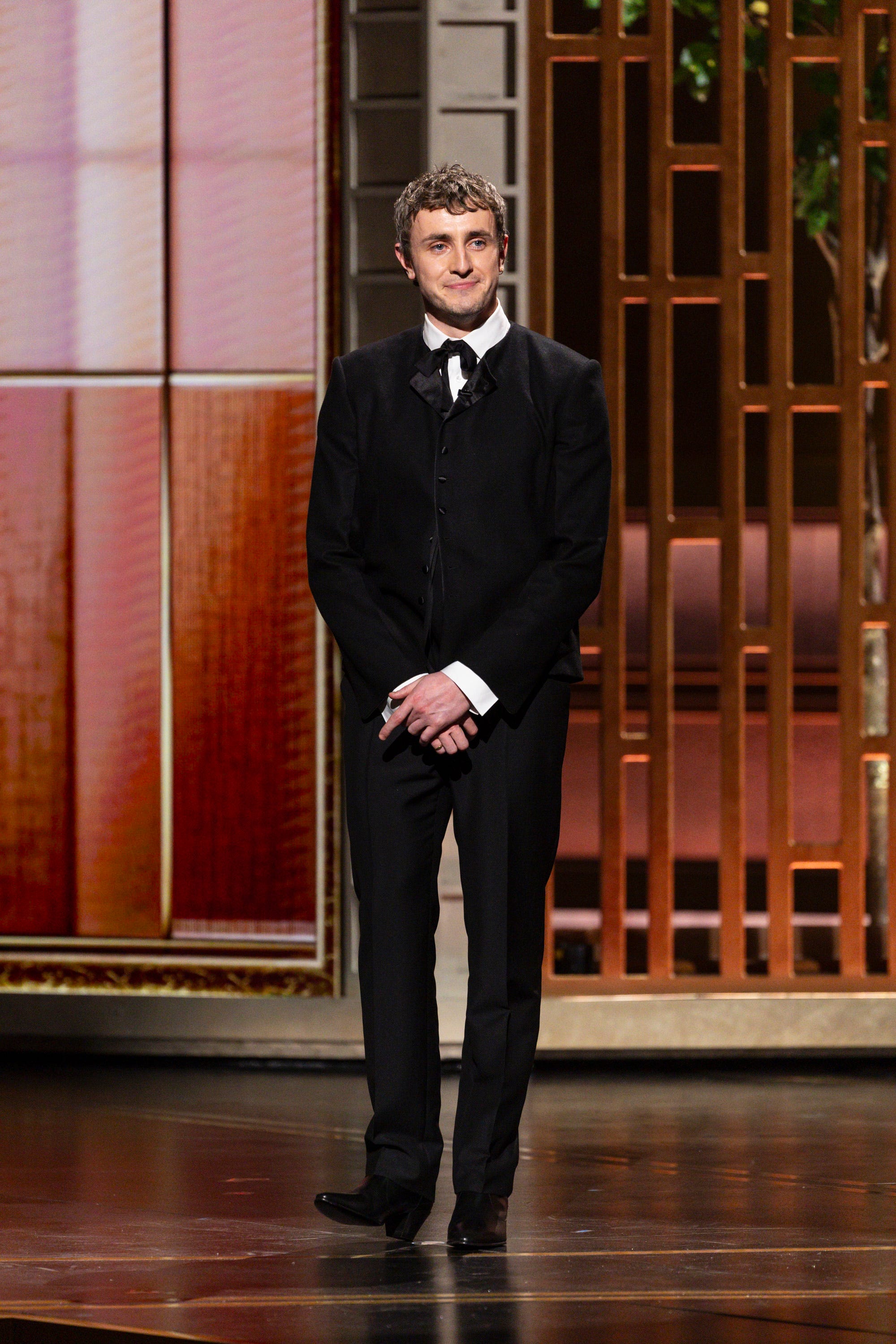
On Sunday Jessie Buckley won the Oscar for best actress for her gut-wrenching performance as a grieving mother in Hamnet.
Her victory was hardly an upset. The thirty-six-year-old was viewed as the frontrunner in the race since Hamnet, a fictionalized look at William Shakespeare’s family life, hit the fall festival circuit. She had clinched virtually every precursor award, despite a worthy batch of contenders like Emma Stone and Rose Byrne.
But it was surprising in at least one way: Buckley is the first Irish woman to win an Academy Award for lead actress in the nearly 100-year history of the Oscars. Despite Ireland’s rich theatrical tradition, only two other Irish women, Saoirse Ronan and Ruth Negga, have been nominated in the category.
Though she has lived and worked in the United Kingdom for the last 15 years, Buckley paid tribute to her Irish family in a moving, heartfelt speech. She dedicated the award to “the beautiful chaos of a mother’s heart,” and ended by saying “Go raibh maith agaibh, slán,” — or “thank you, goodbye” in Irish.
Two years ago, Cillian Murphy became the first Irish-born performer to win the Oscar for best actor, for his role in the historical drama Oppenheimer. (Before you ask, “but what about Daniel Day-Lewis?”, the three-time Oscar-winner has Irish citizenship and has lived there for many years, but was born and raised in England.)
Buckley was the most prominent representative of Irish culture on Sunday night, but not the only winner from her homeland: visual effects artist Richard Baneham picked up his third Academy Award for his work on Avatar: Fire and Ash, and according to Screen Ireland, Irish films and talent earned 10 nominations this year. Irish music also played a pivotal role in Sinners, Ryan Coogler’s Oscar-winning Jim Crow horror story.
In yet another glaring sign of Irish cultural ascendance and recognition, Buckley’s Hamnet co-star Paul Mescal is also Irish. That’s right: A middle-class lad from County Kildare — not a Brit — played The Bard, the most celebrated writer in the English language. (Oscars host Conan O’Brien — a famed Irish-American — even noted that for the first time since 2012, there were no British nominees in the best actor or actress categories this year. Take that, Great Britain!)
Irish president Catherine Connelly acknowledged Buckley’s historic victory in a press statement, calling it “a thoroughly deserved testament not only to Jessie’s outstanding performance in Hamnet, but to her performances both in film and on stage across her career to date. I know that her proud community in Kerry and beyond will be sharing with her in this wonderful achievement.”
Buckley’s win is one part of a broader surge in Irish popular culture over the last decade.
In recent years, Hollywood has been gripped by Hibernophilia, with Irish actors like Ronan, Buckley, Mescal, Barry Keoghan, Domhnall Gleeson, Andrew Scott, Nicola Coughlan, and Eve Hewson popping up in seemingly everything. (Irish actors and this “green wave” has coincided with the popularity of other Irish cultural exports, like Sally Rooney’s novels, TV shows such as Bad Sisters and Derry Girls, the politically charged hip hop trio Kneecap — and their autobiographical movie — and even Kerrygold butter.)
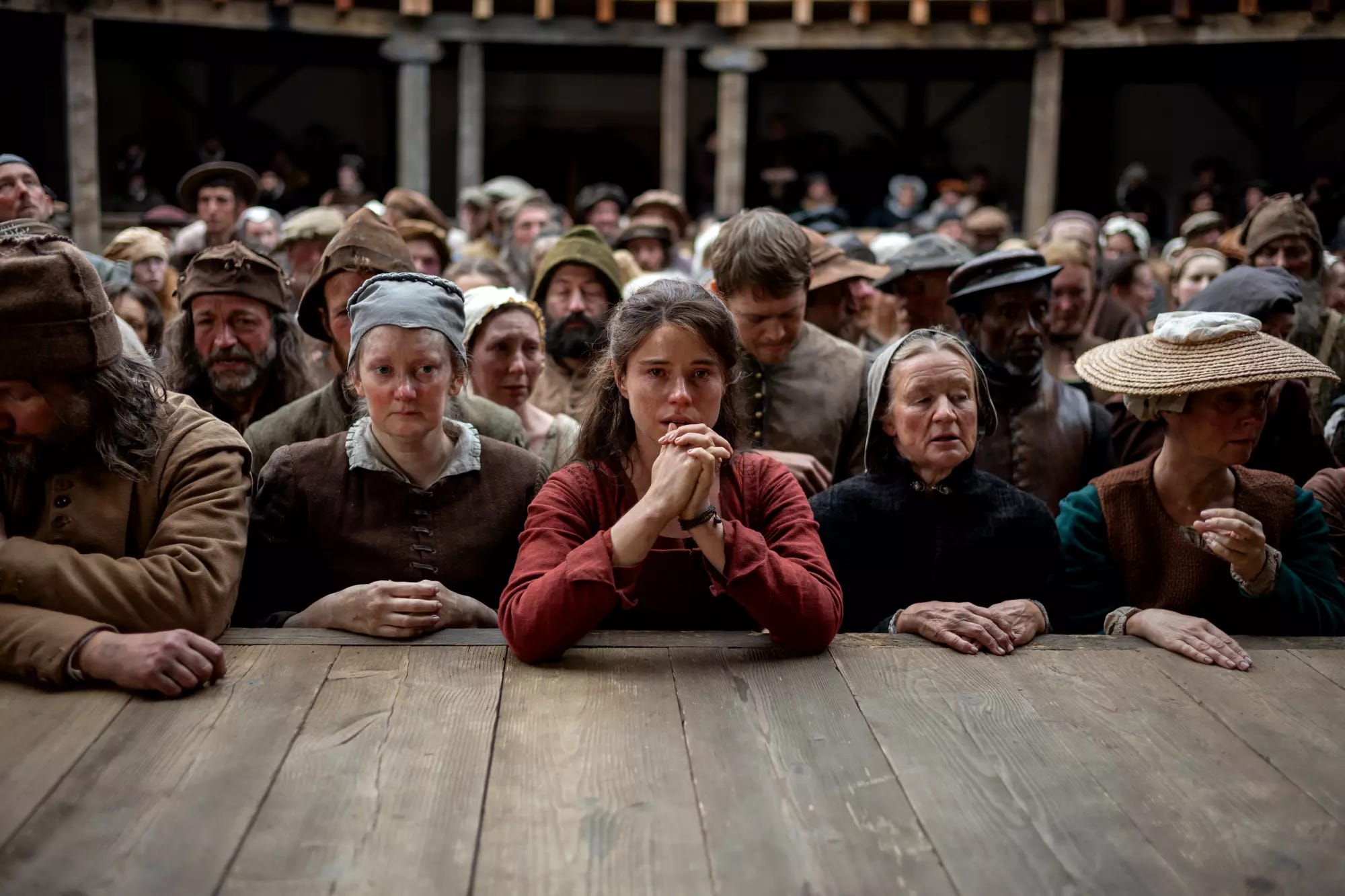
2023 was a watershed year for Irish talent in Hollywood, when movies and actors from the country racked up 14 Oscar nominations. (And Colin Farrell should have won for Banshees of Inisherin, but let’s not dwell on that.) That year, Paul Mescal, promoting his performance in the film Aftersun, made his home country proud by giving an interview in the Irish language on the red carpet at the British Academy of Film and Television Awards — a highly symbolic venue for such a gesture.
Despite its small size and population (about 6 million), Ireland has long punched above its weight, culturally speaking — particularly in literature and music.
“We’re really good storytellers because that’s all we had for so long,” Sharon Horgan told me in 2024. “We had nothing. We just had the craic and someone to be angry with. There’s an amazing tradition of storytelling, and also this great darkness and ability to harness tragedy and make a great song or a story about it. For a small island, we’ve always had enormous talent come out of it and a hugely influential impact on culture.”
Irish pop culture may be particularly appealing in 2026 because it doesn’t come with the same geopolitical baggage as the equivalent from the United States, the U.K., or pretty much every country in Western Europe. Because of their history as a colonized nation, the Irish are, on the whole, deeply sympathetic to subjugated people everywhere, an affinity that has grown stronger since the war in Gaza began in late 2023. “There’s a nonthreatening feeling to Ireland. We’ve never invaded anyone; we’ve never colonized anyone. What’s not to like about that?” columnist Séamas O’Reilly told Vulture in 2024. Essentially controlled by the Catholic Church just a few decades ago, Ireland has undergone sweeping political and cultural change, and is now firmly on the right side of issues like abortion and gay rights (while certain other countries are frantically moving backwards).
Since Donald Trump’s re-election, increasing numbers of Americans see Ireland as an appealing alternative to the U.S. According to The Irish Times, the number of American citizens seeking asylum in Ireland has increased more than four-fold since 2024, and nearly 10,000 Americans moved to Ireland in the 12-month period ending April 2025. (Actor Rosie O’Donnell was one of them.)
The politics are one thing. But there’s another, more straightforward explanation for Ireland’s cultural ascendance: money.
Over the last decade and a half, both the Republic of Ireland and Northern Ireland have become busy hubs for film and TV production, thanks to generous government subsidies. The financial incentives are so compelling that a number of American game shows are now filming in Ireland, flying contestants in from the U.S. (because airfare for an entire cast and crew is still cheaper than making a show in L.A.) This production boom has helped train local crews, editors, and technicians. Within the country, programs continue to be launched in support of creative endeavors, including initiatives that provide basic income for artists.
The country, with a rich theatrical lineage, has only recently begun to foster homegrown acting talent.
Ireland is home to the Abbey Theatre, the first state-subsidized theater in the English-speaking world. It was also the training ground for Irish dramatists like J.M. Synge for over a century. But it did not have a drama school on the level of the Royal Academy of Dramatic Art in London until 2011, when the Lir Academy — also known as the National Academy of Dramatic Art at Trinity College, Dublin — opened its doors.
“The idea of professional acting training was never fully appreciated in Ireland,” said founder Danielle Ryan, who helped fund the conservatory with her family’s airline fortune, in 2011. “Mostly the tradition in Irish theater was, ‘Get up on stage and give it a go.’” Though it’s a tiny program, it has already proved successful: Paul Mescal graduated from the Lir in 2017 and was soon cast in the TV adaptation of Rooney’s Normal People — his breakthrough role.
Buckley, who is a few years older than Mescal, followed a more unconventional path to stardom. After finishing high school in her hometown of Killarney in County Kerry, she applied to the Guildhall School of Music and Drama in London, but was rejected. On a whim, she tried out for I’d Do Anything, a talent competition show following the search to find new stars for a West End revival of Oliver! (You can watch highlights on YouTube, but warning: you will definitely get sucked into the late-aughts body-shaming horror of it all.)
She finished in second place, but the visibility helped her land work on the stage — and a place at RADA. A decade and a half after being a reality TV also-ran, Buckley is an Oscar winner, one of the industry’s biggest stars, and the most visible face of a new generation of Irish talent. Hopefully, the Irish government’s investment in the arts will lead to more Jessie Buckleys and Paul Mescals in the future.
We can all drink to that, especially today. Sláinte.
Don't ignore contemporary Irish writers! Claire Keegan, Sebastian Barry, Colm Toibin, Colum McCann, Paul Murray, Paul Lynch, Kevin Barry, Niall Williams, Sally Rooney, John Banville, the late William Trevor, Roddy Doyle, Anna Burns, Donal Ryan and oh dear, I am sorry to be leaving many out! Humane writers, with such a gift for language.
Ireland is a country that went from the 19th Century to the 21st without passing through the 20th.