


In recent days, the news has been filled with talk of memes. “The White House’s ‘memeification’ of war with Iran sparks scrutiny,” the Hill reported. “Service members and families who lost loved ones say the Trump team’s memes and jokes trivialize combat and sacrifice,” the Washington Post said.
Iran, which bans the Internet at home, keeps churning out its own memes, including some with Lego imagery. “Pro-Iran groups have used AI to troll Trump and try to control the war narrative,” said The Associated Press. A story saying “Iran’s propaganda machine trolls Trump” included a response from a White House spokeswoman who said NPR “should look inward as to why they are referring to terrorist regime propaganda as ‘trolling.’”
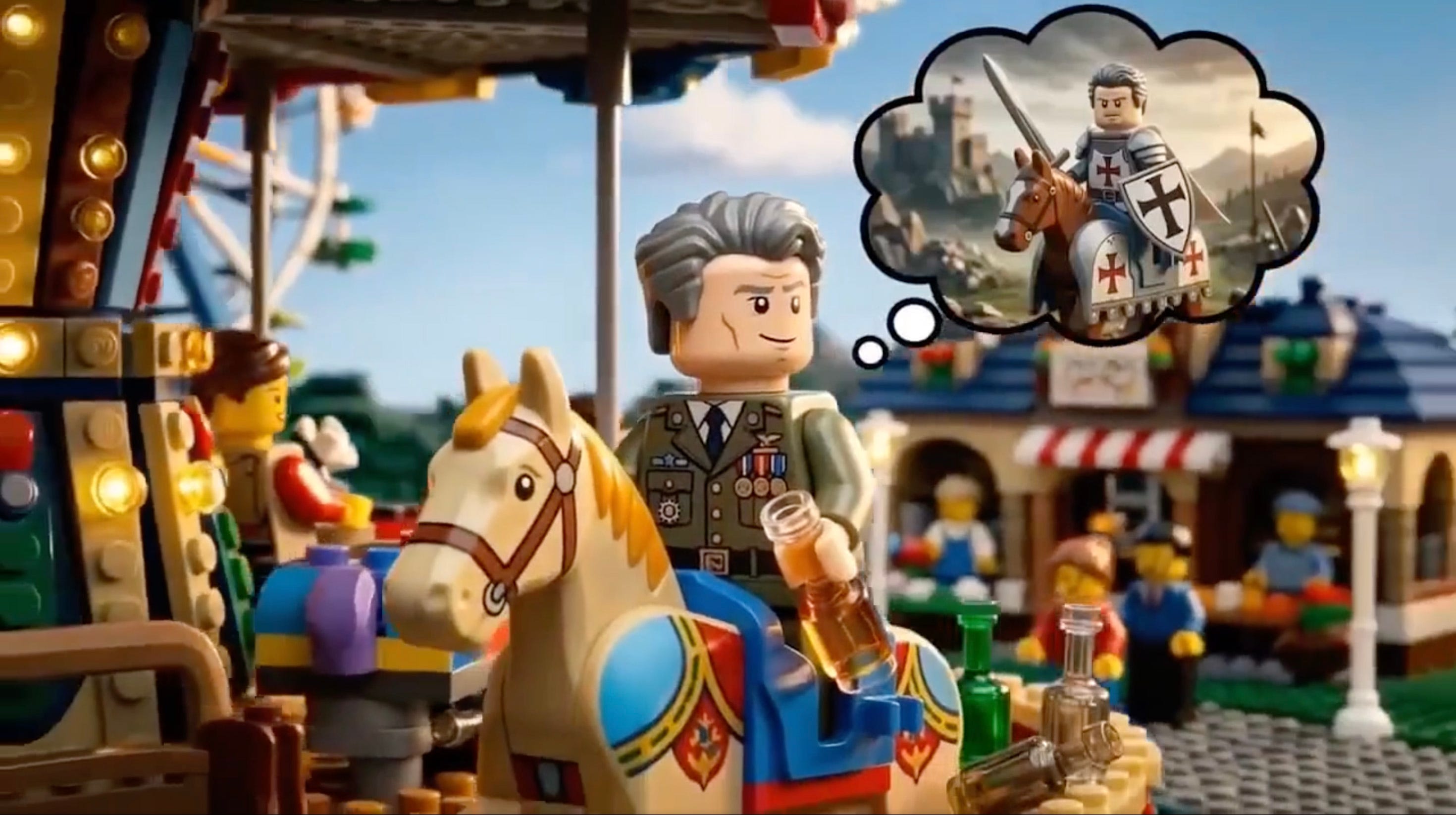
This coverage generally misses the big picture and betrays a profound hypocrisy. Memetic warfare has entered a new, dangerous era — and the media itself has helped bring this about.
Of all the topics I’ve discussed on They Stand Corrected, my podcast and newsletter fact checking the news, memetic warfare is one people bring up especially often. It’s a phenomenon that surrounds and manipulates us in ways most people don’t realize.
The term “meme” was coined in the 1970s by evolutionary biologist Richard Dawkins to describe a “unit of cultural transmission.” Looking back, we can see memes used throughout history — symbols, signs, images, phrases, and more.
I spoke with Jason Korman, CEO of Gapingvoid Culture Design Group, who uses memetics — the study of memes — in his work helping the public and private sectors improve work cultures. Memes are everywhere, from “In God We Trust” to the Nike “swoosh,” he pointed out. President Barack Obama’s use of “Yes We Can” (previously used in Spanish and attributed to Dolores Huerta) and his “Hope” image were memetic tactics. So was President Donald Trump’s resurrection of President Ronald Reagan’s “Make America Great Again.”
Outside actors, meanwhile, use memetic warfare against the United States. In 2006, a master’s thesis from the Air Force Institute of Technology argued that it was time to “rethink the struggle against terrorism as a fight against an infection,” counteracting an “epidemic of terrorist ideology.” It specifically discussed memetics. In 2022, the U.S. National Counterterrorism Center wrote about the use of memes by violent extremists.
For people who want to use memetic warfare, this era is a gift, Korman said.
“With the invention of social media and the Internet, you can spread your memes into people’s pockets, literally. If one is interested in changing how people think and has lots of resources and lots of time, you can actually transform entire populations at any scale.”
Iran seized the opportunity. It took lessons from Russia and meddled in the 2024 election. “In 2016, the disinformation within the US elections predominantly rested on Russia as the perpetrator. In 2024, Russia has been joined by China and Iran,” according to a study published in the journal National Security and the Future.
In the United Kingdom, memetic warfare researchers testified last year about China, Russia, and Iran engaging “in systematic disinformation campaigns to undermine UK democracy, elections, and foreign policy.”
Korman wants the United States to use memes in a positive way to help instill pride and “unity around being an American.” That would mean focusing campaigns on questions like, “What do we believe in as a people, and what does this country stand for?” In this political environment, of course, that’s unlikely to happen.

The media is making it worse. Instead of serving as beacons of truth, today’s news giants beg for clicks by playing into people’s rage. A study of 40 million headlines found they have gotten more negative and focused on clickbait “regardless of journalistic quality.” News executives know that social media tools automatically show headlines, and many people screenshot them — so headlines become their own memes, helping drive traffic.
While all this is enough to beware the constant onslaught of manipulative memetics coming at us, there’s another risk as well. Memes laden with malware are on the rise. There’s every reason to believe that Iran is among those trying to take advantage of this. The regime has launched cyberattacks against the United States, including a thwarted one on Boston Children’s Hospital, the FBI said in 2022. Then-FBI Director Chirstopher Wray called it “one of the most despicable cyberattacks I’ve ever seen.”
So while Trump’s critics share Iran’s memes and the media provides superficial coverage, it’s crucial to recognize the darker reality. Memetic warfare is powerful, spreading quickly, and no laughing matter.
Josh Levs is host of They Stand Corrected, the podcast and newsletter fact-checking the media. Find him at joshlevs.com.
Thanks for publishing my latest column, The Contrarian. We're living in a very dangerous time, with anti-democratic movements growing on both the right and left. Memetic warfare is helping both, like never before. Weigh in over at https://theystandcorrected.substack.com/ !
Try also calling the memes tasteless, irreverent, and stupid. Trivializing war is unserious and in poor taste at the very least.
Also as usual, much of the legacy media is intent upon making as many clicks and as much profit as they can, continuing to do the American people a disservice. The worship of the god of Mammon does not redound to their image or credibility.