


If Carolyn Bessette Kennedy were alive today, it’s hard to imagine her being on TikTok, Instagram, or — God forbid — Facebook.
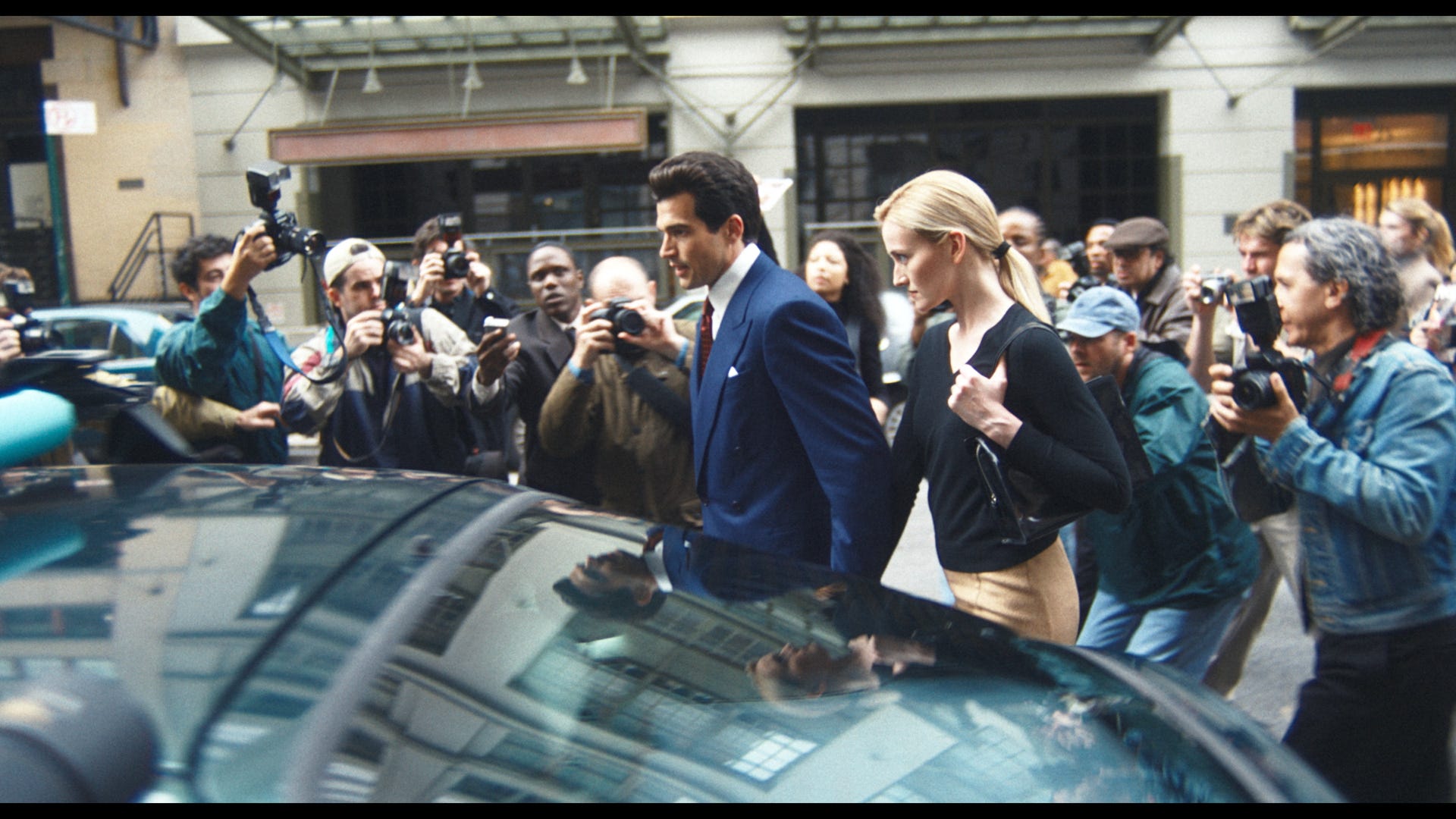
The Calvin Klein publicist became one of the most famous women in the world when she married John F. Kennedy Jr. in 1996. Yet even at a time when celebrities were less accessible than they are today, she was an unusually elusive figure who assiduously avoided the limelight. She granted virtually no interviews in her lifetime, and a compilation of every known clip of her speaking amounts to barely a minute long. These days, she is known mostly through the photos taken by the paparazzi who camped outside the couple’s Tribeca loft.
Ironically, Bessette’s utter disinterest in fame — as well as her impeccable minimalist style — has made her an icon with a younger generation raised in a clout-chasing culture. The fascination with Bessette has been building for years, through books about her enduring influence on fashion and films like David Fincher’s Gone Girl, which play on her unknowable image.
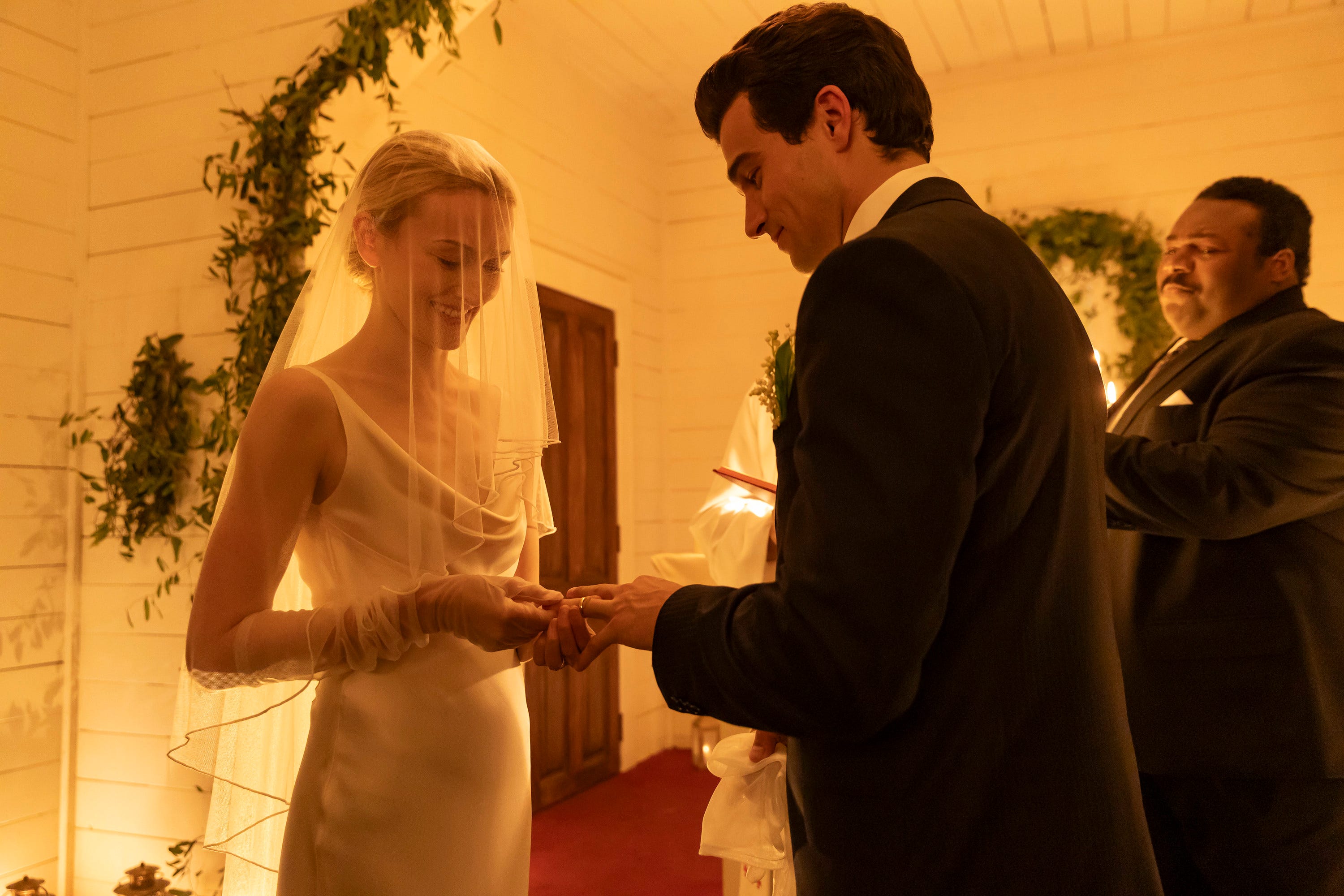
But the curiosity exploded into full-blown Bessettophilia in recent weeks, thanks to the release of Love Story: John F. Kennedy Jr. and Carolyn Bessette, a limited series following the turbulent relationship between the handsome political scion who was once voted “The Sexiest Man Alive” and his ineffably cool bride (played by Paul Anthony Kelly and Sarah Pidgeon, respectively). The finale — which wasn’t made available to the press, but will presumably depict the 1999 plane crash in which Kennedy, Bessette, and her sister, Lauren Bessette, died — airs Thursday on FX.
Since the show premiered on February 15, TikTok and Instagram have been flooded with CBK-related content. There are wistful images from her pre-JFK days, a zillion tributes to her instantly iconic bias-cut wedding gown, creepy renderings of what she’d look like now, and even close readings of her manicure style. Pidgeon’s mannered performance as Bessette has even sparked a meme in which people toss their hair and bite their lips dramatically in mundane settings.
The drama leans hard on ‘90s nostalgia, with a wall-to-wall soundtrack of bops by the Stone Roses, Fiona Apple, and The Breeders, and exacting recreations of shuttered hotspots like The Roxy. With major storylines about George, the glossy magazine Kennedy founded in 1995, and Bessette’s work at Calvin Klein in the Kate Moss and Marky Mark era, Love Story offers a tantalizing glimpse into a bygone era in fashion and publishing. It recreates a period when New York City had yet to be overrun by soulless chain stores and TikTokers, when it was possible for a twentysomething working in PR to afford her own apartment in Manhattan.
But to viewers who grew up in the age of the Kardashians, arguably the most unfamiliar yet enticing part of the series is Bessette — a woman who eschewed the attention she effortlessly seemed to attract.
“Can you imagine turning down the cover of every magazine? That’s what made her special. She didn’t need it,” says Sydney Steinberg, a thirty-four-year-old writer and comedian in Los Angeles who has shared humorous tributes to CBK on her Instagram account, including one in which she is baffled by the very concept of social media.
Bessette had an undeniable mystique that seems all but impossible to maintain in the age of the smartphone. “You can’t have that anymore, Steinberg says, “We get to see inside every celebrity’s life. They don’t even feel famous anymore.”
Unlike contemporary celebrities turned lifestyle influencers, “She just wanted her private life,” Steinberg says. “I think that’s why they’re so obsessed with her. She just was living, and not for the camera, just for herself.”
Steinberg was eight years old when Bessette died, and remembers the tragedy well. (Her mother and grandmother always admired her chic discretion).
But Love Story — and the social media algorithm pushing CBK content far and wide — have also introduced the ultimate ‘90s It Girl to a new generation, many of whom had limited prior knowledge of Kennedy family lore.
Elizabeth Sweeney, a twenty-two-year-old academic administrator from London, had never heard of Bessette until a few weeks ago, when Love Story kept popping up on her timeline. “Probably because I love romance shows,” she says. She has been watching faithfully, even though she is not impressed by the writing or acting. “It’s the aesthetic that’s making me want to watch…the ‘90s minimalism,” she explains. People her age view the decade as “the ultimate era — before phones really existed, but when fashion and activities like drinking cosmos in cool New York bars were a thing…[It] seemed like a trendy era, but with people trying less hard.”
“I think Gen Z’s are starting to crave simplicity due to the overconsumption we have now,” says a 27-year-old content creator who uses the handle Nordic Cowgirl on TikTok. She grew up in Europe and was not familiar with CBK until three years ago; now she posts almost exclusively about her. “Carolyn definitely had that image about her due to living in the ‘90s. We crave that time we didn’t have, because it seemed so much better than the current world we live [in]. I know I crave the past way of living due to how our society is now, especially our obsession with phones and media.”
The show is a hit on social media and has gotten mostly positive reviews from critics, but its premiere was preceded by months of bad press. Last summer, when Ryan Murphy Productions shared a first-look image of Pidgeon and Kelly in outfits that looked like they were purchased at Zara, the backlash was so furious that the show’s costume designer was eventually replaced. Then JFK Jr’s nephew, Jack Schlossberg, denounced executive producer Ryan Murphy for “making millions” off his family’s tragedy — not the first time the mega-producer has been accused of exploiting other people’s trauma. (The surviving members of the Bessette family issued a statement in 1999 and have said almost nothing since.)
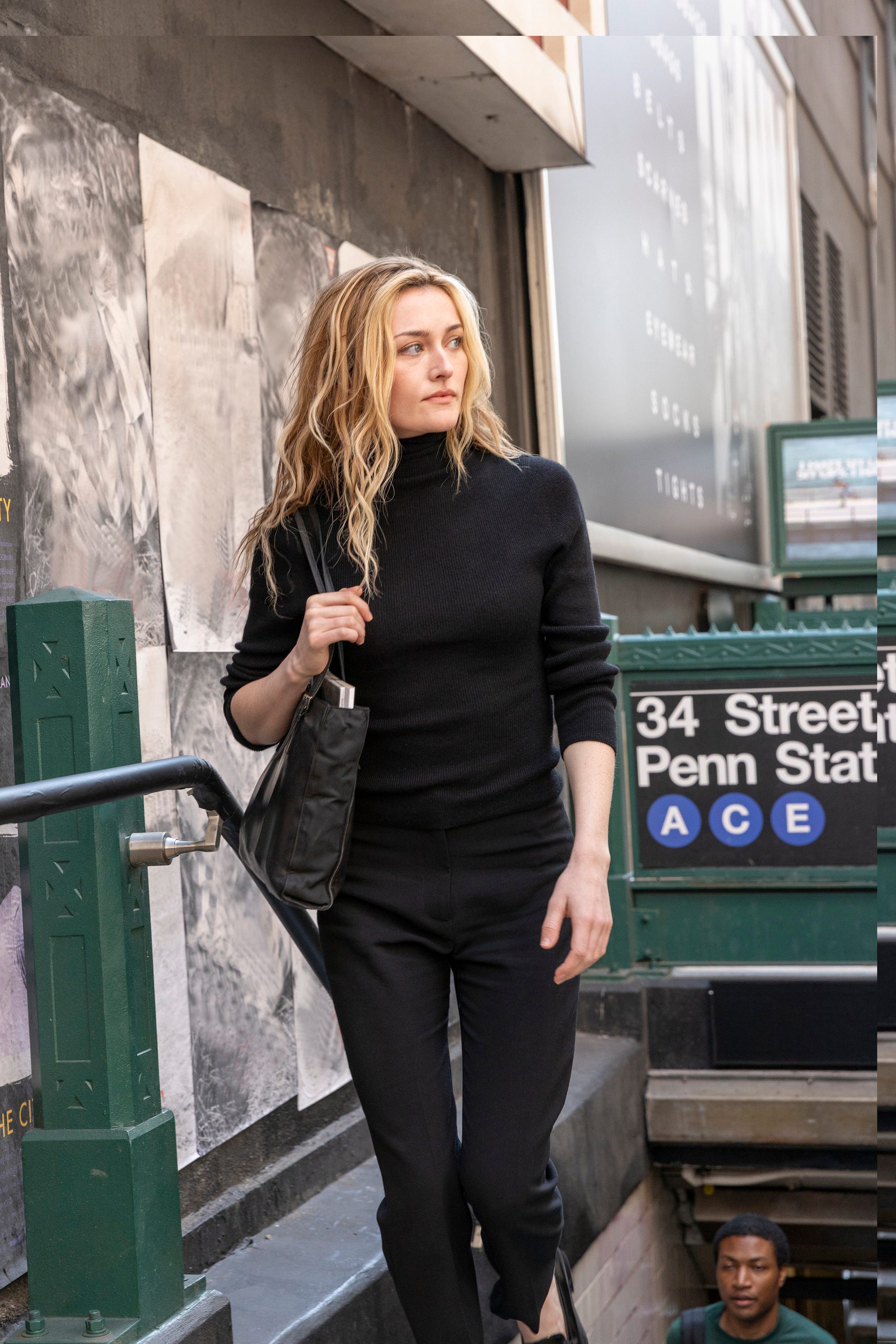
At their best, Murphy’s nostalgic docudramas humanize figures like Marcia Clark, who were once maligned by the bloodthirsty press. In this regard, Love Story is largely sympathetic to Bessette, drawing explicit parallels between her plight and that of Princess Diana, whose death marks an emotional turning point in the penultimate episode. Creator Connor Hines has left out some of the more salacious rumors about the couple’s relationship, and instead chose to portray Kennedy as a devoted, if slightly self-absorbed, husband, not a fatally reckless womanizer. His version of Bessette is funny, free-thinking, and down-to-earth, nothing like the tabloid caricature of her as a volatile cokehead. (By contrast, the show is much harder on Kennedy’s ex, actress Daryl Hannah, who penned an opinion piece for The New York Times denouncing the show’s “irritating, self-absorbed, whiny” characterization of her.)
The series arguably couldn’t have come at a worse time for the Kennedy family, which is dealing with the slow-rolling destruction of the Kennedy Center, the ruinous policies of RFK Jr., and the tragic death of JFK Jr’s niece, Tatiana Schlossberg. But ultimately it has very little to say — good or bad — about the family’s complicated political legacy or well-known history of dysfunction and misfortune.
Instead, Love Story is framed as a tragedy about an independent, accomplished woman who feared losing her hard-earned sense of self to the man she married — and wound up losing far more than that.
It’s poetic that, 27 years after her death, Bessette is being celebrated in her own right by a younger generation of women, even if all the attention would make her cringe.
Meredith Blake is the culture columnist for The Contrarian
I'm not a pop culture person, so beyond reading George a coupe of times, they didn't mean much to me, until the weekend me, my mom, her co workers went whale watching in Massachusetts the weekend JFK Jr.'s plane went down.
While my group did have fun, I could tell the state was in shock and mourning, and I felt bad for everyone. And what also brought it home for me was watching, in a Boston hotel room, a PBS documentary about the Kennedy's. I don't remember the name of it.
And by coincidence, Pearl Jam's biggest hit, Last Kiss, a cover song from the early 60s about a car crash that seemed apt, if morbid, was all over the radio that weekend, as I had my walkman with me. The and one hit wonder LEM's Steal my Sunshine. Put it all together, what a quirky trip.
Sad demise. I was headed to the newly designated Czech Republic for a world Harp conference the day they crashed. I was well over 40 yrs old. So sad. So many stupid things an impudent, full of himself male Kennedy did. What a mistake of a life. Women should not associate with these people. Dangereux. And their Kennedy compound looks like a 50’s dump. All it is is land. Granted a beach house, but nothing special. Why do we give them so much credit? Joe Kennedy was a racist anti semite. Luckily his living boys might have redeemed him. Look where that got them. JFK,Jr struggled and Caroline has been making up for it ever since, now she has a dishy son running for office (frankly I hope he wins). What a sad family, full of tragedy.