


The “presumption of regularity,” a concept neither mentioned in the Constitution nor enshrined in any law, boils down to the notion that courts should give presidents the benefit of the doubt. As voting rights litigator and founder of Democracy Docket Marc Elias wrote in May, “Courts assume that the president and his administration act in good faith, that their actions are lawful, their statements truthful and their motivations honest.” (Don’t laugh, this used to be true.) However, when it comes to Donald Trump, Elias explains: “The cat-and-mouse game he has played with federal judges is rapidly turning into outright defiance. At every stage, the government asserts the presumption of good faith and regularity to shield itself from the judicial scrutiny democracy requires.” Well, no one outside of the MAGA cult thinks the presumption of regularity is reasonable under this regime. (Even more fanciful is reliance on this Justice Department’s “professional ethics of the lawyers who appear before judges on behalf of the government.”)

That presumption was called into question again on Friday when FBI agents conducted searches of long-time virulent Trump critic, John Bolton. As lawyer, former FBI agent, and The Contrarian contributor Asha Rangappa wrote for The New York Times, “[T]he very fact that the public can’t be sure whether this is, in fact, a legitimate investigation highlights the current crisis of trust in federal law enforcement, a crisis that has been exacerbated by the words and actions of Mr. Trump and members of his administration.”
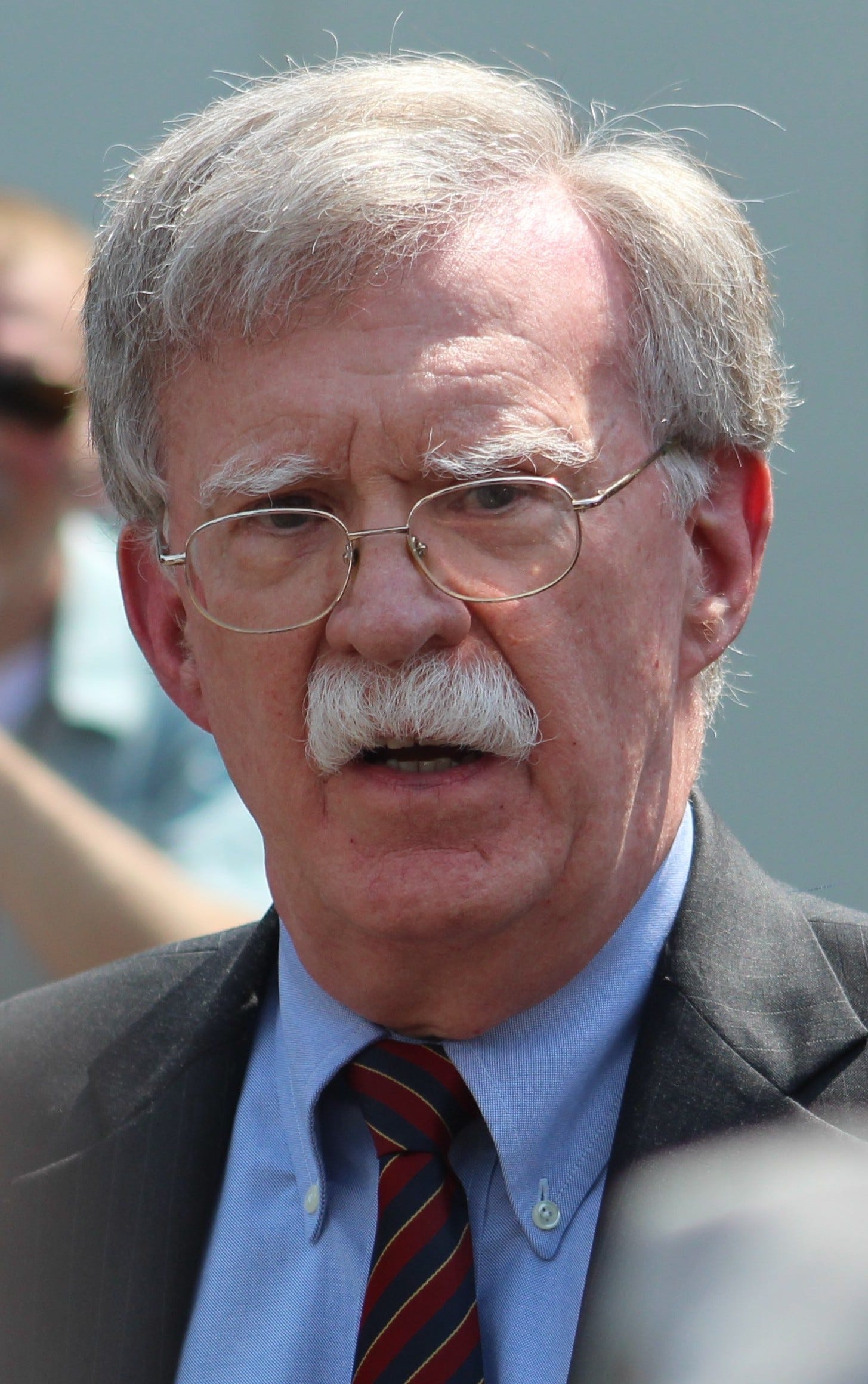
When the head of the FBI has made an enemies list (on which Bolton’s name appears), the regime systematically yanks security clearances and protective details for political opponents (including Bolton), and numerous figures—including Trump, FBI Director Kash Patel, and Vice President JD Vance—comment on the ongoing Bolton “investigation,” one might reasonably conclude things are not on the up-and-up. (As Peter Baker notes, citing his and Susan Glasser’s well-documented book The Divider, “Trump and his team have sought to use government power to go after Bolton since his first term even when it meant ignoring normal standards, so much so that his own assistant attorney general quietly resigned rather than go along anymore.”)
Given all that, the phrase the “presumption of regularity” is laughable under this thugocracy. As The Contrarian contributor Barb McQuade told the New York Times, “For all we know, the investigation into John Bolton’s conduct may be rock solid, but Trump’s Justice Department has lost any presumption of regularity.” However, she continues, “In light of all of the threats the Trump administration has made to target his enemies, they have lost any presumption of good faith.”
Beyond Bolton, evidence abounds to support skepticism about the regime’s intentions, based on its pattern of weaponizing government against opponents. The list of particulars includes: contriving “mortgage fraud” allegations against two of Trump’s prime enemies (New York Attorney General Letitia James and California Democratic Sen. Adam Schiff) as well as a Federal Reserve governor whom Trump pines to replace; extorting law firms that have represented foes; delaying, evading, and arguably ignoring a host of legal rulings; and charging Democratic officeholders (e.g. Judge Hannah Dugan, New Jersey Rep. LaMonica McIver) with bogus accusations of interfering with ICE arrests.
The has been an abundance of other instances of manifest “irregularity”: concocting a “corrupt bargain” to keep the New York mayor under Trump’s thumb; dismissing Justice Department officials who prosecuted Jan. 6 criminals; pardoning Jan. 6 felons; firing a Justice Department lawyer for being candid with the court; investigating special counsel Jack Smith, threatening to impeach judges who rule against Trump; slapping tariffs on Brazil for prosecuting its former president and coup instigator; and extracting “settlements” in frivolous claims against media companies (and holding up regulatory decisions until they pay).
We cannot assume good faith when the president and his henchmen routinely lie (e.g., BLS figures are fraudulent! Crime in D.C. is soaring! Prices are down! No classified materials in Signalgate! Elon Musk doesn’t run DOGE!). As constitutional scholar Larry Tribe put it to me recently: “The presumption of regularity rests on what has become a counterfactual assumption of normalcy.” It is time to make the presumption of irregularity (i.e. bad faith) when it comes to the Trump crowd.
Normalcy is entirely missing in the immigration realm, most glaringly in deportation of migrants to El Salvador. In dissembling over the timeline and falsely insisting the U.S. could not return Kilmar Abrego Garcia, Justice Department lawyers earned the ire of federal judges. Given the government’s repeated misrepresentations, then, courts going forward should “operate with persistent (and justified) skepticism toward the executive branch. ... effectively shifting the burden to the government to affirmatively demonstrate its good faith, even in routine matters,” argued Alan Z. Rozenshtein in Lawfare.
For example, in considering a warrant to search the home or office of someone whose name is on a enemies list (or who happened to have litigated against Trump or whom Trump accused of “treason”), courts should demand an especially detailed factual showing to establish “probable cause” and should not rely on a Trump political appointee’s or recent hire’s affidavit without corroboration. Judges must be hyper-vigilant so as not to authorize a vengeance investigation.
Likewise, when evaluating if the government willfully disobeyed a court order, judges should assume trained lawyers understand the plain meaning of orders (and hence that disobedience is deliberate). If the government wants to rebut the assumption it willfully defied the court, a high-ranking official can testify to exculpatory facts under oath. Finally, whenever Trump invokes an “emergency” or other grounds (“rebellion”) for deploying troop domestically, courts should insist the government prove the factual basis for its claim (e.g., From where did they get the data that crime was trending up in D.C.?).
In short, the “presumption of regularity” is an absurd phrase to apply to an administration that cavalierly dissembles, disingenuously feigns confusion, and abuses power. The rule of law cannot survive if judges allow government lawyers to treat them like suckers.
I think it's fair to say that that there is a presumption that there is either a political or personal motive in 99.9999% of every act or comment made by Trump.
This is an excellent summary of the Bully-In-Chief’s dictatorial acts.