


Since it was first published in 1847, under the pen name Ellis Bell, Emily Brontë’s Wuthering Heights has become one of the most widely adapted works of literature in the Western canon. It has been reimagined countless times in film, television, theater, ballet, and even pop music, and is almost as often framed as a tragic tale of ill-fated lovers, Cathy and Heathcliff, whose intense connection forms in childhood as they run free on the windswept Yorkshire moors.
Yet most of these adaptations only cover the first half of the novel, in which Cathy marries her neighbor Edgar to secure her financial future as well as Heathcliff's, then dies in childbirth. Few adaptations take on the book's second half, which follows Heathcliff on a methodical quest to destroy Cathy's remaining kin, and many gloss over or entirely elide the darker elements of the narrative, such as child abuse, sexual violence, animal cruelty, necrophilia, and racism.
The first cinematic adaptation of Wuthering Heights, a silent film from 1920, has sadly been lost to time. But easily its most celebrated interpretation is the 1939 film starring Laurence Olivier and Merle Oberon, which was nominated for Best Picture at the Academy Awards (ultimately losing to Gone With the Wind). It succeeds as a slice of classic Hollywood entertainment, but is wildly unfaithful to the source material, with an appended happy ending showing Cathy and Heathcliff’s ghosts together in the afterlife.
Each successive generation has had its own Cathy and Heathcliff — sometimes several — and a version of Wuthering Heights that reflects the cultural impulses of the moment. In the ’50s there were Rosemary Harris and Richard Burton in a TV version (thought to be lost until it was recently rediscovered). In the ’90s there was Juliette Binoche and Ralph Fiennes, who later teamed up in The English Patient. The new millennium has seen a Masterpiece adaptation starring Tom Hardy and a gritty indie film from British director Andrea Arnold featuring a Black Heathcliff.
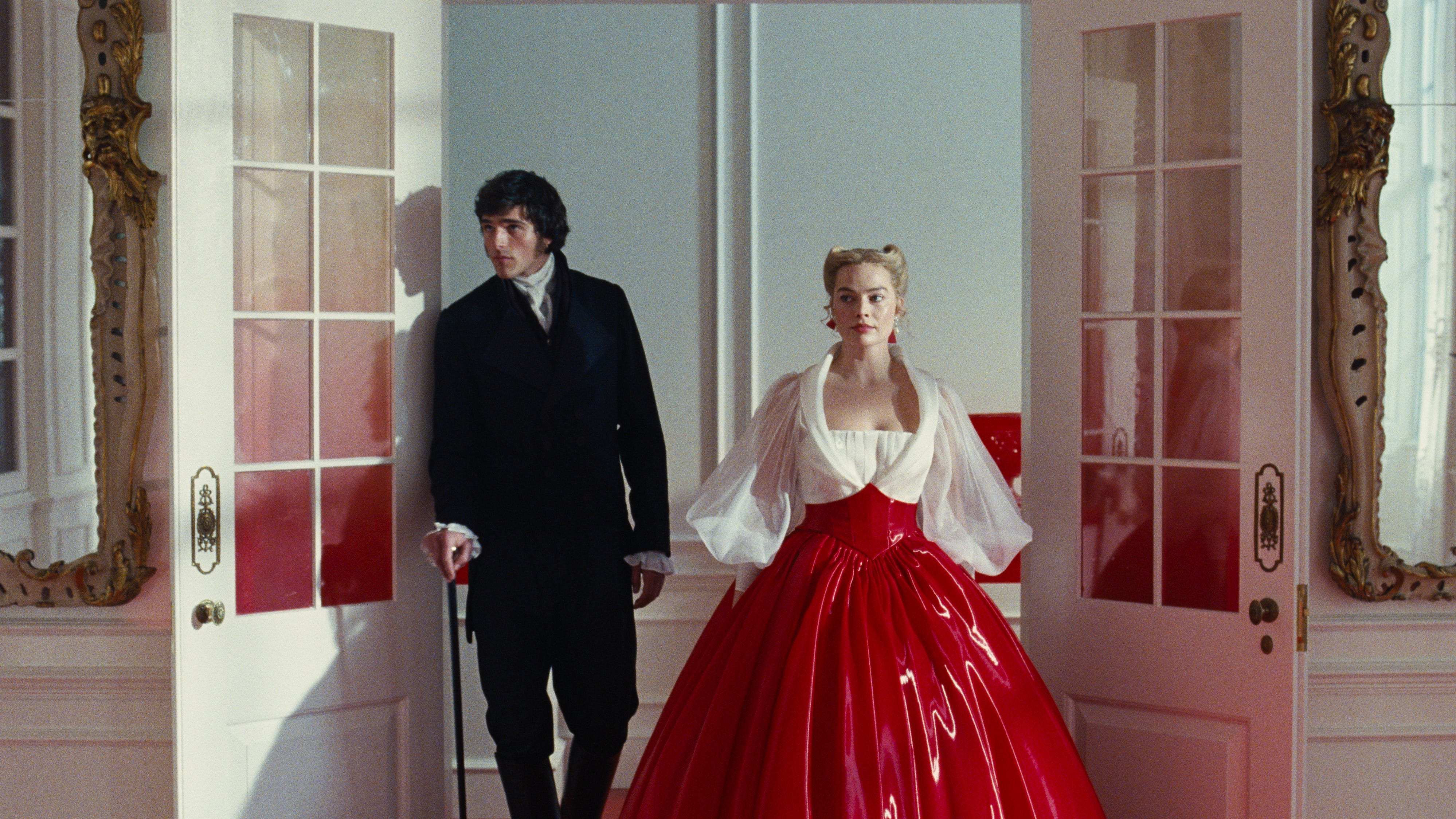
This weekend brings yet another take on Brontë’s twisted tale of obsession, a big-budget Hollywood production starring two of the industry’s most gorgeous actors, Margot Robbie and Jacob Elordi, as the doomed couple.
Written and directed by Emerald Fennell, this version of Wuthering Heights seems expressly designed for a post-Fifty Shades of Grey era. It is unrepentantly (and unrelentingly) horny, crammed with suggestive cutaway shots of snail mucus and gooey egg yolks. It reimagines the visceral intensity of Cathy and Heathcliff’s relationship as literal kink (complete with leather and latex costumes that look like Swiss Miss fetishwear), taking a story about women’s subjugation and turning it into erotica.
Like so many filmmakers before her, Fennell has made sweeping changes to Brontë’s novel, leaving out the second half of the book, eliminating multiple characters from the first generation, and significantly aging up the central duo (Robbie is 35; in the book Cathy dies at 18). But where her film departs even from previous adaptations is just how much she embellishes the story with her own fantasy: this is unabashed fan fiction that imagines what happens if Cathy and Heathcliff had gotten to consummate their passion, over and over again (while she was pregnant with another man’s baby).
Fennell has stylized the title with quotation marks, as if to suggest this is not “really” Wuthering Heights. She explained the choice this way: “You can’t adapt a book as dense and complicated and difficult as this book. I can’t say I’m making Wuthering Heights. It’s not possible. What I can say is I’m making a version of it.”
Adaptations of an adaptation
Fennell is right that Wuthering Heights does not readily lend itself to adaptation. It is a strange, unwieldy book, not easily compressed into a two-hour feature film — or even a multi-part television series. Spanning multiple generations of two intermarried families, the story is told from the perspective of two unreliable narrators and features a cast of characters who range from mildly unpleasant to utterly diabolical. Even the most attentive reader will likely need to consult a family tree to keep track of the various Lintons and Earnshaws.

Then there’s the thorny issue of Heathcliff’s ambiguous racial identity, which has divided scholars for decades but has been glossed over by most filmmakers other than Arnold. (A foundling plucked off the streets of Liverpool, a major slave port in the 18th century, Heathcliff is described as, among other things, “a dark-skinned gypsy.”)
So why do so many filmmakers keep trying to adapt a book that is as fundamentally untamable as the moors? Hila Shachar, a professor at the University of Dundee in Scotland, explores this conundrum in her book Cultural Afterlives and Screen Adaptations of Classic Literature: Wuthering Heights and Company
“People like replicating Pride and Prejudice or Sense and Sensibility, because they have ready-made dialogue and the plot can be followed quite faithfully,” Shachar told me over Zoom. “But with this novel, you have a lot of filmmakers going, ‘I only read half the book.’ And I was interested in why it was so culturally relevant, if the book itself is not the thing that is being faithfully adapted.”
Shachar argues that the 1939 film, directed by William Wyler and produced by Samuel Goldwyn, has usurped the actual novel in the popular imagination. It transformed Cathy and Heathcliff into archetypal lovers, like Romeo and Juliet, frolicking on the moors as adults.
“In people’s minds, it’s a very clear-cut, transcendent heterosexual love story associated with the English landscape. That’s what that film created, visually and ideologically,” she said.
“If you read notes from Samuel Goldwyn, he basically said ‘Why would anyone like these characters as they are? We’re going to turn this into a romance.”
The novel is not about romantic love, but power, Shachar said, and how it relates to class, race, and inheritance. Cathy has no power because she is a woman; Heathcliff because he is an orphan and racial other.
Shachar notes that the impulse to tame Wuthering Heights originated with Emily's own sister, Charlotte. A year after the book was published, Emily Brontë died of tuberculosis. Soon after, Charlotte wrote a well-known preface that all but apologized for her sister’s “rude and strange” book, saying it was “hewn in a wild workshop, with simple tools, out of homely materials.” The goal, Shachar said, was “trying to save their social reputations in Victorian society” after the book’s true authorship became known.
Most versions of Wuthering Heights are actually “adapting Goldwyn and Wilder,” rather than Emily Brontë, she said. (Even Kate Bush’s fantastically strange 1978 hit single, which she was inspired to write after catching a few minutes of a BBC version of Wuthering Heights and before she read the novel, is essentially an adaptation of an adaptation.)
These interpretations of Wuthering Heights often serve as “barometers for what’s happening at a given moment.” The 1939 film was made during the lead-up to World War II, at a time when many expats in Hollywood were pushing for American intervention. “You could almost read it as propaganda in the way it presents England. It neutralizes the class issues in the novel,” Shachar said.
Shachar believes that Hurlevent, Jacques Rivette’s little-known French-language 1985 adaptation, comes closest to capturing the essence of the novel in its portrayal of Cathy and Heathcliff as “beings who were consumed by power and who lacked power, and therefore took it out on those around them.”
But, she added, “I’m waiting for a version that actually tackles the problematic aspects head on.”
An abusive man as romantic hero
Alas, Fennell’s Wuthering Heights is not that film.
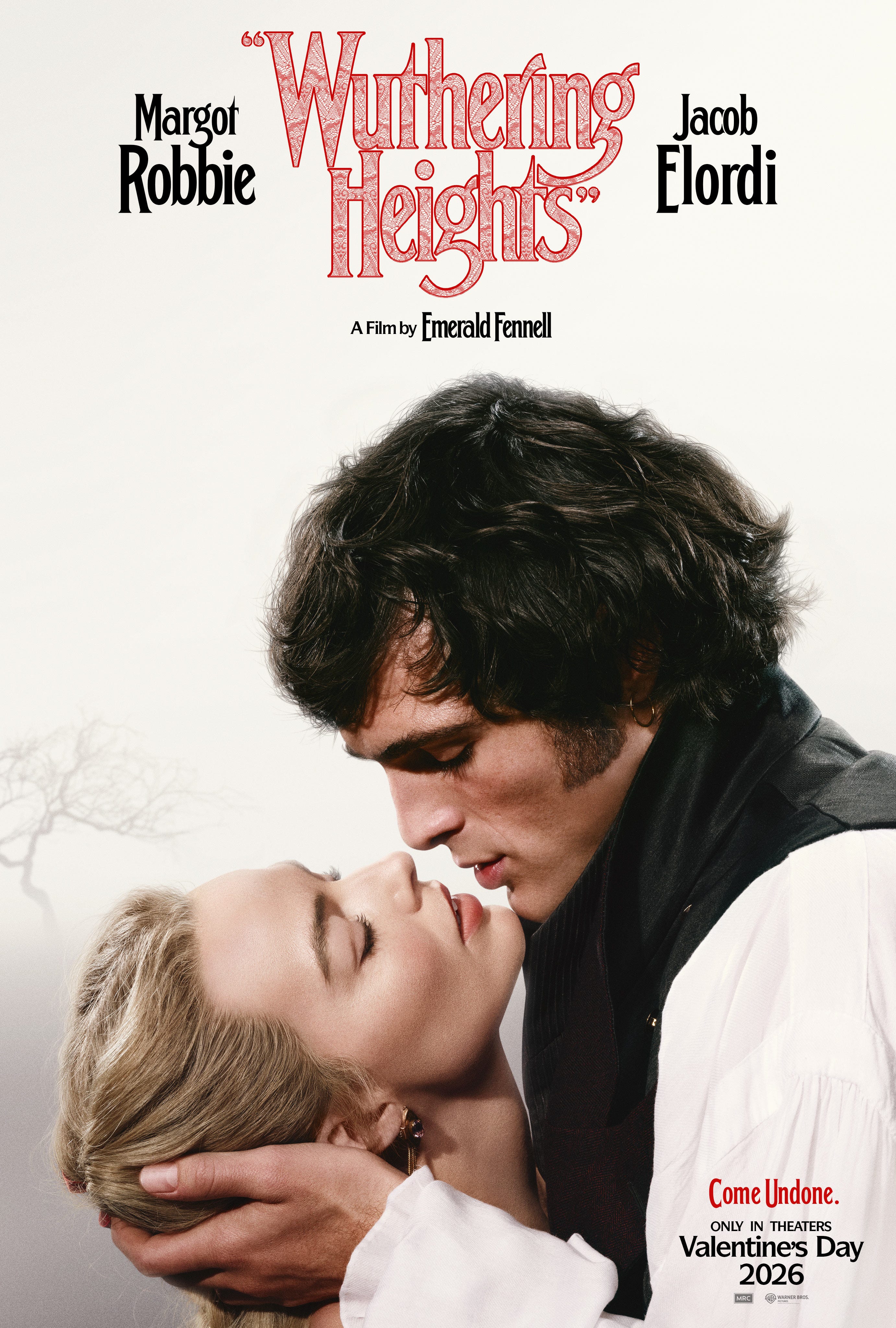
The director has described Brontë’s book as “the greatest love story ever written.” Marketing for the film has emphasized the tortured romance element, and it is being released on Valentine’s Day Weekend. The movie poster shows Robbie and Elordi in profile, locked in a passionate embrace reminiscent of Rhett and Scarlett in Gone With the Wind, above a tagline, “Come undone,” that links madness with romantic love.
Here’s where I admit my own complicity: I first read Wuthering Heights in high school and recall swooning over what I, too, saw as a tragic romance, despite having a teacher who encouraged more thoughtful interpretations. I called that teacher, Monica Matouk, who is now an instructor at Deerfield Academy, to get her perspective. “The novel is so troubled by the realm of the physical,” she told me. Cathy in particular has “such a powerful feeling of disillusionment with physicality. She refers to her body as a ‘shattered prison’ that she longs to get outside of.”
The book, she added, is “Brontë’s attempt to answer a kind of fundamental question: how do you live authentically and powerfully and freely as a woman in a social realm?”
Fennell at least attempts to wrestle with this question. Perhaps the best thing that can be said about this film, other than the fact it’s inspiring more people to read the book, is that it is squarely told from Cathy’s perspective and acknowledges many of the restrictions placed on women in the late 18th century (when the story is set).
Robbie, who also serves as a producer on the film, is best known for her starring role in Barbie, the Greta Gerwig blockbuster that managed to reimagine a doll once viewed as a symbol of unrealistic body ideals as a feminist icon. It made huge amounts of money by appealing to underserved female audiences.
Executives at Warner Bros., the studio behind Wuthering Heights, are clearly hoping to replicate Barbie’s success by luring millions of women to the multiplex (and away from their fourth or fifth viewing of Heated Rivalry.)
Yet particularly in a post-#MeToo era, the insistence on framing and marketing Wuthering Heights as a “love story” aimed at women is both tone deaf and troubling.
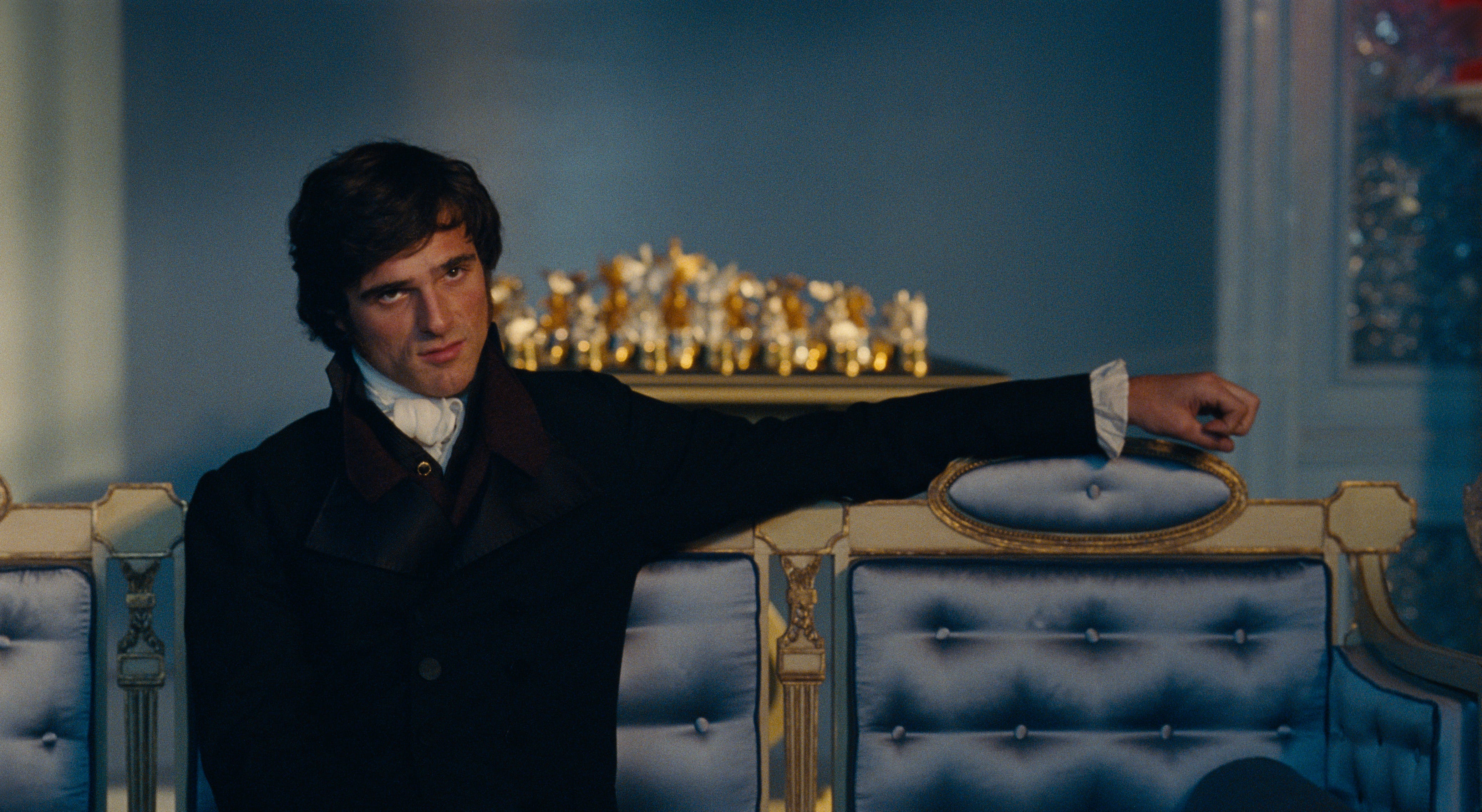
Fennell doesn’t shy away from depicting some of Heathcliff's toxicity. Though we never see Elordi’s Heathcliff murder a dog or exhume a corpse, as he does in the novel, we do watch him elope with Cathy’s insipid sister-in-law, Isabella (Alison Oliver), out of spite, then proceed to torture her physically and emotionally (at one point literally chaining up his new bride). But Fennell presents Isabella as a willing participant in a consensual, if transgressive, act, not as the victim of a vengeful brute. The film ends with Cathy’s death from maternal sepsis, and the last time we see Heathcliff, he is weeping over her lifeless body. Before his cruelty can be interrogated, he has been firmly reestablished as a tragic romantic hero.
You could argue that this ending is not as ridiculous as Cathy and Heathcliff’s ghosts walking hand-in-hand through the moors. But in some ways, Fennell’s sexed-up revisionism may be more noxious than the chaste sentimentality of classic Hollywood. In 2026, do we really want to glorify abusive men, even — perhaps especially — ones played by renowned heartthrobs?
Meredith Blake is the culture columnist for The Contrarian.
I have never understood why Wuthering Heights is considered a love story by popular culture. Perhaps because I read it on my own as a pre-teen, I did not embark on it with that assumption. Re-reading it as part of a Victorian novels course in college did not change my view. I was never blind to the abuse that Heathcliff inflicted on others.
Thanks for the review. It's hard to enter the mental and social worlds of the Victorians. Or imagine London with child prostitutes, going through a cholera epidemic, with sewage overflowing and the stink reaching to Buckingham Palace. Even without black (slave) ancestry in the case of Heathcliff, gypsies were despised as thieving, dark-skinned aliens speaking a strange language. It's not so far back that 500,000 or more Romany perished in the Nazi death camps in their own little publicized or remembered holocaust. The horror of the Jewish calamity overwhelmed this monstrous atrocity in Western collective memory.
As for the current film version, it has nothing to do with the novel as it really is. Jo Ellison summarizes it best in her review in the Financial Times when she describes "the madness at its centre" - "a dark, deranged story about incest, appalling violence, torture, sexual abuse and torture." We should be glad most of us can never know what such darkness really is. What it is not is a pinkish consumer product packaged for Valentine's Day of imagined erotica and romanticized copulation.