


Active shooter drills are muscle memory for almost every American born in the past 30 or so years. So it is no surprise that during the horrific White House Correspondents Dinner (WHCD) shooting, the younger attendees reacted the quickest.
Why? Because active shooter protocols are now instilled from a young age. We assume the presence of gun violence – it’s par for the course, considering little has been done to restrain it.
However, on Saturday, it was the press and top political officials who tasted the trauma so familiar to school children. Now that the elites have been affected directly, will something finally be done to curb the gun violence epidemic?
Unlikely. Not even two days after the shooting, the news cycle completed its playbook: distress, divert, then disregard. The chatter shifted to who grabbed whom first, the ballroom, and Temu outfits.
Almost every shooting is captured by this pattern. Politicians send thoughts, prayers, and snap judgements while the news cycle moves on to something shinier.
But for the young people who have lived this reality since childhood, we are not granted the luxury of moving on swiftly. The trauma compounds with every year we watch mass shootings go unaddressed. It stacks like bricks on your chest, one atop another, pressing the air out of your lungs until, underneath that looming tower, it feels like there is none left.
At age sixteen, I experienced my first lockdown. We were trading vocab cards in Spanish class when the loudspeaker abruptly crashed through the sound system.
“Teachers and students, we are in lockdown. Please execute lockdown protocol immediately.”
An active shooter had fled the police and was stalking the edges of school property.
As our teacher ran to lock the door, we tugged the blinds closed so hard a panel broke. Then, we hit the floor and curled up anxiously under our desks. Our classroom was an outdoor trailer, amplifying the sense of terror.
Minutes ticked by in slow motion as we furiously texted our parents that we loved them.
After what felt like hours, the principal announced that police had successfully cleared the area. Lockdown was over. With no offer of discussing or recovering from the lockdown, we resumed class, with our hearts still beating wildly.
Thousands of school kids experience an active shooter lockdown every year. It is so commonplace that as adults, we trade lockdown stories with friends, colleagues, and even strangers.
These experiences are not exchanged lightly. Especially when the lockdown drill begins after the first shot is fired.
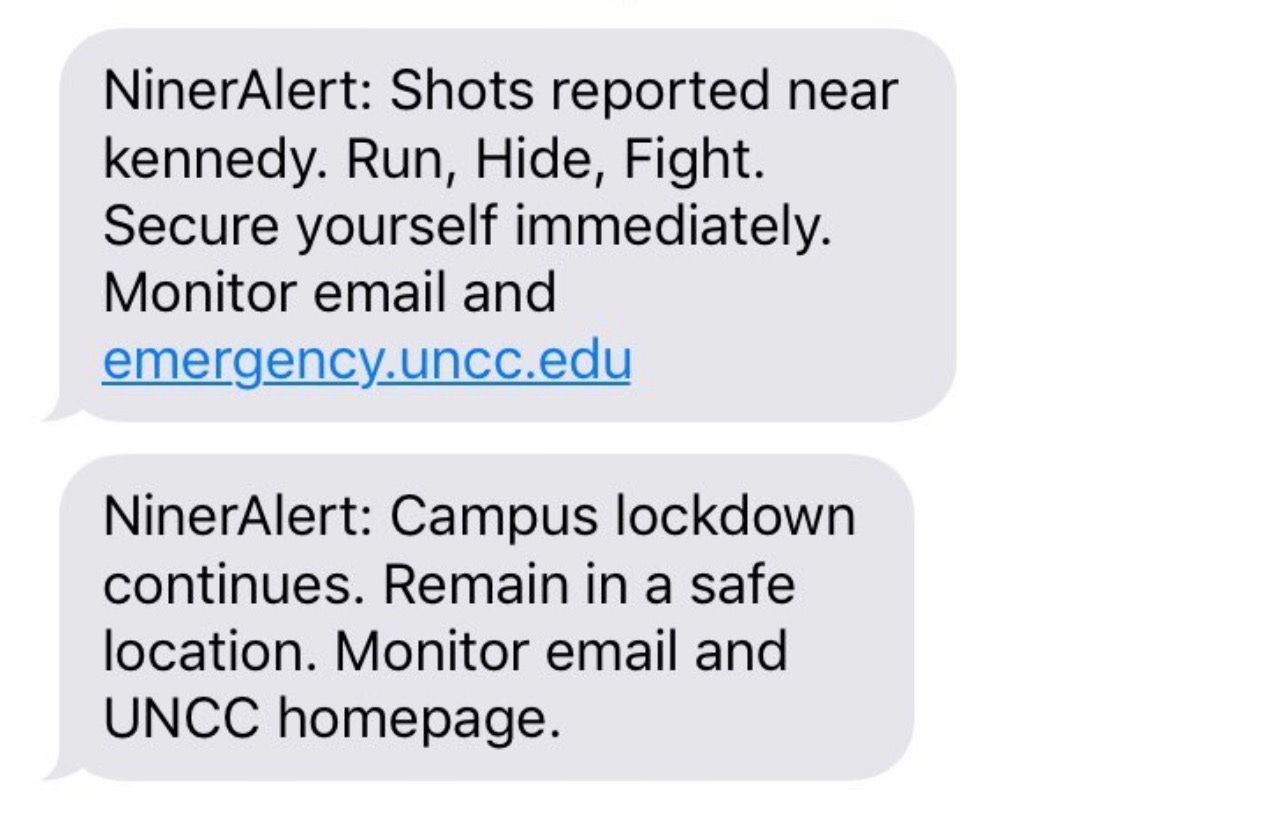
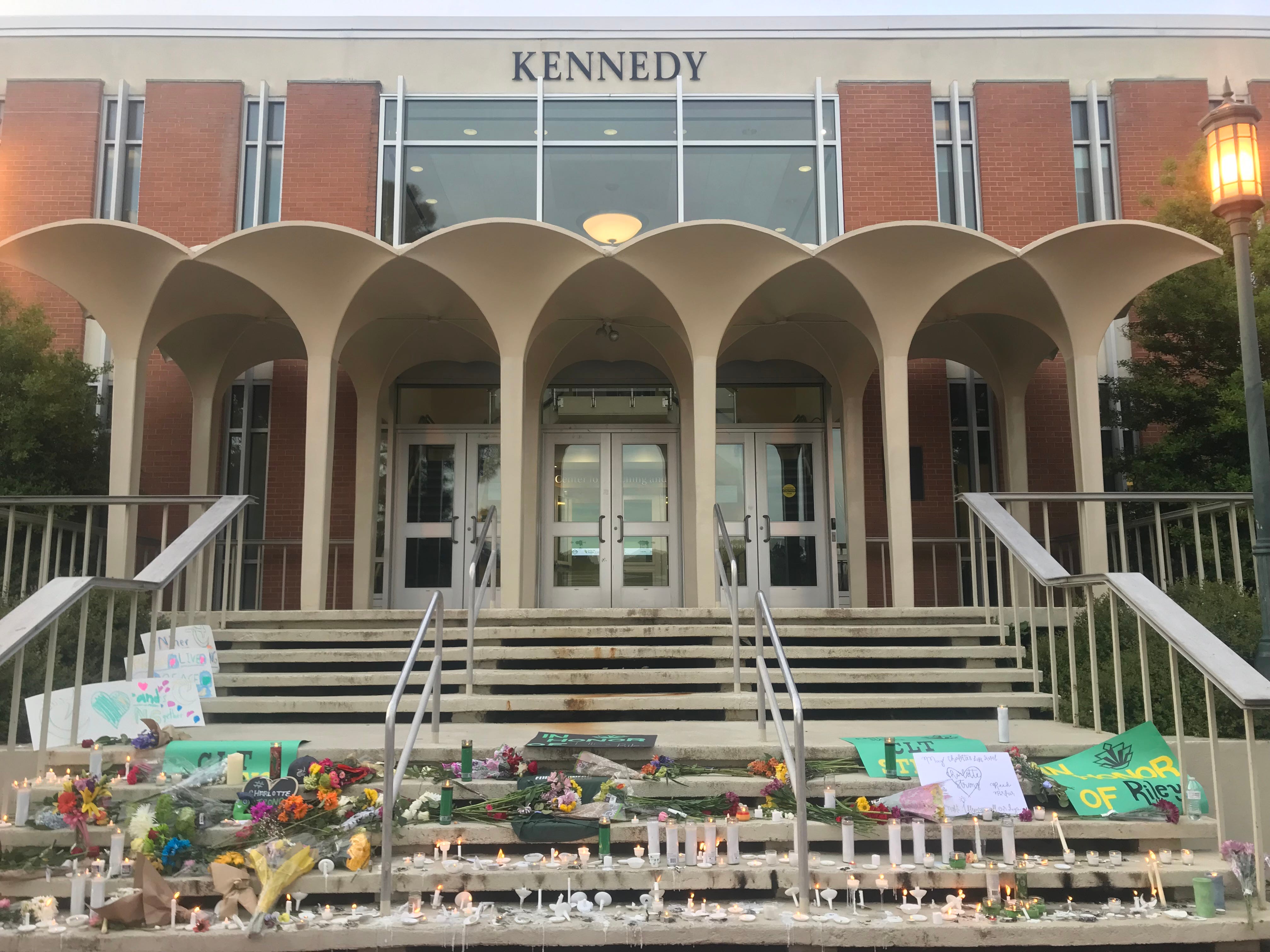
At the end of my senior year in college, I was retreating home from class when a horde of backpacks flashed by me. Instinctively, I began to sprint across a busy road without a pedestrian walk sign, alongside a horde of others. Thankfully, a few of us lived nearby, so we sheltered inside our apartments. As we watched other students flee towards us, we grabbed them and yanked them inside. A few of my friends had fled directly from the shooting site. We held each other – strangers and friends alike – until we received confirmation the shooter had been apprehended. The memories of embracing trembling strangers, distributing water in mix-matched vessels, and praying for proof of life continue to haunt me.
On that occasion, police confirmed that two students, Reed and Riley, had been murdered. Others were shot and transported to the hospital to treat their injuries. I knew one of them from a student club. Reed and Riley died trying to protect their classmates from the gunman.
Graduation was that weekend. Everything was bleak. We roamed campus like zombies, vacillating between tears and curses. The arena slated to host our graduation ceremony morphed into a funeral home. Later, when we stepped up to receive our diplomas, a sense of loss hung over us. Even now, when I return for my friends’ master’s ceremonies, the memories bombard me before I can find my seat.
*****************
This is the trauma that our leaders permit to befall our youth. Moreover, it never leaves you. Every year on April 30th, I spend the first hour of my day willing myself to be normal at work. I fail before my coffee goes cold.
Survivors relive traumatic flashbacks every time another shooting occurs. They bristle at the sound of a balloon popping, flinch at sudden movements, and forgo sleep when nightmares reemerge. I understand, because it happens to me too.
Like most other shootings, news stations quickly moved on after the first couple of days. Our U.S. Senators at the time, Richard Burr and Thom Tillis, did not physically appear to offer condolences. Any conversations around gun reform fell on uninterested ears.
It is a rinse and repeat cycle for mass violence in America. Gunmen terrorize schools, kill students, teachers, and administrators, and traumatize hundreds of others. It must be understood that mass shootings affect the entire community. Nevertheless, the news reacts in shock, politicians tweet out their thoughts and prayers, and an investigation is potentially launched. Then, we are back to square one.
The result of non-action? American society is over-saturated with shootings. Our threshold for violence skyrockets with every incident – only two killed, they weren’t even children, it was interpersonal violence, etc.
Politicians capitalize off desensitization to protect their big money interests. The hypocrisy is staggering but intentional: they pound their chests about protecting children from mythical threats, but swiftly bury their faces in the NRA’s expensive endorsement after every dislodged bullet.
When the media platform these narratives, they are complicit. Televising bad faith talking points like “it’s the person, not the gun! Mental health crisis!” contradicts the reality that mental health funding has been slashed, health insurance premiums have skyrocketed, and lifesaving medications are greedily price gouged. This enables the cycle.
Distress, divert, disregard.
Our elected leaders did not pass gun reform laws – or anything substantial– after Sandy Hook. Or Parkland. Or Uvalde. Or, so it seems, the WHCD.
If the needle will not move for dead school children or the President of the United States, then we as a country are sending a message of tacit acceptance, one which welcomes a culture of constant gun violence. We are championing it as central to our identity, our American uniqueness.
Our children do not deserve that. We, as a national community, do not deserve that. And those in power who refuse to protect us do not deserve their positions.
So again, I ask traditional media and politicians alike: how long until you forget this shooting, too?
Ciera Stone is the editorial associate and reporter at The Contrarian. She received a master of arts at the University of Notre Dame, concentrating on international peace, global affairs, and justice.
Thank you Ciera. I'm a recently retired jr. high teacher who has experienced the cycle of 'appropriate training & drills' along with a thousand students over the years. My students said they 'want to be in your class if a shooter comes, because you have all those tools and stuff'. We've lost students and former students to murders in the street, and in prison as murderers, along with suicides of despair. yet our school and town are a strong community, as towns go. I'm quite sure that this 'poorest town in the county' cannot find a place in mind or heart to comprehend why a president thinks a ballroom is somehow a response to violence. The disconnect is extraordinary. We allow it. What happened to the old ethos 'the captain is the last to leave the ship" ? I believe, and I pray, that you and other people who have had to internalize the reality of intense gun violence (students, teachers, parents, gathering places stained with blood) will grow in strength and beauty. Your voice is like that already.
The NRA hides behind the Constitution and pays Congress enough to keep legislation off the table. Of course, there is more to it.