


Last Friday, a regional passenger jet approaching Minot International Airport came terrifyingly close to colliding with a B-52 bomber doing a flyover at the North Dakota State Fair.
It’s the latest in what has felt like a near-constant stream of horrific crashes and frightening near-misses that began in January, when a mid-air collision between a Black Hawk helicopter and an American Eagle plane near Reagan National Airport killed 67 people.
Luckily, in the Minot incident, the pilot of the SkyWest plane responded quickly with an “aggressive maneuver” and was able to avert catastrophe.
“This is not normal at all,” he reportedly told passengers. The flyover had been approved by the Federal Aviation Administration, according to a statement from the Air Force, but air traffic control at Minot had failed “to advise of the inbound commercial aircraft.”
The close call has brought renewed attention to the issue of aviation safety. Transportation Secretary and former Real World star Sean Duffy, who blamed diversity, equity, and inclusion for the Reagan disaster, has vowed to “secure our skies” by “supercharging” the air traffic control workforce.
But when it comes to ideas for keeping people safe in the air, there’s another TV personality we should all be listening to: Nathan Fielder, the creator and star of the HBO series The Rehearsal.
Season 2 of the wonderfully bizarre docu-comedy focused on—of all things—flight safety, looking at how poor communication can lead to fatal airline crashes.
The Rehearsal, which was nominated for four Emmys last week, defies easy categorization. The basic premise goes something like this: Fielder, playing a version of himself, helps regular people rehearse difficult conversations and challenging scenarios so that they are prepared for them in real life.
These rehearsals are actually elaborate role-playing exercises and often take place on meticulous sets designed to simulate mundane real-world environments (see: the interior of a Brooklyn bar; a detailed replica of a couple’s San Jose apartment). The show blurs the line between improvisation and psychological experiment. Fielder is the host and narrator but also a stilted life coach whose intense awkwardness somehow liberates people from their own.
Fielder presents a compelling theory that communication failures in the cockpit are a major factor in fatal airline crashes. He also argues that pilots are reluctant to seek treatment for issues such as depression because they fear being grounded, which has led to a mental health crisis in the profession, further endangering passengers.
Season 2 was almost too timely, premiering just a few months after the Potomac (which appears to have been caused by a communications breakdown) and concluding a few weeks before the deadly Air India crash (which occurred shortly after one of the pilots apparently turned off the plane’s fuel switch, perhaps intentionally.)
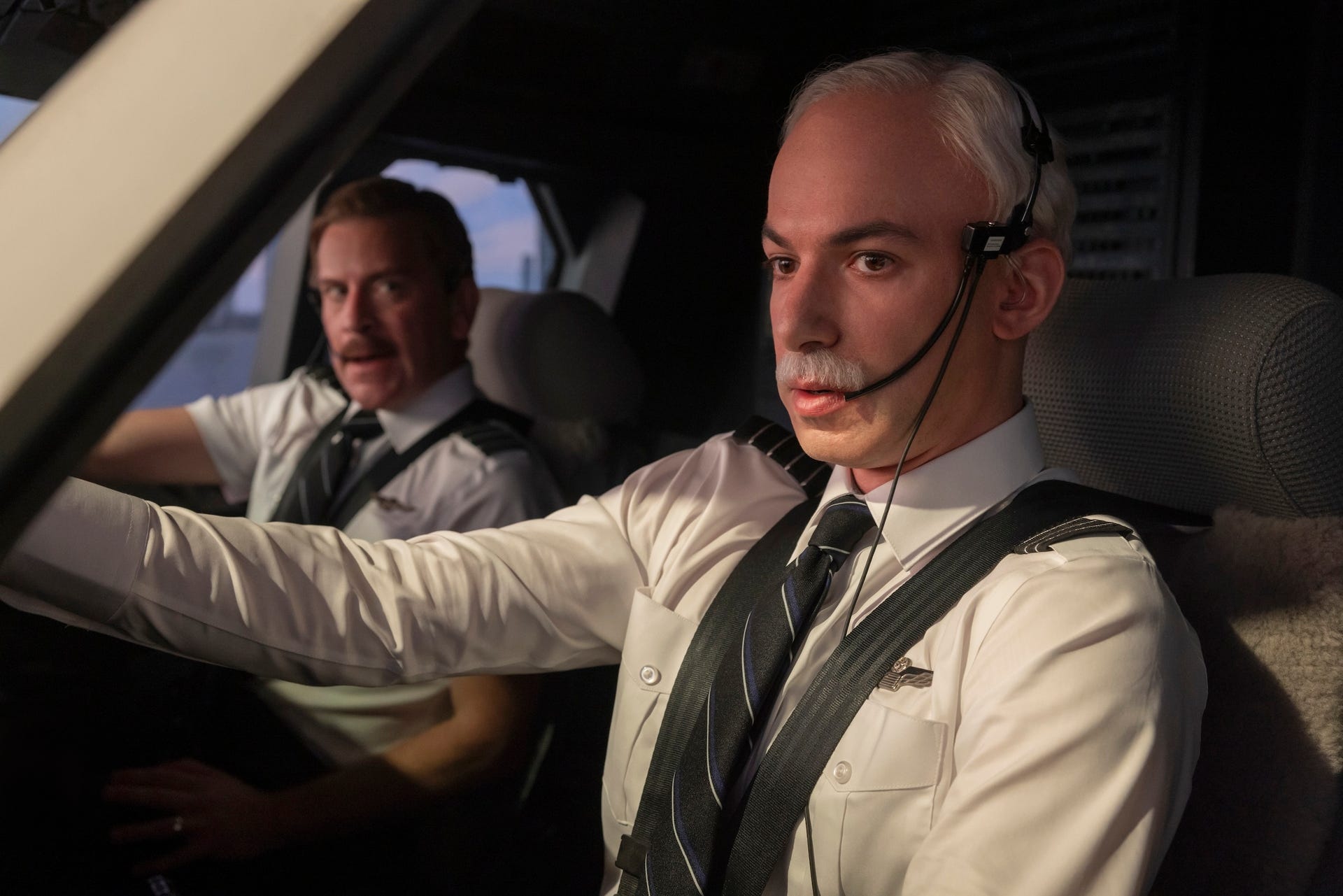
Season 2 opens with a frightening dramatization in which a junior pilot timidly raises concerns about the flight’s trajectory, only to be overruled by his superior—with disastrous results.
Fielder claims that such a scenario is not only plausible, but that versions of it have happened dozens of times over the decades. To make his case, he compiles black box transcripts from deadly accidents over the years showing numerous examples of pilots reluctant to assert themselves in moments of crisis.
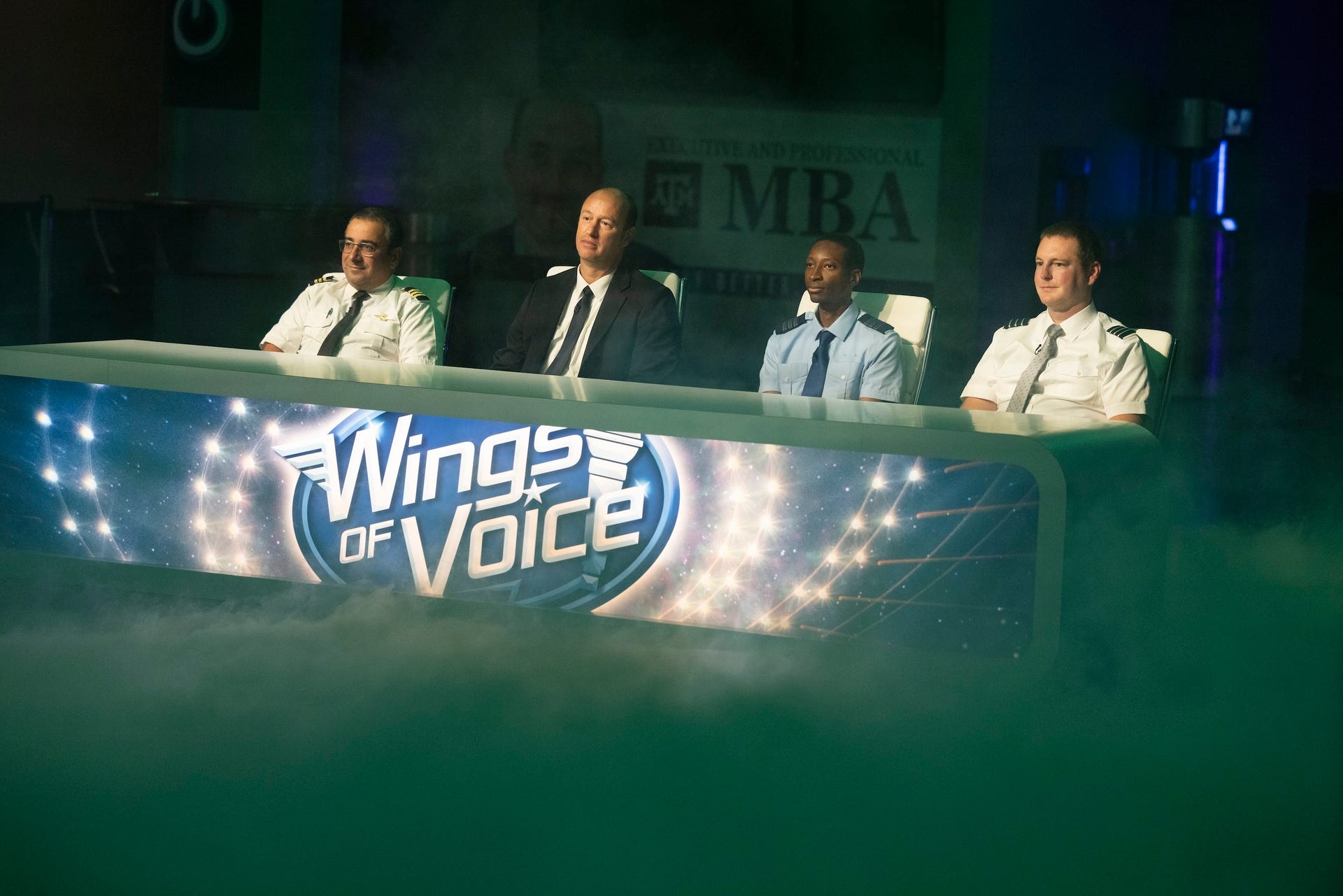
Over the course of Season 2, which wrapped in May, Fielder stages various “rehearsals” designed to help airline pilots and first officers become more comfortable speaking their minds in and out of the cockpit. In one extended gag, pilots are asked to judge an American Idol-esque reality competition called Wings of Voice and give critical feedback to rejected contestants. Another rehearsal follows an unlucky-in-love pilot as he fumbles through a date.
Fielder is unafraid to commit to a bit: He even trained to become a pilot. In the Season 2 finale, he flew a 737 jet with 150 passengers from Las Vegas to San Bernardino—a flight he cheekily dubbed the “Miracle Over the Mojave” (and which surely kept the legal department at HBO up at night for weeks on end).
Along the way, Fielder also stars in a bizarre mini-biopic of Captain Sully Sullenberger and asks his crew to create a detailed replica of a terminal at Houston’s George Bush Intercontinental Airport. And there are digressions involving cloned dogs, the Evanescence hit “Bring Me to Life,” giant lactating puppets, and the moral cowardice of Paramount executives (which feels especially relevant this week.)
All of these wild tangents served a purpose (other than burning vast sums of WarnerDiscovery’s money). Fielder argues that role-playing exercises (though presumably not ones involving fake singing contests) should be a standard part of training for American pilots.
Through comedy—or something like it—Fielder brought attention to a crucial but seemingly obscure problem in the airline industry and proposed solutions that could very well save lives, according to aviation experts.
Fielder has continued his crusade beyond The Rehearsal, giving a surreal interview to CNN that felt like something between advocacy and performance art. He called the FAA “dumb” for casting doubt on his central theory and stated that the communication training that pilots receive is inadequate.
“Someone shows you a PowerPoint slide saying, ‘If you are a co-pilot and the captain does something wrong, you need to speak up about it.’ That’s all,” he told anchors Wolf Blitzer and Pamela Brown.
To prove his point about the difficulty of confrontation in the workplace, he suggested that Brown probably feels intimidated speaking up around the more experienced Blitzer. Brown dismissed the idea, but Fielder pressed on. “You have to say that now,” he said.
Like pretty much everything Fielder does, it was spectacularly awkward. But the whole point of The Rehearsal is that temporary discomfort is much preferable to the alternative.
Meredith Blake is the culture columnist for The Contrarian.
Best 👏 show 👏 ever
Interesting series analysis. I want to check this out. Art imitating life.