


This weekend, the United States crossed the threshold it had spent two decades debating. With three Iranian nuclear sites, including the fuel-enrichment plant at Fordo, reportedly struck, President Donald Trump has delivered the kind of decisive action his predecessors resisted. The tactical execution appears clean. The message unmistakable. But what follows, as with initial salvos of any conflict, is not.
Confirmation will take time—and early declarations of success often obscure both the technical reality and the strategic cost. There is no blueprint accompanying the detonation. No structure for escalation management. No coherent vision for Iran’s aftermath—only the familiar conviction that strength will compel stability.
It is always desired and hoped for. It rarely works.
Fordo existed as the red line no one formally acknowledged. Buried deep within a mountain near the Shia holy city of Qom and fortified against all but the most specialized ordnance, it represented both a technical challenge and a strategic tripwire. U.S. presidents from George W. Bush to Joe Biden assessed the risks of directly striking it—global condemnation, Iranian retaliation, the collapse of diplomatic off-ramps—and consistently chose restraint. Trump apparently did not.
This strike marks a stark departure not only from past restraint but also from earlier covert approaches. In contrast to conventional munitions, prior U.S. efforts relied on cyber sabotage—most notably Operation Olympic Games, the joint albeit unacknowledged U.S.–Israeli campaign initiated under Bush and accelerated under President Barak Obama. The cyber campaign temporarily delayed Iran’s program without crossing the line into overt military conflict. That threshold, until now, remained intact.
By targeting hardened nuclear sites with traditional munitions rather than digital tools, Trump shattered the informal consensus that preemptive strikes carried more long-term danger than short-term gain. The operation might delay enrichment. It almost certainly ends any internal debate in Tehran about the wisdom of nuclear ambiguity. And it signals that kinetic force, not cyber stealth, now defines U.S. resolve.
In a nationally televised address Saturday night, Trump described the airstrikes as a “spectacular military success,” claiming that the targets had been completely and totally obliterated.” Whether it a wishful expectation, the rush of adrenaline, or Trump’s reflexive hyperbole, the coming days will tell.
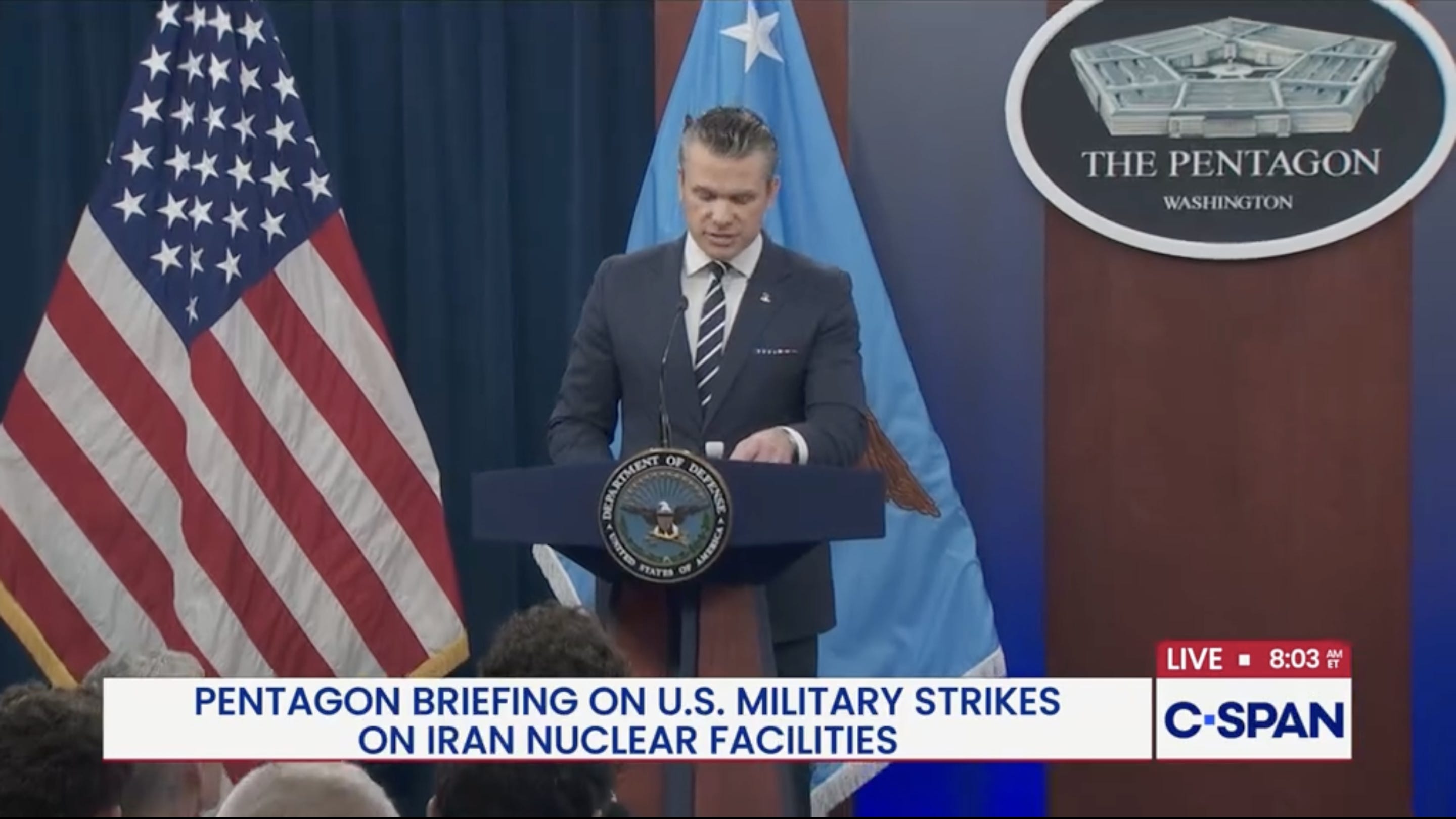
At a Pentagon press briefing Sunday morning, Defense Secretary Pete Hegseth echoed the praise in transparently political terms, calling the president’s leadership “bold and visionary” and declaring that Iran’s nuclear ambitions “have been obliterated.” Military officials offered limited detail on battle damage. Full readouts will follow—but the initial framing, both visual and rhetorical, was unmistakably designed to burnish Trump’s image of command.
Despite the aggressive tone, Trump emphasized the limited nature of the operation. According to two individuals familiar with the matter, the United States conveyed to Iran through back channels that no further strikes were planned and that the door remained open to a diplomatic resolution.
Fordo might no longer be operational, but the real danger now lies in believing that silence equals submission—or that strategic clarity follows from tactical success. Iran might respond, or it might not. It might absorb the strike, shift its narrative, or use the moment to reset rather than retaliate. But what replaces this moment—what fills the vacuum left by shock and spectacle—is still unknown. And the costliest misstep would be assuming we’ve already won.
Every government, even those struck hardest, eventually reclaims agency. The assumption that this strike leaves Iran politically directionless or paralyzed is as familiar as it is flawed. After the smoke clears, regimes reorganize. They adapt their posture, tighten their grip, revise their narratives. The Islamic government will not equate the loss of Fordo with the end of its standing—it will use the strike to reassert domestic authority, rally regional support, and reframe its position on the international stage.
The 19th-century Prussian strategist Carl von Clausewitz warned that war is never a single act. The enemy adjusts. The real reckoning comes after the first blow, when both sides begin to recalculate. Misreading this pause is where institutions falter, believing resolution has been achieved when uncertainty is only beginning.
The path for de-escalation now rests on assumptions about Iranian behavior that might no longer hold. If Trump signals triumph and disengagement, he risks creating a vacuum of intent—a familiar pattern with unfamiliar stakes. The United States might not have sought to manage Iran’s internal crisis, but by targeting the heart of its nuclear program, it has accepted a role in shaping what follows. That responsibility comes with no clear off-ramp. Only consequences.
It is one thing to launch a war. It is another to navigate what comes after. And it is fair to ask, after the strike, whether the United States has the institutional capacity—let alone the leadership clarity—to manage what is arguably the most complex national security crisis since 2003. Trump’s Cabinet is not built for this. Hegseth commands the Pentagon with cable-ready conviction but little demonstrated capacity for strategic planning. Director of National Intelligence Tulsi Gabbard manages the intelligence community like a broadcast platform.
There is no Colin Powell. No Condoleezza Rice. No Brent Scowcroft. And even their strategic judgment was far from infallible. The Gulf War in 1991 was tactically precise but failed to secure lasting stability. The second Gulf War—just 12 years later—unraveled into occupation and insurgency, setting off a cycle the United States spent the next two decades trying to escape.
If Trump genuinely wants peace, and not just a fleeting illusion of it, he must turn short-term shock into long-term settlement. That would require clarity about what Iran is being asked to concede, coordination with allies on what concessions the United States is prepared to offer in return, and patience for a diplomatic process that will move slower than the missiles did.
In short, claiming peace will require Trump to succeed in three arenas—each fundamentally at odds with his instincts but essential to the outcome he now says he wants.
At home, leadership starts with seriousness. That means restoring institutional channels he’s spent years undermining: a functioning interagency process, empowered diplomats, and honest intelligence briefings that don’t cater to preference. National security cannot run on charisma and conviction alone. It requires competence—people who understand escalation ladders, signaling theory, Iranian civil-military relations.
If Trump wants the Nobel Peace Prize he covets, he will need to govern like a president, not a performer. That starts with telling the American public the truth: This isn’t over. It might just be the beginning. And it will demand more than applause lines.
Abroad, success depends not on Israel’s approval but on broader coalition support. That means clarity with Europe about end goals. It means reassuring Gulf partners that escalation won’t spiral into regional collapse. It means engaging the Security Council not as a nuisance but as a forum where diplomatic containment can be built. And it likely means engaging adversaries—China, possibly even Russia—to prevent the kind of opportunistic interference that follows Western distraction. Peace cannot be unipolar, especially when the strike itself was not multilateral. If Trump wants to reshape the region, he needs more than B-2 bombers. He needs buy-in.
Finally, peace requires something harder to legislate: restraint. Not withdrawal, not passivity—strategic restraint. The discipline to hold back after success. The patience to let pressure work without demanding immediate results. The willingness to hear truths that challenge the narrative. Trump can end this with leverage, but leverage is not a guarantee. It’s a position from which to bargain. The question now is whether he can do what great-power leaders do: stop hitting when the enemy is off balance and start shaping what comes next.
That’s where statesmen earn their legacy. Or lose it.
The reckoning won’t be written by the bombs we dropped but by the choices we make now that they’ve landed.
Brian O’Neill, a retired senior executive from the CIA and National Counterterrorism Center, is an instructor on strategic intelligence at Georgia Tech.

Bibi has trump on a string … unctuous flattery is directing US military action
A very sober assessment of the situation. We have a long track record of failure following military interventions of this type.