


There was a time in 2015 when it seemed like Donald Trump, real estate magnate and reality TV star, would be a different kind of Republican—one who did not itch for armed interventions in nations we didn’t take the time or trouble to comprehend.
In retrospect, he was the wiliest political opportunist of the 21st century. A gut fighter who saw his main chance after then–Florida Gov. Jeb Bush contended in a debate that his brother—George W. Bush—had “kept us safe.”
“I mean, say what you want, the World Trade Center came down during his time,” Trump said of the former president in an interview a few days later. I wrote at the time that “it took the audacity of a Trump, unconstrained by any normal political rules, to ignite the debate.” In a field of “aggressive interventionists,” he and Sen. Rand Paul, R-Ky., stood apart.
Rand Paul still stands somewhat apart, but Trump—who came off as so cautious about global military engagement in the 2016 campaign that I found myself thinking he made sense—was exploiting not just Jeb’s gaffe but a larger opportunity: American weariness after the Iraq war and occupation (which ended in 2011) and the ongoing conflict and nation-building in Afghanistan.
As the GOP nominee, Trump was the dove in the 2016 race, leaving Democrat Hillary Clinton as the hawk. His positioning was a success—and yet, in what should have been a high-volume, in-our-face warning, he reversed course immediately after his inauguration.
“During his first 100 days in office, it has become clear that President Donald Trump views military force as his primary—if not only—foreign policy tool,” analysts Peter Juul and Ken Gude wrote for the Center for American Progress in May 2017. They accused Trump of “reckless endangerment” and lamented his budget priorities: less money for diplomacy and soft power, more for the military.
At the end of 2019, three years into his first term, Notre Dame security experts Joseph Parent and Paul MacDonald published an article headlined “Trump Didn’t Shrink U.S. Military Commitments Abroad—He Expanded Them,” in Afghanistan, Syria, and beyond.
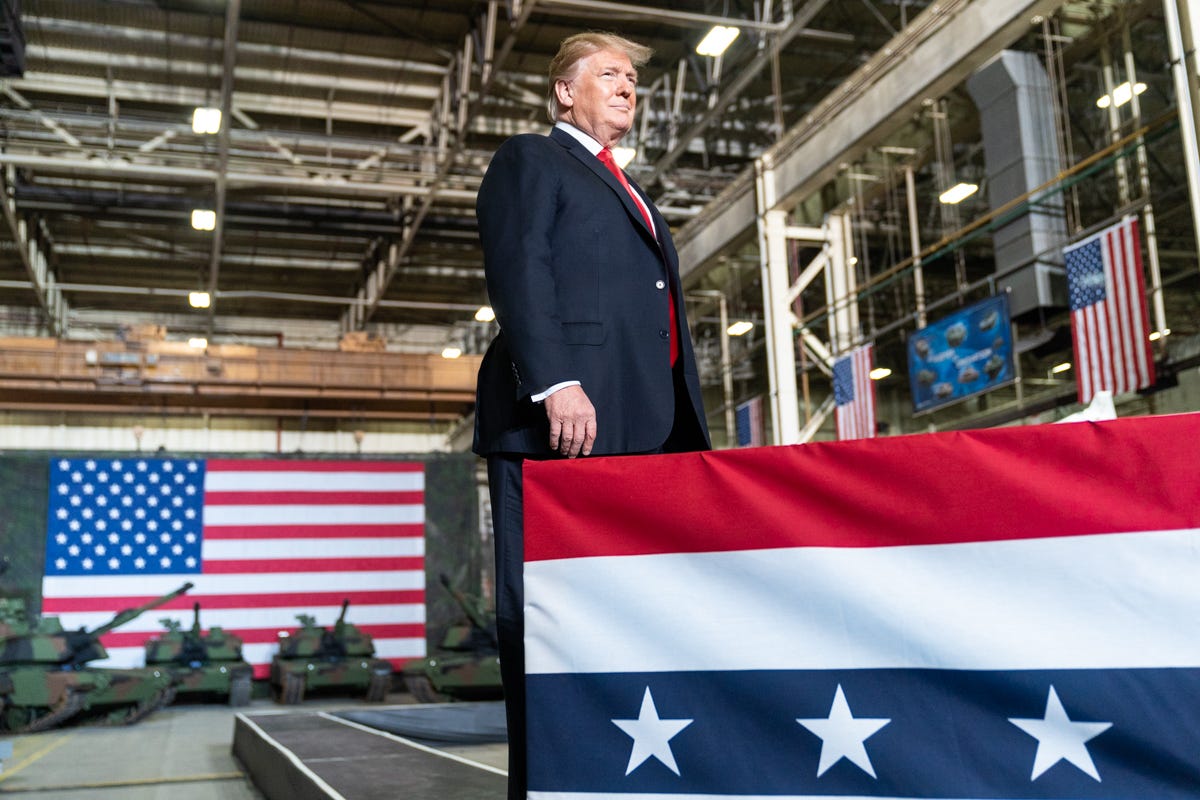
If you feel like we’re reliving the past, we are—except this time at triple speed, intensity and ambition. Donald Trump the 2024 candidate made pledges to focus on the home front and “affordability,” followed by familiar fantasies and jokes about buying Greenland or annexing Canada, then alienated both of them for real, then moved into actual and threatened military actions: air strikes in Nigeria, Syria, and Iran. Lethal attacks on Venezuelan fishing boats. A raid to oust and detain Venezuelan President Nicolás Maduro. Plans for Trump to “run” Venezuela, for U.S. companies to take over its oil industry. Five oil tankers seized for violating a Trump-ordered blockade of Venezuela.
There has also been the constant musing about future targets: Drug cartels in Mexico. The leader of Colombia. Cuba, if it doesn’t collapse on its own. Even Greenland, if it doesn’t surrender in advance. Even, again, Iran—where swelling protests have been met by an armed government crackdown, and Trump has publicly offered to intervene: “Iran is looking at FREEDOM, perhaps like never before. The USA stands ready to help!!!”
How could we have let this happen again? Parent and MacDonald got it right in 2019: “Trump’s rhetoric can diverge sharply from reality without consequence because few in his party have an incentive to hold him accountable…regardless of how many campaign pledges are broken or foreign policy initiatives end in failure.”
Trump re-ran the “dove” play in 2024. He would lower grocery prices and end the Russian invasion of Ukraine on Day One or even before taking office, he bragged. He was a dealmaker in hot pursuit of a Nobel Peace Prize. The real deal was the stunning bargain he offered to top oil executives in April 2024: You raise $1 billion for me, I’ll scrap all these climate regulations you hate, and we’re gonna drill baby drill. (Never mind that oil production at the time was setting records.)
And here we are, a U.S. president going to war for oil, threatening sovereign nations across the hemisphere, and making clear he prefers hard power to soft power. That signal came right at launch when Trump pal Elon Musk fed the U.S. Agency for International Development “into the wood chipper”—along with its life-saving food and medicine distribution, and the global goodwill, contacts and entrée it brought America.
Presidents have, of course, been known to campaign one way and govern another, especially when confronted with a shattering event like 9/11. Texas Gov. George W. Bush called education “a civil rights issue” and his top priority on the 2000 campaign trail, and promoted a “humble” foreign policy vision. “I’m worried about overcommitting our military around the world,” he said in his Oct. 11, 2000, debate with Vice President Al Gore.
The Clinton-Gore administration had ventured into nation-building in Somalia, Bosnia, and Haiti. Bush ended up attempting it at scale in Afghanistan and Iraq. Barack Obama won by promising to get us out of the quagmires, but Afghanistan was ongoing when he left office. Trump pledged the same, and also failed to deliver. Joe Biden withdrew U.S. troops from Afghanistan within a few months of a deadline Trump left behind, and it went so badly that he never recovered.
Here’s a time capsule from years before Trump got serious about politics:
The Washington Post, March 25, 2003: Donald Trump, with Amazonian beauty Melania Knauss at his side, pronounces on the war and the stock market: “If they keep fighting it the way they did today, they’re going to have a real problem.”
Looking as pensive as a “Nightline” talking head, the Donald concludes, “The war’s a mess,” before sweeping off into the crowd.
That didn’t last. Trump has been a hawk in dove’s clothing ever since he entered the 2016 presidential race. He campaigns on non-interventionism. Then, as commander-in-chief, he’s unable to resist the temptation of having his own military to command, to watch its heroics on TV, to accumulate power and resources. And he escalates.
For anyone who hasn’t gotten the message yet: Never trust Trump, even on war and peace. Especially on war and peace.
Jill Lawrence is the author of The Art of the Political Deal: How Congress Beat the Odds and Broke Through Gridlock.

More like a hawk with bone spurs. How any military member can possibly respect him is beyond me.
One wonders why, after a remarkably consistent history of transgressions against society, wives, partners, and institutions, people still have difficulty in accepting the malign character of Donald Trump? I believe it is largely due to a media compromised between the pillars of misinformation and real information that form public opinion. Misinformation can be exceedingly profitable for all parties involved, including the reporters and writers. Maybe it is even more profitable than reporting the truth. And honestly, Trump tempts the media with constant, reliable hyperbolic misinformation content.
Did we all forget that Trump used David Pecker and the National Enquirer as his daily media megaphone to hide negative stories about him, and to expand explosive, vile, untrue stories about his rivals? And that we all saw those stories as we idled about in our grocery store checkout lanes? And now he is assembling a much larger and more potent media conglomerate to operate as his nouveau National Enquirer. The Devil's bargain that almost all the media accepted is based on exchanging chests full of profit and loot in subscriptions and clicks in exchange for publicizing the daily hose of misinformation.
So Jill, I don't see your job as reporting on the terrible person represented in Trump. That horse left the barn many decades ago. The people who believe in Trump don't read this article anyway. Your job now is to stand and fight against your industry and colleagues who perpetuate the conveyor belts of media misinformation.
Take it to them, and good luck in your fight for your freedom and independence! Thank you for your work.