


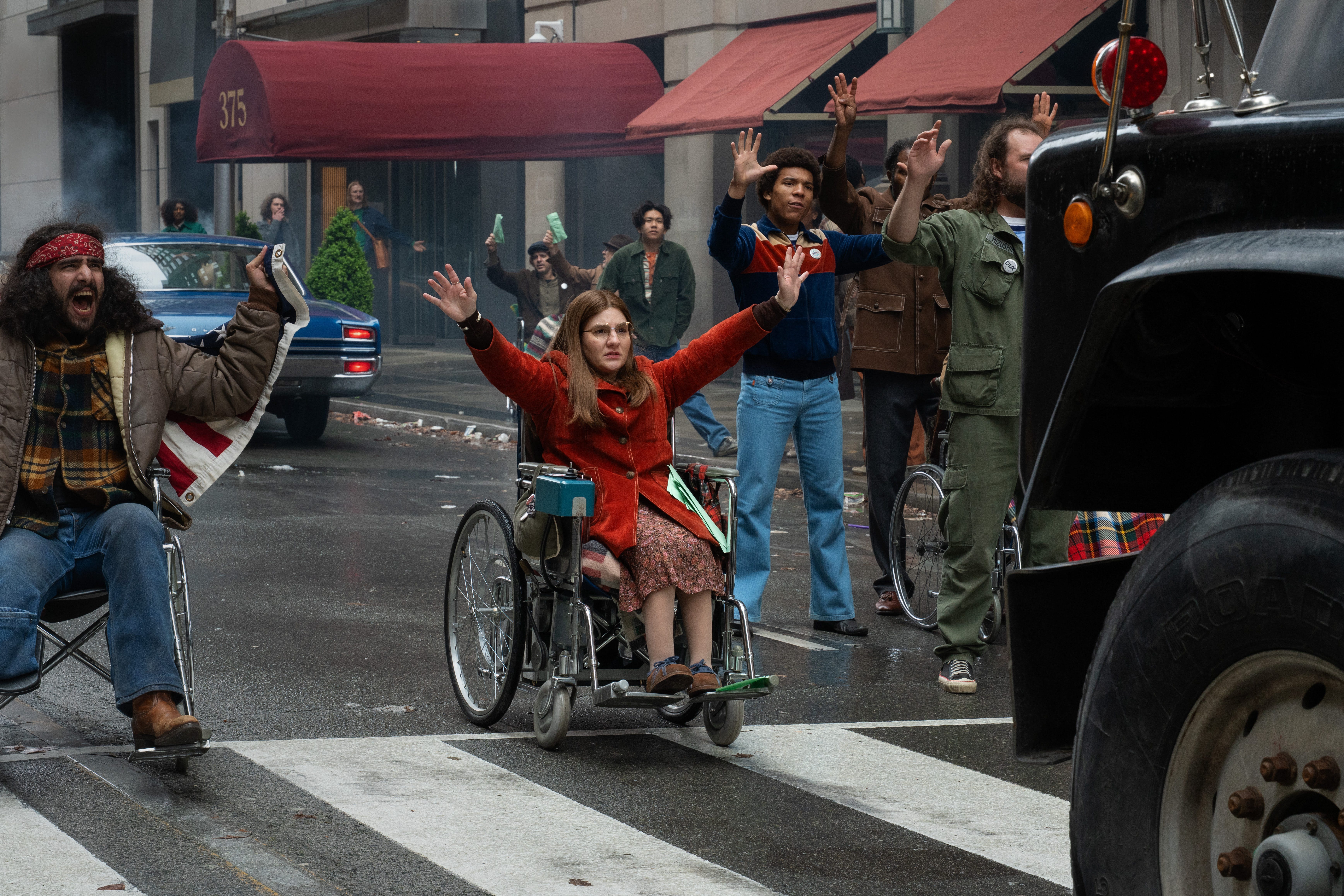
The longest peaceful occupation of a federal building in American history began on April 5, 1977, when Judy Heumann, a disability activist, and more than 100 protestors stormed the offices of the Department of Health, Education, and Welfare in San Francisco.
The purpose of the sit-in was to pressure the government into implementing Section 504 of the Rehabilitation Act of 1973, which stated that disabled people must not be excluded from any federally funded program or organization. The historic legislation had passed four years earlier, but bureaucrats failed to issue regulations based on Section 504, which would have massive implications on American schools, hospitals, workplaces, and public spaces.
The San Francisco protesters — most of them disabled — remained on site at the federal building for 26 days, garnering national attention and ultimately compelling Joseph Califano, the Secretary of Health, Education, and Welfare, to sign the Section 504 regulations that laid the groundwork for the passage of the Americans with Disabilities Act in 1990.
The historic showdown is dramatized in Being Heumann, a film biopic now streaming on Apple TV. Based on the memoir of the same name, it stars English actor Ruth Madeley as Heumann, a trailblazing disability rights activist who was unable to walk as a result of a childhood case of polio. She was also a counselor at Camp Jened, a radical summer camp for disabled children in upstate New York that became a launching pad for the disability rights movement.
“She really set me on a course I’ve had for the rest of my life to be an activist,” says Jim LeBrecht, an executive producer of Being Heumann, who first met Heumann when he was a teenager attending Camp Jened. (With Nicole Newnham, he also co-directed Crip Camp: A Disability Revolution, the essential Oscar-nominated documentary about Camp Jened and its pivotal role in the disability rights movement.) Heumann was already something of a celebrity, having successfully sued New York’s Board of Education to become the first person in a wheelchair to teach in the city’s public schools.
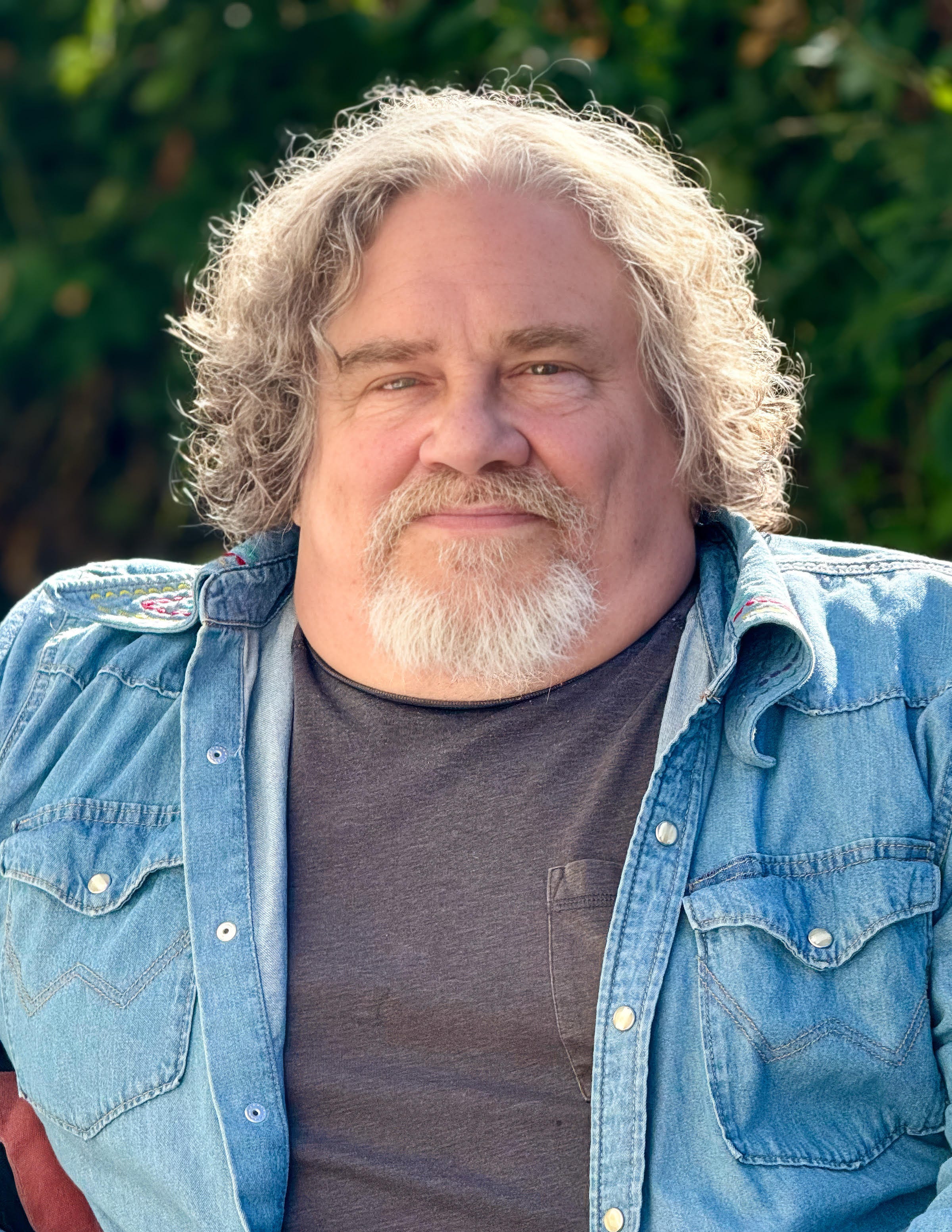
“At the time, there was no ADA, there was nothing, and so it really always felt like we just had to put up with whatever we were given, and if somebody said no, we had no recourse,” recalls LeBrecht, who was born with spina bifida and was not expected to live more than a few days. “She just really opened up a world for me that I didn’t know existed.”
Directed and co-written by Sían Heder, the filmmaker behind best picture-winner CODA, Being Heumann is an inspiring, urgent story about the origins of a movement that has made enormous progress — but faces renewed challenges under the Trump administration.
“It really would have pleased Judy that this story of the 26-day takeover of a federal office is getting out to a wider audience,” says LeBrecht. “Entertainment is so important. We’ve seen time and time again films and television shows that have really been able to change public opinion.”
Programs like Will & Grace and Ellen helped shift views on LGBTQ+ rights, for example. But LeBrecht, a sound designer and filmmaker, thinks the disability community is still waiting for its breakthrough pop culture moment — the project that will help normalize the everyday experiences of roughly 1 in 4 Americans.
“Documentaries, television, and film are just so important,” he says. “But getting things greenlit is really difficult.” He’s excited about comedian Tina Friml, a comedian who has performed on Tonight, and actor Steve Way, who stole every one of his scenes in the recent Hulu series Furious.
Being Heumann will no doubt move the conversation forward. Inspiring but also full of irreverent humor, the film is perhaps most radical in its portrayal of people with disabilities as, well, fully human. As played by Madeley, Judy is formidable but also demanding and prickly as hell, not a one-note martyr. “I’m not an asshole,” she says at one point, “I’m just from Brooklyn.” While occupying the federal building, Judy and her friends smoke pot, play music loudly, and have trysts in a commandeered freight elevator.
“We have a film that talks that actually says people with disabilities have sex!” LeBrecht says in a stage whisper.
Heumann, who died in 2023, advocated for improved disability representation in the media.
“It is no longer acceptable to not have women at the table. It is no longer acceptable to not have people of color at the table,” she wrote in a white paper for the Ford Foundation. “But no one thinks to see if the table is accessible.”
LeBrecht thinks his old friend would be thrilled to know that there are 12 actors who identify as disabled — including performers who are deaf, blind, and use wheelchairs — in the principal cast of Being Heumann. Casting directors Bernard Telsey and Adam Caldwell strove for authenticity, starting with Madeley, who was also born with spina bifida.
“There was none of this, ‘Oh, we got a non-disabled actor playing a role,’ which we call ‘cripping up’ in the community,” — an entrenched industry practice that has provoked criticism from advocates but has also resulted in Oscar glory for numerous actors.
LeBrecht also spent time on the film’s set, which was unusually accommodating for a Hollywood production. Trailers and stages were equipped with an array of ramps, enabling people in wheelchairs to move freely. It also had the added benefit of making work easier for crew members hauling equipment to and from set. A team of about 15 people advised on accessibility behind the scenes, including co-writer Rebekah Taussig and ASL dialogue coach Anne Tomasetti, who advised on the sign language used in the film.
The film shows how Heumann and her fellow activists drew inspiration and support from other movements of the ‘60s and ‘70s, particularly Civil Rights -- even singing “We Shall Overcome” at a pivotal scene. The Black Panthers, based in nearby Oakland, provided food for the protesters. “That was an essential part of the story,” says LeBrecht, who believes it’s important for any community to know its history.
“It can be a source of pride; it can be a source of motivation. It can be a source of grief,” he says. In the case of the disability community, “When you realize what happened virtually 50 years ago to push back against the government to get these regulations signed — this story is unfortunately incredibly relevant today.”
Being Heumann ends on a triumphant note, as Heumann and her “occupation army” eventually convince Califano (Mark Ruffalo) to support the 504 regulations. The sit-in was a remarkably successful feat of activism, one that helped make the world safer and easier to navigate for all people.
“Accessibility is not a charity. It serves everyone,” LeBrecht says, citing the automatic door openers on many storefronts. “It helps the older person. It helps the person pushing a stroller. It helps the 23-year-old intern carrying 14 lattes stacked up high.”
Yet the progress made by Heumann and her peers is being severely undermined by the MAGA movement. Disabled people have been disproportionately affected by cuts to Medicaid. Trump has vowed to shut down the Department of Education, which oversees special education and ensures that states comply with federal laws requiring access for students with disabilities, and shift oversight to the Department of Health and Human Services.
Last year, the Department of Energy proposed eliminating the Section 504 accessibility requirements, while the Department of Justice has scaled back enforcement of Olmstead v. L.C., a Supreme Court ruling which affirmed the right of people with disabilities to live within their communities, rather than in a restrictive institution, whenever possible.
The overwhelming message coming from the administration is “that we’re useless members of society,” LeBrecht says. The current situation only compounds what he refers to as the “disability tax,” the additional financial and logistical burden that comes with being disabled.
“Judy has a quote somewhere about how things never move at the speed you want them to,” he says. “I have to be reminded occasionally that it’s a marathon, not a sprint.”
Meredith Blake is the culture columnist for The Contrarian