


“It is with our passions, as it is with fire and water; they are good servants, but bad masters.” —Roger L’Estrange, Aesop’s Fables, 1692
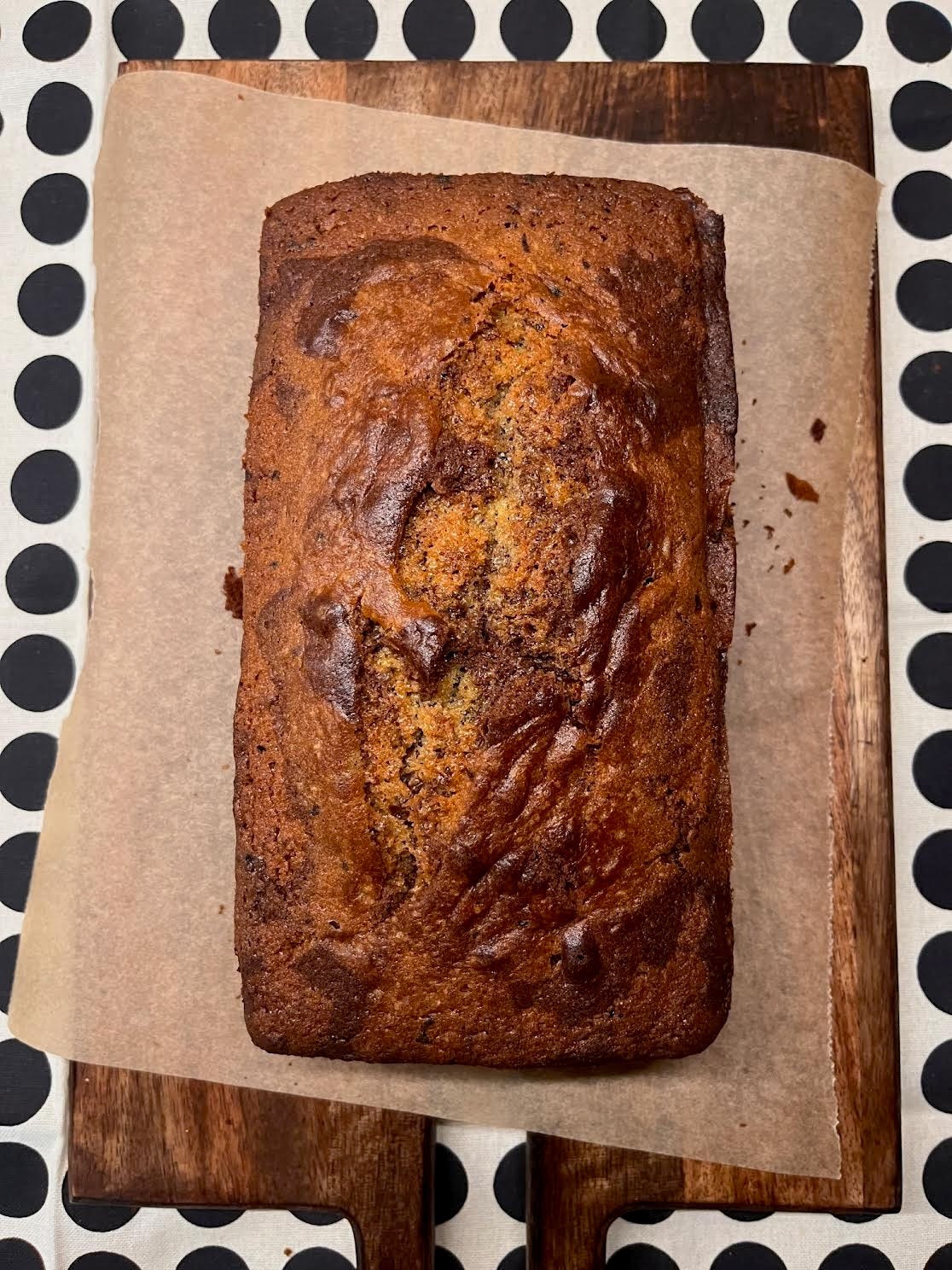
I recently came across the notes I jotted down in 2016 of a conversation I had with a young man whose family produces truffles. He spoke to me eloquently, enthusiastically, lovingly about his métier, his work, and his passion for the black diamond of Chinon. As we drained our coffee cups and began our goodbyes, he paused and said, “I really love your political posts on social media.” I responded with a sigh. “I’ve been told to stop posting political statements and links,” I told him. “It’s been suggested that it’s dangerous and could alienate professional contacts, it could hurt my reputation as a food writer and author, and it could anger potential hotel clients. So, no more.”
It has always made me sad to think I must stifle myself from speaking out on something that I am so passionate about, upset when warned about my reputation, disheartened whenever anyone tells me to “stay in my lane” or “stick to baking." Politics and the fight for everything we believe in (especially during these times of looming fascism) are so important and so consequential. “Next to that,” I concluded, “food is a mere luxury and often seems so meaningless.”
“Ah, no, there you are wrong!” he answered gravely. “Just think how beautiful it is to talk about food, to share a recipe, to reveal a food’s history or the cultural significance of a dish, to prepare a meal for others. Food always makes people happy. Whoever is reading your blog or your social media posts, you will be sure that your food is making them happy. And making even a handful of people happy is so important!”
I was suddenly struck by how right he was, this young man just a handful of years older than my sons. All along, I had held in my hands the greater power of being effective without even realizing it, and it was my first passion: food.
I have always been a political beast, from the moment I stared in awe and envy at the McGovern for President in ’72 campaign button pinned to my older brother’s T-shirt and tried to understand the satirical political cartoons he drew for his high school art show. I packed my bags and left the United States years later, in part for political reasons, saying to myself, “either I stay and go into politics or I leave and try and discover what else is out there, find another political and social system that is a better fit.” If I had been a bolder, more confident and assertive young woman, I might have stayed and fought.
But I left, politics on my mind. And cookbooks in my suitcase.
I eventually married a man who followed politics as well and as passionately as I, and together we cooked, shared food with others, bought more cookbooks, discovered new cuisines, traveled and ate. Together, we explored the origins and cultural significance of various dishes, weaving them into the broader historical and even political context of their time. We reveled in food and the joy and wonder it brought to others as we adamantly refused to talk politics over a meal. We rarely discussed politics at all as we avoided divergence and heated arguments, yet we thoughtfully voted in elections – he in France, I in the United States – and raised our sons to listen, understand, and vote.
And I started a food blog and began writing about food, and I wrote my first cookbook. I was focused and dedicated. Yet, with each political event, every crisis in the United States, each Presidential election, I would get caught up in the whirlwind, in the heat and insanity, in the weightiness of the outcome and begin to wonder if I was in the right business. I have often felt as if my voice and energy should be used for something bigger, more important, more meaningful than food. And so, I rant and rave, I write long, detailed explanations on social media trying to wield influence, hoping someone in power or someone on the other side is listening, and I am transformed, again, into the manic political beast that has always lurked inside of me.
And then this handsome young man, going on and on and on passionately about truffles, brought me back to earth with one simple, honest reflection. I had forgotten essential things along the way, as I allowed myself to be caught up in the political maelstrom that was a presidential election and the results of that election: Food soothes and comforts; food breeds understanding and tolerance; food brings together all kinds of people, no matter their political leanings.
Food can make people happy.
Sometimes I wonder what exactly I bring to social media, to the world of Substack, to this single political platform, The Contrarian. And, for that matter, why would a political platform include food writers in their list of contributors?
Food heals.
That’s why.
I wrote about the need for comfort foods in turbulent times; I wrote about food as a restorative, for both body and mind. It isn’t just that we need to eat. We are all multifaceted human beings; it can’t be all politics all the time, or we’d go absolutely mad. We can’t be in a constant state of outrage or terror, or we’d lose our humanity. Why do you think pet photos get such a colossal response? Or silly memes? It isn’t just a distraction. Sometimes we just need to change the subject.
I’m reminded of the C.S. Lewis quote: “Friendship is unnecessary, like philosophy, like art.... It has no survival value; rather it is one of those things which give value to survival.” Or the illustrious Marie-Antoine Carême—hailed even in his own time, the early 19th century, as the “king of chefs and the chef of kings’—who once claimed:
“When we no longer have good cooking in the world, we will have no literature, nor high and sharp intelligence, nor friendly gatherings, no social harmony.”
A fine meal, a beautiful garden, time with family or friends, animal videos and, yes, admit it, frivolous gossip simply drag us each back to a happier place, a place of normality. These things give value to survival. These things have the power to inspire social harmony.
So, I’ll continue to write about food, share recipes, and gather everyone around my virtual table. And I’ll probably yell about politics, too.
I’m sure each of you has your “thing” that lets you escape, that makes you laugh in dire times, that you love to share with others. What’s yours?
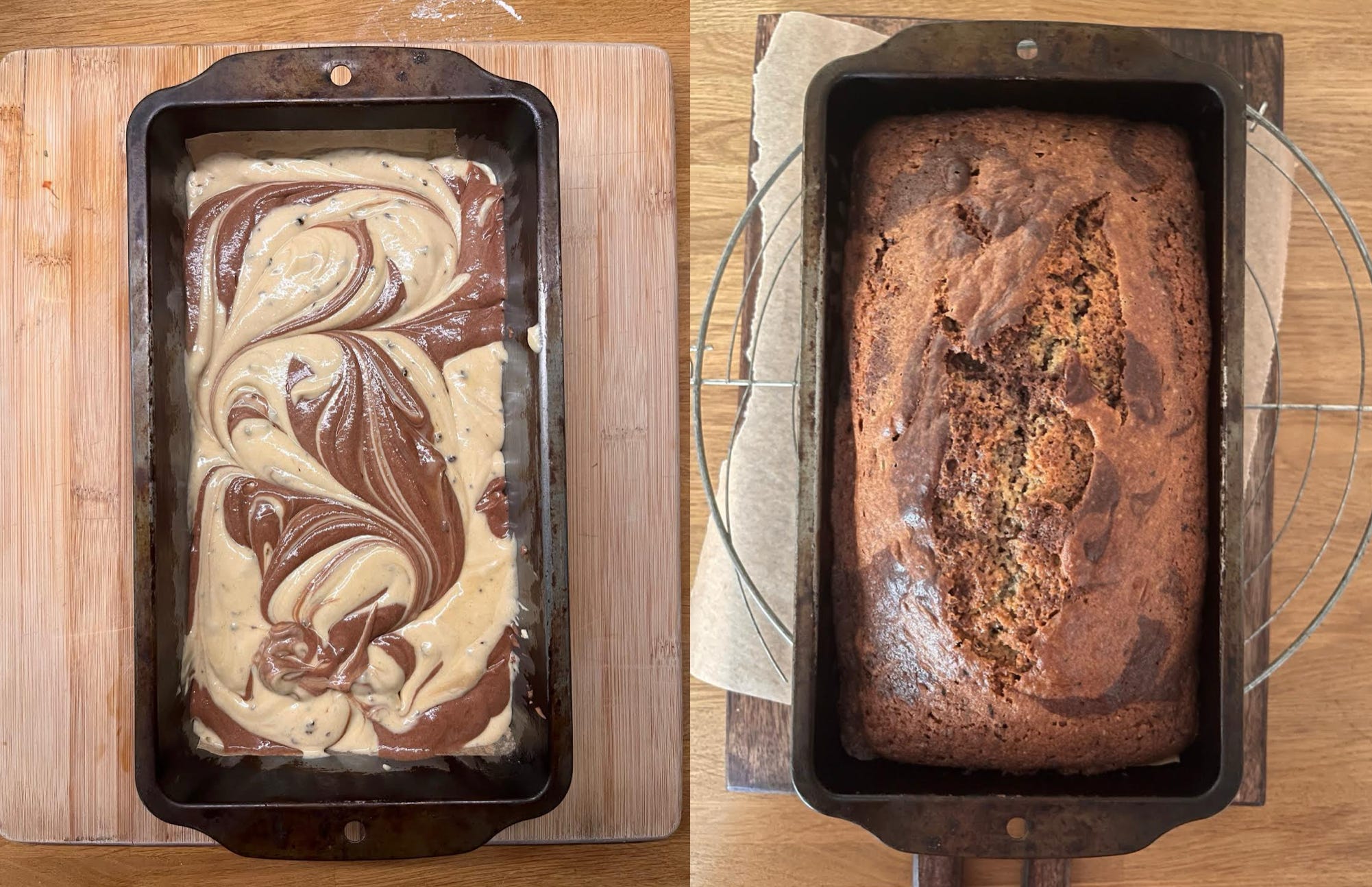
This week, I brought together my two favorite flavors, my happy flavors, in a really simple recipe for everyone.
Chocolate Coffee Marble Cake
1 ¾ cups (230 grams) flour
2 teaspoons baking powder
Gently rounded ¼ teaspoon salt
12 tablespoons (175 grams) unsalted butter, softened to room temperature
1 ⅛ cups (225 grams) sugar
4 large eggs, preferably at room temperature
3 tablespoons vegetable oil (you can use olive oil, if you like)
½ teaspoon vanilla extract
2 tablespoons milk
2 tablespoons unsweetened cocoa powder
1 tablespoon instant espresso powder
1 tablespoon strong prepared coffee
Preheat the oven to 350°F (180°C). Butter a standard loaf pan and fit a piece of parchment paper in the bottom.
Stir the flour, baking powder, and salt together in a small bowl. Set aside.
Cream the softened butter and the sugar together in a large mixing bowl, beating with an electric mixer until blended, light and fluffy; just a minute or two is really all that is needed.
Beat in the eggs one at a time, and then beat in the vegetable oil and the vanilla.
Beat in the flour mix in three additions until blended, scraping down the sides as needed.
Divide the batter evenly between two bowls – I normally do this by weighing the batter into a clean bowl then spooning half of it back into the first bowl. Or you can eyeball it.
Beat the milk and the cocoa powder into one portion of the batter; dissolve the espresso powder in the tablespoon of prepared coffee, and then beat this coffee mixture into the other portion of batter.
Spoon large dollops of each mixture into the prepared loaf pan, alternating and layering the two flavors. Drag a skewer or a long, sharp knife blade back and forth through the dough in swirls to create a marble pattern; do not over-swirl or you won’t see a marbled pattern when you cut the cake into slices.
Bake the cake in the preheated oven for 55-60 minutes until the cake is set all the way to the center and just barely begins to pull away from the sides of the pan; you can cover the top of the cake lightly with a sheet of aluminum foil for the last five or ten minutes of the baking time if you think the cake is browning too quickly.
Remove the cake from the oven and place on a cooling rack; allow the cake to cool in the pan for about 10 minutes before loosening the cake by sliding a knife around the edges and turning it out, removing the parchment paper from the bottom, and allowing it to cool completely, top side up, on the rack.
If you like, make the cake a bit more decadent by preparing a chocolate ganache and drizzling it over the top.
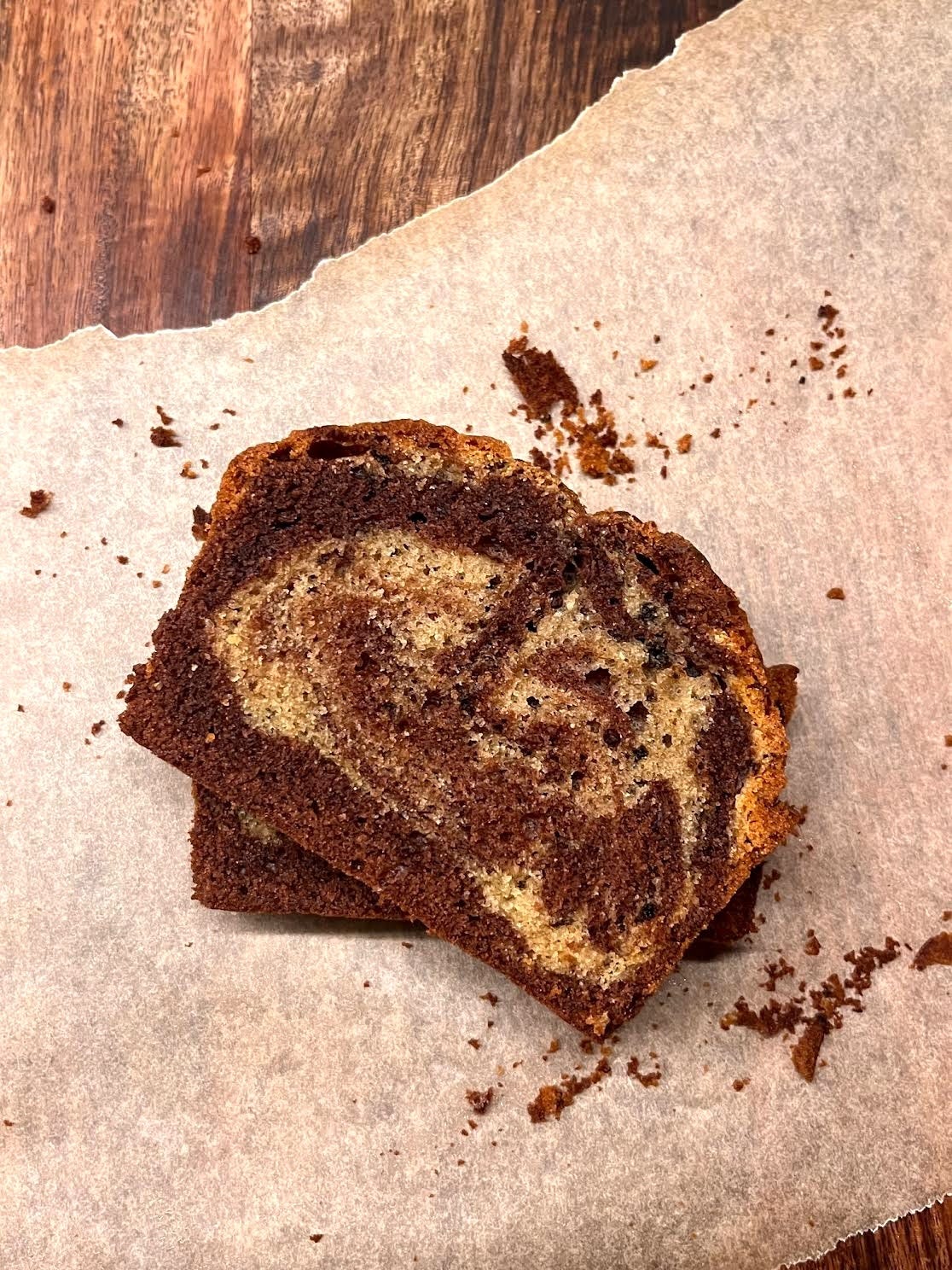
Jamie Schler is an American food and culture writer living in France where she owns a hotel and writes the Substack Life’s a Feast.

This was such a refreshing read!
Everything about this column is lovely: your story, your writing, your deep dives into life and living, and of course the recipe. Sounds delicious, like a company cake, which I'll try next time company's coming. Makes me think of the song, "If I Knew You Were Comin' I'd've Baked a Cake" sung by Eileen Barton in the 1950s.