


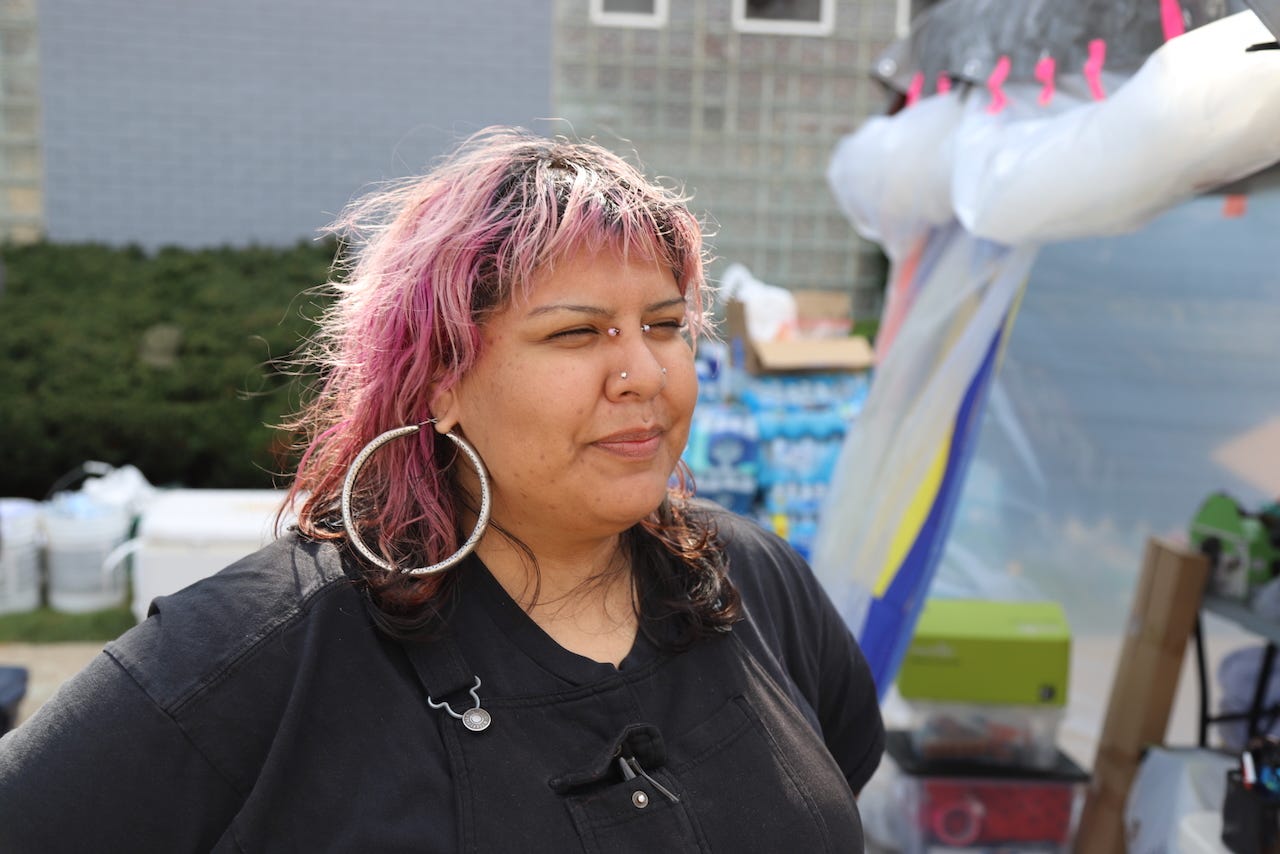
When Michelle Narvaez isn’t at work styling hair at a Chicago salon, she spends her time with a small group of activists who have become a daily presence outside the secretive U.S. Immigration and Customs Enforcement facility where immigrants detained in the area are housed.
“I feel a sense of responsibility. I couldn’t live with myself not doing anything,” Narvaez tells me as we chat outside the facility on a warm, sunny Monday.
Since “Operation Midway Blitz” launched last month, the Department of Homeland Security and U.S. Immigration and Customs Enforcement claim hundreds of immigrants have been arrested in an avalanche of ramped-up enforcement activity. Tensions in Chicago neighborhoods have spiked, federal agents have lobbed tear gas and shot pepper-spray pellets at anti-ICE protests outside the facility, which is located in a normally quiet, working-class Black suburb outside the city.
The most brazen action so far happened last week, when agents conducted a middle-of-the-night, military-style raid on an apartment building in Chicago’s South Shore neighborhood, a predominantly Black, lower-income community. (As a whole, Chicago is 32% white, 30% Latino, and 28% Black, with the remainder Asian and other groups.)
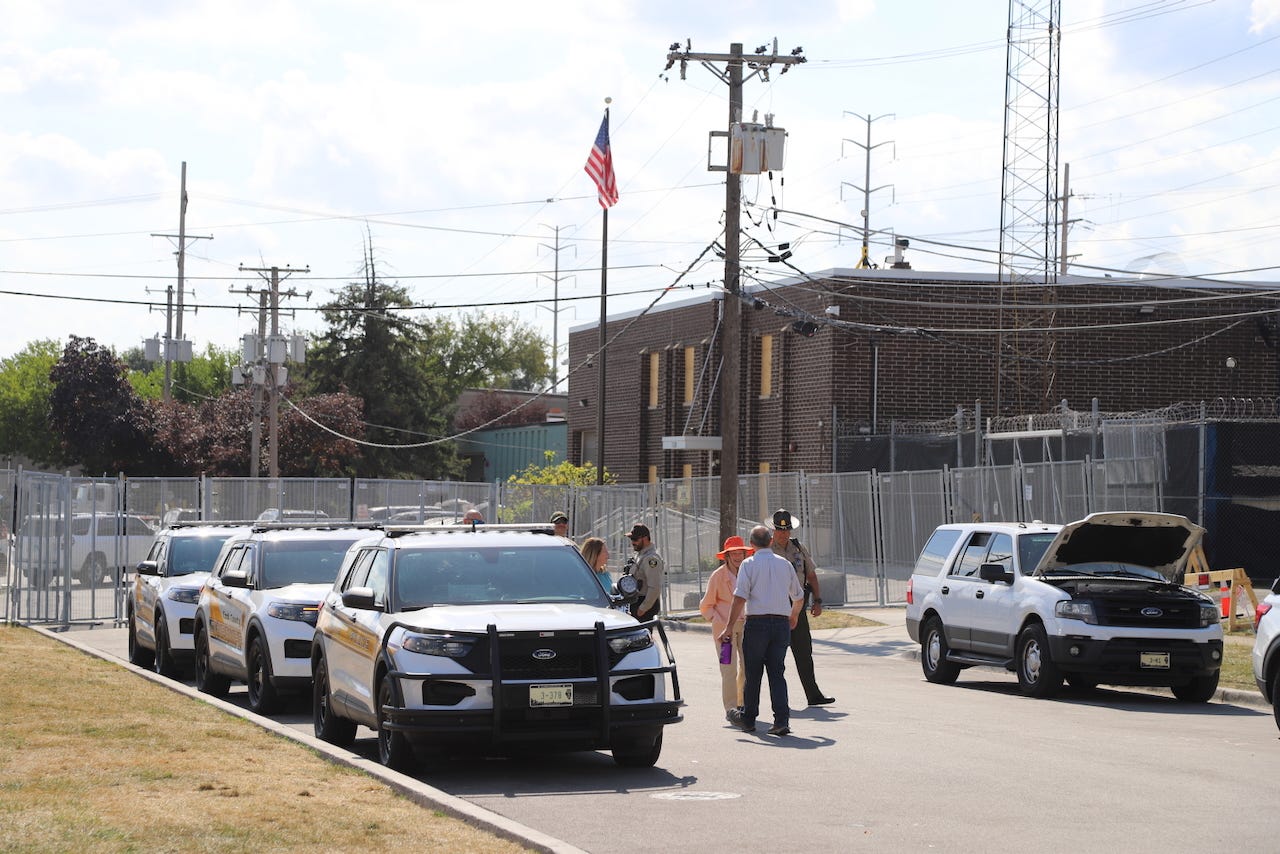
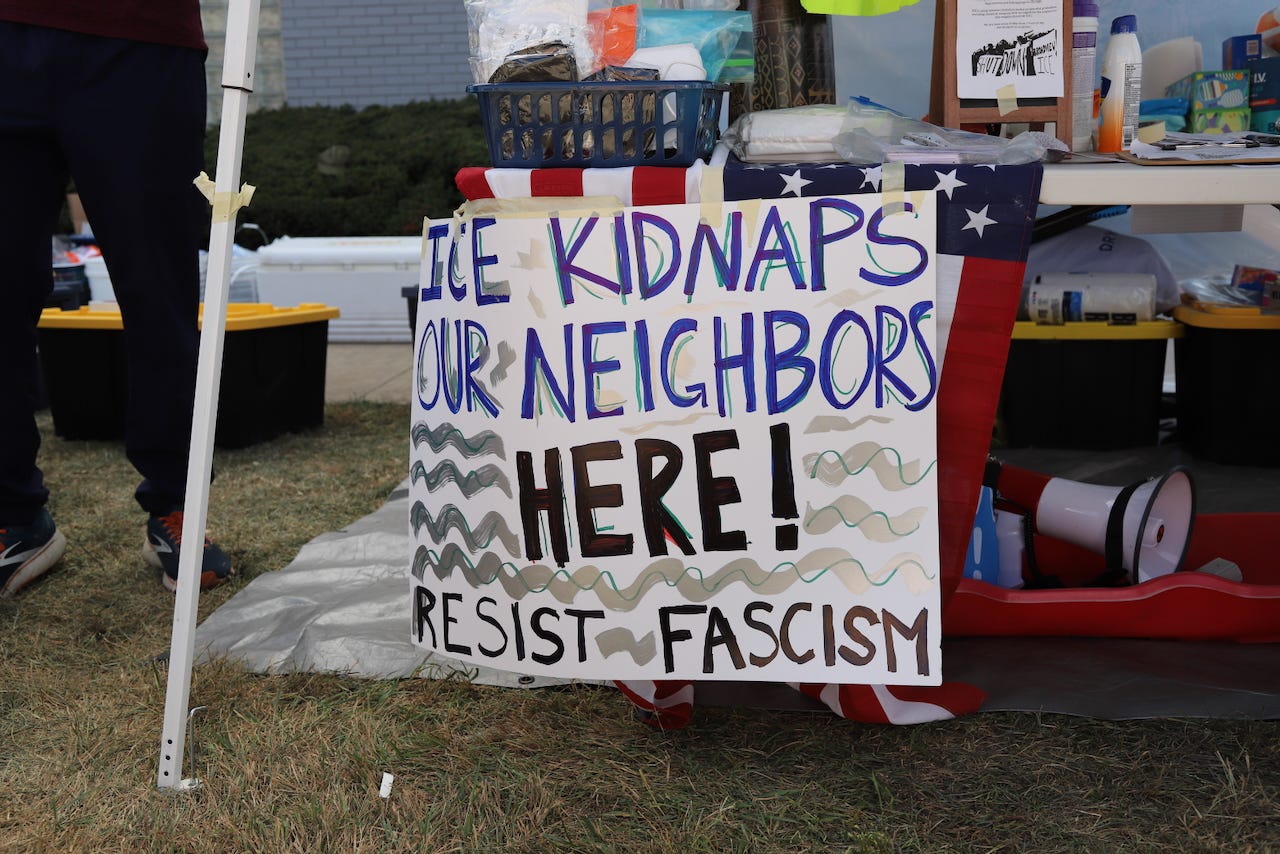
The crowd out front of Broadview on Monday is sparse as I chat with Narvaez, a friendly young woman with pink-tinted hair and an easy smile. Signs propped on a table next to her include a strict warning against initiating any violence or threats against federal agents. That day, Illinois Gov. JB Pritzker, Illinois Attorney General Kwame Raoul, and Chicago Mayor Brandon Johnson filed a federal lawsuit to block the Trump administration’s deployment of National Guard troops here. Johnson also signed an executive order barring ICE agents from city property. Early today, Trump said the mayor and the governor should be jailed.
As Narvaez and I chat, an Asian man approaches and tells her he’s having no luck getting information about his brother, who was detained at a Home Depot parking lot, a common ICE target. His brother needs medication, the man says. Narvaez hands him a flyer with a hotline number and gives him more tips on how to get the information he needs.
It’s a common scenario, she says. “It’s hard for people to find their loved ones. And by the time they get a response, they’re told they’ve been shipped to Michigan, Wisconsin, Indiana, Texas.” On more than one occasion, Narvaez tells me, she and other activists who are at the facility regularly have seen shackled detainees being put in vehicles and driven away.
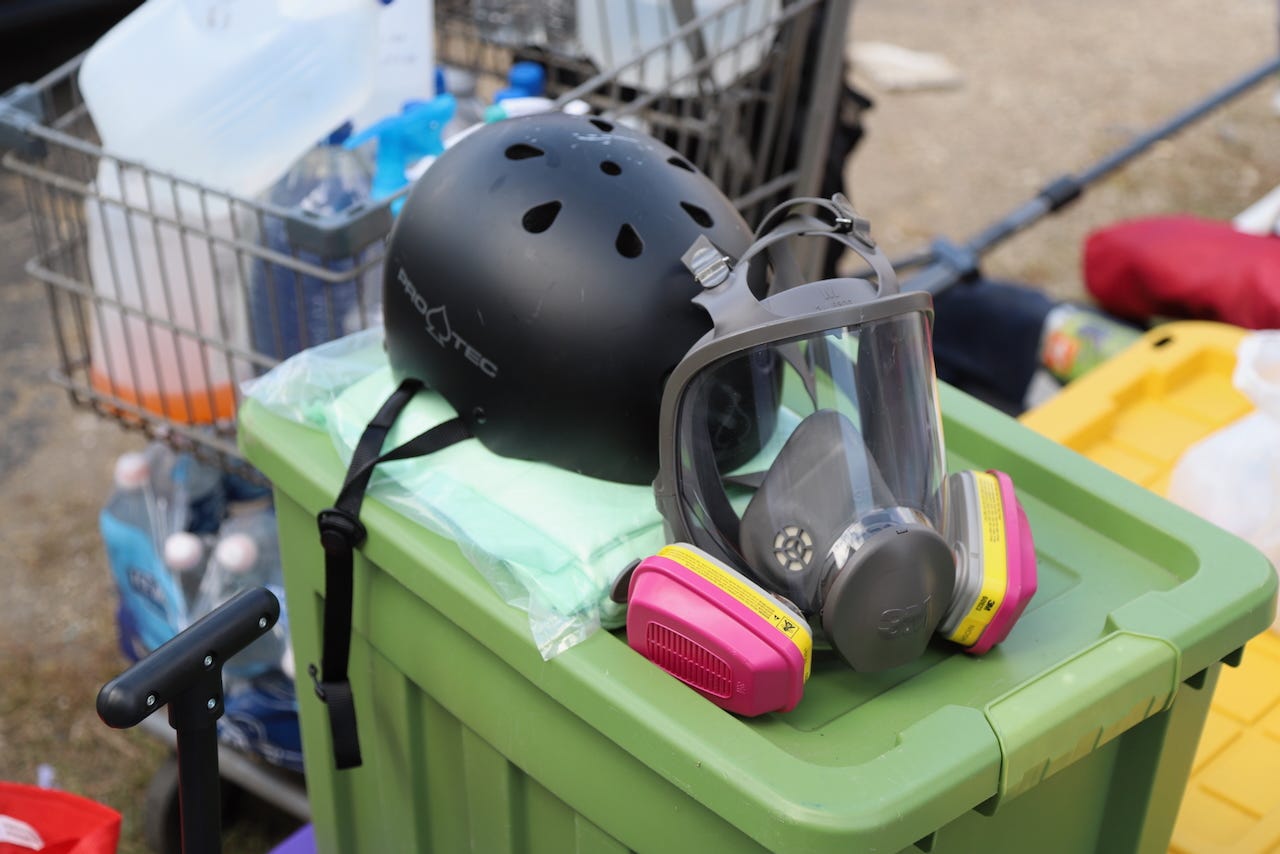
Federal agents have used tear gas and pepper-spray pellets against demonstrators. In one incident, an agent shot pepper-spray pellets at a local TV reporter’s car; Narvaez says her car has been hit with pellets, too. Local media, activists and clergy have sued Secretary of Homeland Security Kristi Noem and other Trump administration officials, alleging that federal agents violated their right to free speech by targeting and assaulting journalists and activists during demonstrations.
As she organizes stacks of water, soap, and other supplies, Narvaez says she’s undeterred. “Someone’s got to do this work. That’s what we’re here for.”
A president who wants to invade
When federal agents dressed in full military gear strolled down a peaceful Magnificent Mile—the city’s ritzy downtown shopping district—and sailed down the Chicago River last month with firearms in full view, it was clearly intended as a conspicuous show of intimidating force.
It didn’t work. One local City Council member rightly called it a publicity stunt.
But the stunt was also a troubling omen, I thought at the time. Since then, increasingly hostile enforcement activity by ICE and U.S. Customs and Border Patrol has mostly targeted neighborhoods of color. Border Patrol chief Gregory Bovino said the quiet part out loud when he told a local public radio reporter that people would be targeted for arrest and detention based partly on “how they look.”
In the past month, agents fatally shot and killed a man in the suburbs and shot and wounded a woman last weekend; body-camera video seems to contradict the Border Patrol’s account of what led to the second shooting. The woman’s lawyer says the officer told her, “Do something, bitch” before the shooting.
The city is still reeling from last week’s overnight apartment raid in South Shore. The building was in severe disrepair, as one elderly resident I spoke with, who gave his name only as “Tony,” told me over the weekend as he walked outside the building. Perhaps it’s true, as he said, that conditions worsened with an influx of migrants.
But a rundown building is an issue for a landlord, not federal agents, who dropped down from helicopters in the middle of the night to crash through windows, break down doors, lob flash-bang grenades, point guns at unarmed residents, and reportedly use zip-ties on children. Several dozen people were arrested, DHS has said. Several Democratic members of Congress now want an investigation into the raid.
Will such military tactics become commonplace? What will happen if the National Guard is deployed here? They’re already stationed just. outside the city. What happens if the federal judge handling Chicago’s case rules against the National Guard, but the Trump regime simply ignores the ruling? A federal judge recently ruled against a planned deployment in Portland, Ore.
In recent days, ICE agents arrested several people as they left a church-operated shelter on the South Side. They also handcuffed a City Council member who asked to see a warrant from agents who came to a hospital to arrest an injured detainee.
An internal poll of nearly 600 registered Chicago voters, conducted in September for the Hands Off Chicago coalition, found that 63% oppose National Guard deployment here, 73% believe Trump’s deployment threats are mainly for political reasons, and 66% oppose the ramped-up immigration enforcement. Well-known business groups have also pushed back against National Guard deployment, saying it won’t help with crime and will undercut public safety.
In normal times, Chicagoans would be enjoying the mild early fall weather, celebrating a summer in which tourism rebounded, and putting our attention on civic problems like city budgets and public schools.
Instead, many of us are worried what will happen next, under a president eager to turn the military against us.
Lorraine Forte is the former editorial page editor for the Chicago Sun-Times, where she has also been an editorial writer and reporter. She has worked in Chicago media for over two decades and has a master’s degree from Northwestern University’s Medill School of Journalism

"federal agents, who dropped down from helicopters in the middle of the night to crash through windows, break down doors, lob flash-bang grenades, point guns at unarmed residents, and reportedly use zip-ties on children".
And where, I ask you, is the push back?
Where, I ask is the outrage?
Where are the journalists pointing fingers at these actions and stating point blank that this is NOT democracy?
Where are the judges? How many have the GUTS to stand tall with the Portland judge and say NO?
Where is the morality? What can these ICE agents possibly say to their family when they return to Texas? That they are proud of defending democracy by zip tying children in Chicago?
ICE agents will never be allowed to forget this treasonous behavior. It will follow them and their family always.
While ICE is operating in communities of color, the dividing line between Latino and white communities is often not hard and fast. I live in what’s called a “majority-minority” community, so like half and half. ICE activity is here and in surrounding areas. I heard that ICE has staked out a food pantry east of here, further in the direction of gentrified Lincoln Square. My point is that we white people know that ICE is now operating where we live so they can crack down on our neighbors of color. I shop at a grocery store where Spanish is the primary language. Today as a Latino plumber left my house and I remarked on enjoying the beautiful weather, he said, “Yes, if only we can get ICE out of Chicago.” It’s a sentiment we can all get behind.