


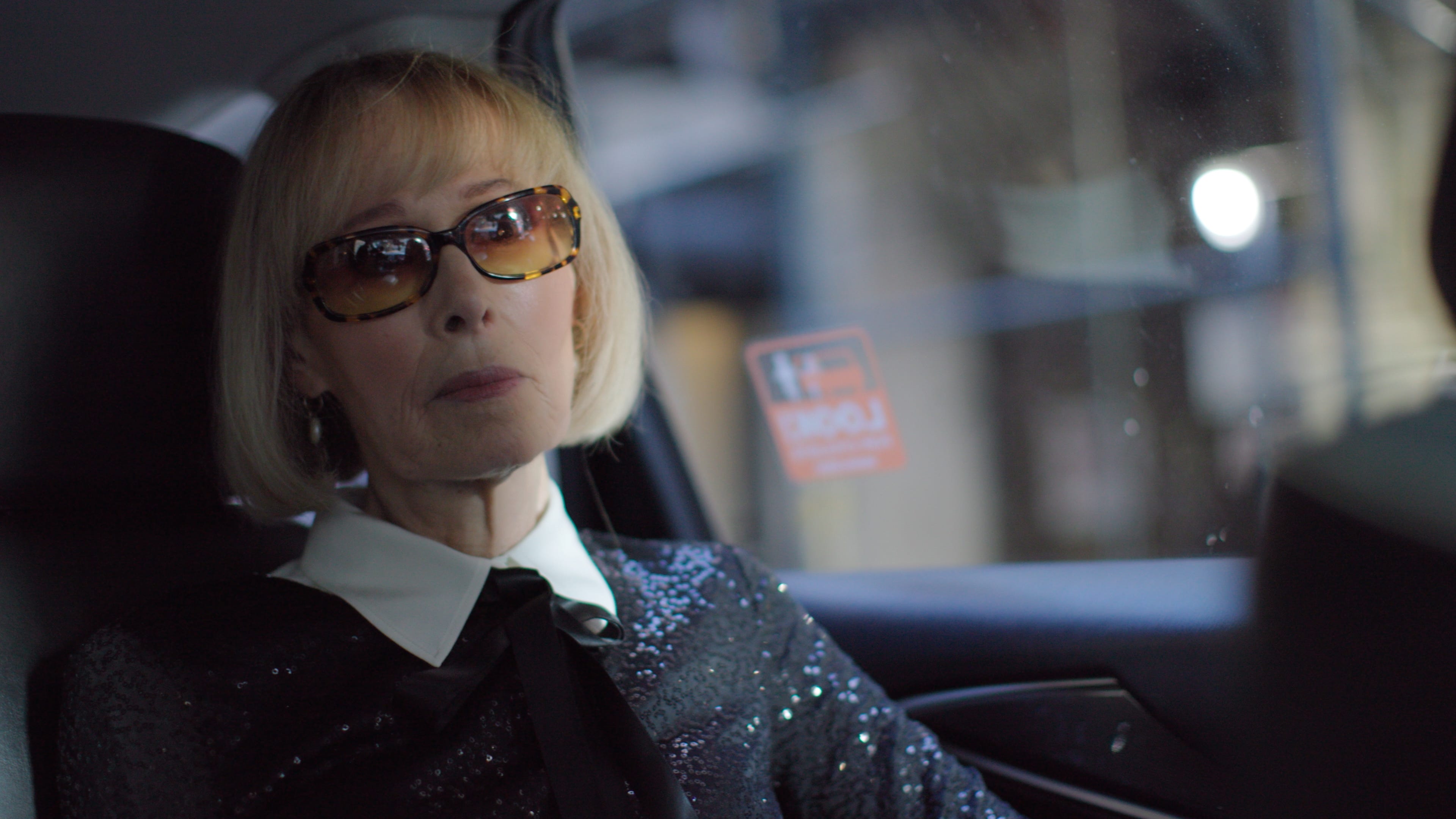
Ask E. Jean, the poignant yet entertaining documentary about E. Jean Carroll — the colorful advice columnist who beat Donald Trump in court twice — is finally in theaters.
But getting it there wasn’t easy.
The documentary’s journey began in 2019, when director Ivy Meeropol read the New York Magazine article in which Carroll accused Trump of raping her in a Bergdorf Goodman dressing room 23 years earlier. The filmmaker was struck by the tone of the piece — devastating, raw, yet full of verve — and reached out to see if Carroll would be willing to participate in a documentary. She received a blunt answer:
“I’d rather eat my shoe.”
“It’a classic E. Jean line,” Meeropol recalled over Zoom this week. “But that just made me want to meet her and get to know her more.”
Carroll had been approached by numerous filmmakers, but was eventually won over by Meeropol’s take: she was interested in creating a complete portrait of Carroll, one that also chronicled her remarkable career as a writer during the heyday of the glossy magazine. They spent a lot of time talking before the cameras started rolling.
“Building trust is no small thing, and I take it very seriously,” Meeropol said. “I am pretty protective of the people I’m making films about…I’m very collaborative. They don’t get to give notes on cuts, but in terms of ‘what should we do together?’, it’s a conversation, not me firing questions at them.”
There were obstacles other than Carroll’s reluctance, starting with two high-profile civil trials in which Trump was found liable for sexual abuse and defamation, and ordered to pay Carroll a combined $88 million in damages. (Of which he has paid $0, while continuing to appeal the judgments, which may go to the Supreme Court.) While those cases were underway, Meeropol had little access to her subject.
Then came what Meeropol calls “The Trump Effect” — the fear that has taken over much of the entertainment business and made streaming services and film distribution companies reluctant to put their weight behind a project that could provoke the outrage of an increasingly vengeful and instinctively litigious president. Some producers and crew members asked to have their names left out of the credits for fear of retaliation.
Still, Meeropol believed a film about Carroll had appeal. “She’s the documentary character that you dream of — to tell a story like this with someone like her? To me, it was a no-brainer.”
Ask E. Jean premiered at the prestigious Telluride Film Festival last fall, and initial reviews were positive, but they received no offers. Months later, a deal finally seemed to be in the works until the distributor “ghosted” the film, according to Meeropol. “I absolutely felt the Trump effect making this film, on so many levels, in so many instances,” she said. (Carroll was not available to discuss the project because of ongoing legal proceedings.)
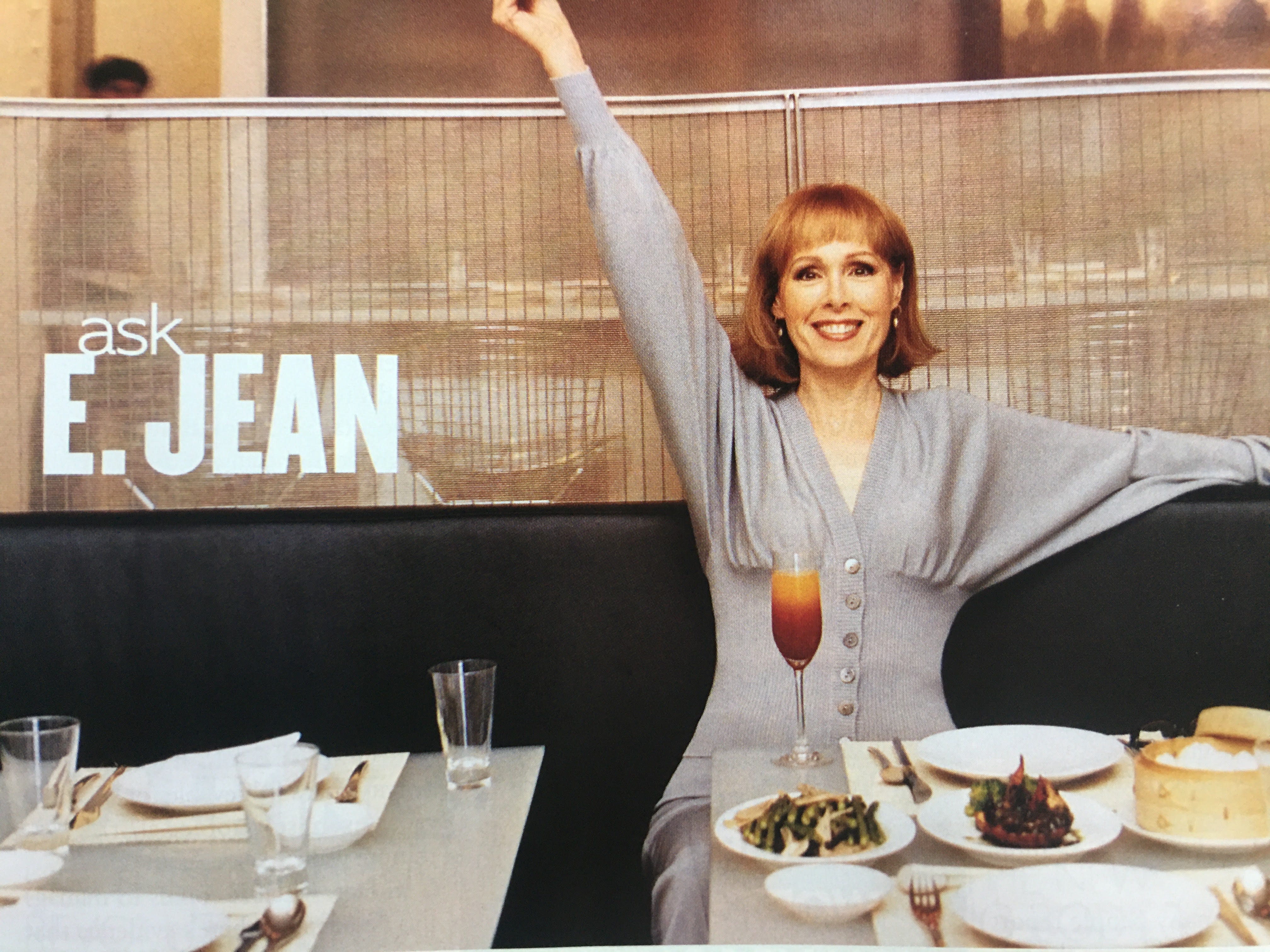
The film, which opened in New York City Thursday and will expand across the country over the next few weeks, is drawn from archival footage, videotaped legal depositions, and original interviews with Carroll and her closest confidantes. Ask E. Jean traces its subject’s fascinating evolution from Indiana cheerleader to Montana housewife to professionally fabulous New York City raconteur who hobnobbed at Elaine’s and once worked at Saturday Night Live. Carroll’s eccentric personality shines through as she recalls some of her wild journalistic escapades, like making out with profile subject William Hurt and writing an unauthorized biography of Hunter S. Thompson.
“I was always interested in how her early life was very traditional. She was doing all the ‘feminine’ things,” Meeropol said.
Because of various limitations on the production, Meeropol only spent about five days in total interviewing Carroll on-camera — less time than she ideally gets with her subjects, yet somehow enough. “Sometimes I will interview people for like six hours to get something really good for maybe 10 minutes. This was the opposite. I’d talk to her for two hours, and everything she said was gold,” she said.
Arguably the most revelatory material in the film is the deposition footage in which Carroll describes the 1996 assault — and its long, devastating aftermath. Meeropol obtained the videos, which had not been made public, from Carroll’s attorney, Robbie Kaplan.
Meeropol calls it “the greatest gift” for the film because “I wanted people to experience this through E. Jean.”
In the deposition, Trump’s lawyer Alina Habba bombarded Carroll with a stream of irrelevant, hostile questions: Were you wearing underwear? What about your handbags from that day? Did you wear a bra? What is your highest level of education? Where’d you go to college? What was your first job? What year did they stop taking your article ideas? Have you ever had acting classes?
“It’s this incredible chance for us to see what really happens when someone who’s brought a charge of rape or sexual assault is deposed,” Meeropol said.
Even as she recalls the horrific details of the assault and fields deeply personal, accusatory questions, Carroll is irrepressibly funny. At one point, she is asked how many many men she dated after her second divorce. “It was such a gorgeous array of chaps,” she says, sweeping her hands in dramatic arcs. “Let me think.”
Meeropol also uses footage from Carroll’s cable talk show, also called Ask E. Jean, which aired from 1994 to 1996 — around the time she was assaulted by Trump. On the program, she doled out sage advice that, we now know, she was not always able to follow herself. In one clip, she tells a rape survivor that “the woman who best survives a rape is the woman who doesn’t perpetuate and worsen her misery by adding guilt to it.” (Carroll told friends about the attack, but did not report it to police.)
Meeropol also unearthed a remarkable clip of Carroll appearing on the 1960s game show, To Tell the Truth, to talk about earning the title of Miss Cheerleader USA. With her trademark wit, she responds to loaded questions from the panelists (e.g. “How did you get the crowd worked up?”)
“What we were doing with a lot of that older archival [material] is showing how insidious the misogyny is,” Meeropol said. “It really delivered in telling the bigger story that we were trying to get at, which is that from the minute we’re born, we are confronted with having to look at ourselves through how men are perceiving us.”
“It’s so deep,” she continued. “And you get to really see all of it play out through this one remarkable person.”
Ask E. Jean also shows how Carroll internalized some of this thinking. As seen in the film, she once called Anita Hill and Paula Jones “wimps” and criticized them for not immediately standing up to their alleged harassers. This attitude even seeped into the pages of her Elle advice column.
“I told women to suck it up and just get on with it. That’s the silent generation,” Carroll says.
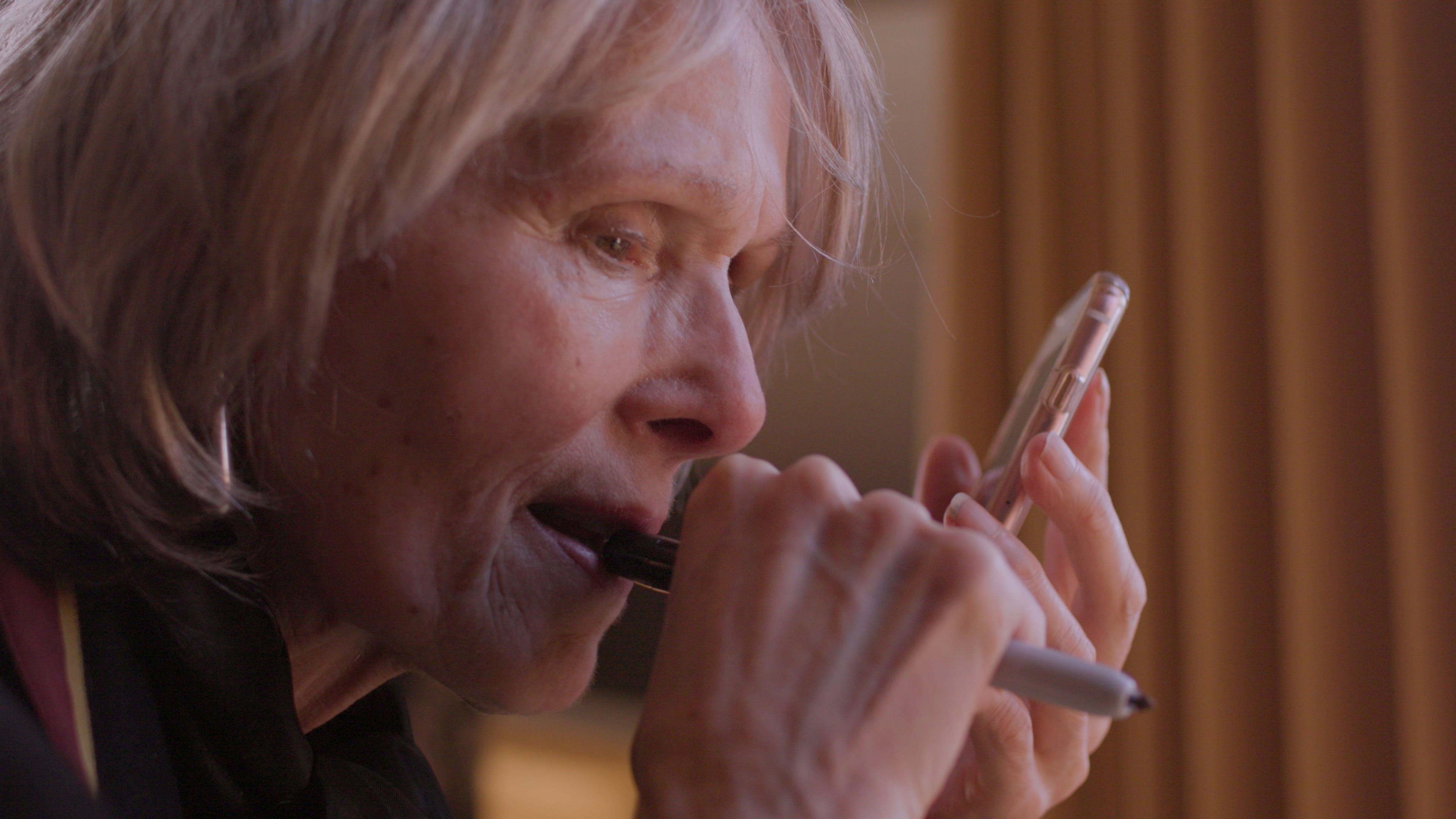
But a turning point came in 2017, when she read the harrowing accounts from women accusing Harvey Weinstein of rape and harassment.
“The surge of #MeToo rose up and just swallowed America, and what happened is women started to write to me to ask E. Jean, should they come forward. How can I sit there silent?” she says in the film.
The movement inspired Carroll to go public and confront the trauma of what happened at Bergdorf — a difficult task for someone with such a feisty persona.
“Being vulnerable isn’t easy for her,” Meeropol said. “But that is why the depositions are so powerful — because she couldn’t run away from those feelings. To me, one of the most powerful, poignant moments is when after all of it, she has to admit that she still blames herself.”
For Meeropol, making films that examine political subjects through a personal lens is nothing new. Her first documentary, Heir to an Execution, focused on her grandparents, Julius and Ethel Rosenberg, who were convicted of spying for the Soviet Union and executed in 1953, at the height of McCarthyism. “I respond to stories of individuals battling these big power structures,” she said.
More than 70 years later, we are living through another moment of fear and paranoia, when it’s hard to get a political documentary financed and made — much less seen by a wide audience. But that’s the goal for Ask E. Jean.
“We are getting it out everywhere — as many theaters will have us,” Meeropol said. “We’re taking the film all over the country.”
Meredith Blake is the culture columnist for The Contrarian
I read E Jean's book (Not My Type) and laughed out loud one second, then reeled in horror the next. She is an incredible talent, and brave woman.
Meredith, have you or anyone else heard when it will be available to stream? Theaters aren't affordable for many.