


You need not take the word of Israel’s committed enemies. For months now, Israel’s president, Isaac Herzog, has been among the leading voices denouncing “a terrible process of brutalization” in Israeli society, including the epidemic of brutality and lawlessness in the occupied West Bank. Marauding bands of violent thugs now routinely attack and murder Palestinians and burn property in what can only be described as routine pogroms, which the government either tacitly encourages, denies, or rationalizes. The absence of a robust U.S. reaction to this unfolding horror raises serious questions about our ability to influence events in the region, not to mention our standing internationally as the supposed leader of the “Free World.”
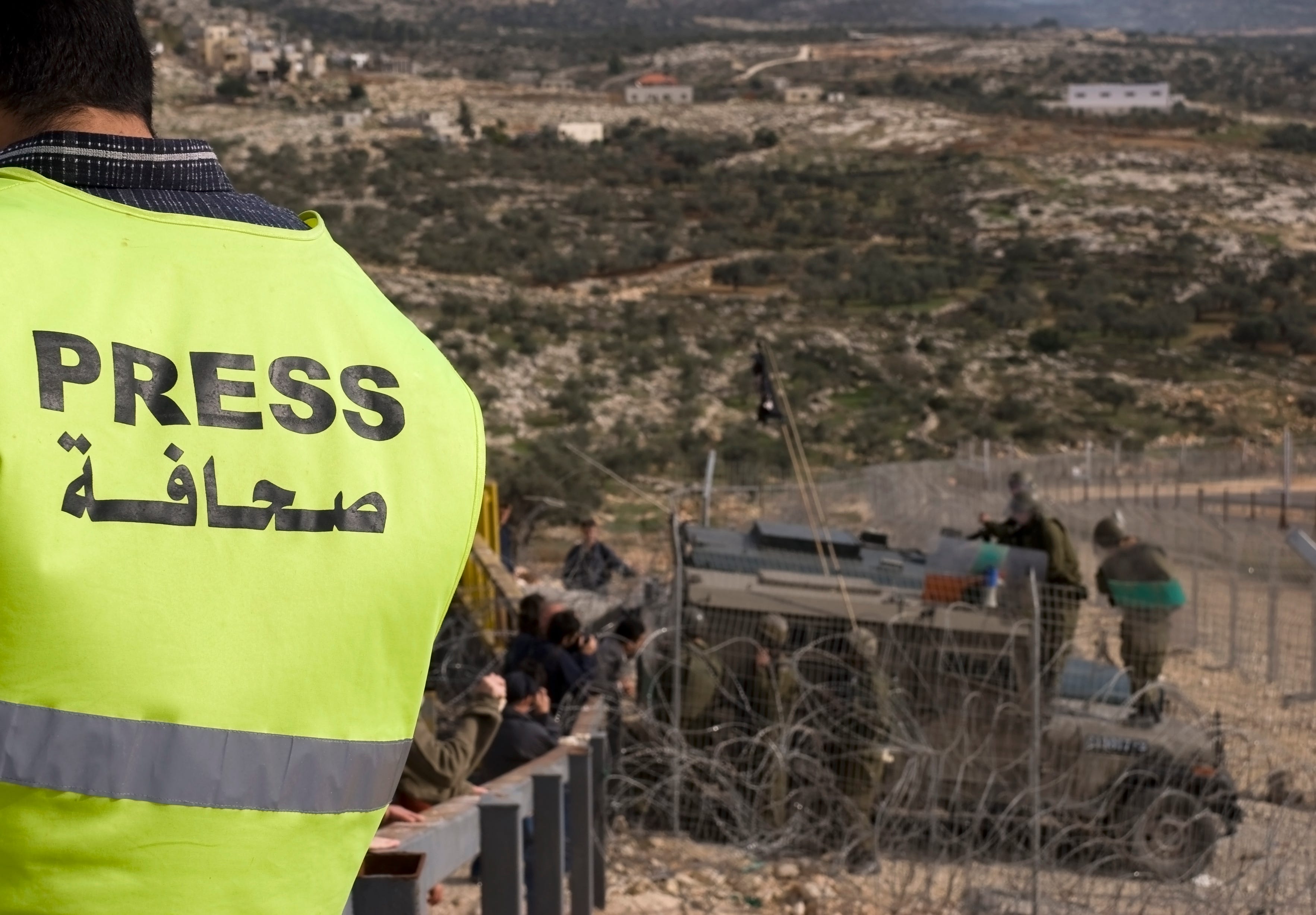
Incidents of unprovoked violence are not stray or isolated, but are now part of the regular pattern of daily life on the West Bank. “Israeli settlers attacked Palestinians and foreign media reporters in the West Bank, blocking and damaging their vehicles during the pursuit,” Haaretz reported on Saturday.
The attack on journalists was among at least 20 incidents of settler violence and incursions into Palestinian communities reported across the West Bank over the weekend, including assaults, armed threats, property damage, trespassing and clashes that led to arrests by Israeli security forces, according to Palestinian reports.
The accounts should appall anyone who claims to care about democracy and human rights. “CNN said its reporters were among those attacked by the settlers near Sinjil, where settlers lynched a Palestinian American last year. According to the channel, a group of settlers blocked the road with their car, preventing the CNN team from moving forward.”
The sense of impunity with which radical settlers now behave was on full display when settlers confronted at gunpoint and detained Rep. Ro Khanna (D-CA) in full sight and without objection by Israeli military personnel. The New York Times reported on Khanna’s visit to “the ruins of Khirbet Zanuta, a tiny Palestinian Bedouin village in the southern West Bank that was abandoned”:
Suddenly, a car of men holding guns pulled up and blocked the narrow road out of the village. The men began taunting the congressman and his team, swearing at them in Hebrew and Arabic and kicking the tires of their minibus, according to accounts, photographs and video footage from Mr. Khanna, an aide and his security guard. A photographer for The New York Times traveling in a different vehicle also saw the interaction.
Rather than forcefully intervene, IDF soldiers, according to Khanna, “smoked cigarettes, chatted with the men and after the settlers left, moved a car to block the road.” The culture of thuggery, unashamed even in plain sight of a U.S. congressman, should be illuminating. Prime Minister Benjamin Netanyahu, as he invariably does, brushed off the incident as an aberration of stray hoodlums.

The Netanyahu government’s go-to response — rank indifference to active incitement — no longer passes the straight face test. While incidents have skyrocketed by more than 560 percent, only “6.6 percent of the cases resulted in an indictment — according to data from Israel Police.” The UK, Canada, Australia, the Netherlands, Spain, Belgium, Norway, Ireland, New Zealand, and France have barred entry of National Security Minister Itamar Ben Gvir and Finance Minister Bezalel Smotrich (although the EU as a whole could not agree on sanctions) in response to the nonstop racist incitement. International condemnation, including a ban from France and Ireland, recently followed Ben-Gvir’s release of a video showing detained activists from the Gaza-bound aid flotilla kneeling with their hands tied behind their backs after their vessel was intercepted. Meanwhile, a larger pattern of horrendous Palestinian prisoner abuse and widely circulated images of apparent war crimes has emerged, with a predictable Netanyahu response: threatening to sue the New York Times for publishing evidence of abuse.
The overall picture should stun the conscience of anyone who supports democracy and the rule of law. In the U.S., such conduct has spurred more lawmakers previously sympathetic to Israel to call for stringent action. Rep. Jimmy Panetta (D-CA), for example, recently announced he would cosponsor legislation that “authorizes targeted sanctions against individuals and entities responsible for violence in the West Bank that threatens regional stability and undermines U.S. national security interests and prospects for a negotiated resolution.” Panetta and other lawmakers recognize that the escalating violence is not an isolated issue, nor incidental to U.S. interests. Instead, it “risks drawing the United States deeper into broader regional conflict.”
While Netanyahu, who brought into government and enabled Ben Gvir and Smotrich — allowing them to indulge in racist rhetoric and abusive policies — bears responsibility, his possible defeat in upcoming elections may do nothing to improve the situation, given the political positions of his opponents. Former prime minister Naftali Bennett, who rose to prominence as director of the Yesha Council, an umbrella body for the settlements, and who is running in coalition with opposition leader Yair Lapid, has denounced violent extremism. But it is far from clear he will take decisive action if he comes to power. Gadi Eisenkot, the former top commander of the Israeli military, whose centrist Yashar party has been rising in the polls, remains maddeningly vague on issues, including the West Bank.
We should not bank on the existing Israeli political system to tackle endemic abuse absent outside pressure. Fortunately, as J Street Ilan Goldenberg argues, the U.S. has an unprecedented opportunity to use its leverage to curb Israel’s egregious, lawless abuse of Palestinians and gross violations of international law. The Israeli political system recognizes it is on thin ice with Democrats, and that even its standing with Republicans is no longer so secure as to ensure it can avoid adverse U.S. reaction.
That opens the door for Congress to pass, as Goldenberg recommends, the West Bank Violence Prevention Act, “targeting violent settlers as well as the organizations and institutions that finance and enable them.” It also leaves room for wider changes in the U.S.-Israel relationship, including a phase-out of military aid and economic sanctions against illegal settlements and other human rights abuses.
The narrative long-pitched by AIPAC and a U.S. administration driven by right-wing Christian Zionists and Netanyahu apologists (epitomized by Sen. Lindsey Graham, Pete Hegseth and other outspoken Islamophobes) — namely, that Israel is simply the innocent victim of antisemitic smears — does not match reality. The attitude has prompted administrations of both parties to indulge in inexcusable Israeli conduct and now fuels an unprecedented backlash against the nation.
Facts on the ground in Israel and the changed outlook on Israel in the U.S. present the chance for a break with a status quo that is no longer acceptable to most Americans. American politicians need to confront Israel’s deteriorating human rights record, take notice of the dramatic shift in American public attitude regarding Israel, and formulate a policy that furthers our stated goals of promoting democracy and regional stability, while fulfilling the legitimate aspirations of two peoples fated to share the same land.
Rubin is correct to point out the extreme brutality the people of the West Bank continue to suffer, even if she avoids the clear description of this system of oppression - apartheid.
The slaughter in Gaza has not stopped either. Since the suppose “ceasefire” last fall, Israel has killed over 1100 men women and children in the region, while occupying over 60% of its land, including much of the best farmland. Israel continues to restrict building materials and food from entering, and 10,000 Palestinians are still missing, either buried under rubble or held as hostages under “administrative detention”.
This did not all start under Israel’s longest serving prime minister, but him and his allies have made it worse. Support for Israel’s brutality in the US remains bipartisan, although that is changing fast.
Step One: Require AIPAC to register as the lobbying organization of a foreign government.
AIPAC--and its smaller imitators--holds a stranglehold on the US Congress with regards to ANY official US government policy towards Israel.