


Hormonal health conversations have been happening all over Capitol Hill this week. Within the past 24 hours, the U.S. Senate Committee on Aging convened the first-ever formal Senate hearing on the need for menopause policy reforms; Health and Human Services held a panel with manufacturers and physicians to troubleshoot the alarming lack of availability of certain menopause hormone treatments; and the Food and Drug Administration organized a full-day event on female-dosed testosterone. Meanwhile, the Heritage Foundation put together its Restoring Men’s and Women’s Health Summit: The Future of Health, Fertility, and Family Formation — three days of speakers covering everything from body literacy to women’s hormonal health across the lifespan to men’s fertility and metabolic wellness.
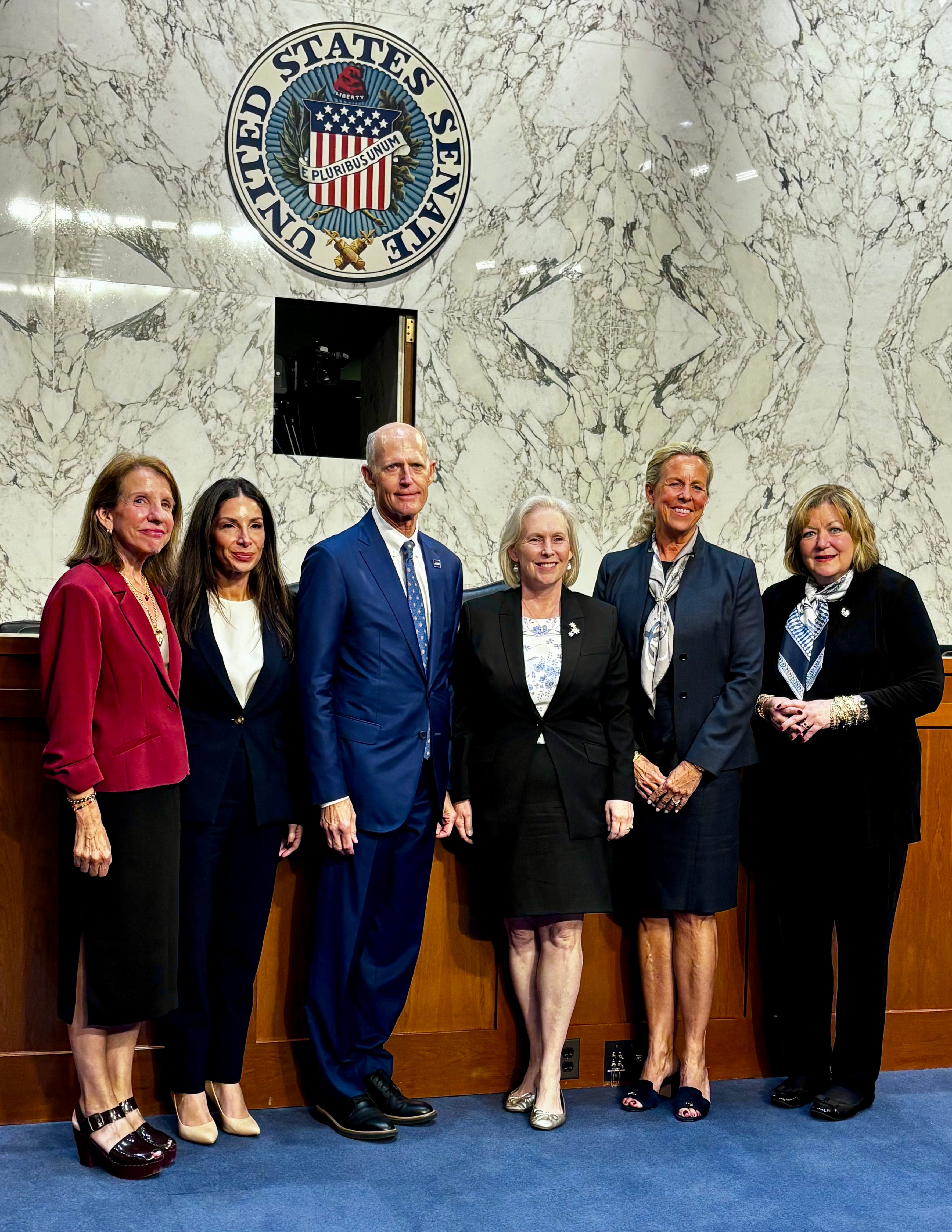
I was one of four expert witnesses who testified at the Senate hearing — and can honestly report that it felt pretty seismic. Chair Sen. Rick Scott (R-FL) and Ranking Member Sen. Kirsten Gillibrand (D-NY) were fired up and deeply engaged. My colleague Dr. Rachel Rubin presented at the FDA and HHS panels and reported the same. Noone I know was at Heritage (shocker), and predictably the agenda is packed with all kinds of MAHA and pronatalist fodder.
But still.
The fact that these issues are center stage in Washington, D.C., translates to an uncomfortable reality for advocates like me — people who are hungry to win meaningful, often long-sought reforms but have to contend with truly problematic players with likely twisted intentions.
I returned to the piece I wrote for The Contrarian in November when the FDA removed the “black box” warning label on estrogen products for menopause. I’m glad I said it on record then — because we are going to have to buckle up for even more moments like this in the near future:
It is an absolutely bizarre experience to now voice support for an outcome issued by any federal player— especially at this moment in time, especially when these same agencies directly impact the fate of so many other women’s health issues.
Of course, I know full well the danger they pose for maternal health and reproductive rights. So, what does that mean for how to deliver good news about menopause care in the here and now? My phone blew up with queries from otherwise well-versed friends asking what to make of the FDA announcement about menopause. Were they missing a smoking gun? Could this be a trick, a ruse, a distraction?
Here is my response. Trust the physicians, the researchers, and the scientists who have advocated for decades against the black box on estrogen products — and who waged that fight regardless of which party held power. And finally, try not to let politics muddle the message. Reversing the labeling requirement — and righting this 20+-year old wrong — is a bona fide win for all of us.
There is an unexpected bright side to the timing of all the federal engagement, too. After Donald Trump was elected in 2024, many advocates turned their attention to state legislatures — not just as a consolation prize but as real-time laboratories for testing reforms. And, importantly, as an opportunity to invest in and build local organizing power.
That is absolutely what has been happening for menopause. I have been tracking legislative advances since 2025; at the hearing yesterday, I let the senators know that in that short time, more than 60 bills to improve menopause care and treatment access have been introduced in 28 states — with 10 states now having 21 laws on the books.
Why does it matter federally? So that when a congressional bill or agency-enacted policy is announced as the embodiment of MAHA, we can correct the record, point to alternate framing, show objective outcomes — and still celebrate the win. It is a bonus that I did not predict when we turned to the states under the assumption that federal progress was stymied.
This is what organizing and advocacy now look like. It’s not all resistance. It is a commitment to achieving change where possible and accepting the wins we need and deserve.
Here is how I capped off my testimony at yesterday’s Senate hearing:
I want you to know two things. First, that there are so many brilliant people making massive contributions — in medicine, in innovation, in philanthropy — who are ready to join you in forging a bipartisan movement.
And second, if you’ve seen a headline, or two — or ten — saying menopause is having a moment, well it is. I promise, it is not a fringe or niche issue. And it isn’t going away. Just ask the loud Millennials coming up behind me. From this proud Gen X menopausal champion — thank you for holding this hearing. I look forward to working with you in the future.
And I meant every word of it.
You can watch the Senate hearing here, as well as access all of the written testimony, including mine.
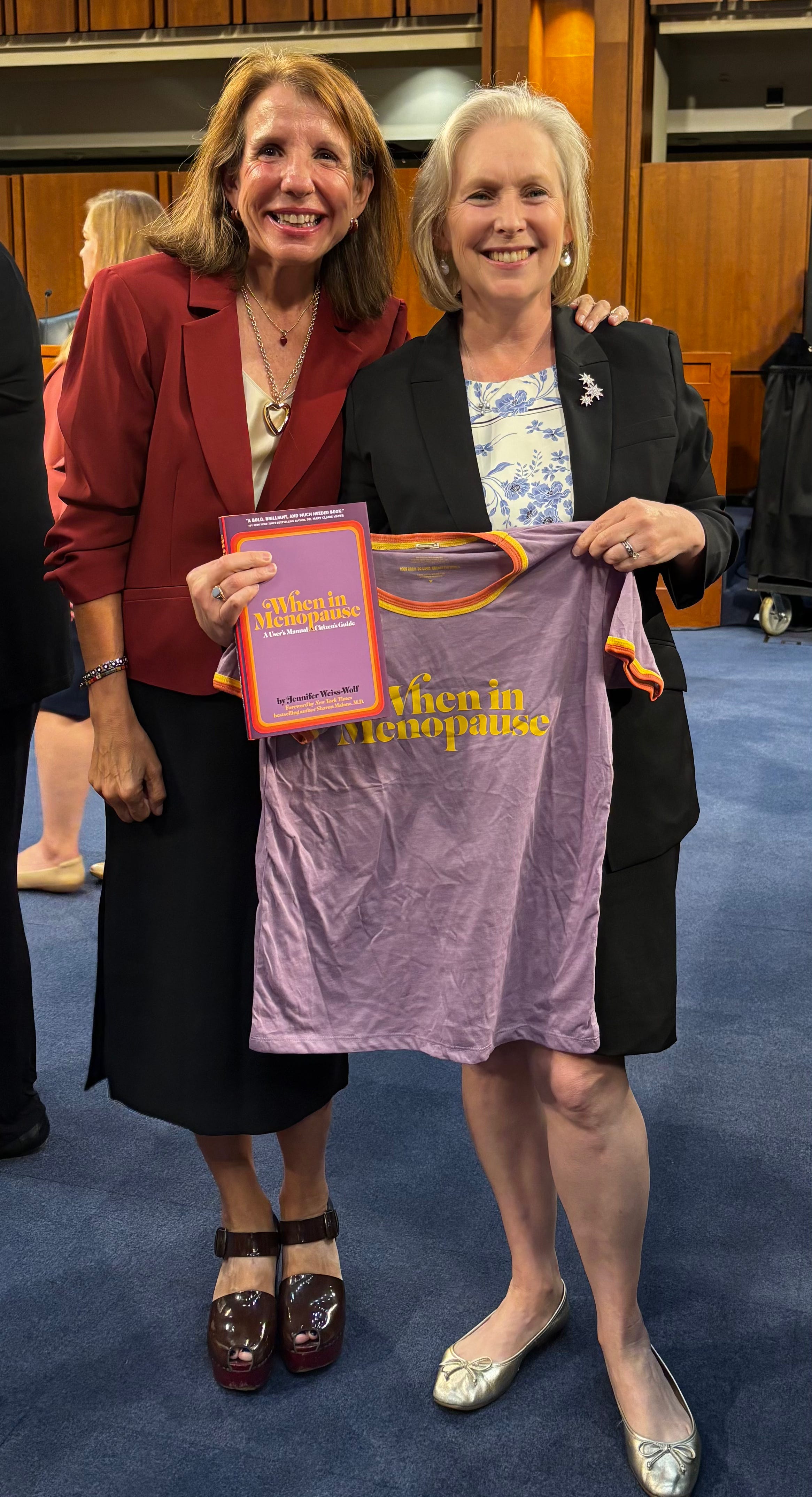
This is as good a place as any to add that my book on menopause and advocacy, When in Menopause: A User’s Manual & Citizen’s Guide, is also available for presale! Stay tuned for some lively Contrarian coverage when it comes out on October 6.

Rick Scott? Rick Scott? What's his game?