


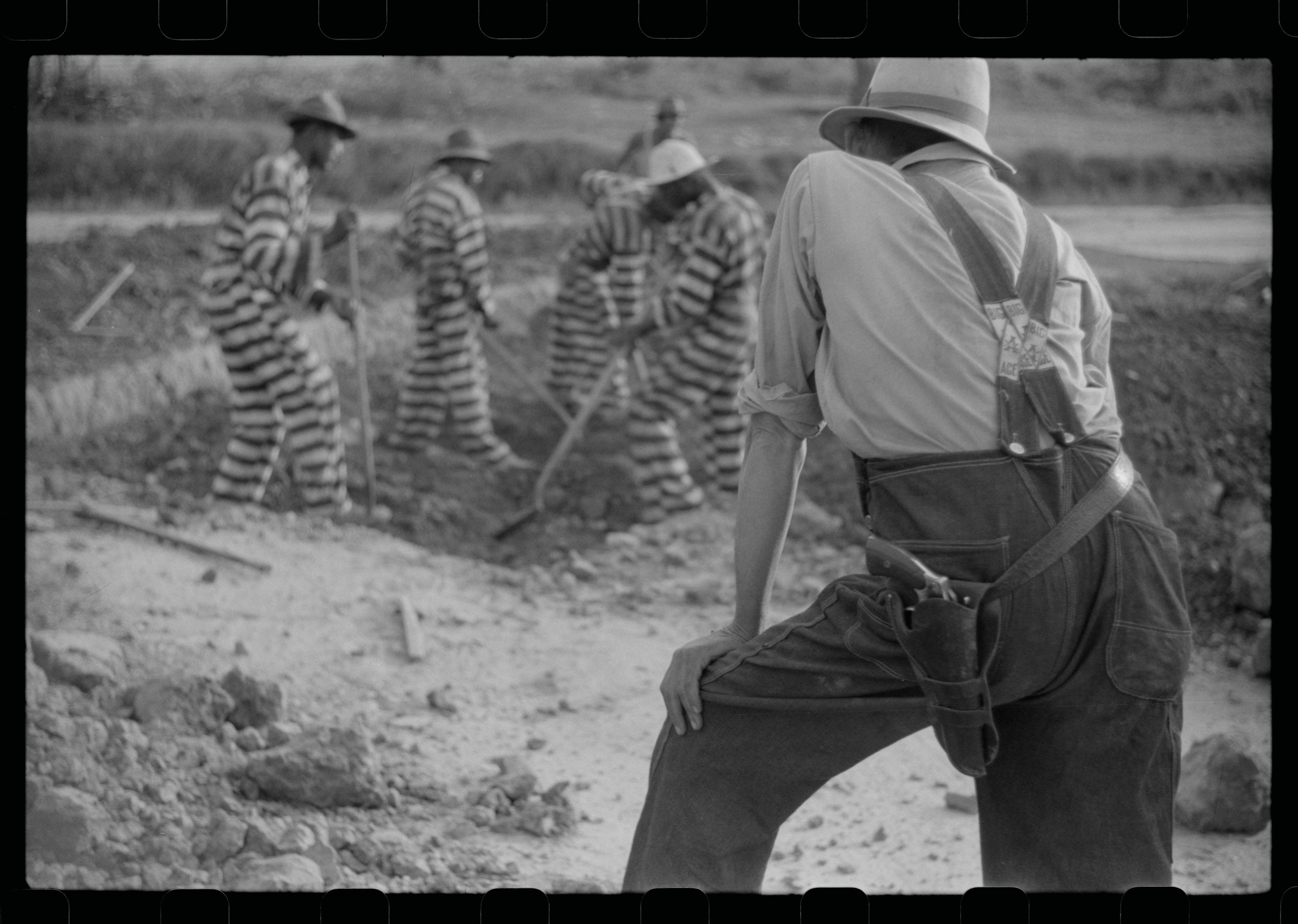
In 1790, the Walnut Street Prison opened in Philadelphia, becoming the first penitentiary in the United States — and the world.
At the time, jails existed to house people for short periods of time as they awaited punishment. But the concept of imprisoning people who’d committed crimes so they could be rehabilitated, rather than subjecting them to public humiliation or brutal physical punishment, was considered relatively humane — even progressive.
“After the revolution, many Americans embraced the idea that we shouldn’t be torturing people in public, and that we should give our citizens a chance to repent their crimes in private,” says Lynn Novick, director of Crime and Punishment in America, a harrowing new documentary on PBS.
As explored in the four-part series, it was the first step in a long process by which a country founded on the ideals of freedom and liberty came to lead the world in incarceration. Crime and Punishment in America, which premiered Monday and is screening nightly through Thursday, covers more than 250 years of American history, from the Colonial era to the present day, when nearly 2 million people — more than a third of whom are Black — are held in prisons and detention centers across the country.
‘Race is at the center of this’
Executive produced by Ken Burns, the series looks at major turning points from the recent past, like the Attica Prison uprising in 1971, the passage of the Crime Bill of 1994, and the rise of mass incarceration in the latter part of the 20th century. Like Ava DuVernay’s The 13th, Crime and Punishment in America explores how the legacy of slavery contributed to a criminal justice system that values exploitation and retribution over rehabilitation.
The series also functions as a kind of shadow history of the United States, shedding light on overlooked, misunderstood chapters in our shared past and showing how the idea of “justice” has been warped by racism, sexism, and ruthless capitalism from the earliest days of the American experiment.
We learn that the indigenous people who were here long before Europeans colonized the land had much different ways of dealing with violent crime. We also learn the true story of John Henry, the steel-driving folk hero who was, in fact, a diminutive teenager sentenced to 10 years of hard labor and likely died from lung disease acquired while digging a tunnel for a railroad company. (States across the South took advantage of a clause in the 13th Amendment which allows involuntary servitude as punishment for crime.)
Since so much of our collective understanding of the criminal justice system comes from Hollywood movies and sensational true crime reporting, “It is stunning how little we know or have been told,” Novick said, noting the profound tension “between the values that we proclaim, and the reality of how society works for a lot of people.”
For more than a century, Black people in the Jim Crow South were denied due process under the law and were subjected to racist mob violence for even the slightest perceived infraction. As Equal Justice Initiative founder Bryan Stevenson notes in the documentary, lynching wasn’t just a punishment for supposed crimes, but also a way to terrorize Black people and maintain the white supremacist social order.
Inspired by Stevenson, Novick said the filmmakers wanted “to really put this part of our history in front of us and remind us that we can't look away, as difficult and painful and deeply disturbing as it is.”
Perhaps the most unshakable scene in the documentary recounts the horrific lynching of Henry Smith in 1893, an event that drew a reported 10,000 people to rural Texas and was even covered in the New York Times. The series also chronicles the Groveland Four, a group of Black teenagers who were accused of raping a white woman in rural Florida in 1949 in a case that went to the Supreme Court (where they were represented by Thurgood Marshall).
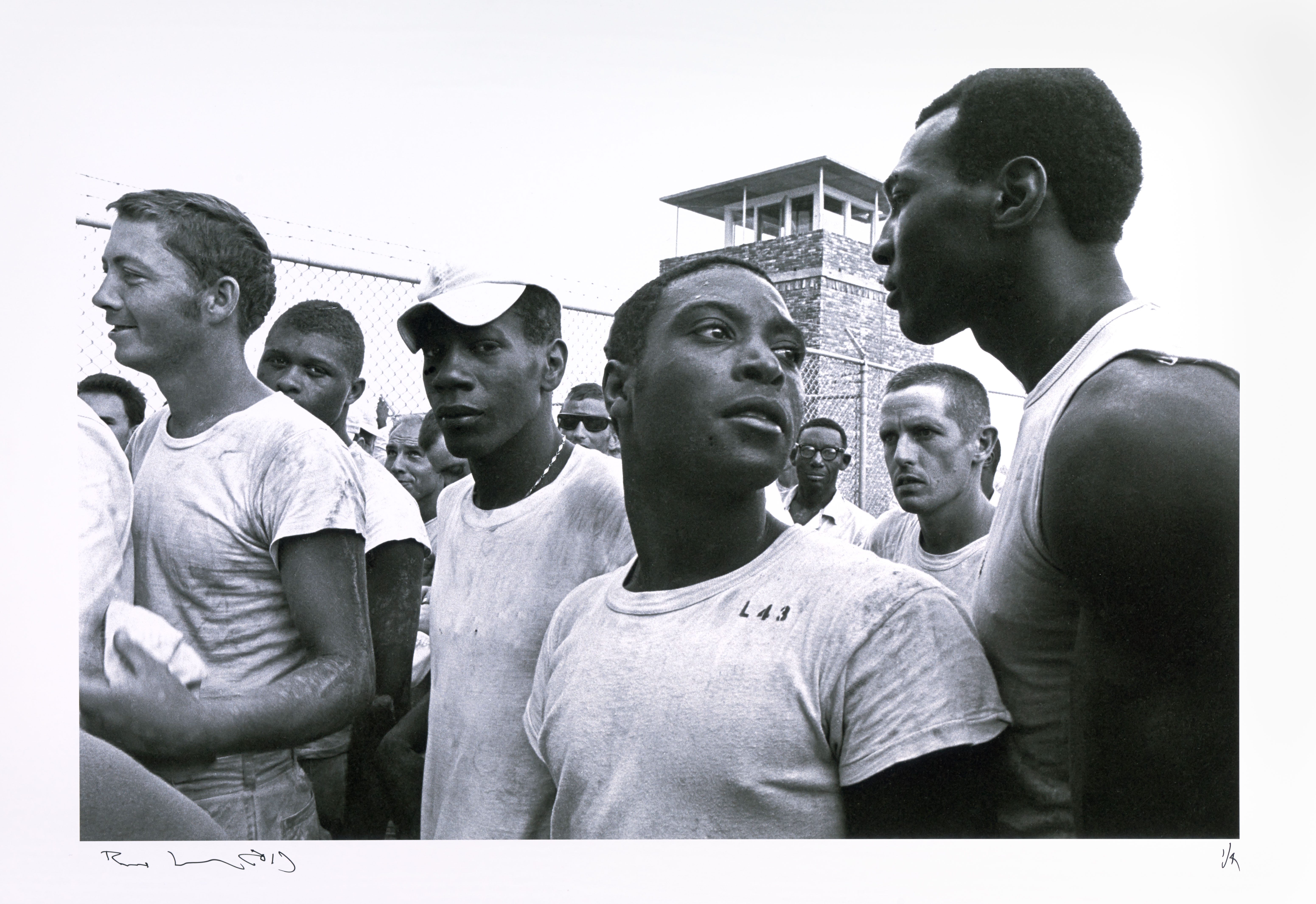
“The question of race is at the center of this,” said Novick, whose many documentary credits include The U.S. and the Holocaust and College Behind Bars. “You cannot walk into a prison or jail today without noticing the vast disproportion of people of color in these places.”
She continued: “It’s important to take the long view and understand how this happened, how we got here, and how law enforcement and incarceration have been part of a system that has been extremely oppressive, especially to African Americans.”
What gets deemed a crime
Crime and Punishment is a sprawling work of history that considers not only how prisons and policing have shaped our national identity, but also how the very idea of what constitutes a crime has evolved dramatically over the last two and a half centuries. Laws forbidding consensual sex acts between adults were on the books in the United States within living memory.
“The culture has a lot to do with what gets deemed a crime. That reflects attitudes towards human behavior and what’s considered right and wrong,” Novick said. “Things that we now think are no one’s business were once against the law in most states, and people were sometimes severely punished for them.”
Likewise, the concept of white-collar crime is relatively novel, the term having been coined during the Great Depression by criminologist Edwin Sutherland, who believed that “white-collar criminals can do far more harm to more people than somebody robbing a convenience store,” Novick said.
The cast of experts includes legal scholars and historians like Sherrilyn Ifill, Heather Ann Thompson, James Forman, Jr., and Talitha L. LeFlouria. But the series also prominently features formerly incarcerated people, including poet and lawyer Reginald Dwayne Betts, journalist Rahsaan Thomas, and Angelica Zaragoza, an advocate who supports and advocates on behalf of women in prison.
As with any Burns production, history is brought to life via the vivid firsthand accounts of real but lesser-known people. In Crime and Punishment, we hear from many colorful personalities, including George Appo, a Gilded Age pickpocket and con man who wrote a memoir about his experiences in New York City’s underworld, and Thomas Mott Osborne, a prison reformer who spent a week undercover at New York’s notorious Auburn prison.
Another standout character is Kate Richards O’Hare, a socialist who was sent to prison for speaking out against World War I. The mostly destitute women she served with did not bear the “stigmata of criminalism,” she wrote. “The only stigmata that I could discover were those of poverty, excessive childbearing, undernourishment, and overwork.”
“It was really stunning to read their accounts, to see their handwriting, to think about who they were,” Novick says. “It’s important to be reminded at all times that when we’re talking about incarceration, we’re thinking about a very abstract system — buildings, cages, bars, guards — but there are human beings involved.”
Over the last decade, American attitudes to the criminal justice system have transformed dramatically — thanks in no small part to documentaries, movies, podcasts, and TV shows depicting incarcerated people with greater empathy and exploring the root causes of crime, like poverty.
And yet the United States still stands out for its cruelty: see the botched execution of Death Row inmate Christa Pike in September, and the detention of more than 600,000 people by ICE over the last two years. Yet Novick feels encouraged by reactions to the documentary, which she’s been showing around the country.
Jess and Annie Nichol, whose sister Polly Klaas was murdered in 1993, took part in a screening at San Quentin Rehabilitation Center in California, where they spoke to a room full of incarcerated men — some of whom were serving life sentences as a result of the “three strikes” law passed in the name of their late sister (which they have since denounced, along with capital punishment).
“Seeing the way these conversations can unfold once we’ve shown the film has been very inspiring,” Novick said, “and gives me some hope.”
Meredith Blake is the culture columnist for The Contrarian
Our prison system has always been different. In fact, in 1831, the French government sent Alexis de Tocqueville over to study it. He rather expanded his portfolio and wrote "Democracy in America," an important early investigation of the then-new American experiment..
The white American male has basically never outgrown the "Wild West" mentality. That's why they're doing everything to keep everyone else (women, other races, etc.) under their thumbs, especially the fascist side of this country.
Meredith, I no longer view you as the "culture columnist" of the Contrarian. In my opinion, you are the social conscience of the Contrarian.