


You’ve likely heard that the United States is a democracy, a republic, a representative democracy, a constitutional republic, a democratic republic, and a constitutional democracy.
Unlike most of what you read online, this is completely true.
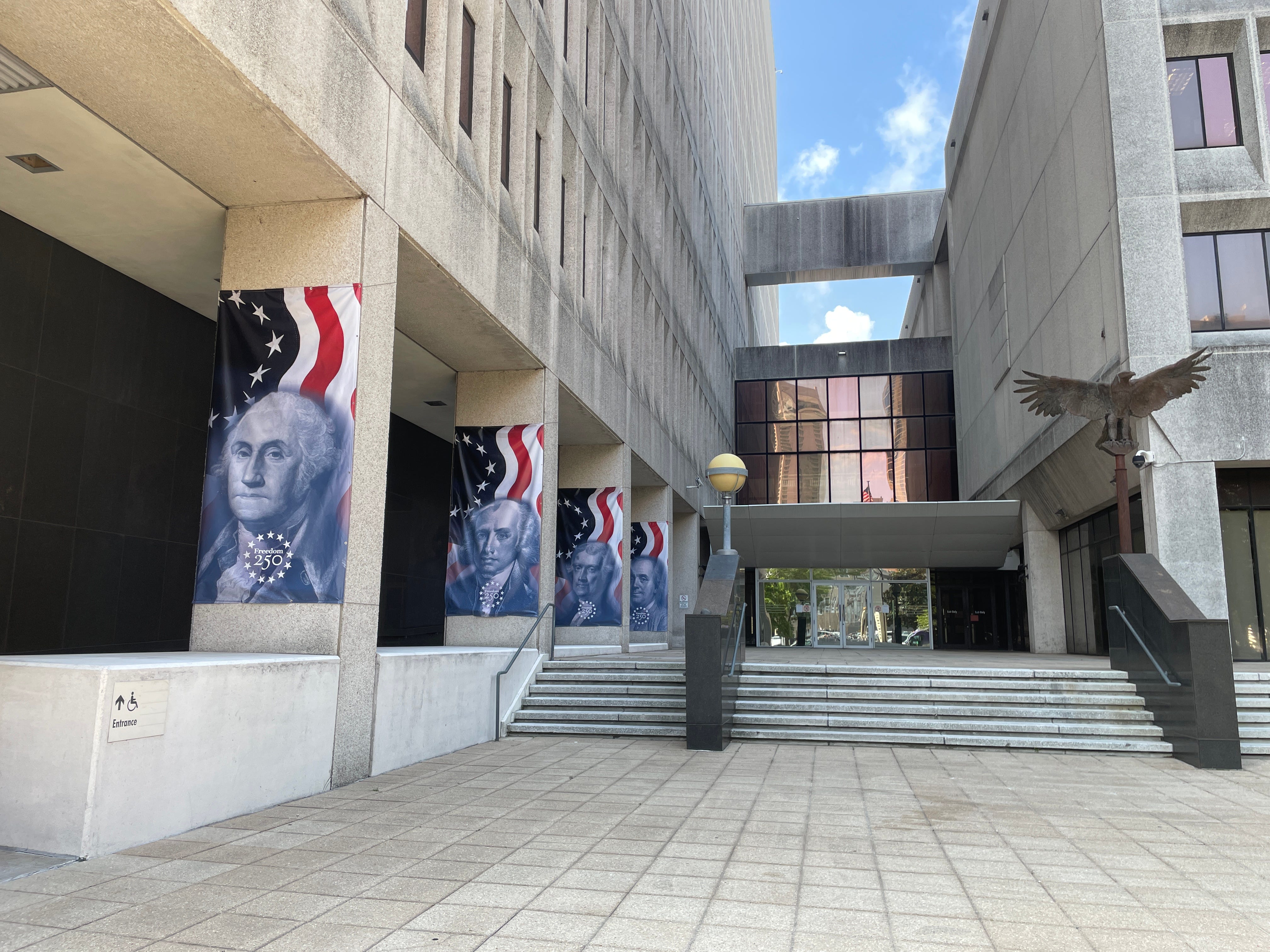
What America isn’t, however, is a direct democracy — unless you mean state and local ballot measures. Under our Constitution, there is no direct democracy at the national level. There, Congress has exclusive lawmaking ability.
But we can all agree that the U.S. has democracy, right? I mean, ‘we, the people,” elect hundreds of thousands of federal, state, and local officials. “Democracy” means “government by the people,” from the Greek: “demos,” for “common people,” and “kratos” for “rule.” So, in a democracy, the common people rule.
But, do we? And, if so, how much?
Back in 1776, there was no central government — so no federal democracy of any kind. Each colony restricted voting to property owners (excluding most women, Black people, poor people, Native Americans, and all enslaved people). When the Constitution was drafted (in 1787), there was no consensus for voter eligibility; as a result, it was left up to each state. Initially, women could vote in New Jersey, and free Black people (mainly men, often property owners) could vote in every state but Georgia, South Carolina, and Virginia. But over the next half century, despite the Bill of Rights expanding constitutional protections to almost everyone (but not the enslaved), most states moved to restrict suffrage to those who were white and male. In other words, a democratic expansion, and contraction, happened simultaneously.
But could those men elect a lot of people?
Initially, no. At the federal level, it was only House members — not senators, the president, or judges. But while states were busy implementing race- and sex-based voting restrictions, the white men who did vote began (ironically) expanding democracy; namely, the Electoral College. In the first presidential election roughly half of states held a popular vote to determine the electors (the people who vote directly for president), while the remaining states had their legislatures pick the electors. Electors, of course, could vote however they wanted. But by 1836 every state besides South Carolina had adopted a popular vote to choose electors and tied the electors’ votes to the winner of the statewide popular vote. Confusing? Yes! But it also brought the Electoral College much closer to the people.
Fast-forward to 1865-1870, when we ratified three constitutional amendments post-Civil War to ban slavery (except as criminal punishment), establish birthright citizenship (mainly for Black people and former enslaved people), expand the Bill of Rights to the states, establish equal protection of the laws, and extend voting rights to people of color (mainly men). Federal laws at the time enforced these amendments — including the nation’s first civil rights law. However, thanks to a contentious 1876 election, much of that progress went unenforced (especially in the South).
Jump ahead to 1913. That year, Americans ratified a constitutional amendment to let the federal government collect income tax (shifting the tax burden from the poor to the rich) and an amendment permitting the direct election of U.S. senators by the public (no longer by state legislators). Seven years later, women won voting rights, and four years after that Native Americans became citizens. But this era also saw sustained racial violence, and the rebirth of the KKK.
More expansions and contractions of rights. But the common people weren’t done.
In the 1960s, the Civil Rights Act and the Voting Rights Act expanded equality in public accommodations and voting. The constitutional amendments ratified between 1961 and 1971 gave electoral votes to Washington, D.C., banned poll taxes, and expanded voting rights for Americans 18 and up. The Supreme Court additionally expanded civil, voting, and reproductive rights between 1954 and 1973 — from Brown v. Board of Education to Roe v. Wade. A massive democratic increase.
But the 1980s saw more contractions: Congress cut the top marginal tax rate from 70 percent to 28 percent (shifting the tax burden back to the poor; today, the top rate is 37 percent). The Federal Communications Commission repealed its Fairness Doctrine; now, TV and radio broadcasters weren’t required to present contrasting viewpoints. The 1990s saw the resulting spike in polarization that was made worse by the Internet. And the first quarter of the 21st century has seen even more expansions and contractions: Increased same-sex rights but also a drop in voting rights, reproductive freedom, and limits on money in politics. The elections of the first Black president and first Black (and female) vice president were also bookended by new heights of gerrymandering and the largest attack on the government since the Civil War.
Here is my point.
Democracy is not an arc: It is a pair of lungs. It expands and contracts. The direction is determined by us, the common people — by our civic engagement, votes, pressure on public officials, or our apathy.
On this 250th anniversary of America, I hope we realize democracy’s future is entirely dependent on our desire to expand or contract it.
I hope we can take one deep, collective breath, and choose the former.
Ben Sheehan is the creator and host of Civics Made Easy, a show on PBS breaking down the complex system of American government and civic participation. He is the bestselling author of What Does the Constitution Actually Say? A Non-Boring Guide to How Our Democracy Is Supposed to Work. His Substack is Politics Made Easy.

Thank you, Ben, for confirming what I've been saying for a long time: Ronald Reagan was a great president only for the rich. He made it possible for them to get richer all the time on the backs of the poor and middle class. The billionaire class should get down on their knees every day to thank him.
Reagan also made it possible for entertainment like Faux Spews, Newsmax, Breitbart and other right wing professional liars to be viewed as mainstream by the ignorant, thanks to the repeal of the Fairness Doctrine.
And let's not forget the Iran-Contra deal.
The United States is not a democracy because of the structure of the Senate. The Senate is the most undemocratic legislative body in the world. Each state gets 2 Senators do matter their population:
California has a population of about 39 million people Wyoming has about 600,000.