

Vladimir Putin did not have his own powerful, quasi-military “National Guard,” controlled exclusively by him, until 2016—a decade and a half after seizing power in the Kremlin. His summit colleague, Donald Trump, pushing presidential power to the edges of dictatorship, has been absorbed lately in transforming America’s once-quaint “National Guard,” originally designed in 1636 to help a local neighbor in distress, into a national military force fully under Pentagon control but totally subservient, Putin-like, to the president, acting as “Commander-in-Chief.”
Trump’s National Guard is becoming a personal military force remarkably similar to Putin’s, reflecting the emerging reality that Trump’s politics, increasingly authoritarian in manner, have moved closer to Putin’s, just as the differences between them have become more difficult to discern.
In June, Trump arbitrarily ordered 5,000 Marines and National Guard troops to Los Angeles to quell spreading protests arising from ICE’s (Immigration and Customs Enforcement) roundup of suspicious-looking, mostly Hispanic, workers, not bothering to check with the LA mayor or the California governor—both Democrats. The president loves to project an image of toughness, but a federal judge, Charles R. Breyer, ruled subsequently that his LA action was “illegal,” a violation of the “Posse Comitatus Act” barring the use of federal troops to enforce a domestic law.
In late August, Trump, unimpressed by the law, ordered thousands of FBI agents and National Guard troops into Washington, DC, where he claimed, “violent gangs and bloodthirsty criminals” flourished, stressing the need to fight “crime,” even though he knew that crime in the nation’s capital had dropped dramatically in the last year.
Apparently eager to win cookie points with Trump, GOP governors from different states then rushed their own National Guard troops to DC to bolster the force Trump had already sent there. Soon, the nation’s capital looked like an armed camp, troops everywhere—except in those troubled parts of the city where they might be useful. Otherwise, the troops spend most of their time collecting garbage, checking traffic violations, and enforcing local law (or trying to).
Trump must have enjoyed this unnecessary demonstration of khaki power, which created havoc and dominated news coverage. He warned that he would soon be dispatching National Guard troops to Chicago and (having gone this far, why not farther?) also targeted Baltimore, Boston, and New York as his likely next victims. On August 25, at one of his staged news availabilities (they used to be called news conferences, when journalists would pose real questions and even occasionally receive authentic answers), Trump got to the main point of the armed takeover: he’d ordered Defense Secretary Pete Hegseth to reorganize the National Guard into “specialized units,” specifically for the purpose of dealing with “public order,” the updated GOP slogan for “law and order.” Using these new, freshly equipped “specialized units,” Trump would then have his own army ready for “emergency action” whenever, wherever he wished, the law notwithstanding; in this way enjoying Putinesque power in a country still functionally democratic.
With this order, which Hegseth never questioned, despite its breach of military tradition and etiquette, Trump changed the core mission of the National Guard. From its start in colonial Massachusetts, the National Guard has focused on local problems. By the 20th century, as America mushroomed into a global power, its responsibilities expanded considerably, and combat-ready units joined up with the Army, Navy, or Air Force to fight in foreign wars.
Now, with his August 25th order, Trump has signaled that he wants (this remains his wish, and is not yet a fact) his new National Guard to become his personal army, similar to the way Putin uses his nine-year-old “National Guard” to strengthen his position as Russia’s unquestioned political leader, to fight his enemies (real or imagined), and to crush any budding opposition to his continued rule.
Like other Russian rulers, whether czars or commissars, Putin had always been protected by a massive military and security force, but in 2016 he felt he needed more. He had survived an explosion of widespread anti-Putin demonstrations following nationwide elections in late 2011, which many Russians considered fraudulent. Signs reading “FOR FREE ELECTIONS” were everywhere. When Putin was inaugurated for his third term in May 2012, another round of angry protests erupted in Moscow and St. Petersburg, led by pro-democracy advocates like Alexei Navalny and Boris Nemtsov, both now dead; murdered. Hundreds of young Russians were arrested. Putin feared Russia might be collapsing into a “color revolution,” such as the recent revolts in Georgia and Ukraine, challenging his autocratic rule.
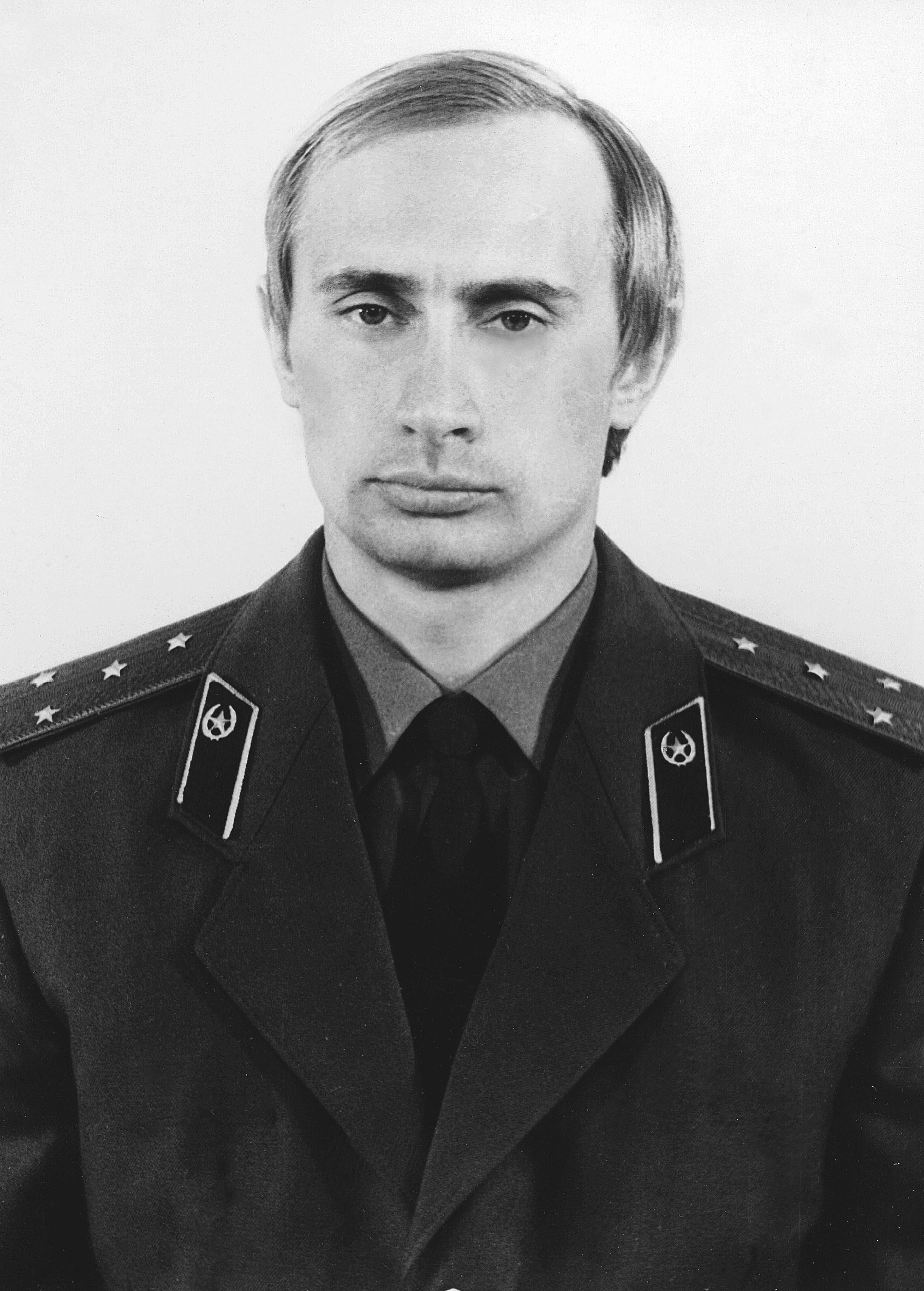
A former KGB colonel, Putin felt he was entitled to additional protection, above and beyond standard security, and he swung into action. Unlike Trump, he had no concerns about such institutional inconveniences as a Congress or a Supreme Court. Russia was already a dictatorship; it’s been so for many hundreds of years. With the help of key KGB colleagues from his hometown of St. Petersburg, including a former KGB general (once his bodyguard) named Viktor Zolotov, Putin started to create a personal army loyal only to him. There would still be the Russian military, border guards, local police, and the old security apparatus, the NKVD or the KGB under the Soviets and the Okhrana under the tsars.
But this personal military force would be new. It would enjoy unrivaled freedom of action to spot, arrest, and/or kill any “internal threat” to Putin or Russia. It would function independently, subject only to Putin’s needs and demands. Its writ would run from Kaliningrad in the West to Vladivostok in the East, from one end of Russia to the other. Under Zolotov’s direct command, it would soon have a force of 340,000 troops, local police, and border agents. Its budget would be under Putin’s personal control; it could not be questioned. Officially, it is now called “the National Guard of the Russian Federation,” though it could be called “Putin’s Okhrana.”
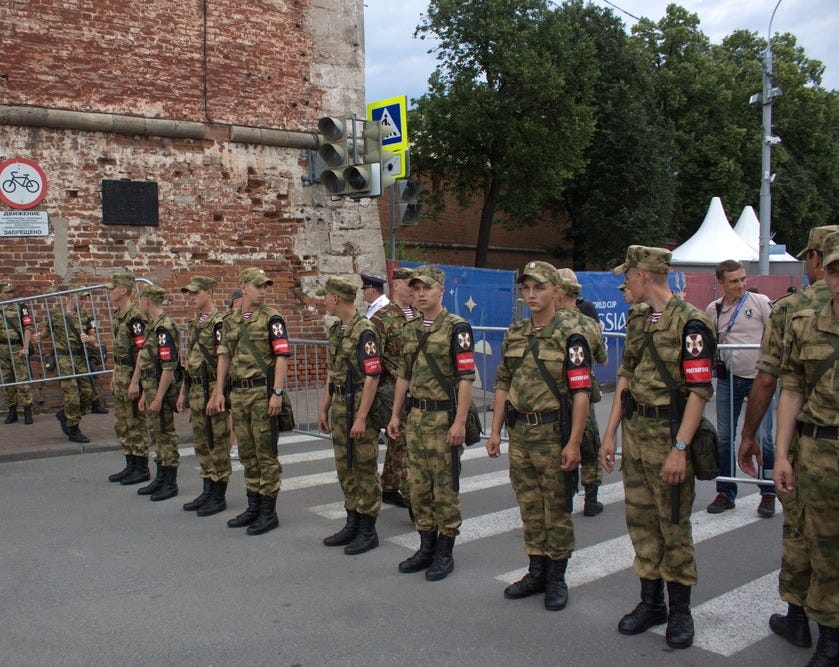
It is his deadly toy. If there is a strike in Kazan objecting to a Putin policy, he can, if he wishes, send his army there to crush it. If there is an anti-Ukraine War demonstration in Zagorsk, small but disturbing, Putin’s Okhrana could and would smash it. It is his personal, hefty army of troops; all well-paid, well cared for, totally loyal, a handy, convenient asset for a Russian dictator.
It is unlikely that Trump has such a monster force in mind, when he refashions the National Guard to suit his political policies and tastes. He may not even know about Putin’s personal army. But he seems determined to bend current Pentagon rules to his own needs and demands, and let military tradition be damned. He has already started. How far can Trump go towards his own Okhrana? We may soon learn.
Marvin Kalb, a Murrow professor at Harvard, a former network diplomatic correspondent and author of 18 books, most recently “A DIFFERENT RUSSIA: Khrushchev and Kennedy on a Collision Course.”
I see boys, not soldiers in the photo.
Become killers.
So T is talking about his own "National Guard" in a grotesque imitation of Putin's National Guard (private police force).
Thank you so much Mr. Kalb for your posts here at The Contrarian. Your experience and insights are so very valuable.
For folks who may have missed it: here is an hour-long discussion by Mr. Kalb of his latest book, given at the National Press Club in February: https://www.youtube.com/watch?v=OH6FsW3Rneg