


A decade ago, two of the world’s leading tech entrepreneurs joined forces to fulfill the dream of creating computers that think. Artificial Intelligence. What could go wrong? Quite a lot, it turns out.
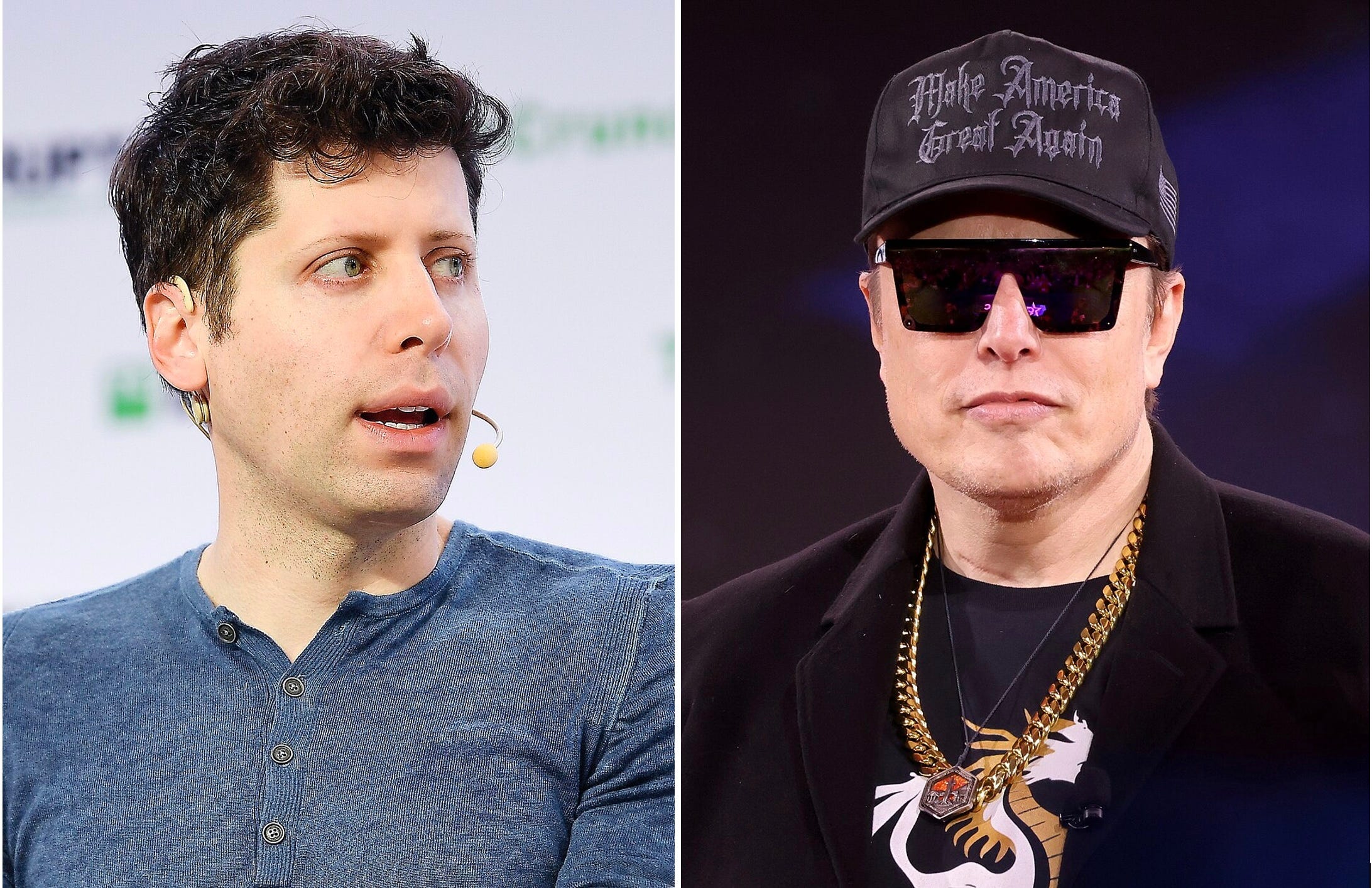
On Monday, the most consequential court battle in the history of AI begins in the US District Court for the Northern District of California in Oakland. The case features Elon Musk’s accusation that his OpenAI co-founder Sam Altman and president Greg Brockman abandoned their original non-profit mission in the pursuit of wealth.
Musk co-founded the non-profit in 2015 and contributed the first $38M before leaving in 2018 after Altman converted part of it to a for-profit entity. The company is now valued at $900B with heavy backing from Microsoft. Musk is seeking to have the for-profit venture wound down, Altman removed from his post, and $134B in “ill-gotten gains” transferred to the non-profit.
What is this case really about, and what’s at stake? On the surface, it’s a battle of egos between two of the planet’s wealthiest men, neither of whom has a consistent record for telling the truth. Depending upon whose version you believe, Musk left either because OpenAI was becoming commercial and violating its stated mission to “protect humanity’s interests in the age of AGI (Advanced General Intelligence)” or because he was rebuffed in an attempted power play to merge the project with Tesla’s AI efforts, at which point he simply chose to start a competing product, X.ai, now part of SpaceX.
Both men’s narratives will be examined in court, but what’s perhaps most notable is how far these two have strayed from the lofty ideals on which their partnership was ostensibly founded.
The founding mission of OpenAI was to “advance digital intelligence to benefit humanity, specifically unconstrained by a need to generate financial return.” Early work on the venture was obsessed with safety and guardrails to protect the species from what its developers considered the most important technology since controlled fire — one with no less potential for disaster if left unconstrained, they were at pains to convince us. Along with a large contingent of leading researchers, they concluded that AGI was inevitable and thus creating it in a responsible manner was a heroic task.
Yet their mission statement has changed six times since then and now promises to ensure that “Artificial General Intelligence benefits all humanity.” How far they’ve come. Safety is guaranteed through vague language, and “the need to generate a financial return” is apparently no longer a problem.
Whether or not Altman and Musk were ever driven by the pure, altruistic zeal of that first mission statement (or whether, for instance, they knew it would provide air cover as they grew), this is a case about greed and hypocrisy. It is about what happens when you profess one motivation while pursuing another.
At stake is a judgment that exceeds the total value of all but 50 countries in the world. But this case, between two people, neither of whom formally owns any stock in the for-profit entity, also suggests motives far more personal than financial gain. At stake is credit for the founding myth and control of the future.
Musk v. Altman echoes familiar Silicon Valley origin myths, most notably Apple’s. Steve Jobs devoted his life to creating the personal computer and was kicked out of Eden, only to return victorious. Both Altman and Musk have experienced such banishments from OpenAI, though Musk departed voluntarily and Altman was fired by the board, only to return after a weekend’s pitched battle. To have the case decided in their favor might give either one a Jobs-ian edge: a claim to being the true visionary, the person whose choice to turn growing the company and technology into a sacred mission was somehow justified — whoever they compromised along the way.
Here’s what the erosion of corporate virtue looks like from the inside. What originally mattered to the architects of OpenAI was being a non-profit, aligning a noble mission with tax advantages. When Microsoft invested, a for-profit entity with “capped profits” was created, a way of showing profits to an investor while still claiming adherence to the mission to help humanity. Then in October 2025, a for-profit arm was converted to a gentler-sounding Public Benefit Company, controlled by the non-profit which owns 26% of the shares.
To see where this kind of internal tension between idealism and greed leads, look no further than OpenAI’s recent agreement to work with the US Military to surveil citizens and use AI to make tools of war. When business and mission compete, business wins; and yet the same argument unspools again and again. ‘Our costs are so high and the virtue of what we’re creating is so great that we must take money from anyone and everyone.’
As this case unfolds in the months to come, it will spotlight much more than a business partnership gone wrong. We will witness the collision of idealism with power and the incompatibility of shareholder demands with philanthropic aims.
Most importantly, the proceedings will demonstrate the dilemma faced by OpenAI and its peers. Despite promises of contributing to the greater good, the company at the forefront of AI has yet to show us a future where everyone wins.
Reuben Steiger is a writer and entrepreneur based in Princeton, NJ. Over a 25-year career he has helped start companies including Second Life and has led global innovation for companies including Interpublic and Omnicom. His current focus is the scaling and adoption of AI technologies. He collects books about the future.

Neither Musk nor Altman, nor any of the other "entrepreneurs" involved in AI are to be trusted. Their only interest in AI is the greed to become trillionaires, gazillionaires, or whatever. AI will never be used to the benefit of all humanity.
I think AI will turn out to be downfall of humankind, just like the unlimited greed going along with it.
AI currently has no controls put on it. It can already be used for malicious purposes. I don’t trust Musk or Altman. Neither should be allowed to get rich from it.