


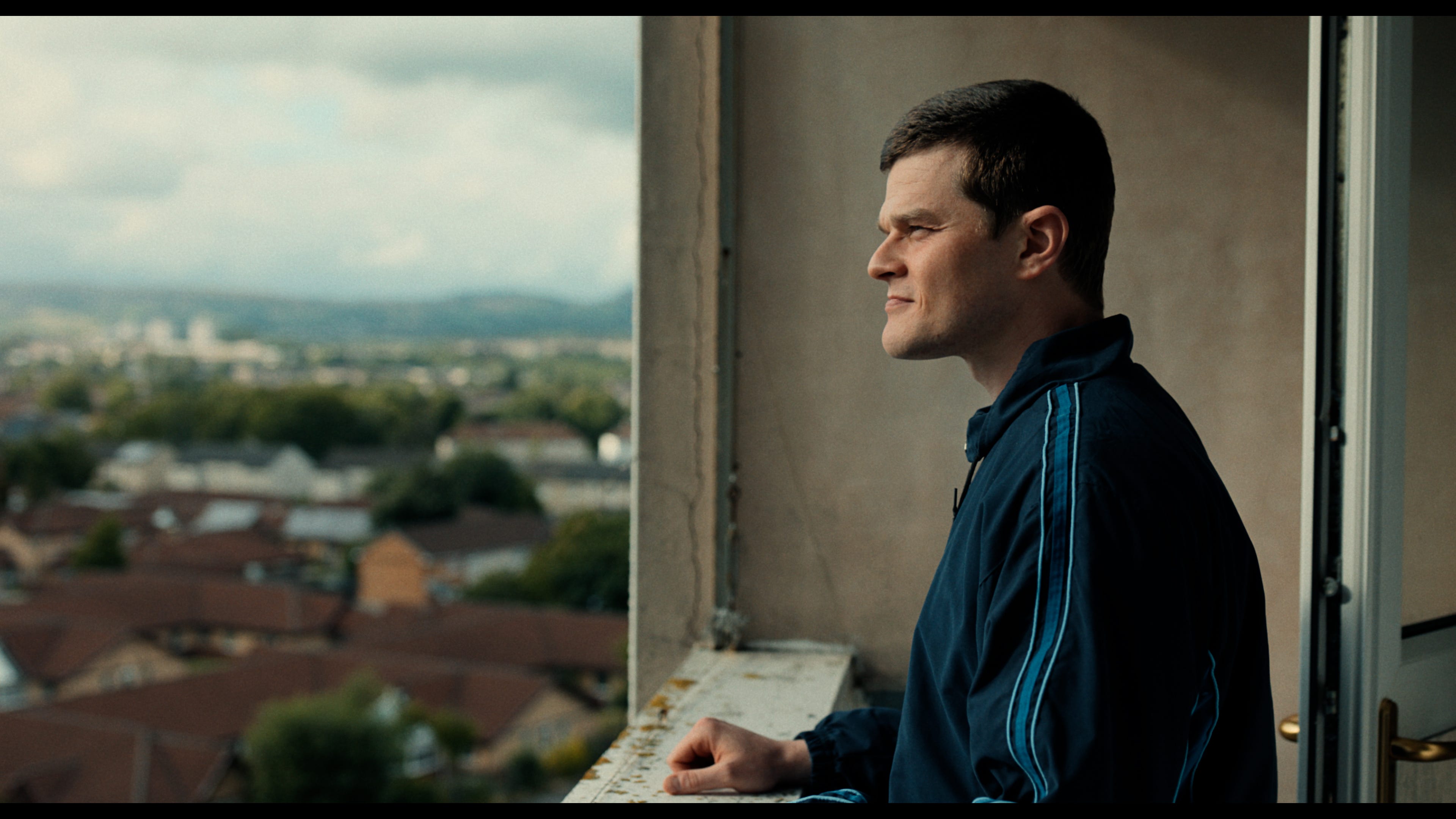
In 1989, Kirk Jones was an aspiring filmmaker working as a runner for a London production company when he saw a BBC documentary called John’s Not Mad, which profiled John Davidson, a Scottish teenager with a severe case of Tourette Syndrome.
“I’ve never forgotten it,” Jones says. “I was just devastated that this young man, who appeared to have an ordinary life and was doing everything right, was suddenly saying things that were not in his control. He was told that he was crazy, he would end up in an asylum, he would end up in prison…I thought, if I ever get the opportunity to make films, this is an idea that I’d really like to look into.”
More than thirty years later, Jones finally got his wish. I Swear, which arrives in North American theaters today, tells the inspiring, frequently devastating story of how Davidson became an advocate for people with Tourette’s, a disorder that causes involuntary sounds and movements, known as tics.
The journey begins in the 1980s, in the small town of Galashiels, Scotland. John (played as a teenager by Scott Ellis Watson and as an adult by Robert Aramayo), a gifted student and athlete, starts having mysterious facial spasms and blurting out offensive words against his will. The adults in John’s life, with no understanding of the condition, assume he is being impudent; his overwhelmed mother even makes him eat dinner on the floor.
Things become so dire that John attempts suicide. His circumstances improve when he is taken in by Dottie (Maxine Peake), the mother of a school friend. A mental health nurse with a seemingly infinite reserve of compassion, Dottie helps John find a job at a local community center and adjusts his medication. But the setbacks persist: John gets arrested more than once and is nearly beaten to death after insulting a woman on the street. John ultimately finds purpose as an advocate, educating the public about the disorder. As his boss Tommy (Peter Mullan) puts it, “I don’t think the problem is Tourette’s. The problem is we don’t know enough about Tourette’s.”
Anchored by Aramayo’s deft performance, I Swear pulls off a tricky balancing act, finding the absurd comedy in Davidson’s story without turning him — or his condition — into a punchline (unlike countless pop culture depictions of Tourette’s). The tone is established in the film’s opening scene, in which John receives an honor from Queen Elizabeth II, only to exclaim, “Fuck the Queen!” (The monarch is utterly unfazed.)
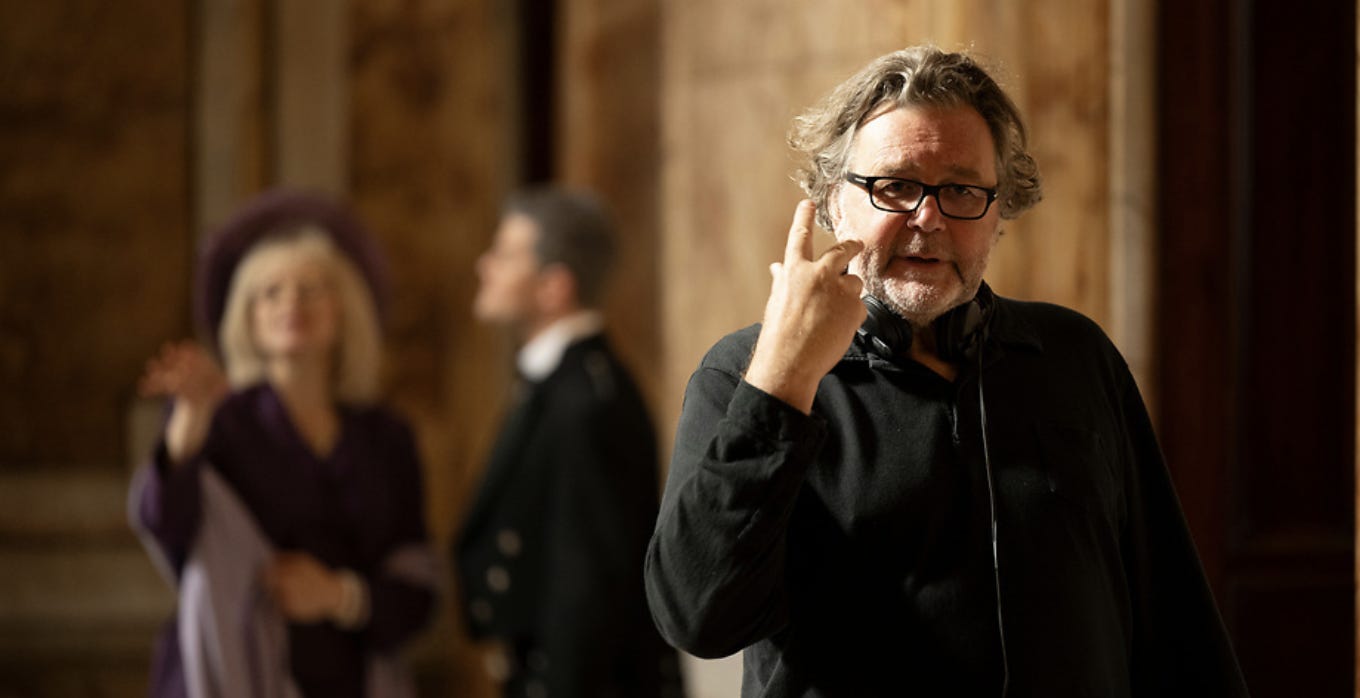
As a filmmaker, Jones has specialized in heartwarming comedies like Nanny McPhee and Waking Ned Devine. After thinking about Davidson’s plight for many years, Jones finally reached out to him via Facebook in 2022. Their correspondence led to an in-person meeting, where the reality of Tourette’s became clear to Jones: Davidson greeted him at the door by shouting, “Let’s have sex!”

“He was saying a lot of things which were inappropriate, but after about 15 minutes, I could see that he calmed down,” Jones recalls. “There’s a very clear relationship between John’s anxiety and the level of tics. Sometimes I’ll call John and we’ll have a Zoom for half an hour. Not one single tic — not physical, not verbal — because he’s comfortable. He knows me.”
In their early conversations, Jones quickly saw the dramatic potential in Davidson’s story — and his particular experience of the disorder. (Contrary to the popular myth, most people with Tourette’s do not involuntarily shout obscenities.)
“When I talked to John about Tourette’s, I realized it was the most potent mix of humor and emotion,” Jones says. “I said to John, ‘Would it upset you if I recognized the humor?’ He said, ‘My life has been the most tragic and the most hilarious that you could ever imagine.’ When he said that, I thought, ‘That’s it. This is my next film.’”
Davidson ultimately became an associate producer and reviewed multiple drafts of the script. Jones even considered having Davidson play himself in the final 20 minutes of the film, but ruled it out following an unsuccessful test shoot.
“After 45 minutes, John was exhausted, having to remember where to stand, remember where the camera was, try and remember his lines,” he says. “I think if John was here now, he would say it was nothing short of a disaster.” Jones also consulted with medical experts about potentially casting an actor with Tourette’s, but says he learned that “it is nothing short of cruel and mentally damaging for someone with Tourette’s to fake Tourette’s in someone else,” in part because of the risk of developing new tics. (About 30 people with Tourette’s do appear in the film, many in background roles.)
Instead, Jones cast Aramayo, a virtual unknown who’d had small parts in Game of Thrones and Mindhunter. He was able to pick the best actor for the role, rather than the most famous, because he decided to finance the film himself. (Jones opted to go it alone when a potential investor asked him to reduce the level of swearing in the script.)
Aramayo never auditioned or submitted a screen test, because the actor was wary of doing a superficial impersonation of someone with a complex neurological disorder. Instead, he spent several months conducting research — spending time with Davidson and other people with Tourette’s. “I didn’t see Rob’s performance until day one on set, and it was just the most wonderful, magical production for the fact that everyone had creative freedom,” Jones says.
Released in the UK last fall to wide acclaim, I Swear won three BAFTA Awards in February, with Aramayo beating Oscar nominees including Leonardo DiCaprio and Michael B. Jordan for the lead actor prize.
But the stunning triumph was overshadowed by an incident in which Davidson involuntarily yelled the N-word while Jordan and his Sinners co-star Delroy Lindo (both Black) were onstage. Even though the show aired on a two-hour delay, the BBC did not remove the audible slur from the broadcast. (It did, however, edit the words “Free Palestine” from a winner’s speech, supposedly for length.)
The incident sparked a heated conversation about racism, disability, and whether people with Tourette’s use the condition as an “excuse” to say vile things. (Here is an excellent interview with a Black Tourette’s advocate, who explains why that is definitely not the case.)
The blame has mostly landed on the BBC and BAFTA for failing to ensure the odious slur was removed from the program, thereby causing additional pain for Jordan, Lindo, Davidson, and everyone else involved. The BBC later ruled that the incident, while unintentional, represented a “clear breach” of its own editorial standards.
The excruciating ordeal underscored the central lesson of I Swear: Because people with Tourette’s cannot control their condition, education, awareness, and thoughtful accommodations are essential.
As Jones said in the aftermath of the event, “The overriding irony is that this is the reason why we made the film in the first place.”
Luckily, this message has not been lost on the people who have seen I Swear.
“I’ve now seen the film playing in Canada, America, the U.K., throughout Europe — subtitled, dubbed — and everyone is able to follow the film,” Jones says. “They laugh when they’re supposed to laugh. They cry when they might cry. It’s heartening that different cultures, different languages, different parts of the world are all in sync from a human perspective.”
Meredith Blake is the culture columnist for The Contrarian
Amazing story and cannot wait to see the film.
Risking TMI here, but here goes.
My 38 yr old totally disabled, non-verbal but ambulatory son is diagnosed with Profound IDD, autism, CP, seizure disorder and SIBs. Now in residential care and is doing well.
When he was home and still, I would always take him with me on daily/weekend errands to help him socialize (as able) and to get him to walk around. He likes going places.
Standing in the check out line with him making noise (chants/verbalization -not words), some arm flapping and playing with a baby toy when he was 12 (still plays with same toys) others in line would obviously notice.
When I caught the gaze of younger children (5-10) they would look away, sort of embarrassed for noticing. I would say to them "He is pretty interesting isn't he? Would you like to know what a happened". "Yes" they would say. Me - "Do you remember when you were a baby and your parents had to do everything for you - Dressing, you , feeding you, even changing your diaper? "Yes" -- Me "then you grew up and are now able to do all those things for yourself." They would stand straight and proud -"Yes, I do that". I then say - My son's body grew up but his brain did not.
They say "Oh, I get it." Most then have a smile of awareness that different is different - and that was okay.
My goal was to have them see the next disabled person as a person, not only as disabled.
Apologies for the long post.
Has anyone ever read Motherless Brooklyn by Jonatham Lethem ? A realistic, sympathetic, often funny book about a young man with Tourette's and how he navigates life and love as part of the Brooklyn underworld. It is, in my opinion, Lethem's best work.