


In October 2024, Israel’s war on Gaza had been raging for one year, and Poh Si Teng was in despair over what she saw as widespread indifference to the suffering of the Palestinian people.
“Nothing was changing,” said Teng, then an executive at ABC News Studios. She decided to quit her job and put her two decades of journalism experience to use. “Maybe I can make a film, to move the needle on things, to get people to start thinking about Gaza and Palestine,” she recalled in a video interview from her home in New York.
She then heard Dr. Mark Perlmutter — a Jewish American doctor who had recently volunteered in Gaza — speak at a fundraiser for a medical charity. “I looked around the room, and everybody was quiet and weeping silently,” she said. Perlmutter, an orthopedic surgeon, introduced Teng to two other doctors who treated Palestinians on the frontlines: Thaer Ahmad, a Palestinian American emergency doctor from Chicago, and Feroze Sidhwa, a trauma surgeon from California who was raised in a Pakistani Parsi family that practiced Zoroastrianism.
“I remember thinking to myself how these three men couldn’t be more different,” said Teng. It was the perfect hook for a documentary: three American doctors, from different religious and ethnic backgrounds, caring for Palestinians injured in a war enabled by the American government.
Nearly two years later, Teng’s kernel of an idea has come to fruition as American Doctor.
The documentary, now playing in New York and expanding across the country over the next month, follows the trio of physicians as they travel to Gaza — or attempt to — to care for patients during a tenuous ceasefire. (Despite previous trips there, Ahmad is denied permission to re-enter and must advocate from afar.)
As different as they are in background and personality, the doctors share a sense of purpose and feel compelled to speak out about the atrocities they witnessed on the ground.
Inspired by his father, who cared for Holocaust survivors in liberated concentration camps, Perlmutter is determined to stop what he considers another genocide. Ahmad takes a heartfelt, humanistic approach. “I am not ‘pro’ anything,” he says in the film. “I’m a Palestinian who wants to see babies that look like my babies not be killed anymore.” By comparison, Sidhwa is the calm, cerebral one, with a longstanding intellectual interest in the Israel-Palestine conflict.
“I approach it as an American, as a humanitarian, as a doctor, as a witness,” Sidhwa said in a joint interview with Teng.
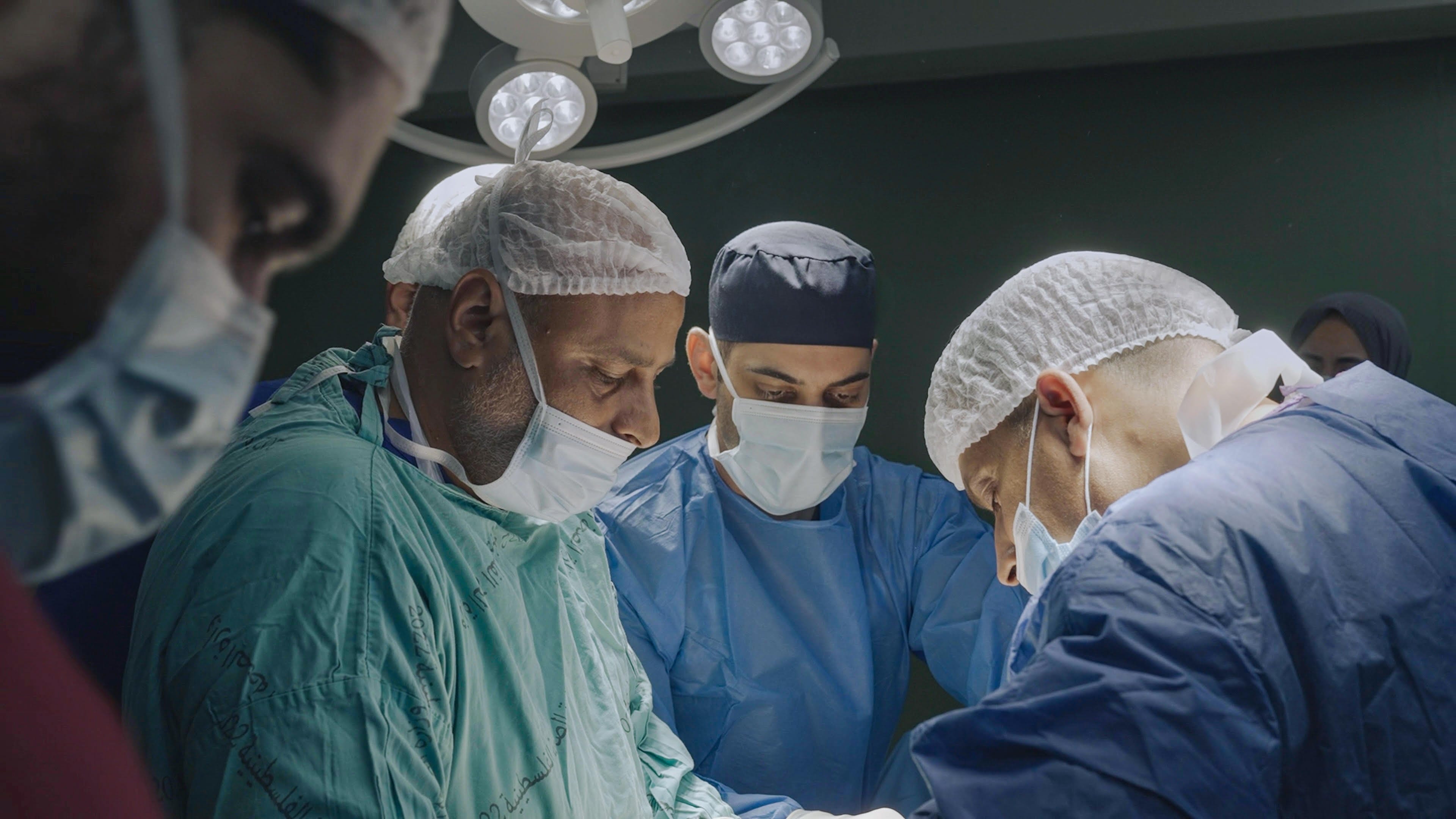
Filmed over several months beginning in December 2024, American Doctor brings viewers inside Nasser Hospital in southern Gaza, where Perlmutter, Sidhwa, and a team of Palestinian healthcare workers care for patients under harrowing conditions.
In one particularly dramatic sequence, they operate on an injured ten-year-old girl who faces the potential amputation of both legs and an arm. American Doctor is as nerve-wracking as an episode of The Pitt, with the tension heightened by the looming threat of an Israeli missile attack. (A strike in August 2025, which killed more than 20 people, including five journalists, is chronicled in the film.)
The similarities between American Doctor and popular TV dramas like ER and Grey’s Anatomy are intentional, Teng said. “I watch and binge on all these shows. There’s something about good-looking doctors and mortality that people just can’t stop watching. In the conceptualization of this film I thought, ‘I’m gonna make The Pitt.’ The difference is, it’s real. It’s set in Gaza, and this is how we’re going to bring Palestine back to the United States.”
Though Teng has produced and commissioned numerous documentaries, American Doctor marks her directorial debut. Making the film was no easy feat: for starters, she was not personally able to film in Gaza (although Perlmutter, ever the optimist, offered to bring her along as his scrub nurse). Instead, she hired co-producer Mohammed Sawwaf and director of photography Ibrahim Al-Otla to be her eyes and ears on the ground.
“Everything that was filmed in Gaza is a result of their work and their sacrifice, filming at a time when literally there were bombs falling over, and there was a blockade,” she said.
One of the more salient themes in American Doctor is how each doctor talks about Gaza based on their religious and ethnic background, and how conscious they are of what they can and cannot say because of who they are. Aware that his identity grants him certain privilege, Perlmutter is the most uncensored and incendiary of the three physicians. As he says in the film, “I gain an audience because I have a white face.” Ahmad is more cautious and notes that Perlmutter uses language, particularly regarding Zionism, that he would get “crushed for.”
Sidhwa says he is “not a religious person at all,” though he has spent decades learning as much as he can about the Israel-Palestine conflict. “Before I was even a physician, I approached it as an American, wanting to know what’s actually going on, what is my government’s involvement in it, and then discovering that I, like most people, very adamantly disagree with what the government is doing with our money; with our diplomatic corps.”
“It’s not the American way to just say ‘Oh well, the government can do whatever it wants,” he said. “That’s not in line with my values or what I was raised to understand are the values of the United States.”
He was in college when the Second Intifada broke out, followed by Sept 11th and the wars in Afghanistan and Iraq, fueling his curiosity about the region’s geopolitics. He decided to spend a year living in Israel, working at an Arab-Jewish cooperative, and was inspired by an Israeli physician who treated Palestinian patients and worked alongside Palestinian doctors.
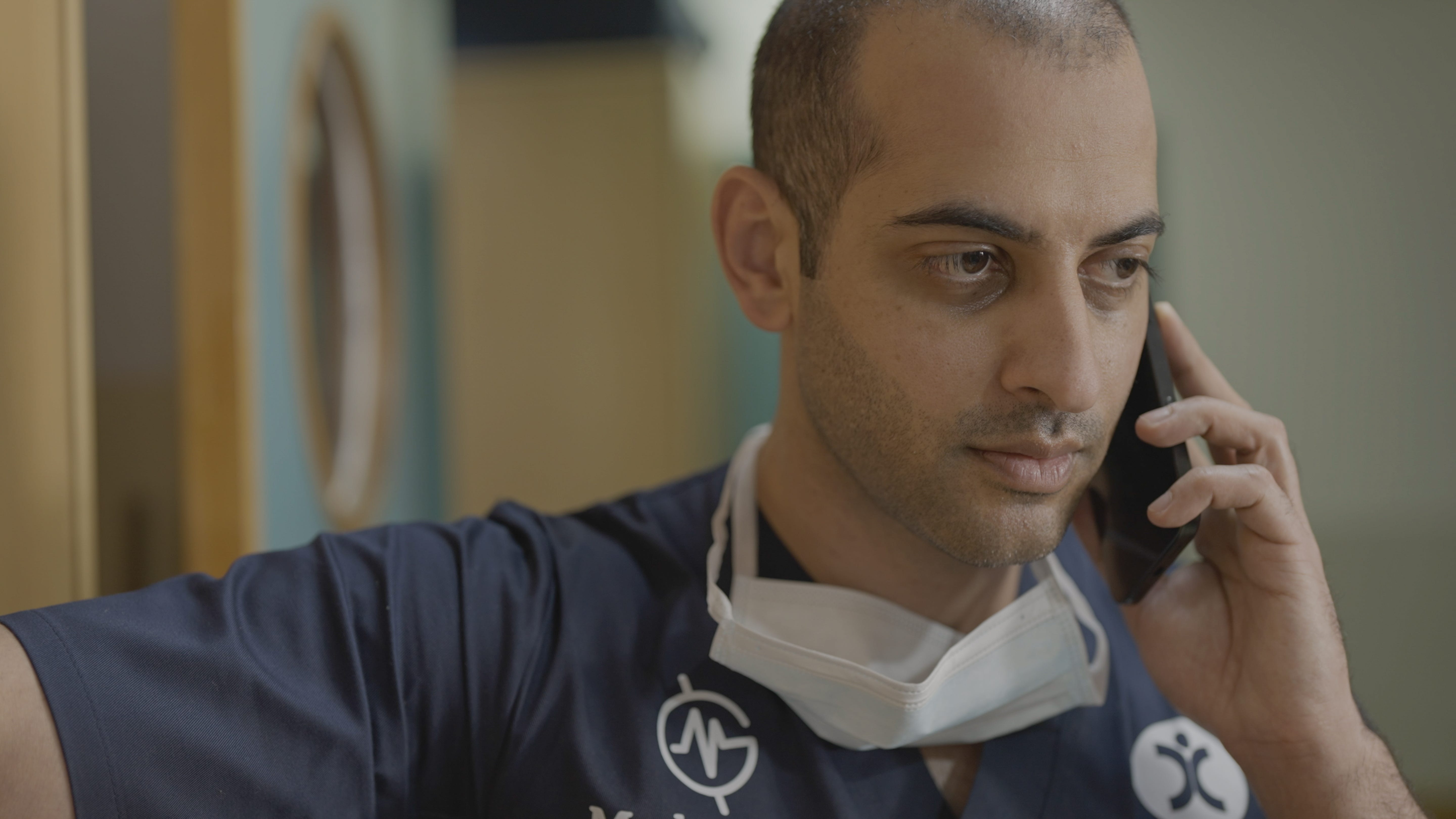
Since becoming a doctor himself, Sidhwa has volunteered in conflict zones including Ukraine and Haiti, and has visited the Palestinian territories multiple times, including a stint in Gaza in spring 2024. Later that year, he published a devastating New York Times article about healthcare workers in Gaza who reported treating a high number of children with fatal gunshot wounds to the head or chest.
Sidhwa believes that it’s important for him, as a physician, to advocate for patients, not merely tend to their physical ailments.
“Physicians, especially trauma surgeons, are natural witnesses to crimes in many ways,” he said. “If your patients live next to a factory that’s blowing carcinogenic smoke into the air, and they’re getting lung cancer, you’re supposed to go to the city government and say, look, you should put this factory somewhere else.”
Gaza is different from other conflict zones, he said, noting that the territory is smaller than the city of Kyiv, where he has also spent time. “The entire power — not only of the Israeli military, but of the United States military — has been unleashed on this tiny little place. This tiny little place is an enclave surrounded by barbed wire and populated by 50 percent children,” he said. “You don’t need to know much else about what’s going on to know that that’s not going to work out well.”
The most important thing, in Sidhwa’s view, is that we are the ones paying for this. “It’s American airplanes burning American jet fuel to drop American bombs outfitted with American guidance systems on targets that are mostly selected by AI software that was developed in the United States, mostly in the Bay Area, near where I live. We don’t have to accept that as Americans. We don’t have to continue feeding the destruction of these people. We could just stop doing that.”
The film follows Sidhwa and his peers as they meet with lawmakers in Washington, D.C., who are largely unwilling to reconsider their unflinching support for Israel. At one point, a defeated Sidhwa calls his advocacy “useless.” A year later, public sentiment around Israel and Palestine has shifted rapidly, something Sidhwa has noticed, as American Doctor has been warmly welcomed at festival screenings from San Francisco to Columbia, Missouri.
“If people are willing to listen and if there’s enough popular pressure, then governmental officials might have to start listening,” he said. “I hope I can make that kind of difference through this film.”
Meredith Blake is the culture columnist for The Contrarian
Uncommon valor and uncommon decency! People like these and their commitment are why We the People in Article VI of our Constitution commanded that “no religious Test shall ever be required as a Qualification to any Office or public Trust under the United States.”
That has got to be an incredibly difficult job. Especially children coming in with severe or life threatening injuries.