


The Supreme Court just gave Stephen Miller and other white wingers in the Trump administration what they wanted: the power to ignore federal immigration law and remake the country to be less diverse and less inclusive.
In two major immigration decisions announced Thursday morning, the Court effectively handed the Trump administration a hall pass from having to follow statutes that limit how the executive branch may (mis)treat noncitizens. In one decision involving the temporary protected status program, the Court announced that federal courts could not review whether the administration had complied with federal procedural requirements. And in the other, a case involving asylum seekers, the Court said that the executive branch is not required to follow the laws that allow noncitizens to claim asylum — so long as the executive branch manages to stop asylum seekers at the border. The combination of these cases is a deadly get-out-of-legal-requirements-free card.
The temporary protected status cases, Mullin v. Doe, challenge the administration’s abrupt decision to end the TPS program for Syrian and Haitian nationals. TPS is a form of immigration relief that allows individuals to live and work in the United States — after a rigorous vetting process — because conditions in their home countries are too dangerous for them to return. Federal law requires DHS, before deciding to end a TPS program, to consult with other agencies about the conditions in a country; here, there is almost no question that DHS flouted that obligation, at least with respect to Haiti. As the New York Times reported, emails show that while DHS asked the State Department for its views on the conditions in Haiti, it went ahead and canceled the TPS program before the State Department responded. That hardly counts as consultation.
Justice Alito’s opinion for the six Republican appointees said that didn’t matter. Indeed, according to Alito, it wouldn’t even matter if DHS crowed openly that it had violated the law and failed to undertake any consultation at all. He wrote that arguments about the administration’s compliance were unreviewable — no court can even consider them. This will allow the executive branch to violate the law without consequence.
The opinion in the asylum case did the same, but for the legal protections for asylum seekers. Federal law requires the executive branch to allow anyone who arrives in the United States to claim asylum and to have that claim reviewed in a good-faith assessment to determine whether they are indeed at risk of persecution or violence in their home country. Passed in the wake of the international reckoning over the Holocaust, when the United States (and other countries) turned away refugees from Nazi Germany only for those would-be refugees to be massacred at home, asylum protections represent the international legal order’s commitment to “never again.”
Justice Alito’s majority opinion for the six Republican appointees (yes, he wrote both) seemed to say … eh, maybe sometimes. The opinion allows the executive branch to refuse to consider an asylum claim, as required by federal law, so long as officials stop the person seeking asylum at or outside the border. That is a giant loophole to hand the administration: It allows them to ignore federal law so long as they physically block anyone who could benefit from that law from entering the United States. What a message to send the Trump administration.

Were this not enough, the Republican appointees even gave the Trump administration a pass on the Constitution. In the TPS cases, the Haitian nationals who brought suit argued that the administration’s cancellation of TPS violated not just federal statutes but also our Constitutional ban on racial discrimination by the federal government. Many readers will likely remember the grotesque, foul, racist statements the President made about Haitian nationals — warning they would poison the blood of the country, and that the President would prefer to admit people from Sweden or Norway. (Sweden and Norway are majority white countries; Haiti is a majority Black country.)
Justice Alito’s opinion said the President’s statements weren’t racist and didn’t establish racial animus toward Haitians. But the majority could not even bring itself to recite the President’s foul statements — just as the federal government’s lawyers refused to do during the argument in the case. The Court essentially plugged its ears and closed its eyes to gutter racism long enough to legalize it.
If and when the Court puts a stop to the administration’s wildly illegal order denying some people birthright citizenship, it is important to keep in mind all of the ways the Republican appointees have enabled this administration’s cruel, hateful, and catastrophic immigration agenda. As Justice Sotomayor wrote in her dissent for the three Democratic appointees in the asylum case, “The consequences of today’s decision are predictable. More people will die.” Justice Kagan said the same in her dissent for the TPS case, writing that the TPS recipients should not “be consigned to devastating, and indeed life-threatening, injury.”
They are right. The Court majority is wrong. And no one should give the Court a pass if and when they do the right thing in the birthright case.
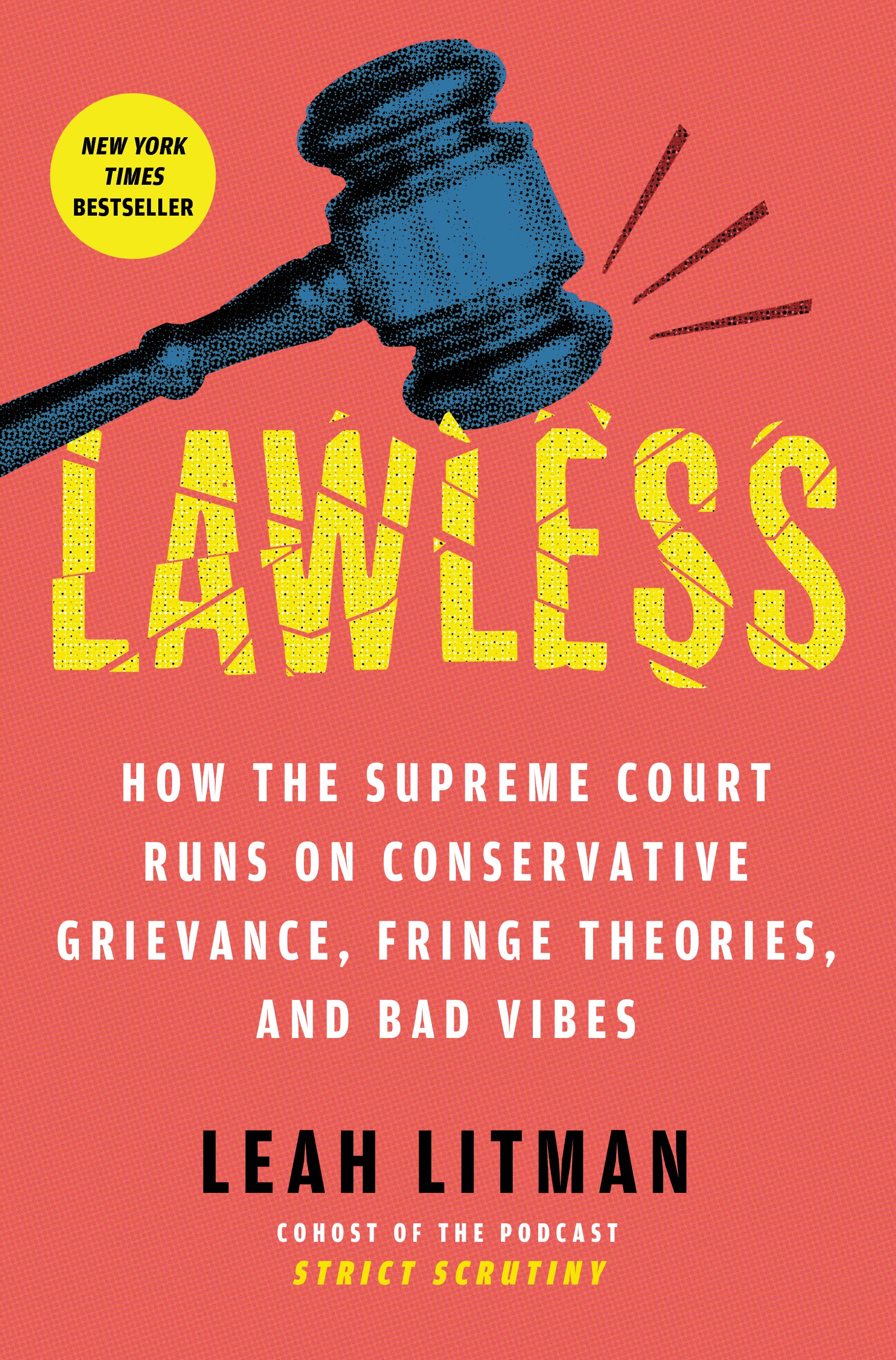
Leah Litman is a professor of law at the University of Michigan, co-host of Strict Scrutiny, and author of the New York Times bestseller Lawless: How the Supreme Court Runs on Conservative Grievance, Fringe Theories, and Bad Vibes. The updated paperback version of Lawless, released on June 16, 2026, contains a new section on how the Supreme Court has enabled Donald Trump.

"Justice Alito’s opinion said the President’s statements weren’t racist and didn’t establish racial animus toward Haitians." Alito also said Black Americans voted for Democrats in both the AL and SC racial gerrymandering cases and the State legislatures were only using partisan gerrymandering, despite the lower courts findings that the legislatures were racially gerrymandering the districts.
The current Supreme Court, made up of six Christian Nationalists and three Justices who follow the Constitution is illegitimate. There's no such thing as Presidential immunity anywhere in the Constitution. There's no such thing as the "Major Questions Doctrine" anywhere in the Constitution. Roe, as Kavanaugh said, was precedent on precedent. The SC, AL and LA racial redistricting decisions thwarted the will of Congress in the 1982 amendment to the Voting Rights Act, signed by Ronald Reagan.
Impeachment proceedings need to be started immediately after the Democrats take control in January 2027 against six of the Supreme Court justices that are violating the constitution and lied to get their positions