


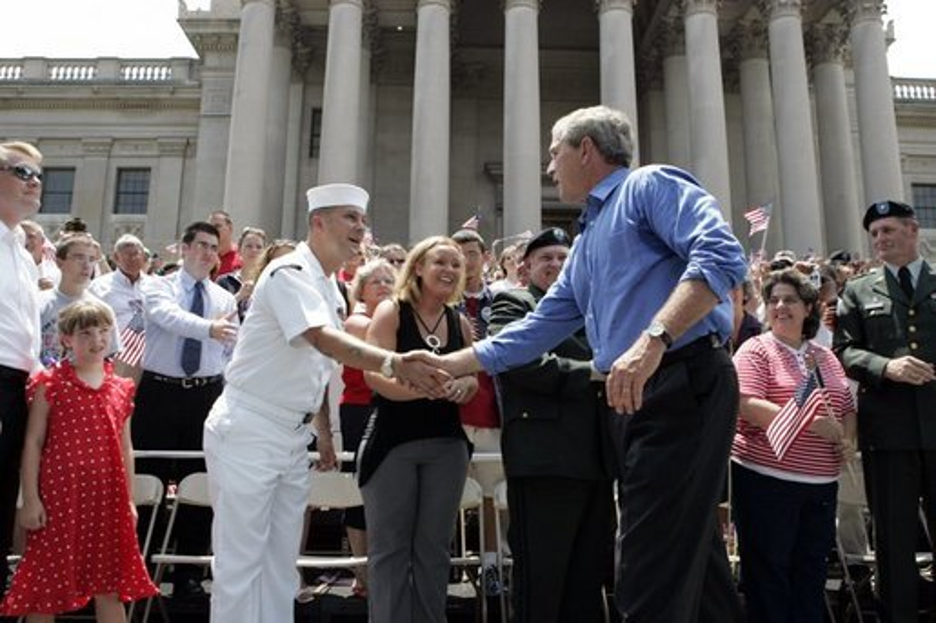
Every Fourth of July, the White House becomes America's most powerful stage for visual patriotism. Presidents use this moment to define what the American celebration should look like—and these choices reveal volumes about what the president sees as the future and past of our country. Shocking to no one, Donald Trump’s Fourth of July celebration this year prioritized images of himself, military weaponry, and his political agenda.
On July 5, 1937, first lady Eleanor Roosevelt reflected, “I sometimes wish that we could bring a little more thoughtfulness into this holiday and draw the distinction between freedom and license which so often needs to be drawn.” Her words resonate with me deeply this year.
A quick history of Fourth of July at the White House
Presidential Fourth of July celebrations have historically been notably civilian affairs that shaped and reflected the mood of the country. Many presidents retreat to their home state or attend a cultural event; precedent shows presidents try to avoid politicizing the day. In 1864, during the Civil War, President Abraham Lincoln invited people from African American schools and churches to hold a picnic on the White House South Lawn in a showcase of tolerance and solidarity. Sometimes, even when the president is not in Washington, the South Lawn is still open to staff and guests.
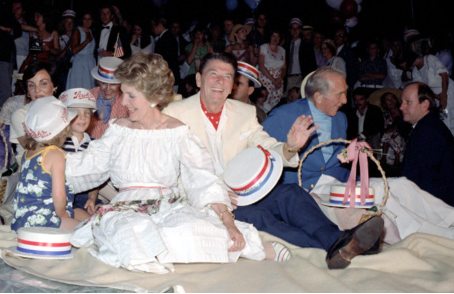
In this image, the Reagans joined the South Lawn picnic in 1981. Look at how they are dressed casually and photographed at eye level, among the people.
In 1984, Reagan attended the Daytona 400 race to witness NASCAR history as Richard Petty won his 200th race. In 2002, President George W. Bush spent July 4th in West Virginia, focusing his visit on honoring veterans. From 2012 onward, President Barack Obama started overseeing naturalization ceremonies on the Fourth of July.
But a visual transformation becomes clear when comparing recent administrations.
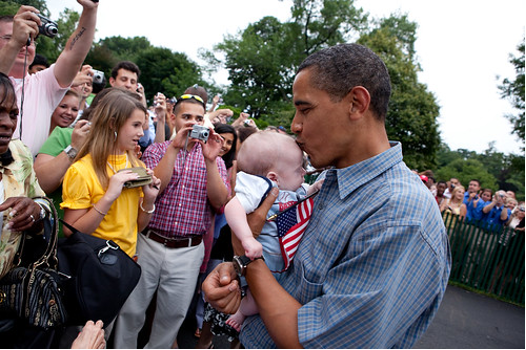
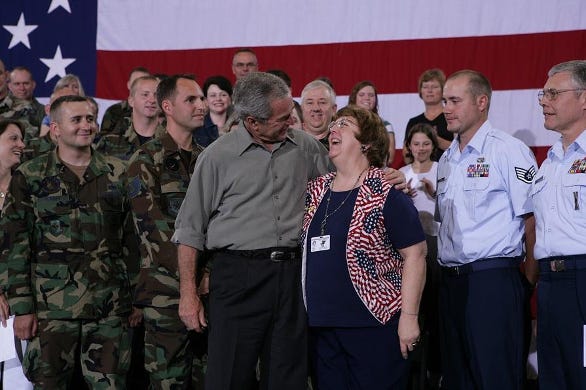
Bush's post-9/11 Fourth of July celebrations shifted toward military symbolism while maintaining intimate human scale. Wounded veterans and military families were prominently featured as honored guests. Obama's consistently emphasized families, children, and service members. Wide shots showed diverse crowds mixing freely, with wheelchair-accessible viewing areas prominently featured and children playing on the South Lawn. The visual message: America's birthday belongs to all Americans.
Then came Trump's 2019 “Salute to America”—a radical departure that transformed the patriotic celebration from a community gathering into a more than $2.5 million performance.
The Visual Language of Authoritarianism
Trump's 2019 celebration marked the first time in decades that military tanks appeared on the National Mall for Fourth of July. The visual composition was telling: Trump spoke from behind bulletproof glass with tanks as his backdrop, creating literal barriers between leadership and people. The dramatic lighting gives the image of an overly produced, militarized production.
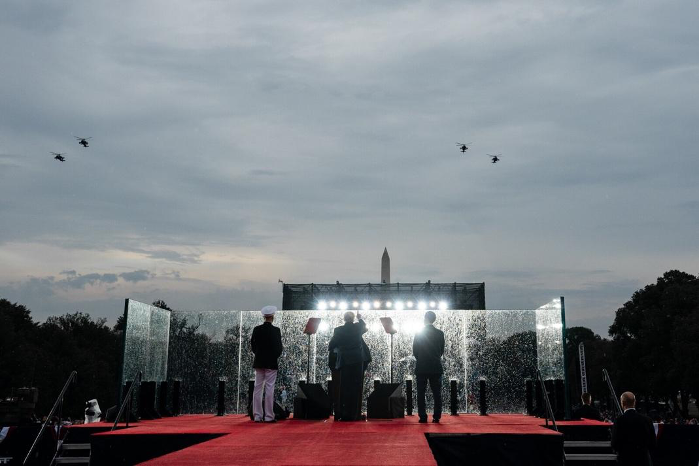
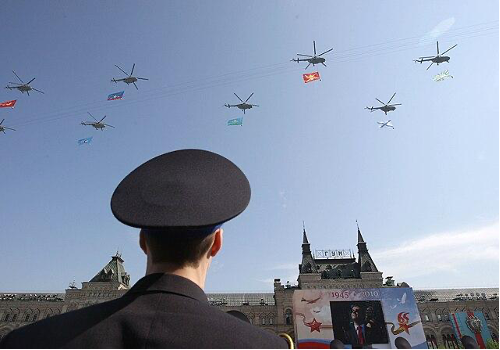
It bore striking visual similarities to independence celebrations in authoritarian nations, like Russia's Victory Day parades and China's National Day celebrations, where military parades serve as displays of state power rather than community gathering.
And this year, the official White House imagery focused on a solo shot of Trump, the “Big Beautiful Bill” signing, and shots of military planes. The imagery highlights Trump as a strongman surrounded by military aircraft and weapons systems serving no functional purpose except spectacle and intimidation. Service members appear in ceremonial formations rather than casual, community-integrated settings. They serve as visual props rather than as honored participants.
The imagery tells a clear story: Celebrating America is just a facade. What it’s really about for Trump is himself, his MAGA agenda, and his authoritarian dreams and actions.
Trump is the first president in history to sign a bill on July 4—turning a holiday intended to celebrate our freedom and independence into a self-serving political stunt.
Visual framing choices reveal underlying assumptions about leadership. Compare this with Bush in 2007, Obama in 2009 or Reagan in 1981, where ground-level photography showed the president moving freely among military families and other guests, shaking hands, and engaging in casual, intimate conversations. Trump’s visual language, on the other hand, emphasizes state power over popular participation and division over unity.
Reclaiming Democratic Imagery
Presidential imagery shapes our collective understanding of what patriotic celebration should look like. When Fourth of July imagery emphasizes military equipment over military families, hierarchy over community, and spectacle over service, it transforms a democratic holiday into an authoritarian display.
Fifteen miles and a world away from the White House, I stood with my wife and 62,000 of my closest friends doing the most patriotic thing we could: seeing Beyoncé’s Cowboy Carter Tour. Just hours after Trump signed a morally and financially disastrous bill, I watched Beyoncé strut onto the stage wearing a sumptuous American flag coat over a star-studded, shimmering bodysuit, her unparalleled voice asking, “O say can you see?”, and proclaiming, “I break chains all by myself.” Beyoncé’s historic production, from the lyrics to the arrangements to the set design to the choreography to the costumes, was a magnificent tribute to the real America, both its beauty and brokenness.
As I took in the images around me—a Louisiana Creole African-American woman creating a stunningly complex and moving homage to our country, the little Black girls in the audience holding hands with their moms, Americans decked out in a kaleidoscope of red, white, and blue, sparkles and fringe, and cowboy hats and boots—I was devastated by the images from the White House. What a different story they told of America. From my perspective as a cinematographer, I was reminded of how important it is for us to take a deeper, more critical look at Fourth of July imagery.
The visual choices matter because they accumulate in our national imagination. Children who grow up seeing patriotic celebrations as intimidating military parades rather than community gatherings absorb different messages about what America means and who belongs in its story. The children at Cowboy Carter saw an America reckoning with its past and present, and believing in our power to shape its future. The children on the South Lawn saw a president celebrating just one America: his.
As you look at July 4th images, ask yourself: Who appears in the frame and who gets excluded? Do the images celebrate democratic community or authoritarian power? And who is allowed to question and define what America looks like?
Until next time, keep your eyes sharp and your lenses sharper.
Send examples of visual politics you've noticed to submit@contrariannews.org with the subject line SPLIT SCREEN.
Azza Cohen (she/her) is an award-winning documentary filmmaker who served as Vice President Kamala Harris's official videographer in the White House. She recently founded a production company with her wife, Kathleen, and is writing a book about visual sexism from a cinematographer's perspective. Uncover and address visual sexism alongside Azza every other week here on The Contrarian and on Instagram and Bluesky. Azza is, in fact, a big fan of The New Yorker, which bought and distributed her film “FLOAT!” in 2023.

While we were all subjected to the glaring contrasts and the stomach-churning substance of Trump's visual July 4th narrative, I really feel for Ms. Cohen. She had to look at all that more deeply in order to speak to us. I just wanted to look away and had the luxury of doing so. Thank you, Azza, for making sure we stay vigilant, even when we don't want to see. Maybe we should all put a candle in the window as a reminder to our fellow Americans.
WE MUST DO BETTER next year! Trump owns the White House lawn next year and two more, but we must plan and stage a 250th birthday party that celebrates the progress we have made toward realizing the values of our Declaration of Independence and emphasizes the unity and basic decency of our people. We can not let him turn this important milestone into another vulgar celebration of MAGA without the strongest challenge we can mount.
Thank you Ms. Cohen for this report.