


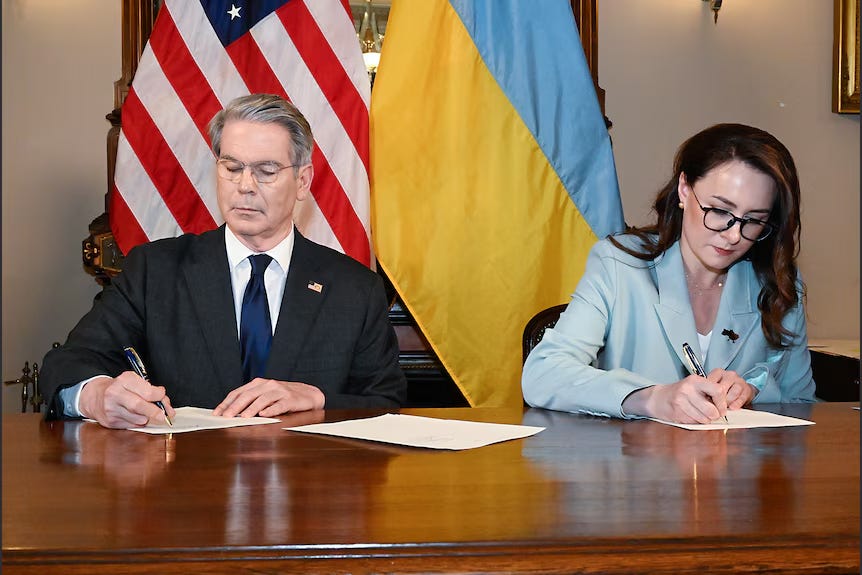
When Ukrainian President Volodymyr Zelenskyy appointed Yulia Svyrydenko as Ukraine’s new prime minister last month, he made a rare choice for Eastern Europe: He selected a woman to lead during wartime. At 39, Svyrydenko brings extensive diplomatic experience. She served as Ukraine’s representative in China, negotiated billion-dollar reconstruction projects with the European Commission, and brokered investment agreements with U.S. Treasury Secretary Scott Bessent.
Yet before she had even delivered her first address as prime minister, the verbal and visual diminishment began. Anna Nemtsova, in The Atlantic’s “Men Are Already Writing Off Ukraine’s New Prime Minister” revealed a similar deep-seated sexism faced by other women leaders. Nemtsova quoted Ukrainian political strategist Oleh Posternak’s Facebook post immediately dismissing Svyrydenko as “exactly the girl who all of you, dear students, are familiar with from school: She always sits at the front desk” and “carefully writes down the teacher's notes.”
Although his comment was probably meant to undercut an accomplished diplomat by likening her to a meek little schoolgirl, it merely showcases men’s overt disdain for ambitious, hardworking, successful women. Nemtsova argued: “Very few women have led former Soviet states, and they have virtually all received this kind of disparagement from men.”
As I’ve explored previously in Split Screen, this verbal diminishment often pairs with visual techniques that systematically undermine women’s authority. Svyrydenko’s case offers a real-time study in how visual media frames female leadership during a crisis, continuing patterns that have persisted for decades.
The Visual Vocabulary of Diminishment
Early coverage of Svyrydenko reveals familiar patterns in how visual media treats women in positions of power. I found her frequently photographed in listening positions rather than speaking roles during meetings. For example, in this Bloomberg piece, the photograph is flattering, but she is shown listening, instead of speaking; or the following photograph in this Globe and Mail piece, in which her eyes are closed while Zelenskyy speaks.
The contrast with her male colleagues is stark. Zelenskyy is consistently photographed in authoritative poses—speaking at podiums, commanding rooms, addressing international audiences. Wide shots establish his presence and authority, showing other people in the room listening to him, and cameras rolling to capture what he says.
For Svyrydenko, this dynamic is particularly challenging. As prime minister two years into a seemingly endless war as domestic distrust simmers against Zelenskyy and his administration, she must demonstrate strength and resolve while navigating visual representation that might seek to emphasize her emotional responses, position her as overwhelmed by military realities, and dismiss her as a mere loyalist.
The visual framing choices matter enormously for domestic and international perception. When allied leaders see images of Ukraine's prime minister, do they see an authoritative leader capable of managing complex negotiations, or do they see someone positioned as secondary to male decision-makers? These visual impressions influence everything from diplomatic respect to funding decisions. Domestically, in a war-torn country suffering tremendous loss and increasingly questioning its leaders, citizens must see Svyrydenko as not only competent but trustworthy.
Posternak's dismissive comment comparing Svyrydenko to a schoolgirl reveals how visual representation connects to broader narratives about women's roles. This narrative becomes particularly problematic when visual coverage reinforces it. If photographs consistently show Svyrydenko in listening positions, or taking direction from others, they validate the characterization of her as a note-taker rather than a decision-maker.
I don’t think portraying leaders as listeners is necessarily a bad thing; in fact, the best leaders are good listeners. I’m pointing it out in Svyrydenko’s coverage so we can all be empowered viewers. We must all question how often we see her listening instead of speaking and how that affects our conscious and unconscious assessment of her authority.
Visual Resistance in Wartime
Despite these constraints, Svyrydenko has opportunities to shape her own visual narrative. Her extensive international experience provides opportunities to be photographed as an equal with foreign leaders, demonstrating her diplomatic authority and global standing.
Her official Instagram provides a master class in how to portray a woman leader. Her team appears to intentionally balance photos of her speaking at official podiums, meeting other world leaders, in motion at work, looking directly at the camera from a low or eye-level angle, and generally looking serious, deliberative, competent, and authoritative. These photos are examples of feminist framing: wide enough to include the context of her actively at work (in a decisive, central position speaking or signing a document), shot from a slight low angle to highlight her authority, with a serious facial expression and natural, realistic lighting.
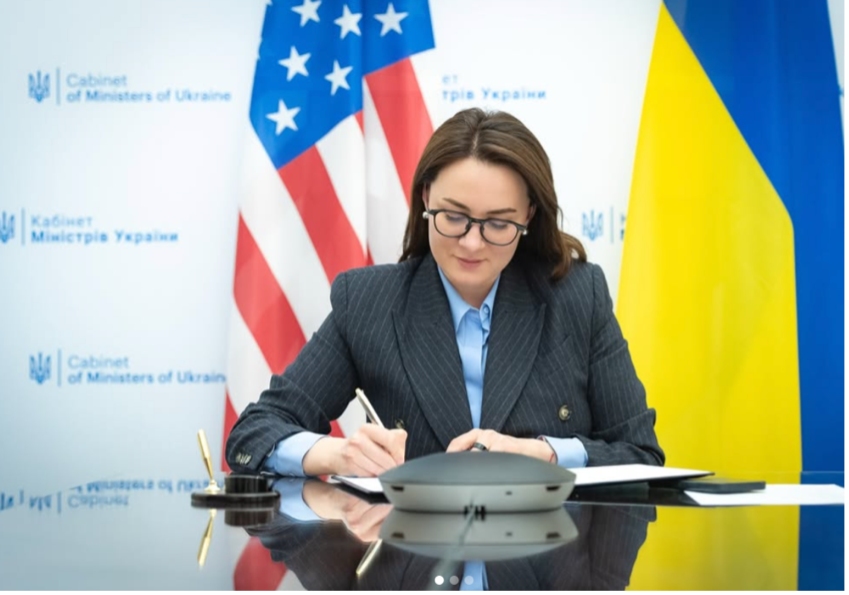
Strategic visual choices can counter diminishing narratives. Official photographs that show her commanding meetings, addressing international audiences, or engaged in high-level negotiations create visual records that emphasize her expertise and authority.
The Stakes of Visual Framing
For Ukraine, the visual framing of its prime minister carries strategic implications. International allies, Ukrainian citizens, and adversaries alike read visual cues about leadership stability, competence, and authority. If Svyrydenko is consistently portrayed as secondary or inexperienced, it potentially undermines confidence in Ukraine's governmental capability during a critical period.
The visual politics also matter for Ukrainian and Eastern European women watching their female prime minister navigate wartime leadership. Young women seeing these images absorb messages about their own political possibilities and the respect accorded to female authority. And young people of all genders grow up with a wider image of what “authority” looks like.
As Svyrydenko assumes leadership during this crucial period, the visual record being created will either reinforce limiting stereotypes about women's capabilities or document the reality of female leadership during a crisis. The camera angles chosen, the contexts emphasized, and the moments selected for documentation will collectively tell a story about whether women belong in positions of ultimate authority.
The camera doesn't just capture moments; it constructs meaning about who belongs in power and under what conditions. For Svyrydenko and all women leaders—and for all of us watching—those visual choices carry weight far beyond any individual photograph.
Until next time, keep your eyes sharp and your lenses sharper.
Send examples of visual sexism you've noticed to submit@contrariannews.org with the subject line SPLIT SCREEN.
Azza Cohen (she/her) is an award-winning documentary filmmaker who served as Vice President Kamala Harris's official videographer in the White House. She recently founded a production company with her wife, Kathleen, and is writing a book about visual sexism from a cinematographer's perspective. Uncover and address visual sexism alongside Azza every other week here on The Contrarian and on Instagram and Bluesky. The New Yorker distributed her film “FLOAT!” in 2023.

An important post. You didn't see coverage of Golda Meir or Margaret Thatcher as other than formidable leaders. Women leaders in the United States are always covered by their looks and motherhood, with the exception of Tammy Duckworth who proved her bonafides in combat.
it would be interesting to contrast PM Svyrydenko coverage with say AG Bondi coverage