


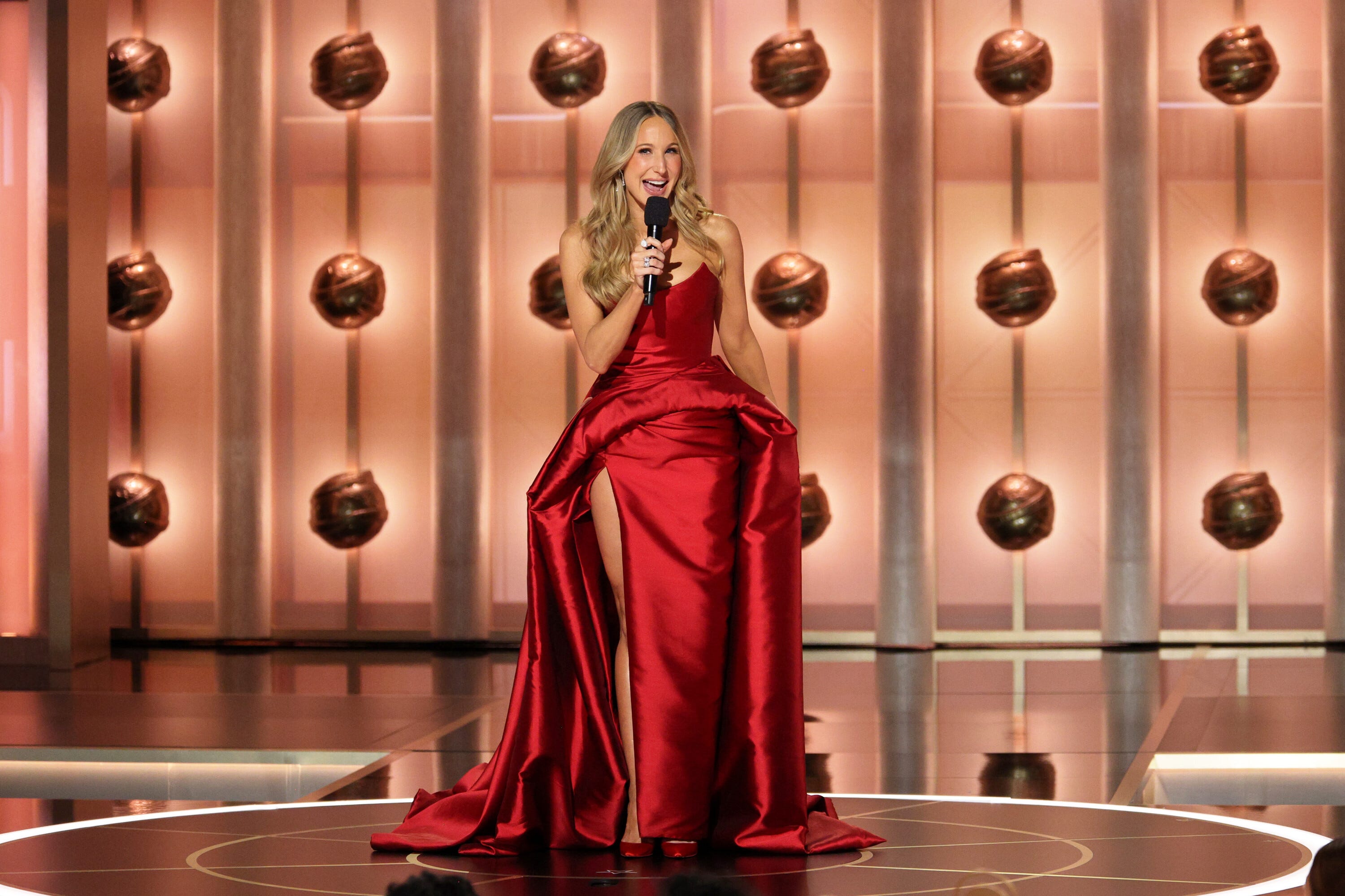
At the Golden Globe Awards Sunday night, it was virtually impossible to tell that anything was amiss in the country, even after one of the bleakest weeks so far in Donald Trump’s second term in office.
The vibe at the awards show, long known for being freewheeling and ethically dubious, wasn’t so much carefree as it was nihilistic — a glittery incarnation of the social media mantra “LOL nothing matters.”
During the three-hour-plus telecast on CBS, hosted by comedian Nikki Glaser, there was not a single mention of ICE, Renee Good, or the hundreds of thousands of people who had turned out at protests across the country this weekend. There was zilch about the retro coup in Venezuela, Trump’s ever-expanding ballroom plans, his takeover of the Kennedy Center, or any of the fresh horrors engulfing the nation on a daily basis.
The bizarro disconnect from the real world was particularly glaring given how many of the honored films and TV series supposedly grappled with fraught political and social issues. Paul Thomas Anderson’s One Battle After Another, about an ex-radical and his daughter on the run from racist militants, won four awards, including best motion picture — musical or comedy. (Yes, comedy.)
Adolescence, the unsettling Netflix drama about the corrosive effects of social media on young people, swept the limited series categories, taking home four prizes. HBO Max’s The Pitt, which follows healthcare workers in a beleaguered Pittsburgh emergency room over a single hellish shift, picked up multiple awards, as did The Secret Agent, a vibrant Brazilian thriller about life under authoritarianism. So, among Globes voters, there was clearly an appetite for fare that engages with the world we live in now.
If only more of that awareness had seeped into the broadcast, which was largely devoid of political statements.
Glaser, known for her fearless roasting of celebrities, landed some barbed jokes about CBS News — “the newest place to see BS news” — and the Epstein files. A handful of stars wore anti-ICE pins or spoke about current events on the red carpet.
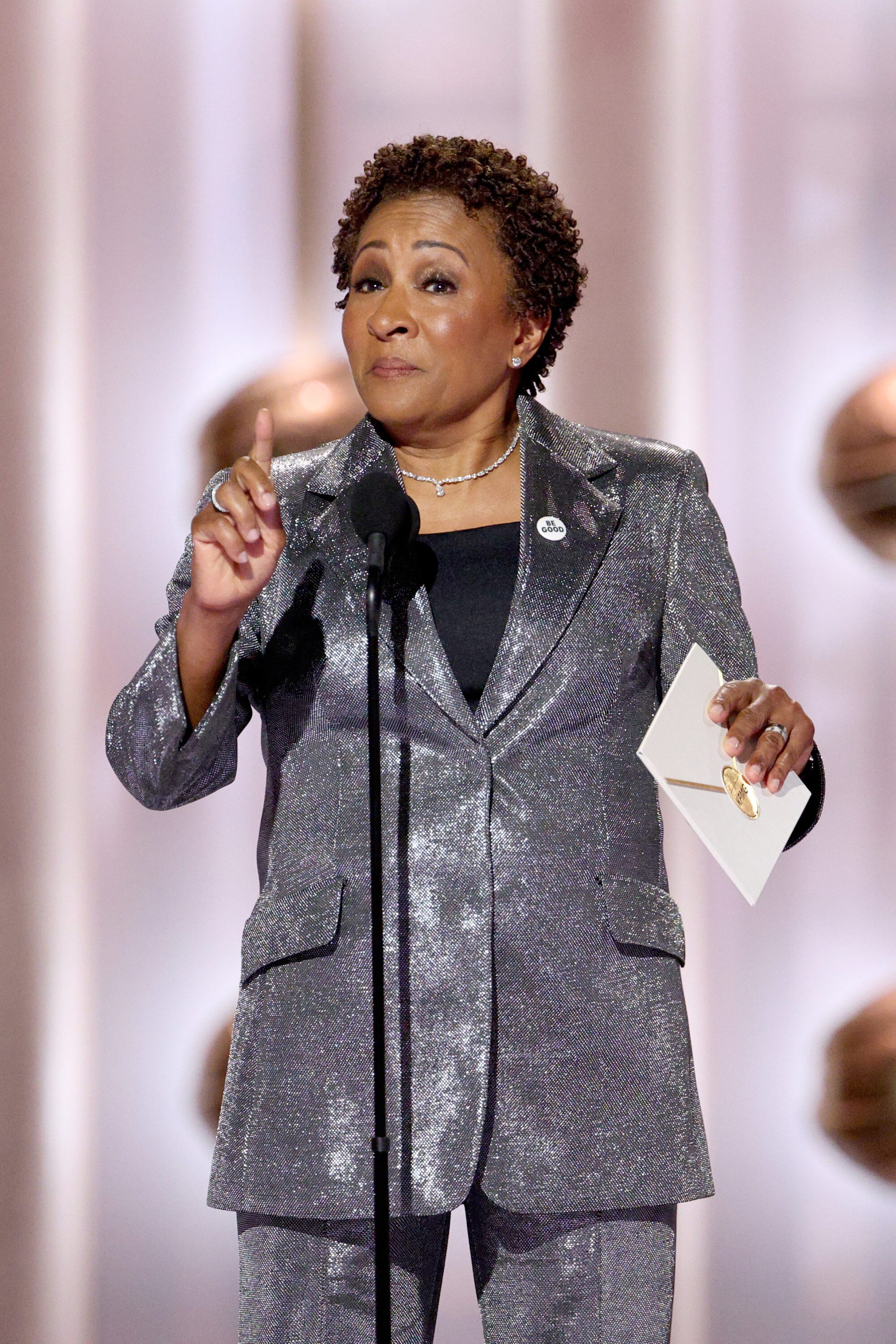
But on stage at the Beverly Hilton, Wanda Sykes delivered the most pointed — and entertaining — moment of the night. Presenting the award for best performance in stand-up, the comedian trolled “people pissed off that a queer Black woman is up here doing the job of two mediocre white guys” and told nominee Bill Maher, “You give us so much, but I would love a little less.” (He...was not amused.) When an absentee Ricky Gervais won, Sykes accepted the award on his behalf and thanked God and the trans community for him — a dig at the vocal atheist known for transphobic material.
Outside of Sykes’ masterful appearance, what viewers got was an overly long, glitch-filled awards show featuring a gimmicky new award for best podcast, announcers who provided inane “color commentary” as winners walked to the stage (thankfully the botched sound mix made it almost inaudible), and countless plugs for Polymarket, the crypto-based, Donald Trump Jr.-aligned prediction market.
Even by the very low standards applied to the Golden Globes, the show was embarrassing, marred by shameless stunts and corporate pandering.
While Glaser’s jab at CBS News was welcome, she did not seem willing to bite the hand that truly feeds her by making fun of the Globes themselves, an awards show that nearly imploded five years ago amid a massive ethics scandal.
The Globes have always had a dubious reputation (two words: Pia Zadora), but for decades, the industry has been happy to look the other way, as has the audience, in part because the boozy Globes telecast was often more enjoyable to watch than the turgid, self-important Oscars. The sketchy, starf*cking tendencies of the Hollywood Foreign Press Assn., the group that previously voted on the Globes, just gave hosts more material for their irreverent monologues.
This mutually beneficial arrangement fell apart in 2021, thanks to an investigation by the Los Angeles Times which accused the HFPA of widespread self-dealing and determined that the influential nonprofit group had zero Black members. Celebrities defected en masse, and the Globes were on life support until a 2023 acquisition by Penske Media.
The show has since clawed its way back to relevance, with help from celebrities who can’t resist the siren song of a red carpet (or a million-dollar gift bag). But it’s arguably a bigger sham than ever, thanks to the massive conflict of interest it now presents. In addition to the Globes, Penske Media owns Variety, Deadline, The Hollywood Reporter, IndieWire, and GoldDerby, giving it a near total monopoly on the entertainment media press that is supposed to objectively report on awards (and the voting bodies that hand them out).
Blame for the misbegotten broadcast and its many cheap stunts can be squarely placed on Penske. But the Globes couldn’t exist without an entire industry that has decided that nothing seems to matter anymore, or that there’s no ethical line too big to cross as long as there’s a golden trophy to collect. It’s true that no one mentioned Trump on Sunday night. Perhaps they didn’t have to; his corrosive influence was everywhere.
Meredith Blake is the culture columnist for The Contrarian
I'm glad I never watch these self-congratulatory "award" shows, where the truly best rarely win.
On the red carpet, actor Mark Ruffalo shared how many of us are feeling these days 💔
https://m.youtube.com/watch?v=gKqDDlL0uPA