

By Roberto Valadéz
This past week, Charlie Kirk’s name was inescapable. He was eulogized by a U.S. president and his name chanted on the streets of London at the “Unite the Kingdom” rally, which drew in over 110,000 to march upon the British capital in ideological solidarity. As someone who actively consumes global news, I have to admit that the magnitude of this movement is staggering. Not because I’m oblivious to the culture wars of our time, but because regardless of the volume of content I consume, I still feel like I’m missing something. Something big. And, undoubtedly, I am.
It’s no secret that algorithms identify, cultivate, and reinforce our existing beliefs. But ignorance in the digital age isn’t supposed to be this easy. The mediums I use to source content—my news aggregator and social media feeds—not only coddle my socio-political comfort, they keep me culturally isolated. I did not know who Charlie Kirk was before he died. A figure as influential as he, the harbinger of a national movement, remained invisible to me by design. This is not merely a personal blind spot, it is a symptom of a far more grave social ailment.
This isolation, when conflated with the performative and antagonistic debate culture that dominates social media, erodes the very bedrock of our social contracts. It dissuades most well-intentioned civilians from engaging in public discourse, while reducing the complexities of society’s perils, and our respective identities, to a binary of us versus them, good versus evil. It must be all or it will be nothing. And we must be victorious.
As frightening as this time of neo-tribalism is, what brings me a morsel of solace is knowing that movements are not monoliths. They are comprised of complicated humans trying to feel of value in, and make sense of, a rapidly shifting world. Terms like “MAGA” and “woke” are defined more by the emotional charge they carry than any formal political treatise. Distilling the emotional muck is a daunting endeavor, but it’s a necessary one nonetheless.
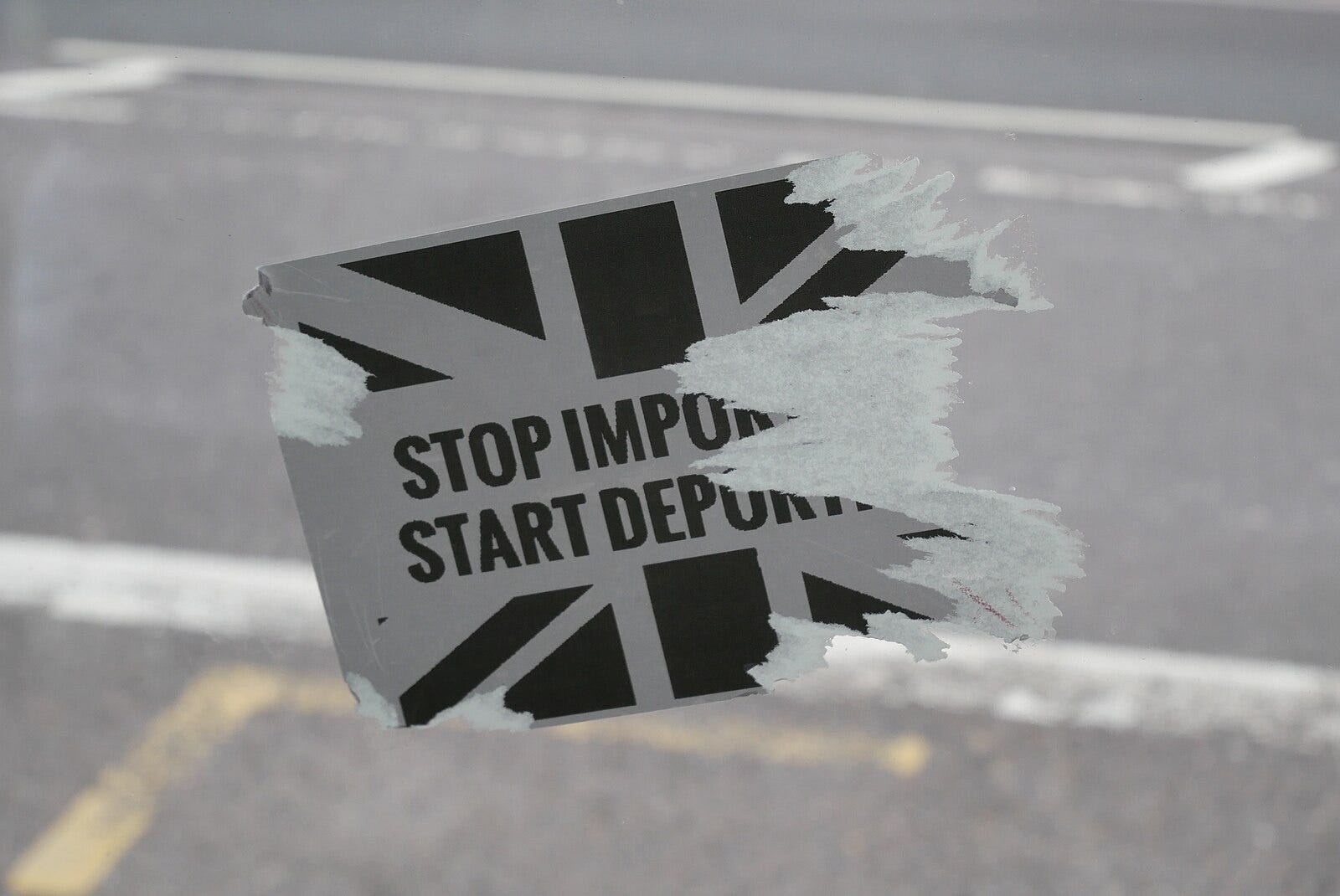
As I read accounts of the “Unite the Kingdom” march, I was taken aback by the testimonials of those in attendance who proclaimed the march had been hijacked by the far-right and was not reflective of their views. Others cited concern for how “broken” their country is. At face value, these responses may be perceived as thinly veiled attempts to sanitize underlying racist or xenophobic opinions. And I suspect some very well are. Yet in the obscurity of opaquely articulated intentions, what I know for sure is that participants did not march under a singular banner. And that makes me wonder how many fragmented, not fully aligned motives might be muffled by those who shout the loudest? To insist on collective, oversimplified, sound bite explanations of “the other side” only feeds the proverbial beast, and strips away the nuance required to form solutions to the issues that exist between us.
So how do we bridge the distance between our filtered realities? What is the answer? I propose we begin with a question. And then continue with more questions after that.
At social gatherings (dinner parties, after work drinks, Thanksgiving), I take advantage of the standard “How are you?” question to respond, “Honestly, with everything going on in the world, things feel really off. Do you feel that, too?” It’s vulnerable and relatable and it invites someone to share what genuinely concerns them without having to assert a political disposition. It also provides an opportunity to dig a little deeper by asking clarifying questions (“Can you share more about why you feel that way?”). I then listen for the details in their reply to see where I can relate and signal my intent to learn more about them, not look for opportunities to judge them.
I have found that leading with a sincere curiosity, and keeping that at the center of any discourse, can disarm combatants and avert charged disagreements. But it requires I demonstrate the maturity to regulate my emotions and give grace to those with the courage to ask questions of me, even when their words are clunky—and I do mean clunky, not condescending. We should all endeavor to discern the difference.
It also requires us to denounce the “prove me wrong” method of debate that made Charlie Kirk such a popular and polarizing figure. The very nature of this exchange is self-serving, stubborn and stifling. It requires obstinate commitment to the opinions one already possesses, and prioritizes preserving one’s own argument, at all costs, by deflecting or sidestepping anything to the contrary. It also dehumanizes those with dissenting opinions. We must connect with the intent to understand, not to conquer.
Perhaps most importantly, it requires us to be accountable for our complacency, and acknowledge that the “give no f*cks” and “you do you” culture to which many of us subscribe is part of the problem. We do not have the privilege of sitting this out. Disengagement will not keep the revolution from coming for you. Take opportunities (when it is physically and psychologically safe to do so) to cultivate deeper conversations with people who don’t perfectly align with your voting record or share in your lived experiences. For those of us with access to certain in-groups, do not turn away from an opportunity to leverage your voice and influence to amplify marginalized perspectives.
To be clear, this is not a call for capitulation; it is an invitation to engage in earnest. We must embrace the messy, uncomfortable work of genuine connection or risk devolving down a path of diminishing returns. I refuse to be reduced to a one-dimensional caricature by those who insist on keeping me at a distance for their ideological gain—and I must hold myself to that same standard. Perhaps in this deeper exploration of the “other side”—and of ourselves—we will see past the veneers of our online personas and claim something worth saving in a world so desperate to tear us apart.
Roberto Valadéz is an executive coach and founder of True You, equipping C-suite leaders with the tools to level up their leadership and amplify their impact. He is the former director of communications and special initiatives for the United Nations Ambassador for Global Health, where he led high-stakes global campaigns, including the office’s work on COVID-19.
Thank you for being so enlightening. Instead of antagonizing people by hurling insults and threats at them it’s clear why we must learn the reasons why they think the way they do. Algorithms are probably designed to instill vitriol on social media. And you’re correct about the “prove me wrong “ argument it’s intent is to force a belief system on to others rather than having civil discourse and yes it’s absolutely dehumanizing. Thanks so much.
I also was shocked by the thousands plus who LOVED charlie jerk and his ideas