


Just three weeks ago, the memorandum of understanding between Washington and Tehran appeared to offer a fragile path out of the U.S.-Iran war. It was never a peace agreement. It was an attempt to stop the fighting long enough for negotiations to begin.
The United States would ease naval pressure in the Strait of Hormuz. Iran would stop attacking commercial shipping and enter talks on broader security arrangements. Both sides could claim they had not surrendered. Both could tell their domestic audiences they had forced the other to adjust.
That framework now looks close to breaking.
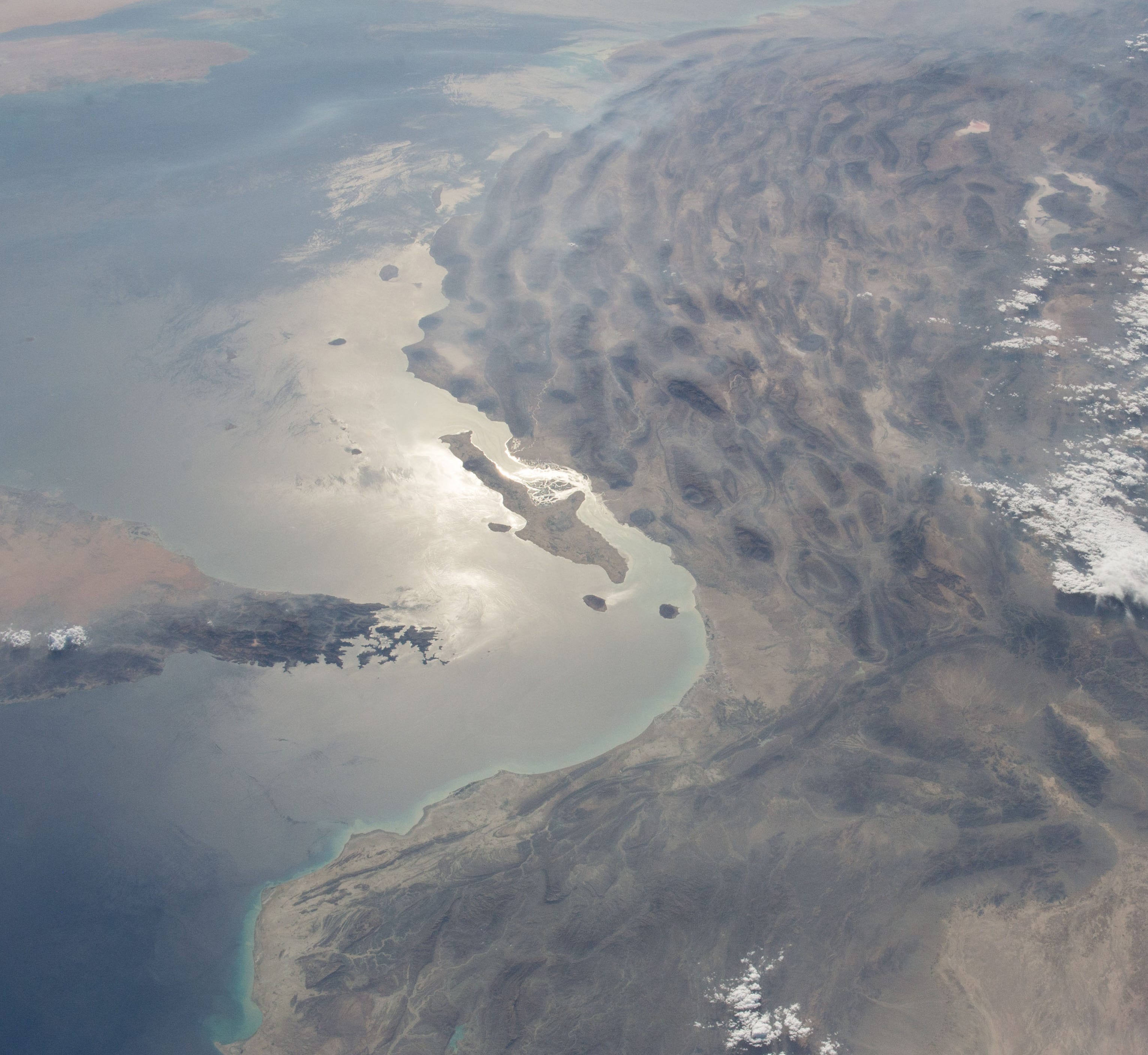
For over a week, the United States has launched new strikes on Iranian military facilities, coastal radar, air defenses, missile and drone sites, and infrastructure tied to Tehran’s ability to threaten shipping through the Strait of Hormuz. U.S. President Donald Trump declared the ceasefire “over,” dismissed negotiations as “a waste of time,” and said the United States will resume a blockade of Iranian ports and “become the guardian of the strait.”
Iran responded with its own escalation. The Islamic Revolutionary Guard Corps attacked commercial vessels transiting through the Omani side of the strait and claimed strikes on U.S.-linked military facilities in the region, while Iranian officials have again declared the strait closed.
The memorandum that was supposed to create time for diplomacy is instead becoming the terrain over which both sides are fighting.
None of this necessarily means diplomacy has formally collapsed. Negotiations have often continued through violence, becoming contests over leverage. The Korean armistice talks dragged on for more than two years while fighting persisted. The Paris peace talks over Vietnam unfolded alongside bombing, offensives, and political theater.
But the current phase is more dangerous than a simple return to tit-for-tat military pressure. Washington and Tehran are no longer arguing only over the future terms of an agreement. They are arguing over what the memorandum required — and who violated it first.
That distinction matters because each side is now treating its own interpretation of the memorandum not as a bargaining position but as the basis for military action.
The Trump administration maintains that Iran abandoned its commitments by resuming attacks on commercial shipping and asserting control over routes through the Strait of Hormuz. From Washington’s perspective, the latest strikes are intended to force Iran back into compliance and restore freedom of navigation.
Tehran presents almost the mirror image. Iranian officials argue that renewed U.S. strikes, the restoration of the blockade, and Trump’s claim that Washington will now act as the strait’s guardian amount to violations of the memorandum. Iran’s retaliation, they insist, is defensive rather than escalatory.
That is how ceasefires unravel. Not always through a single decision to restart the war but through a series of actions each side describes as limited, necessary, and justified.
This is the moment when miscalculation becomes more likely. One side may hit a target it believes is military and discover too late that the other treats it as a red line. An American strike on infrastructure tied to Iran’s coastal defenses could be read in Tehran as an attack on national resilience. An Iranian strike on Gulf infrastructure could be read in Washington as an attack not on leverage but on the regional order itself.
The most dangerous version of this would not necessarily begin with a deliberate decision to expand the war. It could begin with a target chosen to send a message. A desalination plant. A power facility. A port. A communications node. A site one side views as connected to military operations and the other views as civilian infrastructure. In the Gulf, where water, energy, shipping, and military basing sit close together, the line between coercion and escalation is thin.
That risk is now compounded by politics inside both systems.
In Iran, the negotiating camp was already vulnerable. The memorandum gave Tehran what it needed most: survival, time, and a claim that it had forced Washington to negotiate. But for hardliners, even that may have looked too accommodating. If returning to the memorandum now would require accepting shipping routes Tehran does not control or suspending retaliation without visible American concessions, the deal will be easier to portray as surrender.
That matters because Tehran’s leaders do not only negotiate with Washington. They negotiate with their own political system. A government that appears to accept humiliation after surviving American strikes risks inviting pressure from factions that argue the only safe course is resistance.
Trump faces a different version of the same trap. His approach to negotiation depends on speed, visible concessions, and validation. Pressure is supposed to produce movement. Movement is supposed to produce a deal. A deal is supposed to prove that the pressure worked. When an adversary resists that sequence, Trump escalates. When escalation does not deliver immediate results, he questions the process itself.
Trump allies often describe this volatility as shrewd, calculated unpredictability. But to Tehran, the pattern may look quite predictable: pressure, outrage, escalation, impatience, then another search for an exit. Iran does not need to defeat the United States militarily to exploit that cycle. It only needs to deny Trump a clean political victory while avoiding escalation severe enough to threaten the regime’s survival.
That’s the same logic I described when the memorandum was announced last month. Time was Tehran’s friend because the agreement gave Iran survival, ambiguity, and room to test American patience.
What has changed is the margin for error. The waiting game has not ended; it is now being played under live fire. Each new American strike gives Iranian hardliners more reason to call compromise surrender. Each Iranian retaliation gives Trump more reason to demand visible submission. The greater danger is that one side hits a target the other cannot absorb politically — and turns a damaged ceasefire into a wider war neither side may have intended.
Brian O’Neill, a retired senior executive from the CIA and National Counterterrorism Center, is an instructor on strategic intelligence at Georgia Tech. His Safehouse Briefing Substack looks at what’s ahead in global security, geopolitics, and national strategy.

"When escalation does not deliver immediate results, he questions the process itself."
And Trump simultaneously creates a new rationale in order to move the goal post. Just recently it was, if Iran still holds the strait, "Then we'll charge tolls on freight." Note that this was never a goal of Trump's war to begin with. Those original points are out the window now, so he has to invent new ones--never mind that this one is the same one that Iran claims.
And what of America stomping in and taking a shipping lane that doesn't belong to us? Is this fine with Congress, which has yet to approve the fighting? Is it even achievable or desirable? No one asks these questions, just accepts that Trump's latest whim works as a rationale for an illegal war.
A know it all president only makes it all worse. It’s always back up and punt.