


Throughout President Donald Trump’s second term, Americans have seen Big Media owners suck up to him to get what they want — including approval for mergers. By playing this game, billionaires have been consolidating even more power over traditional media outlets. So when people hear about a new merger, they may naturally assume it’s more of the same.
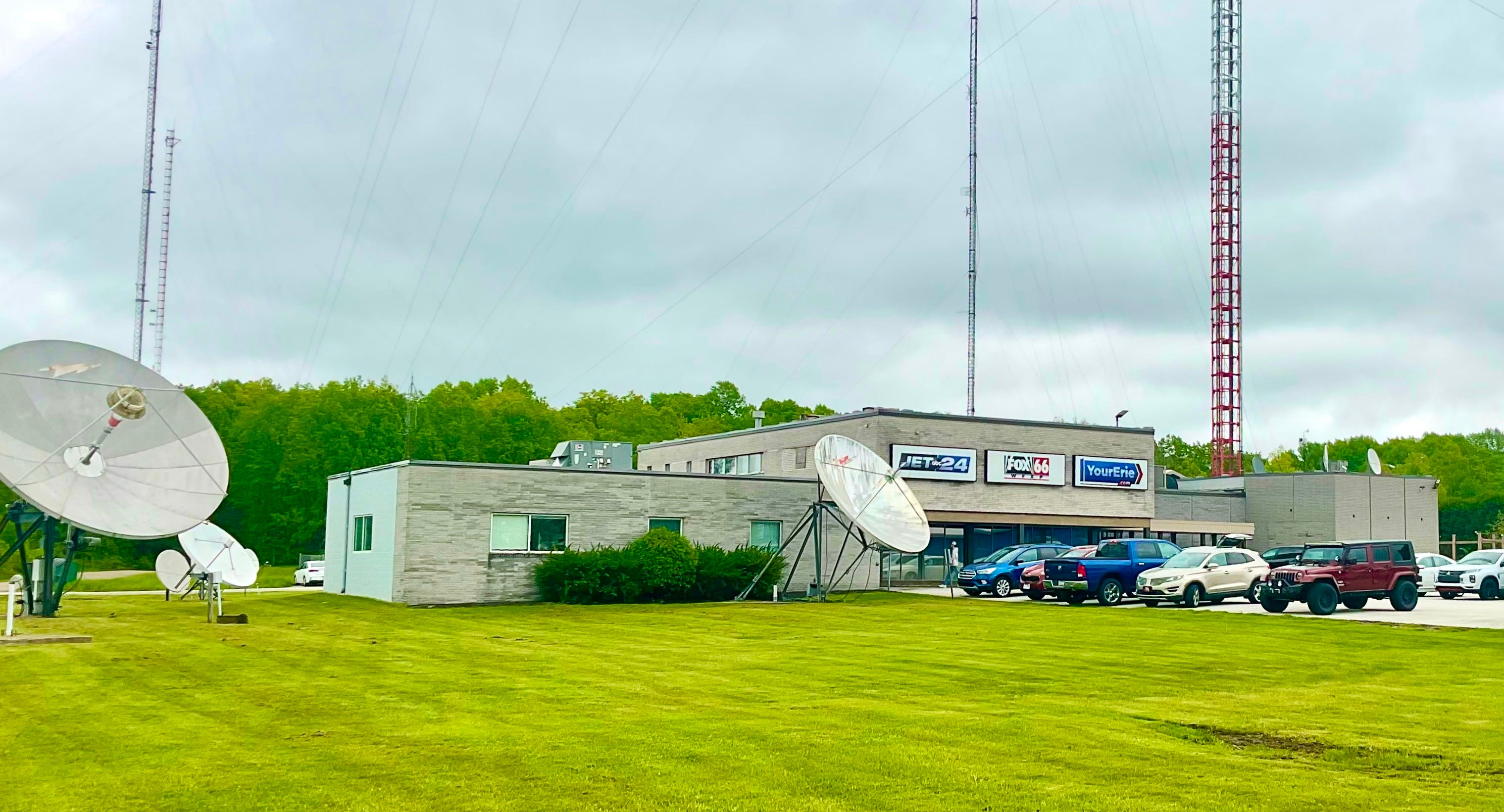
Nexstar, the largest owner of local TV stations across the country, recently announced that it purchased Tegna, another big owner. Now, the deal is in limbo. A judge has paused it, granting a request from DirecTV.
What matters most in this story is what it means for people across the country who count on local news. That’s what I’m digging into for They Stand Corrected, my podcast and newsletter fact checking the media.
There are reasons for alarm. Will the company push all these stations in a single ideological direction? Sinclair, another power player, infamously had local stations read the same op-ed assailing “fake news” back in 2018, in each case pretending that it was the anchor’s own words.
Ideological poisoning is especially dangerous in local news. Though trust in the media has plummeted across the board, Americans still trust local sources substantially more than national and social media sites.
To allow this merger, the Federal Communications Commission — with Trump’s strong endorsement — waived a rule preventing a company from owning enough stations to reach more than 39% of U.S. households. The new, combined company will reach an estimated 80%.
On MS Now, Jen Psaki noted that Nexstar was among the companies that temporarily pulled Jimmy Kimmel from the air last year. “That move was seen as Nexstar trying to butter up Trump and (FCC Chairman) Brendan Carr precisely to get this merger approved,” she noted.
These concerns are legitimate. But this merger speaks to something bigger — and it’s not falling strictly on political lines.
Conservatives opposing Trump’s stance
Eight states have filed an emergency motion (separate from DirecTV) to stop the merger, saying it will damage competition. These include deeply “blue” California and New York, as well as “purple” North Carolina.
But CPAC, the Conservative Political Action Coalition, is fighting the merger as well. So is Newsmax, the conservative TV network. Testifying in Congress, Newsmax owner Chris Ruddy pointed out that Nexstar has used its power to get cable services to carry its national network, NewsNation.
Some local stations and associations are fighting the merger, including ones in Indiana, Mississippi, and Tennessee. The nonpartisan National Association of Broadcasters, meanwhile, supports the merger. According to Open Secrets, the organization gave more money to Democratic committees than Republican ones in 2024.
A big argument in favor of the merger is that it’s needed to counteract the power of tech giants — something many Democrats generally support.
Stations’ financial lifeline
At issue is how local stations make money. Traditional ad revenues are disappearing, as people stream instead of watching over airwaves. Stations count on retransmission fees, which cable, satellite, and streaming services pay stations to broadcast their content.
There are also battles over what social media platforms should pay these stations. And as AI overtakes just about everything, stations rightfully want to ensure that any tools that “scrape” their content pay for it.
Proponents of the merger explain that small stations have little to no leverage to negotiate this stuff with tech giants. If they combine into a mega-entity, they stand a greater chance of demanding fees that help keep the stations alive. In a post for an organization called The Media Institute, attorney Adonis Hoffman calls TV consolidation “a moat against extinction.” But none of this erases the dangers of news outlets being controlled by even more powerful corporate overlords.
The debate is complex. But there’s a bigger issue at stake, which media executives are largely ignoring: People are tuning out the news. Ten years ago, 51% of Americans said they follow the news closely; that has plummeted to 36%, according to Pew Research.

Americans are fed up with media failures. They’re done with politicians and pundits being allowed to say just about anything without being fact checked. And after years of Big Media making their phones beep every five minutes with clickbait headlines, they’ve had enough.
There is a solution: a strict, nonpartisan commitment to truth. Forget ideologies. Focus on the two ingredients of truth: facts and context. Americans don’t need the media to tell them people’s opinions anymore. They don’t need the media to be platforms for talking heads. They need the media to decipher reality from fiction, especially in the era of AI.
In my own way, I’m seeing that this audience exists. There are people craving trustworthy sources of truth. As Big Media owners fight over revenues, none of them are fighting for that.
Josh Levs is host of They Stand Corrected, the podcast and newsletter fact-checking the media. Find him at joshlevs.com.
Thanks for running my latest column, The Contrarian. The fight for truth is a crucial battle of our time. Share thoughts, questions, and links you want me to fact check over at https://theystandcorrected.substack.com/
-JL
I barely watch tv news anymore.